Artwork
The passage of the Jordan River with the Ark of the Covenant
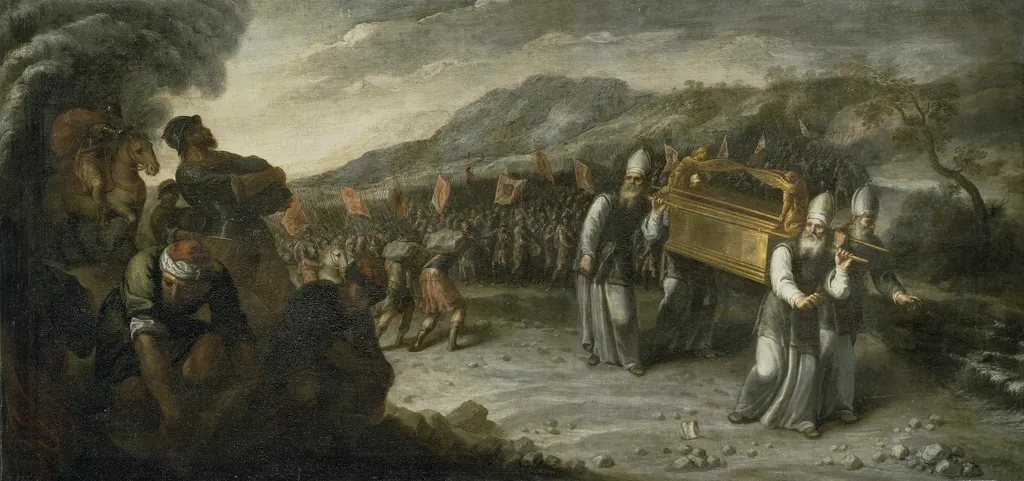
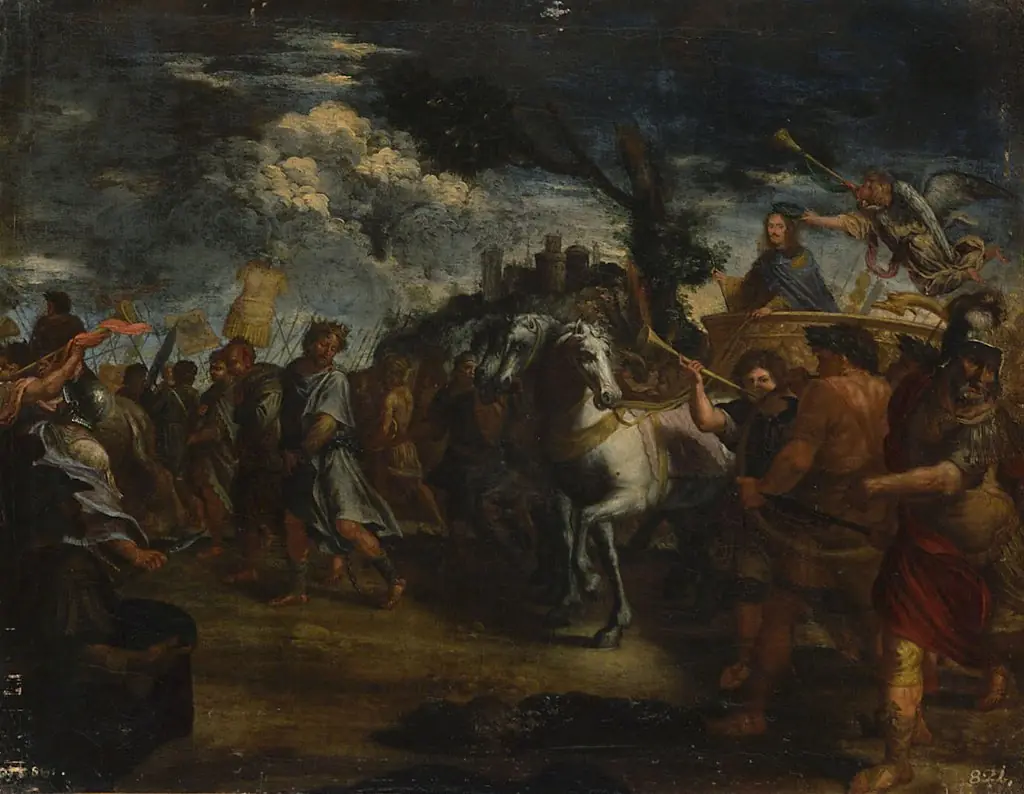
The passage of the Jordan River with the Ark of the Covenant is an oil painting by the Early Baroque Italian artist Juan Montero de Rojas. It dates from 1667 and is held in the collection of the Museo del Prado.
About this work
Subject & Meaning
The painting depicts the biblical narrative of the Israelites crossing the Jordan River, a pivotal moment marked by the presence of the Ark of the Covenant.
The painting depicts the biblical narrative of the Israelites crossing the Jordan River, a pivotal moment marked by the presence of the Ark of the Covenant. The scene specifically illustrates the miraculous event where the river's flow is halted, allowing the people to pass on dry ground while carrying the sacred ark. Visual elements include the river itself, the Ark, and a flag, which likely serves as a standard for the Israelite camp or a symbol of divine guidance and military presence during the crossing.
The work represents the fulfillment of divine promise and the transition of the Israelites into the Promised Land under Joshua's leadership.
Technique & Style
Executed in 1667 by Juan Montero de Rojas, this work is an oil painting on canvas. The composition measures 112 cm in height and 235 cm in width, presenting a broad horizontal format. Visually, the piece depicts the biblical crossing of the Jordan River, featuring the Ark of the Covenant and a flag as central iconographic elements within the narrative scene.
History & Provenance
The painting The Passage of the Jordan River with the Ark of the Covenant was created by Juan Montero de Rojas in 1667. Executed in oil on canvas, the work measures 112 cm in height and 235 cm in width. It is currently held in the collection of the Museo del Prado in Madrid.
The piece was previously part of the holdings of the Museo de la Trinidad before its transfer to the Prado.
Overview
Juan Montero de Rojas painted The Passage of the Jordan River with the Ark of the Covenant in oil in 1667. The work, now in the Museo del Prado, portrays a biblical procession as the sacred chest is carried across a rocky riverbank under a storm‑laden sky. Soldiers and flags appear in the distance, while two robed figures lead the group, one playing a flute.
Context
Created during Spain’s Baroque period, the work reflects contemporary interest in dramatizing biblical narratives for devotional and didactic purposes. The emphasis on light and shadow aligns with the Counter‑Reformation’s visual strategies, aiming to inspire piety through emotionally charged, realistic scenes.
Artist & collection

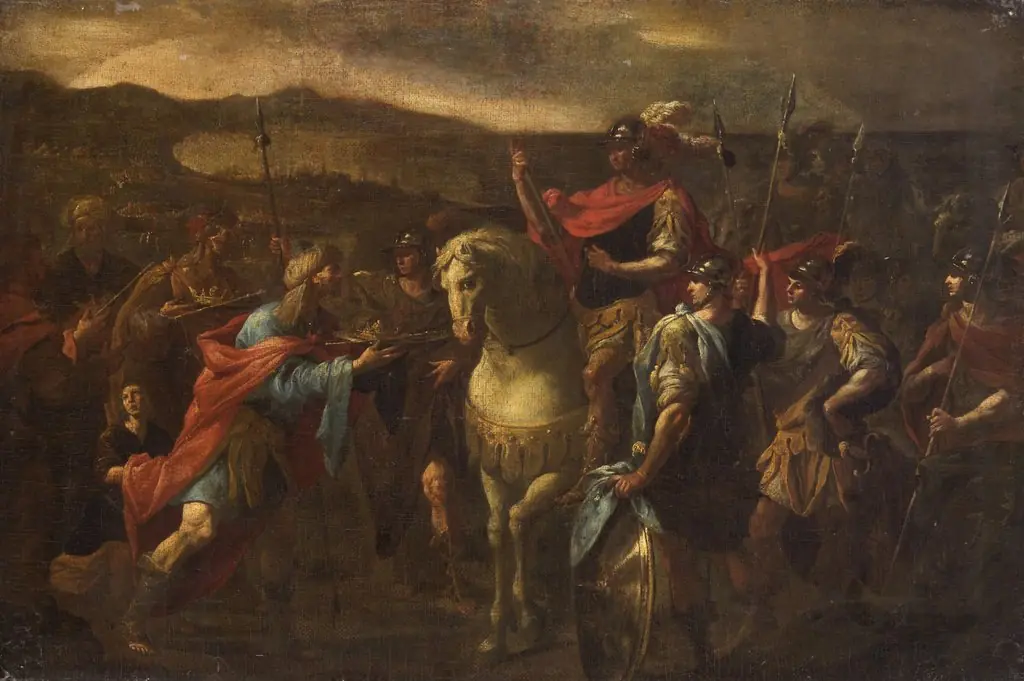
- Indische Könige huldigen Alexander dem Großen
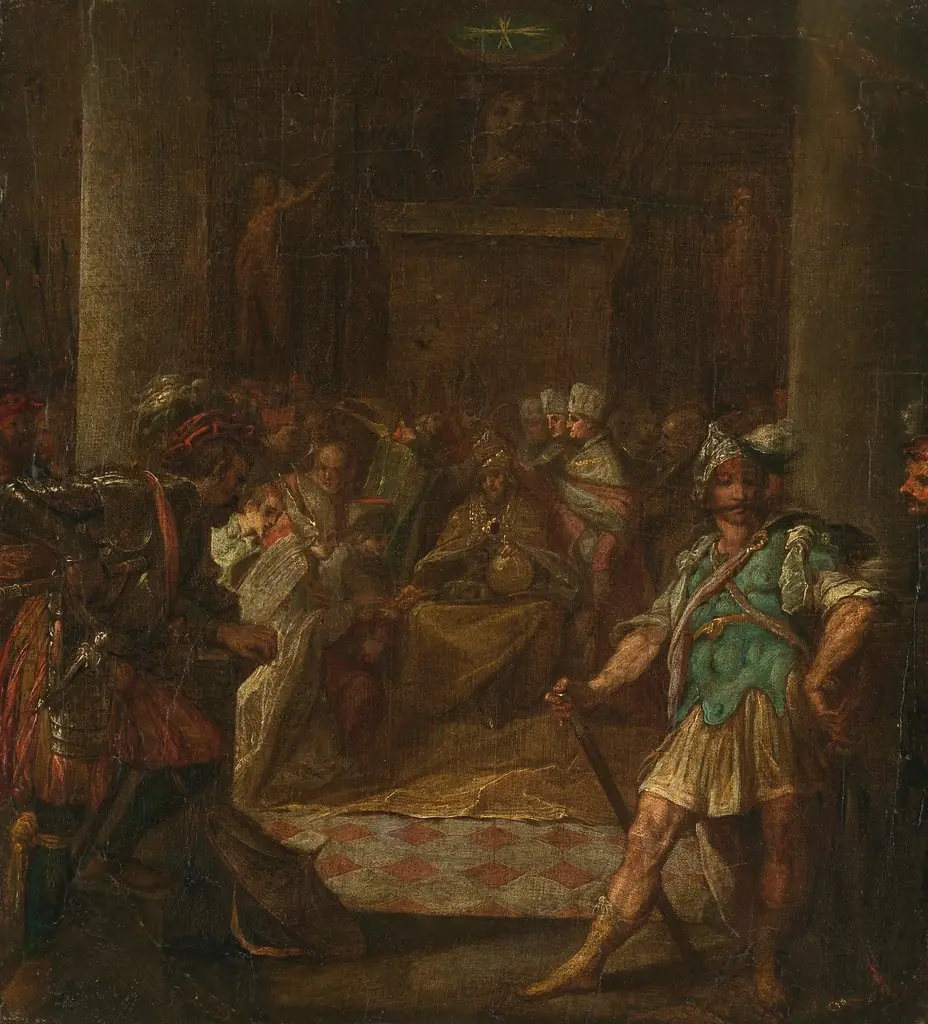 Imperial Coronation
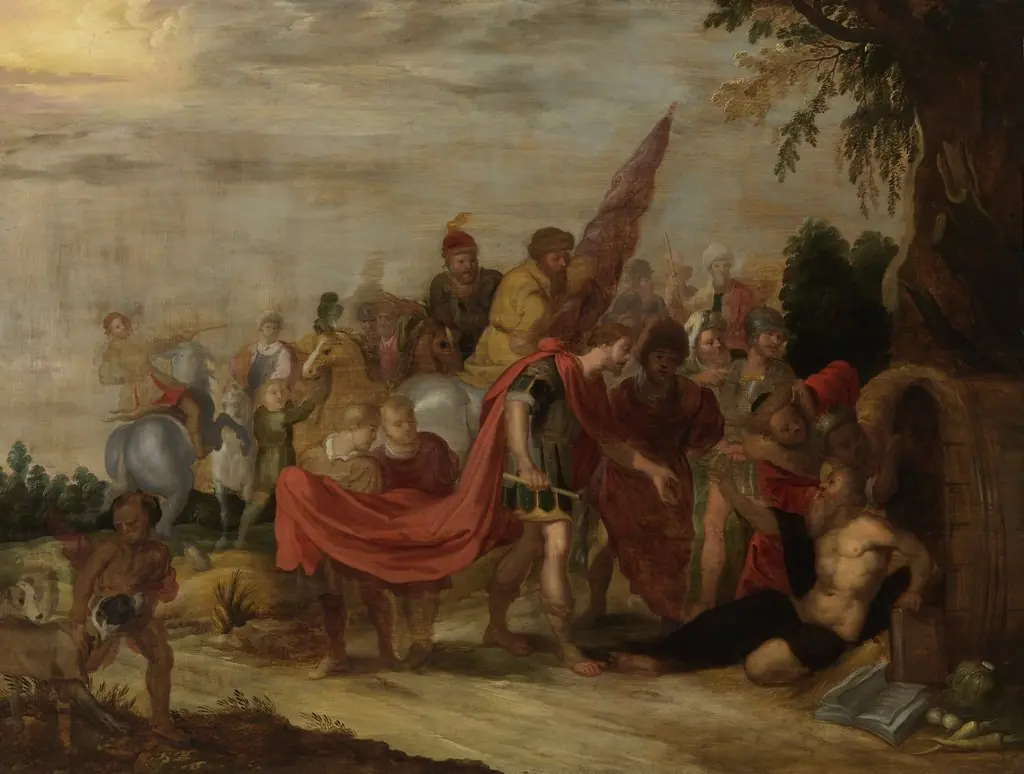 Alexander en Diogenes
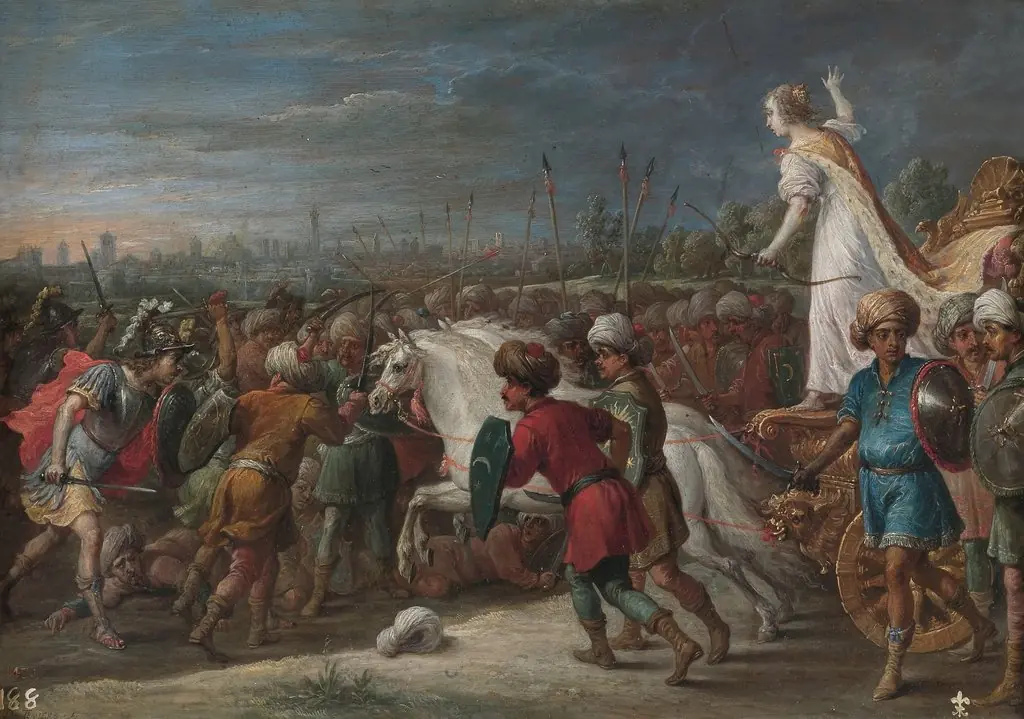 Armida en la batalla frente a los sarracenos
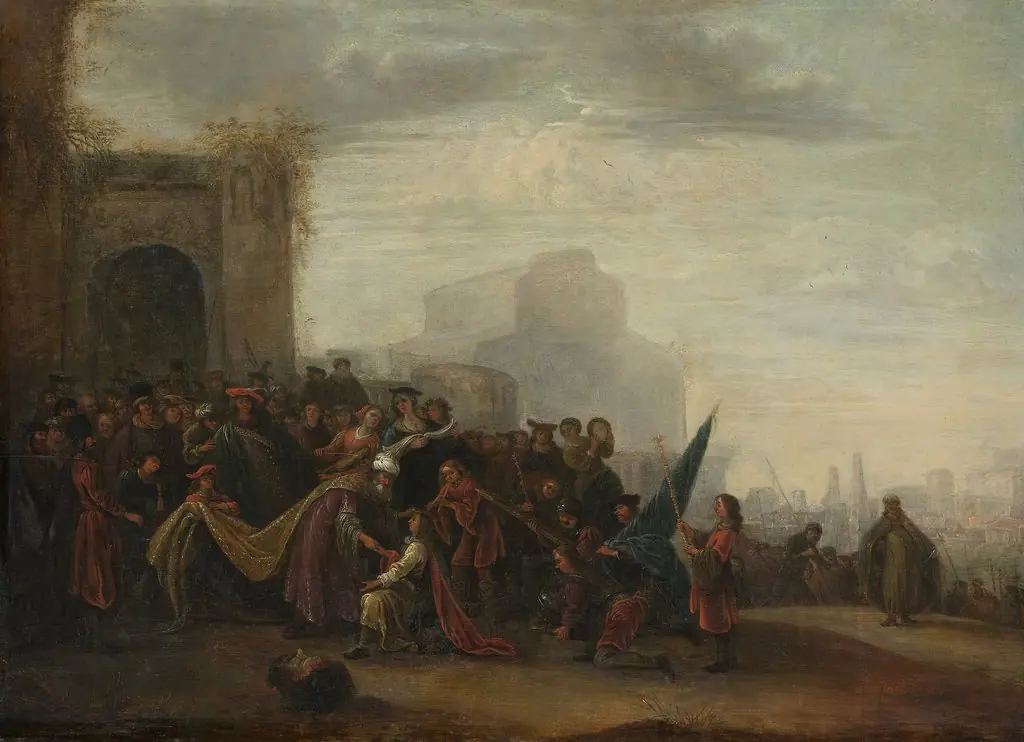 Saul honoring David after his victory over Goliath
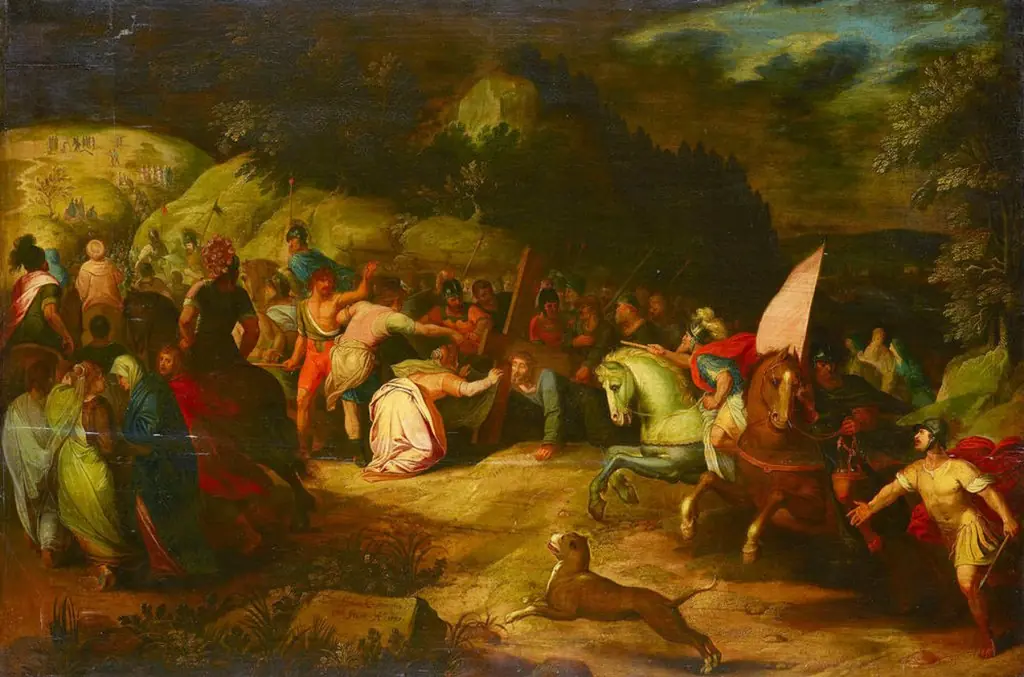 Christ collapsing under the cross on his way to Golgotha
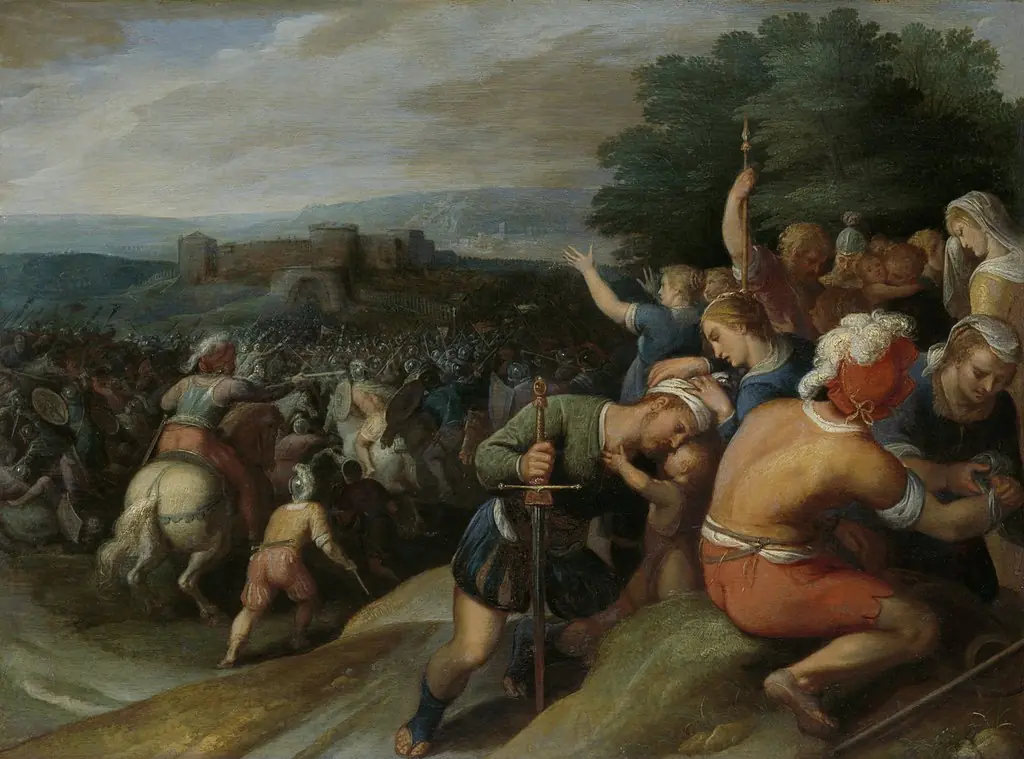 The Batavians Surround the Romans at Vetera
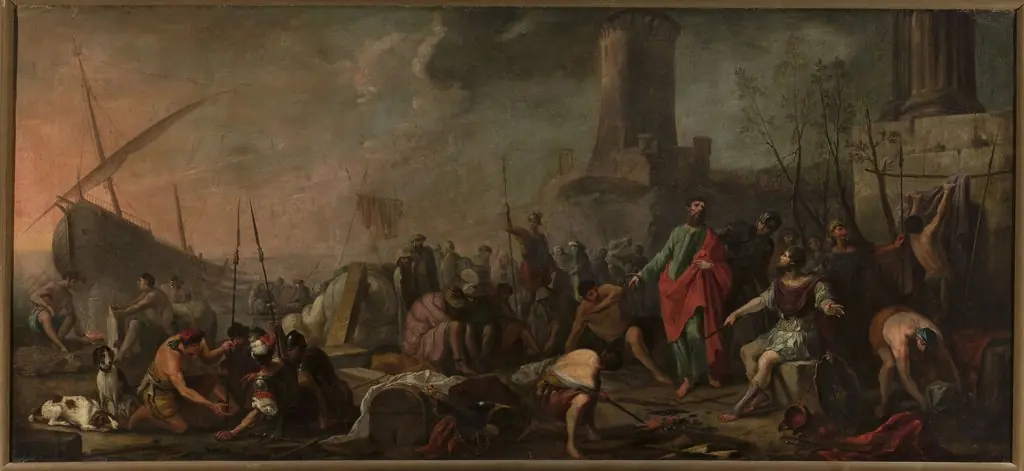 St. Paul on Malta
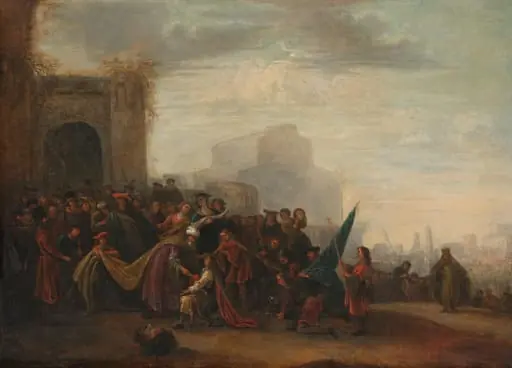 Saul Welcoming David after his Victory over Goliath
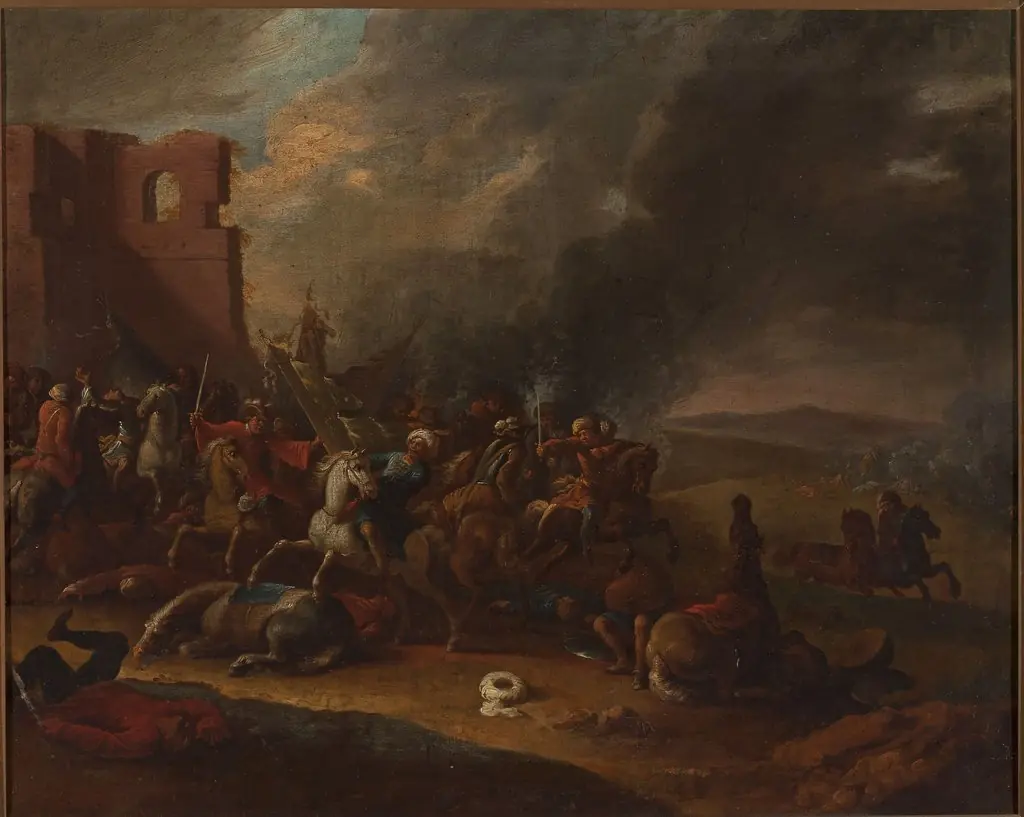 Battle with the Turks
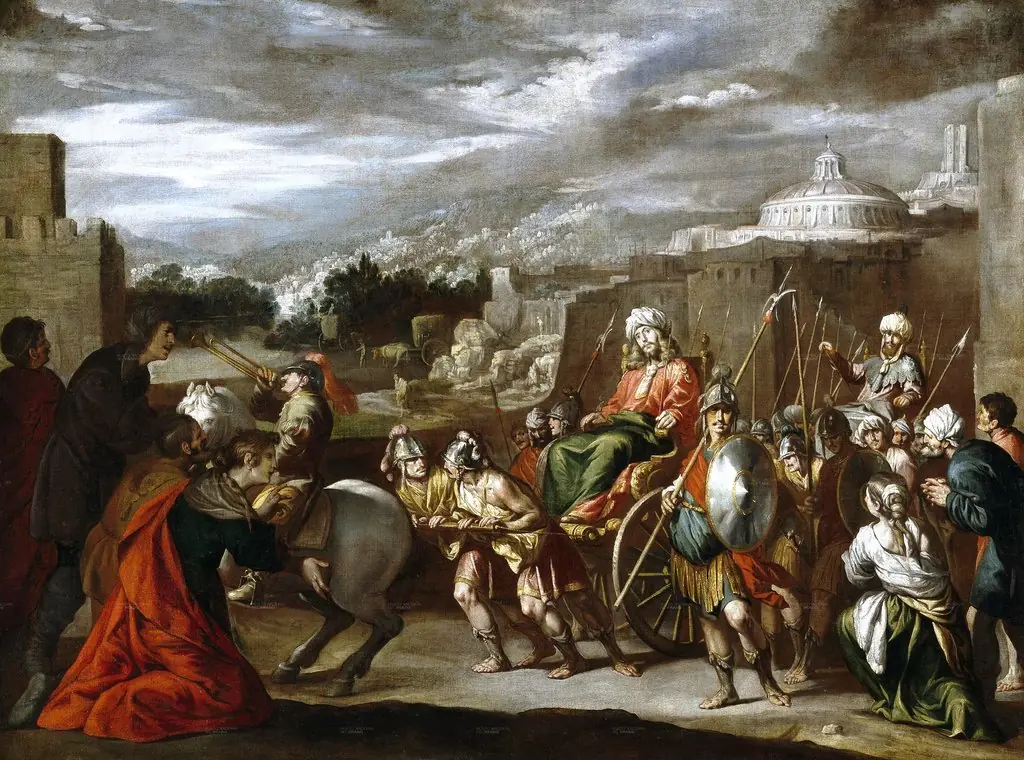 Joseph’s Triumph in Egypt
 Triumphzug des Erzherzogs Leopold Wilhelm