Artwork
Saint Benedict blessing the Bread
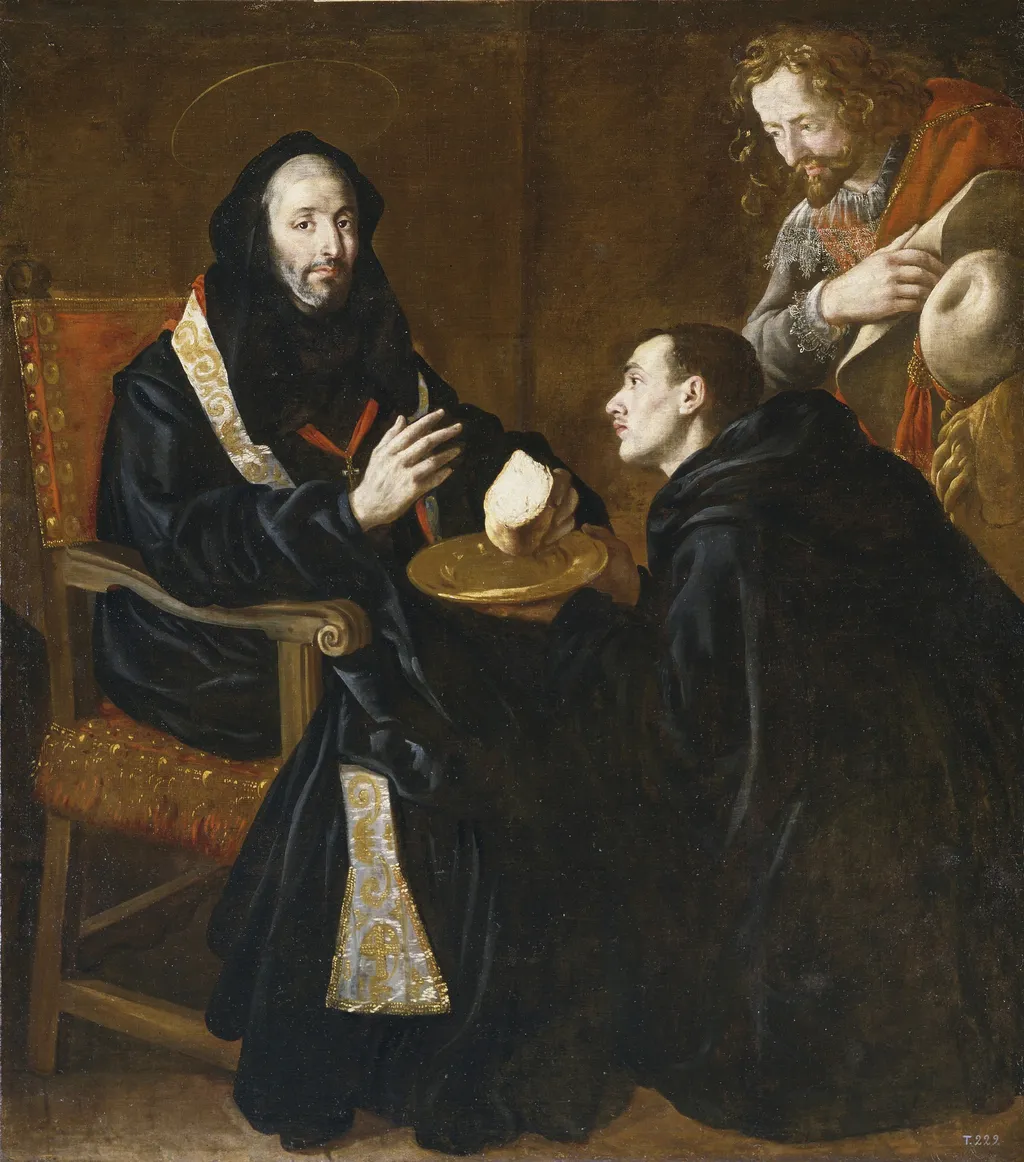
Saint Benedict blessing the Bread is an oil painting by the Early Baroque Italian artist Juan Rizi. It dates from 1655 and is held in the collection of the Museo del Prado.
About this work
Technique & Style
The handling is restrained yet expressive, with subdued chiaroscuro used to model the figure and the bread, avoiding dramatic contrasts.
The painting is executed in oil on canvas, with the support measuring 168 cm in height and 148 cm in width. The technique emphasizes smooth, controlled brushwork and a restrained palette, typical of mid-17th-century Spanish religious painting. The composition focuses on Saint Benedict raising his hand in benediction over a loaf of bread, rendered with careful attention to light and texture to convey both sacredness and material presence.
The handling is restrained yet expressive, with subdued chiaroscuro used to model the figure and the bread, avoiding dramatic contrasts. The stylistic qualities align with Rizi’s training in Madrid, reflecting the influence of Francisco Pacheco and the tenebrist tradition, while maintaining a measured, devotional character appropriate to its liturgical context.
History & Provenance
The work was painted by Juan Rizi in 1655, as indicated by the artist’s date on the canvas. The painting entered the Museo del Prado’s holdings through the aggregation of the former Museo de la Trinidad, which had earlier acquired it as part of the national collection formed from ecclesiastical sources. The canvas measures 168 cm in height and 148 cm in width and depicts the Benedictine theme of Saint Benedict blessing bread, consistent with its classification as a religious painting of the mid-seventeenth century.
The painting Saint Benedict blessing the Bread is held in the collection of the Museo del Prado in Madrid. Historical records indicate the work was previously part of the holdings of the Museo de la Trinidad before its current location. The provided sources do not contain specific inventory numbers, accession dates, or a record of exhibition history for this artwork.
Context
Juan Rizi painted Saint Benedict blessing the Bread in 1655, a religious work now housed in the Museo del Prado, where it remains part of the museum’s collection of Spanish religious art. The painting depicts a moment of divine intervention involving bread, aligning with the saint’s legendary miracles of multiplication. Its composition and devotional focus reflect Counter-Reformation emphases on miraculous intercession, situating it within broader trends of Spanish Baroque spirituality and monastic patronage.
Scholarship has examined its theological symbolism and material execution, though limited analysis exists on its reception history beyond ecclesiastical contexts.
Legacy
The painting's enduring presence in major institutions underscores its significance in Spanish religious art. Its inclusion in the Museo del Prado's collection since inception has cemented its reputation as a key example of 17th-century Castilian devotional painting. The work continues to be studied for its masterful handling of sacred narrative and material textures.
Overview
Created in 1655 by the Spanish Benedictine monk Juan Rizi, this oil painting portrays a quiet, interior scene centered on Saint Benedict as he blesses a loaf of bread. The work is part of the collection at Madrid’s Museo del Prado and exemplifies the religious genre paintings of the early Baroque period.
Subject & Meaning
The composition presents three figures in a dimly lit room. The central figure, dressed in black with gold trim and a red sash, extends his hand toward a small round loaf set on a golden plate, indicating a benediction. A second, darker‑clad man leans forward to observe the bread, while a third figure, identified by a halo and curly hair, hovers above, gesturing downward, reinforcing the sacred nature of the act.
Own this work as a print
Artist & collection
Artist
Friar Juan Andrés Ricci de Guevara, known as Friar Juan Rizi (1600, Madrid - 29 November 1681, Monte Cassino) was a Spanish Benedictine monk, painter, and architect, in the Baroque style.

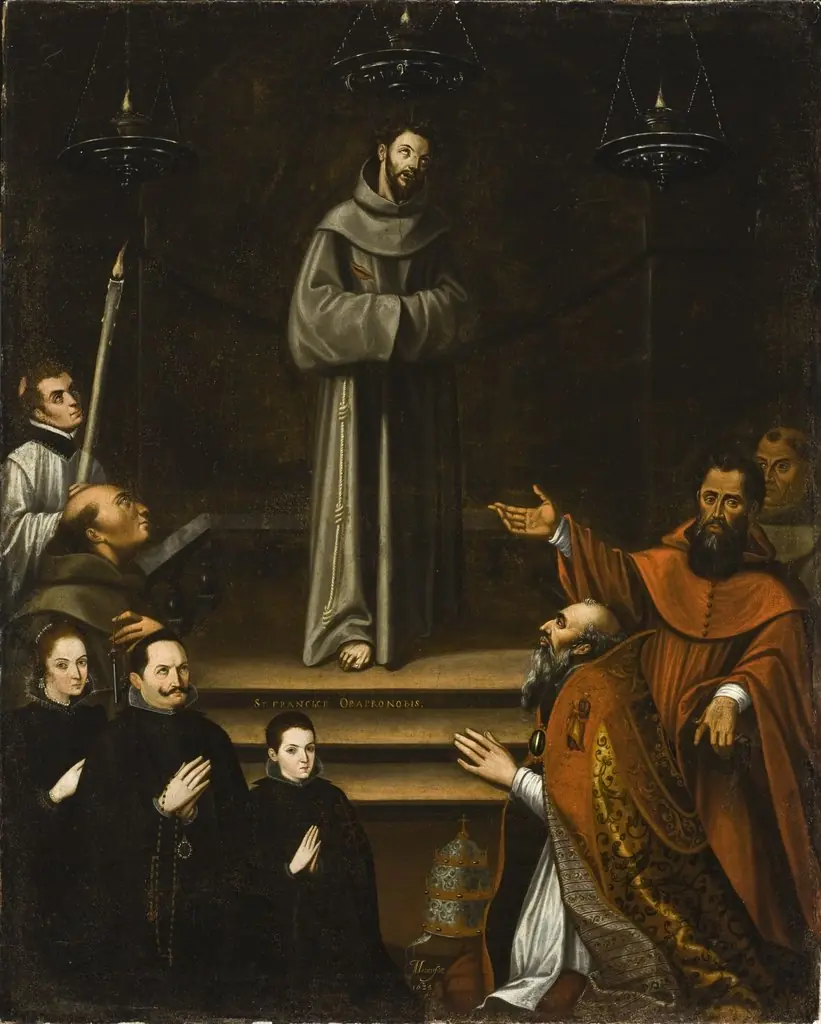 Saint Francis of Assisi Appearing before Pope Nicholas V, with Donors (La aparición de San Francisco de Asís al Papa Nicolás V, con donantes)
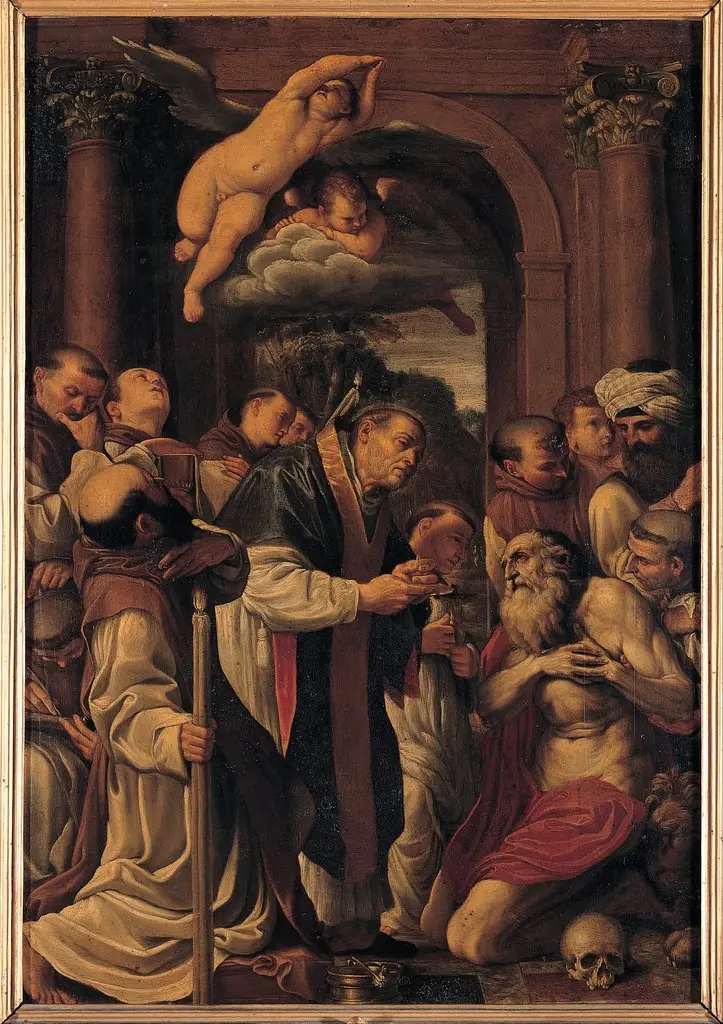 Communion of St. Jerome
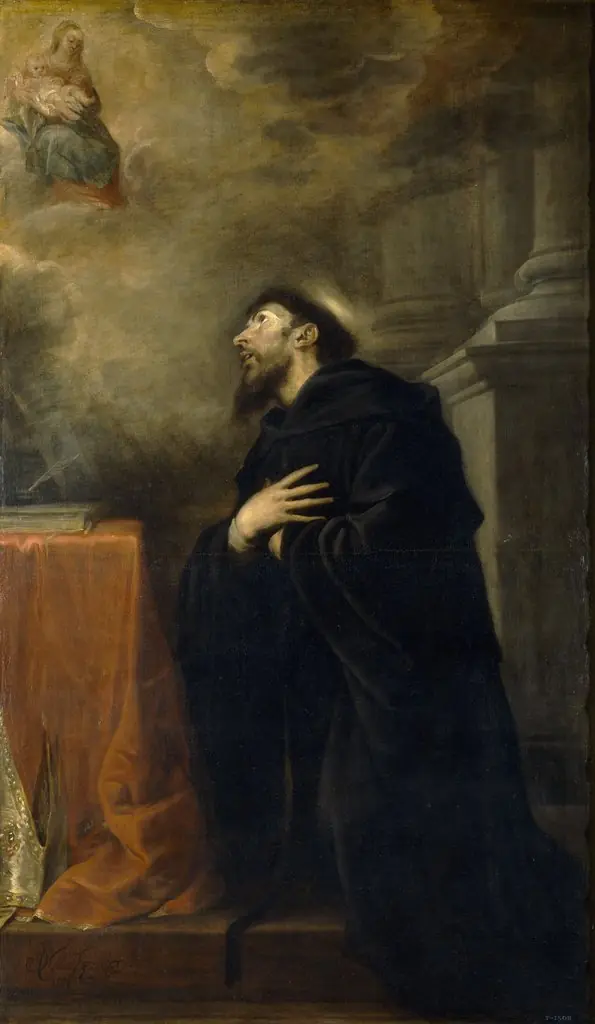 Visión de San Agustín
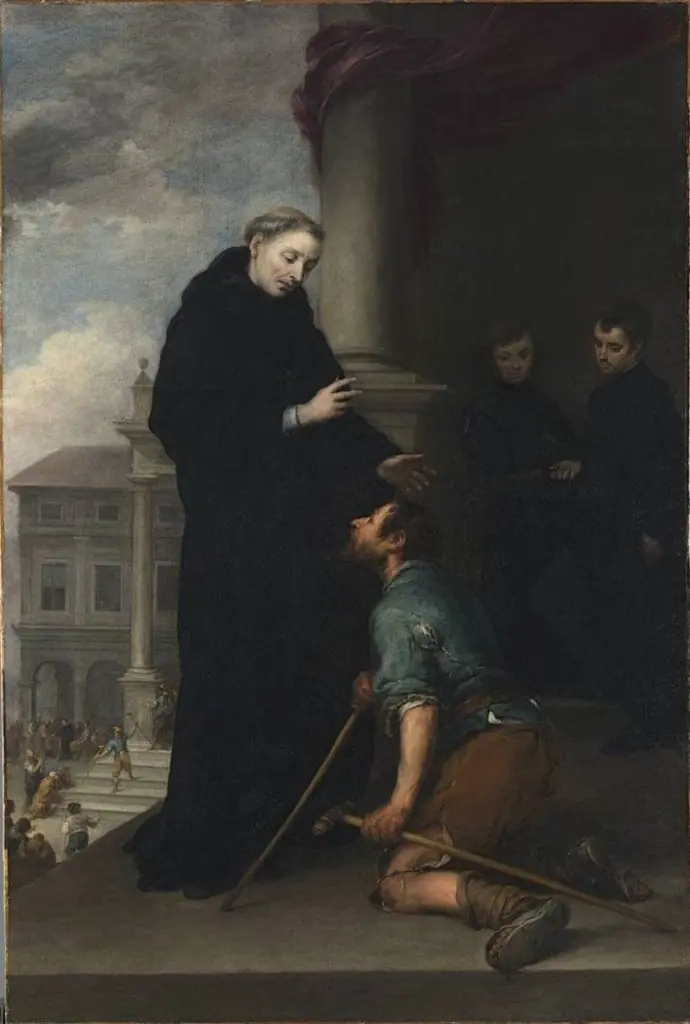 Thomas of Villanova heals the sick
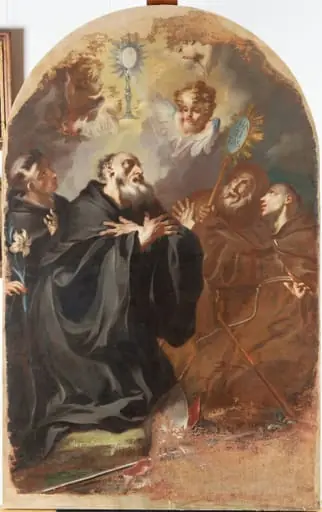 Heilige, die eine Monstranz anbeten
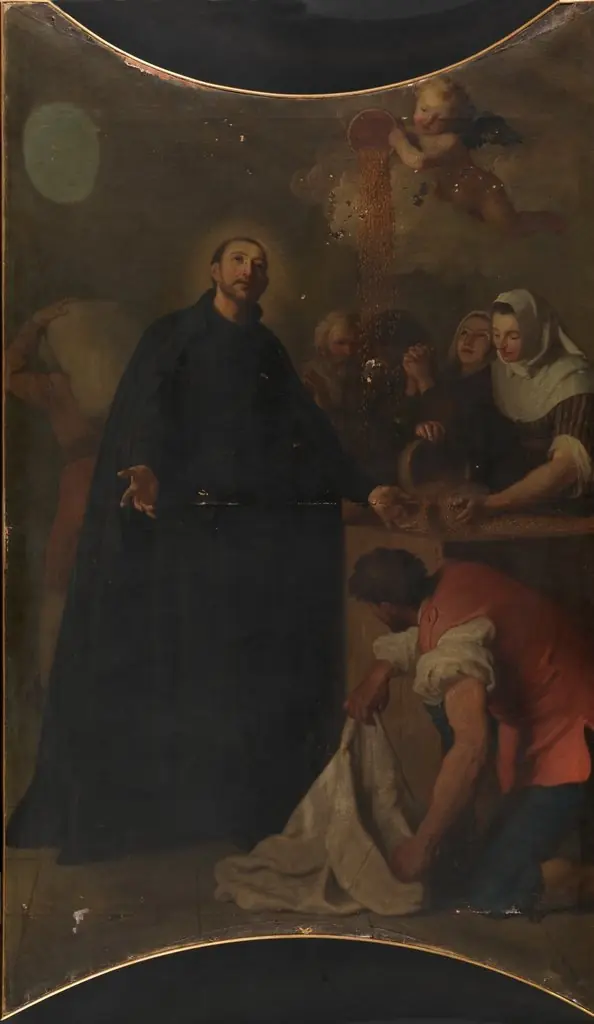 Multiplicación del trigo en la ciudad de Puy por san Francisco de Regis
 Saint Dominic in Prayer
 Encuentro de San Juan de Mata y San Félix de Valois
 Milagro de san Francisco de Regis
 The Prayer of St. Bonaventura about the Selection of the New Pope
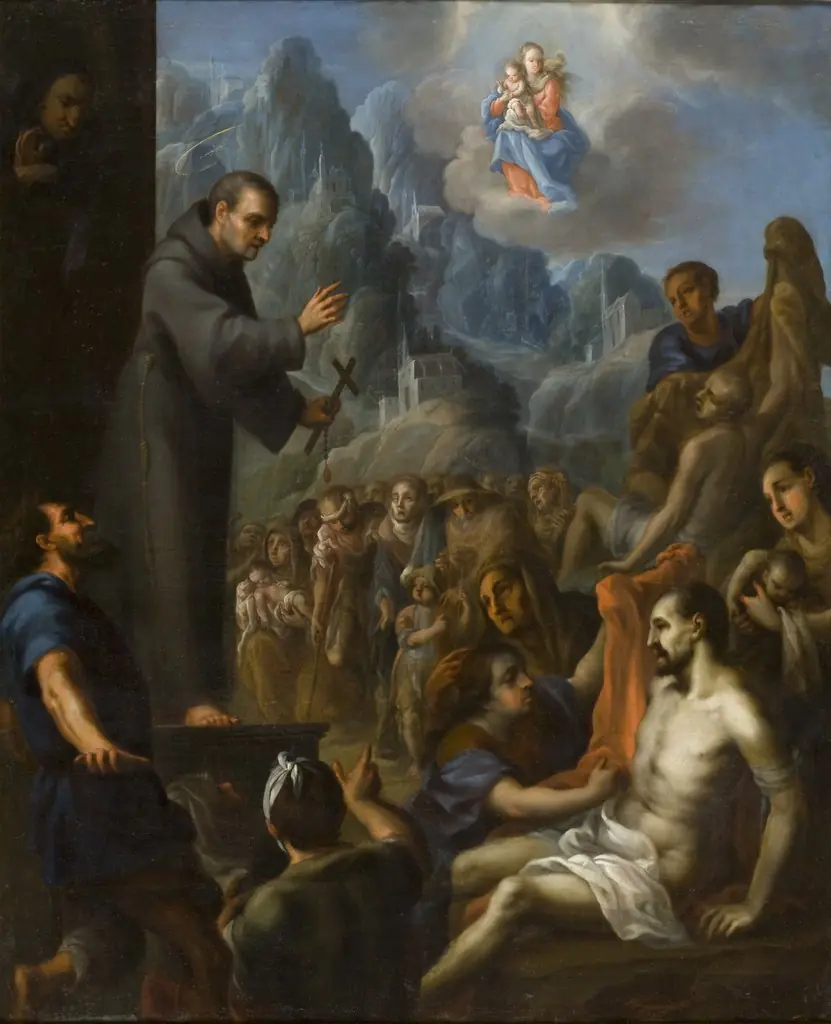 Miracles of Saint Salvador de Horta (Milagros del beato Salvador de Horta)
- Saint Benedict