Artwork
City View
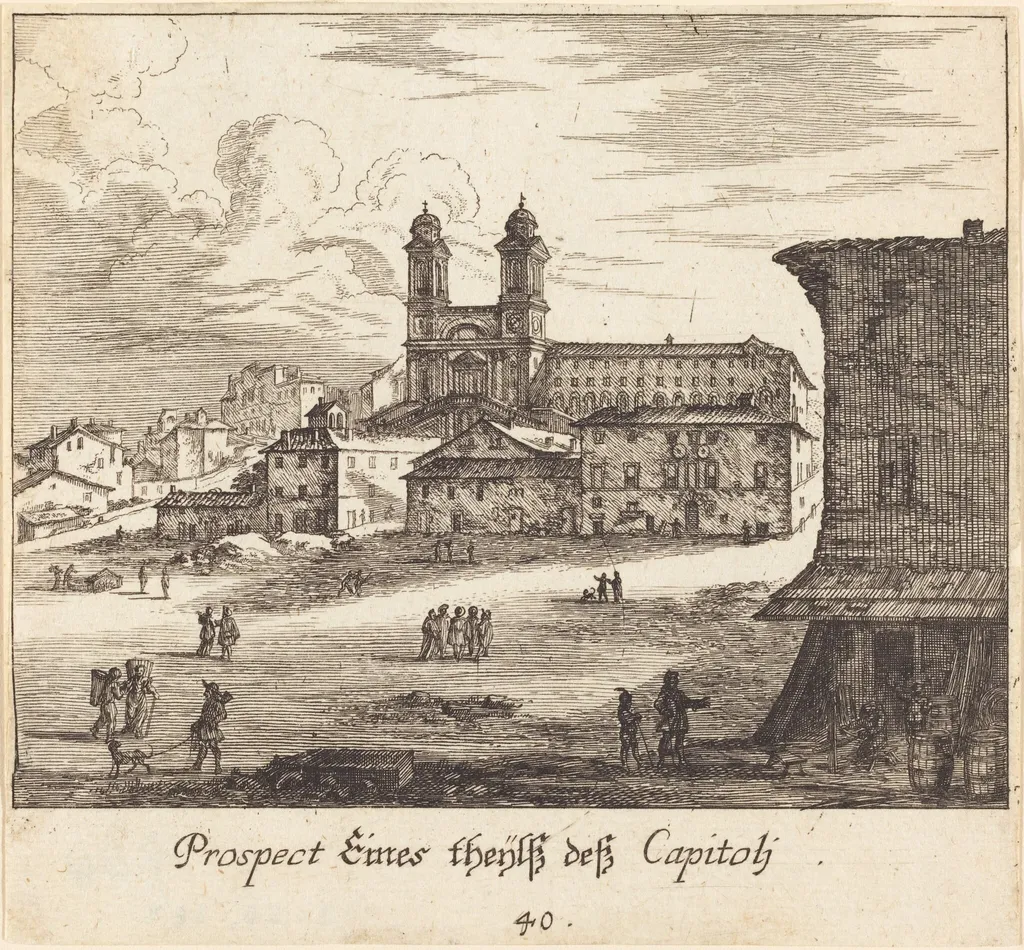
City View is an ink print by the Baroque artist Melchior Küsel. It dates from 1681 and is held in the collection of the National Gallery of Art.
About this work
Overview
Created in 1681 by Melchior Küsel, City View is a black-and-white etching depicting an idealized urban landscape. The print captures a dense arrangement of buildings centered around a prominent church with twin spires and a dome. Delicate lines suggest figures moving along streets, near a river, and crossing a bridge, while wavy patterns in the sky imply atmospheric movement or distant smoke.
Subject & Meaning
The church dominates the composition, symbolizing religious and communal authority, while the river and bridge hint at trade and connectivity.
The scene presents a composite cityscape rather than a specific location, blending architectural elements to evoke a sense of civic order and spiritual centrality. The church dominates the composition, symbolizing religious and communal authority, while the river and bridge hint at trade and connectivity. The presence of pedestrians grounds the image in daily life, suggesting a functioning, inhabited urban environment.
Technique & Style
Küsel employed etching, a method involving acid-bitten lines on a metal plate, to achieve fine, controlled detail. The precision of the lines allows for intricate textures in architecture and subtle gradations in the sky. The absence of tone or color emphasizes linear structure, characteristic of 17th-century Northern European printmaking, where clarity and craftsmanship took precedence over painterly effects.
History & Provenance
The print was produced during Küsel’s active period in Augsburg, a center for print production in the Holy Roman Empire. Though specific early owners are unrecorded, similar works by Küsel circulated among collectors and artisans interested in topographical imagery. Its survival reflects the demand for detailed urban views in the late 17th century, often used for study or decoration.
Context
In the decades following the Thirty Years’ War, European cities sought to rebuild and reassert their identity. Prints like City View offered idealized visions of urban harmony, combining architectural grandeur with orderly daily life. Küsel’s work aligns with a broader tradition of topographical prints that documented or imagined civic spaces, serving both documentary and aspirational functions.
Legacy
Küsel’s etching contributes to a body of work that helped standardize the visual language of urban representation in print. While not widely known today, his precise technique influenced later engravers and surveyors who relied on similar methods to map and depict cities. The print remains a quiet example of how printmaking shaped perceptions of urban space in early modern Europe.
Own this work as a print
Artist & collection


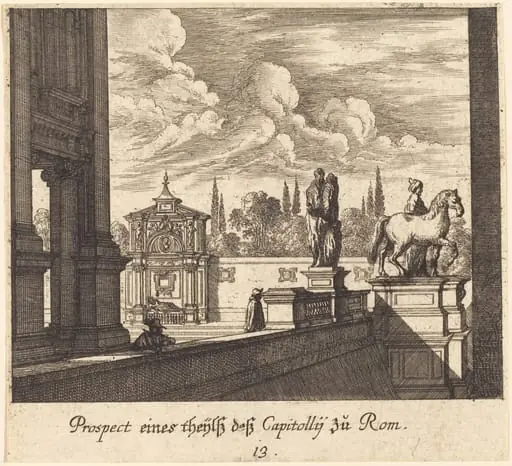 Capitoline, Rome
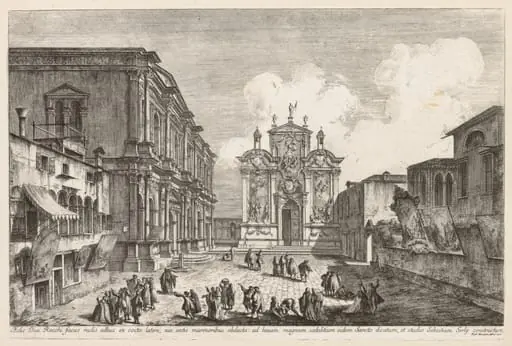 Views of Venice: Campo S. Rocco
![Santa Maria Maggiore from "Prospectus Locurum Urbis Romae Insign[ium]", by Lievin Cruyl](https://artifactworldgallery.com/img/lievin-cruyl--santa-maria-maggiore-from-prospectus-locurum-urbis-romae-ins--552492caf03c6a55-w320.webp) Santa Maria Maggiore from "Prospectus Locurum Urbis Romae Insign[ium]"
Santa Maria Maggiore from "Prospectus Locurum Urbis Romae Insign[ium]"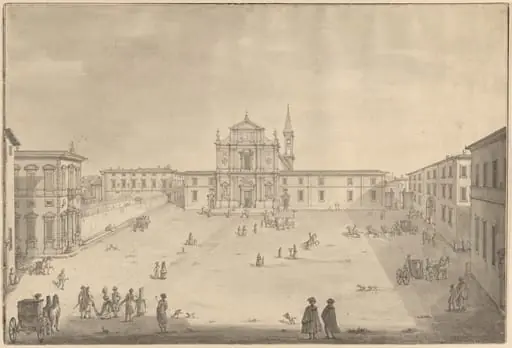 A View of the Piazza San Marco in Florence
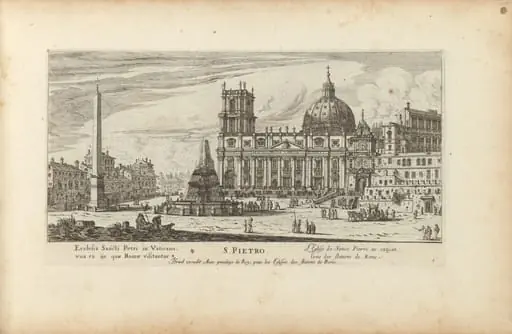 S. Pietro
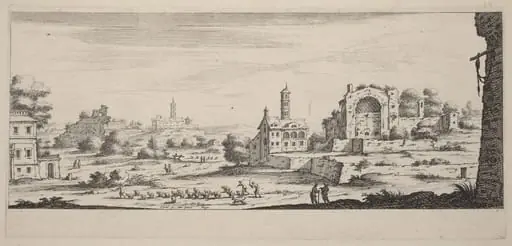 Veuë de temple de Soleil à Rome (View of the Sun Temple in Rome)
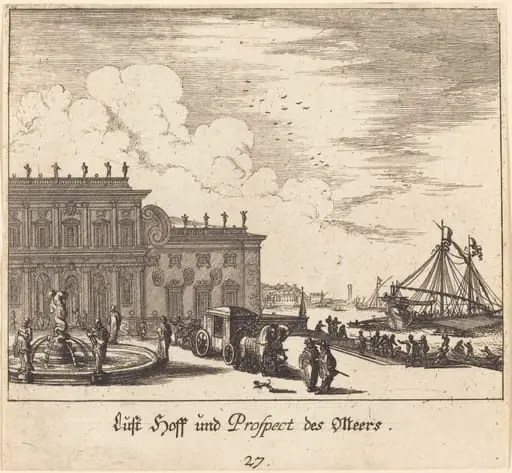 View of Meers
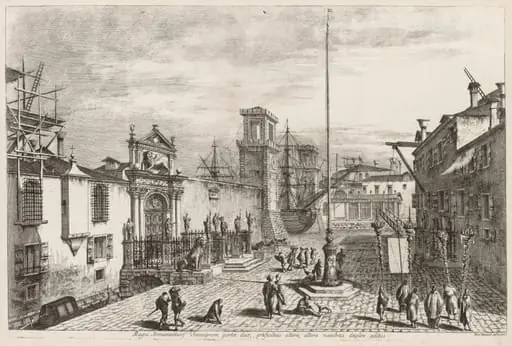 Views of Venice: The Gates of the Arsenal
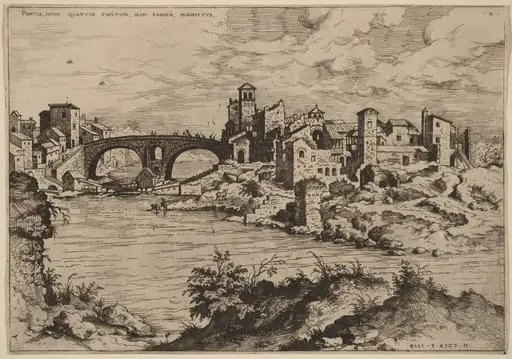 View of the Ponte Quattro Capi and the Island of the Tiber
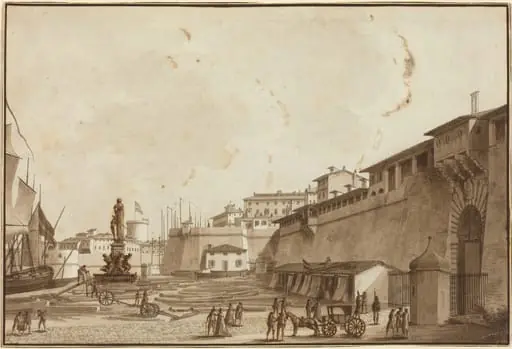 View of Livorno
- Panorama of a City on a River