Artwork
伝狩野永徳筆 唐美人唐子図屏風|Chinese Women and Children in a Palace Garden
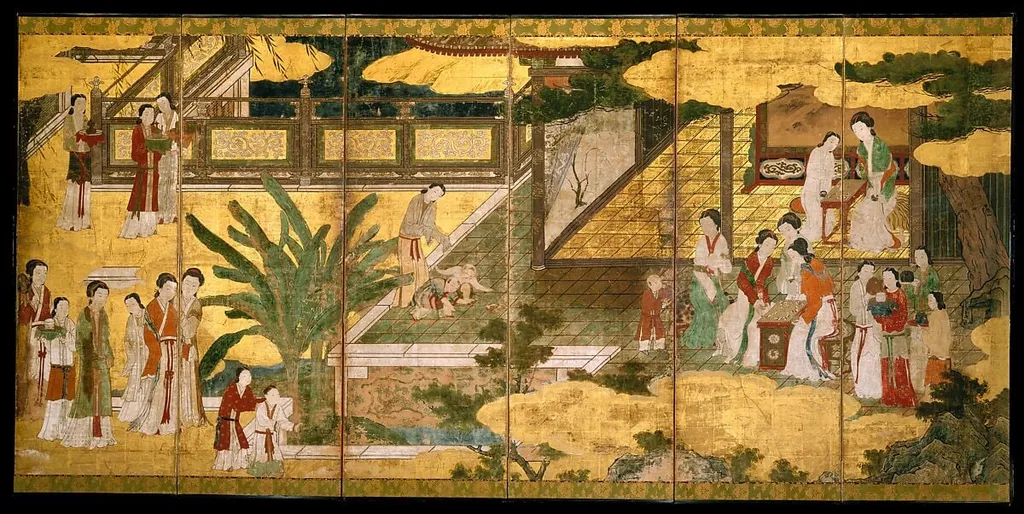
伝狩野永徳筆 唐美人唐子図屏風|Chinese Women and Children in a Palace Garden is an ink painting by the Baroque artist Kano Eitoku. It is held in the collection of the Metropolitan Museum of Art.
About this work
Overview
Created around 1650 by Kano Eitoku, this six‑panel folding screen measures several meters when opened and is part of the Metropolitan Museum of Art’s collection. Executed on paper with ink, pigments, and applied gold leaf, the work presents a garden scene populated by figures in elaborate dress, set against a stylised landscape of trees, rocks and a distant structure.
Subject & Meaning
The panels depict a group of women and children within a palace garden, their attire reflecting traditional Chinese costume. The figures are engaged in leisurely activities, such as children playing with toys, suggesting a serene, cultivated environment. The composition emphasizes harmony between human presence and the cultivated natural setting, a theme common in East Asian courtly imagery.
Technique & Style
Eitoku employs a highly detailed, realistic approach, rendering fabrics with intricate patterns and shading that convey texture. Gold leaf is applied to architectural elements and decorative motifs, lending a luminous quality that underscores the scene’s opulence. The use of ink outlines combined with vibrant pigments creates depth, while the gold accents highlight focal points within the garden.
History & Provenance
The screen was produced in the mid‑17th century during the Edo period and later entered the collection of the Metropolitan Museum of Art, where it is displayed as an example of Kano school painting. Its provenance prior to acquisition by the museum is not extensively documented, but it reflects the school’s continued engagement with Chinese subject matter and courtly themes.
Artist & collection

 The Tale of Taishokan
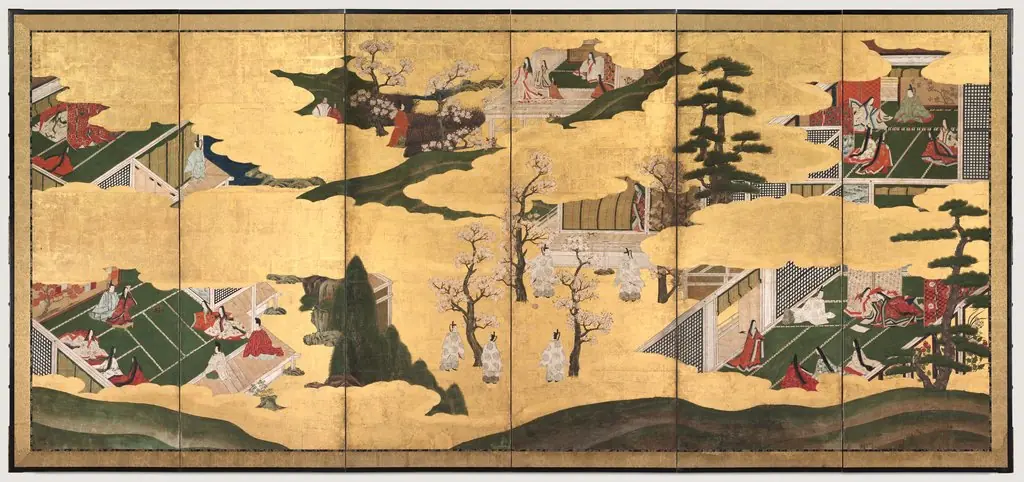 Scenes from the Tale of Genji
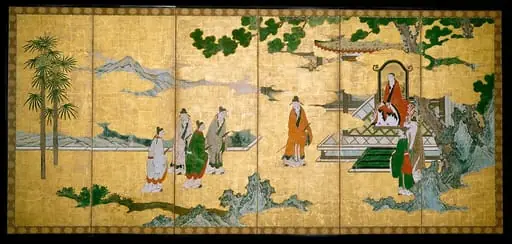 商山四皓・蘇東坡風水洞|The Return to Court of the Four Graybeards of Mount Shang (left); Su Shi’s Visit to the Wind and Water Cave (right
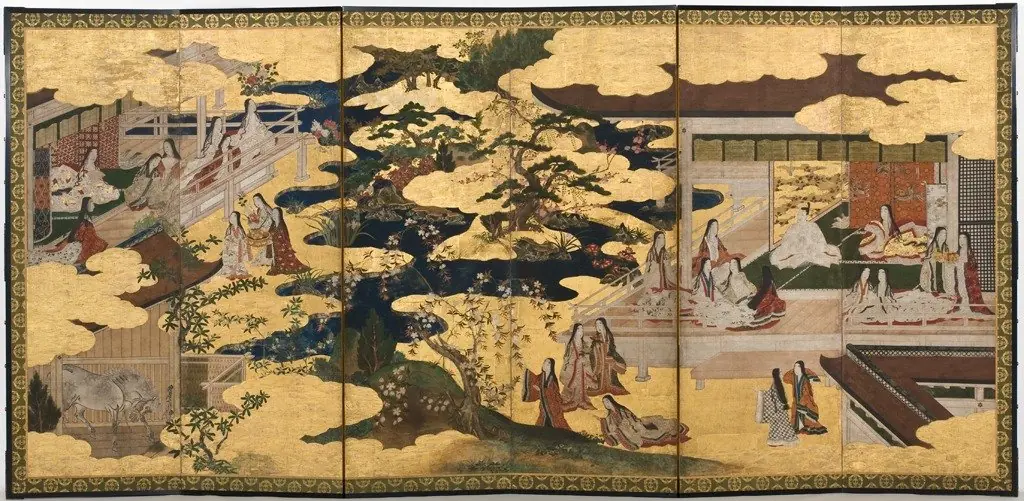 Scene from "The Tale of Genji": from the chapter "The Maiden"
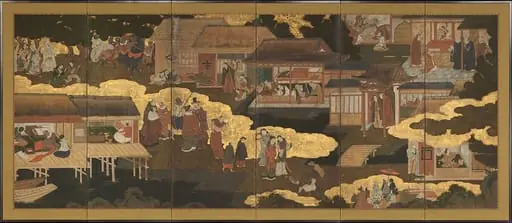 南蛮屏風|Arrival of the Europeans
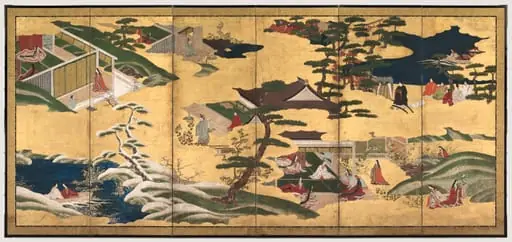 Scenes from the Tale of Genji
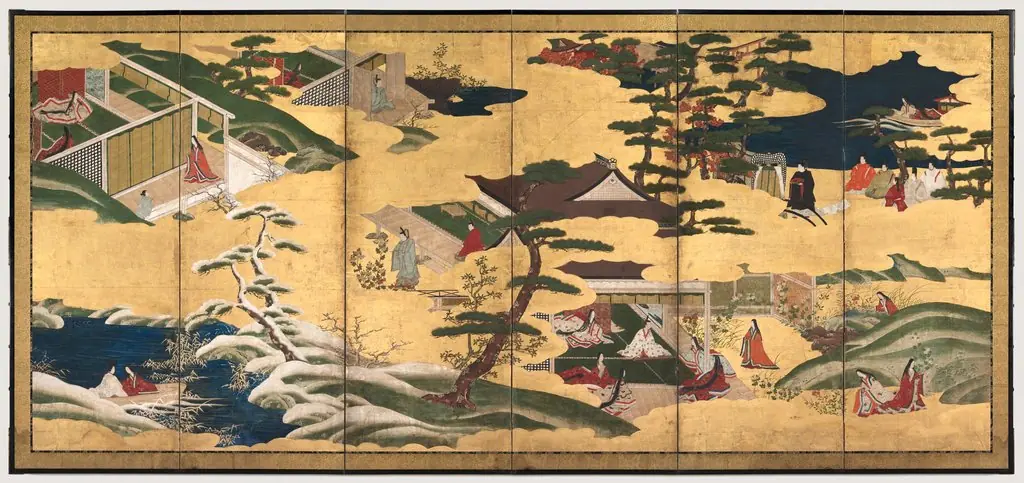 Scenes from the Tale of Genji
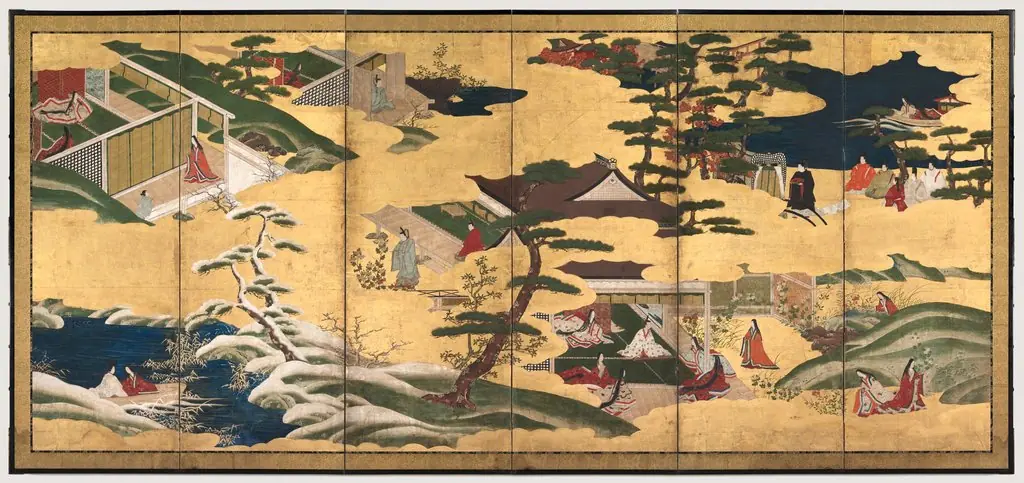 Scenes from the Tale of Genji
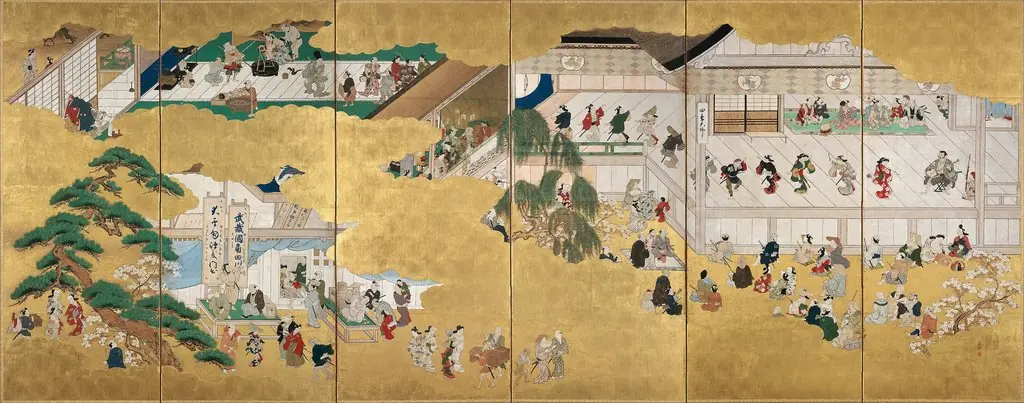 Scenes from the Nakamura Kabuki Theater
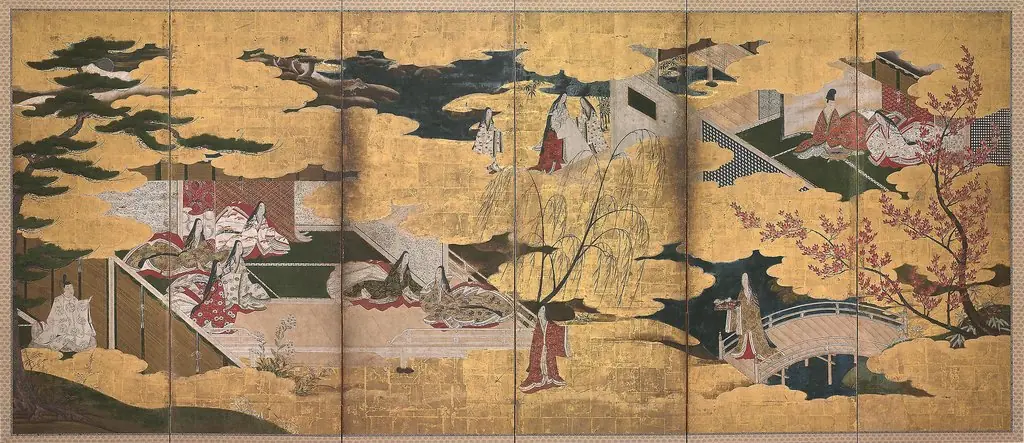 The Tale of Genji
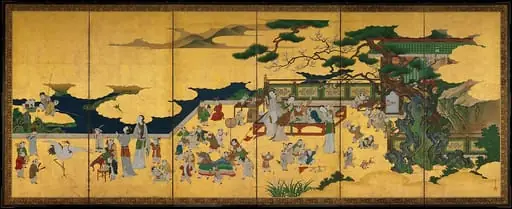
- 狩野永納筆 唐子遊図屏風|One Hundred Boys
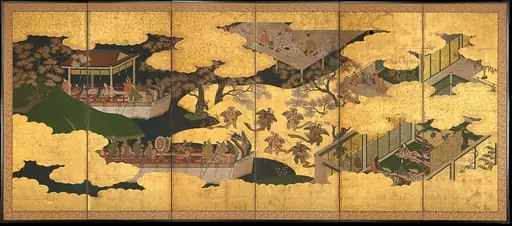 源氏物語図屏風 (胡蝶)|“Butterflies”