Artwork
源氏物語図屏風 (胡蝶)|“Butterflies”
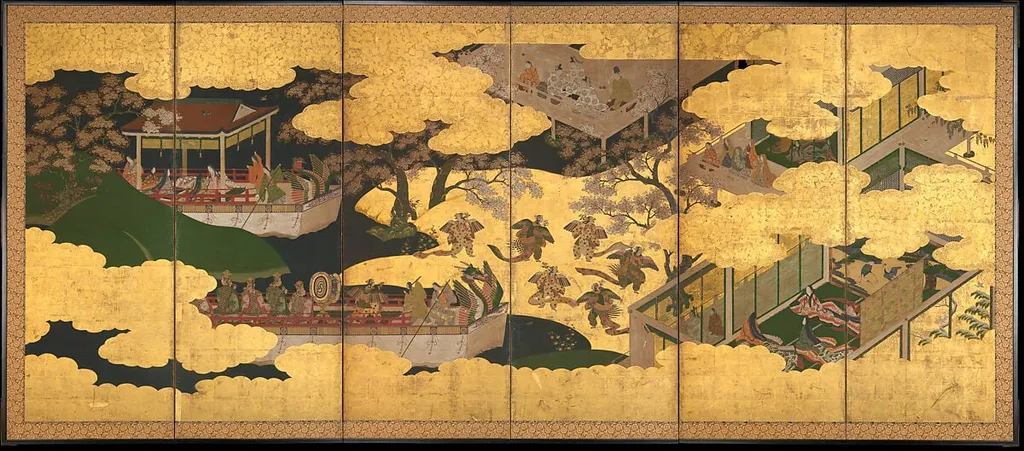
源氏物語図屏風 (胡蝶)|“Butterflies” is an ink painting by the Renaissance artist Tosa Mitsuyoshi. It dates from 1590 and is held in the collection of the Metropolitan Museum of Art.
About this work
Overview
The central panels are dominated by a swarm of butterflies and birds, serving as the visual and thematic focal point that gives the chapter its name.
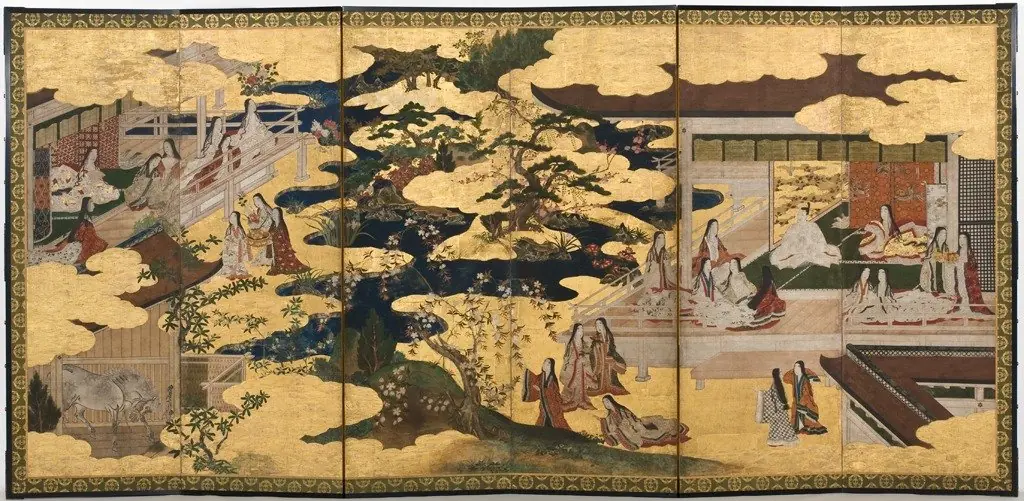
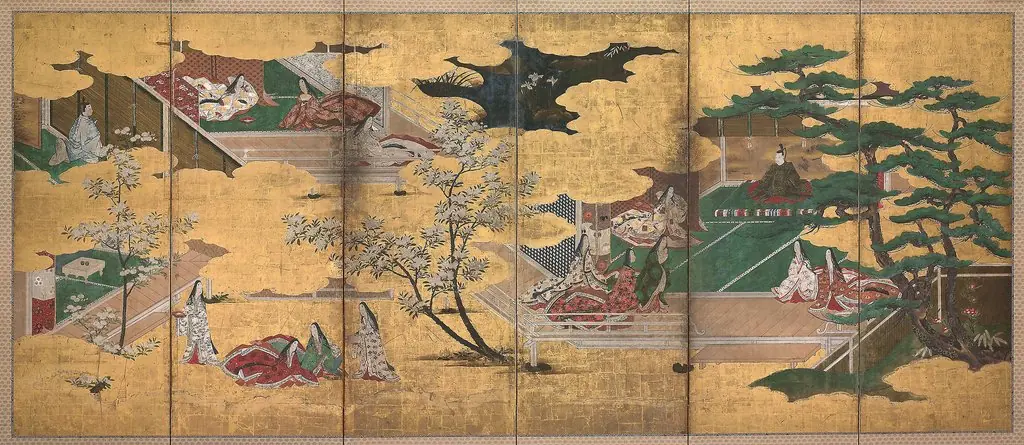
Created in 1590 by Tosa Mitsuyoshi, the leading painter of the Tosa school, this six-panel folding screen illustrates a scene from The Tale of Genji, specifically the chapter titled "Butterflies" (Kochō). Executed in ink, vibrant mineral colors, and extensive gold leaf on paper, the work exemplifies the yamato-e tradition of narrative painting adapted for the lavish aesthetic of the Azuchi-Momoyama period. The composition unfolds across a shimmering gold ground, depicting a courtly gathering within a garden setting.
On the left, a red-roofed pavilion overlooks a pond where figures in elaborate, multi-layered robes congregate. A boat carrying additional courtiers navigates the water, connecting the architectural space with the natural environment. The central panels are dominated by a swarm of butterflies and birds, serving as the visual and thematic focal point that gives the chapter its name.
The right side features a raised wooden platform where further figures engage in leisurely activities. Mitsuyoshi's work here demonstrates his mastery of the Tosa style, characterized by precise line work, flattened perspective, and the integration of gold to signify wealth and spiritual radiance. This screen stands as a significant example of late sixteenth-century Japanese narrative art, bridging classical Heian literary themes with the opulent decorative sensibilities of the emerging warrior class.
Subject & Meaning
The screen presents a series of leisurely scenes: a red‑tiled pavilion beside a pond, a boat drifting on water, fluttering butterflies and birds, and a raised platform under a roof where figures gather. The recurring motif of butterflies suggests transience and the fleeting pleasures of courtly life.
Technique & Style
Mitsuyoshi employs delicate brushwork to render figures and foliage, while the application of gold leaf creates a luminous background that catches ambient light. The composition links the panels through continuous landscape elements, allowing the eye to travel across the narrative.
History & Provenance
Created in the late Momoyama period, the screen reflects the Tosa school’s emphasis on refined courtly subjects. It entered the Metropolitan Museum of Art’s collection in the 20th century, where it remains on view as an example of Japanese screen painting.
Context
Folding screens of this type were used as portable partitions in aristocratic residences, often serving as visual storytelling devices. The inclusion of gold leaf aligns with contemporary tastes for opulent surfaces that enhanced interior spaces.
Legacy
‘Butterflies’ illustrates the Tosa school’s mastery of decorative elegance and narrative detail, influencing later Japanese screen makers who continued to blend fine painting with luxurious materials.
Artist & collection

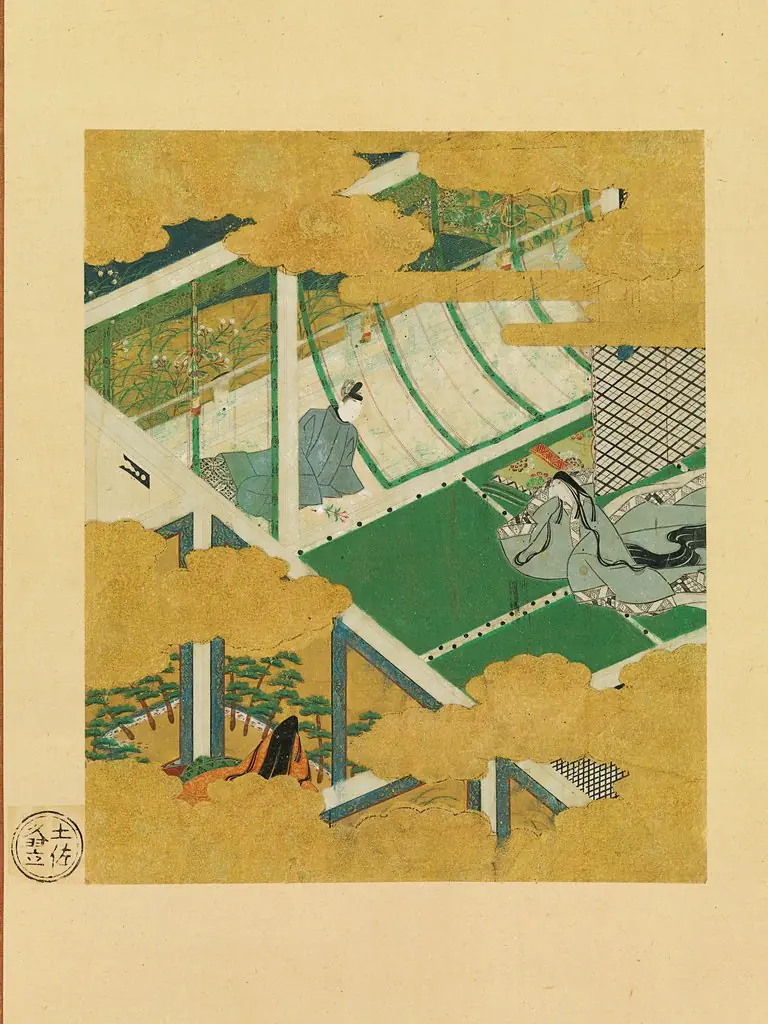
 源氏物語画帖「玉鬘」|“A Lovely Garland” (Tamakazura), from The Tale of Genji
 “Mistflowers” (Fujibakama)
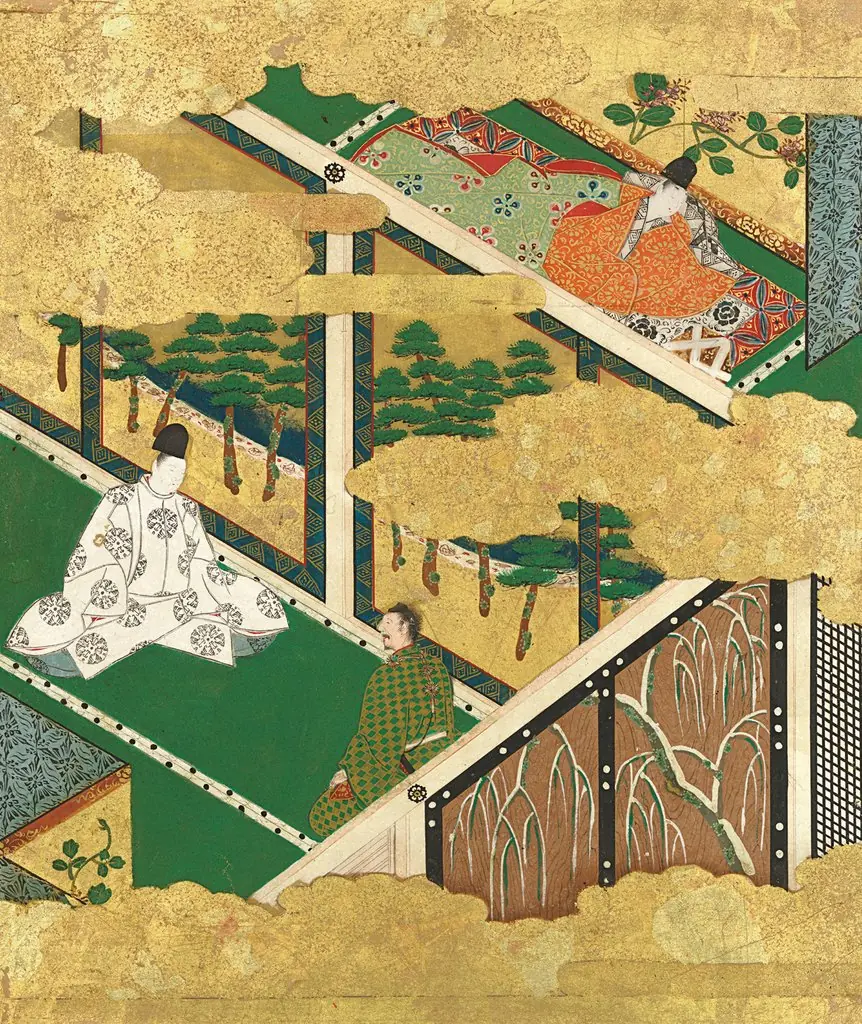 “The Oak Tree” (Kashiwagi)
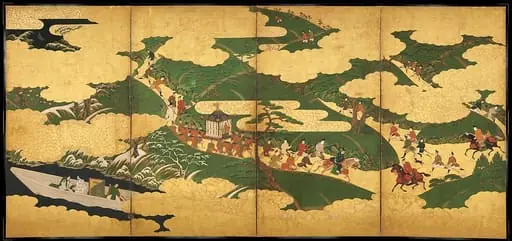 源氏物語図屏風「御幸」・「浮船」・「関谷」|“An Imperial Excursion” (Miyuki), “A Boat Cast Adrift” (Ukifune), and “The Barrier Gate” (Sekiya)
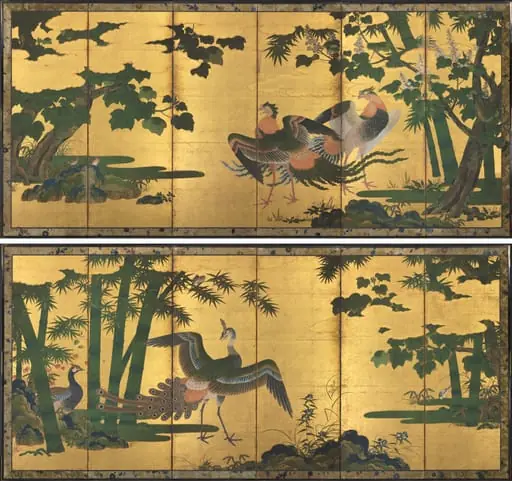 Peafowl and Phoenixes
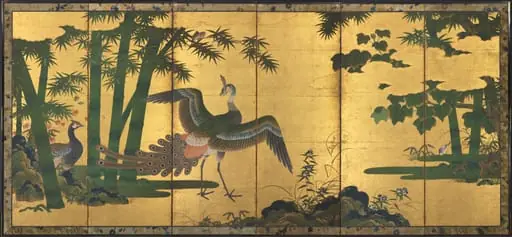 Peacocks and Bamboo
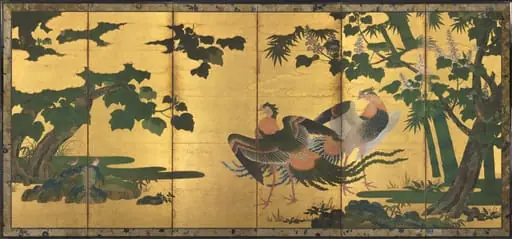 Phoenixes and Paulownia
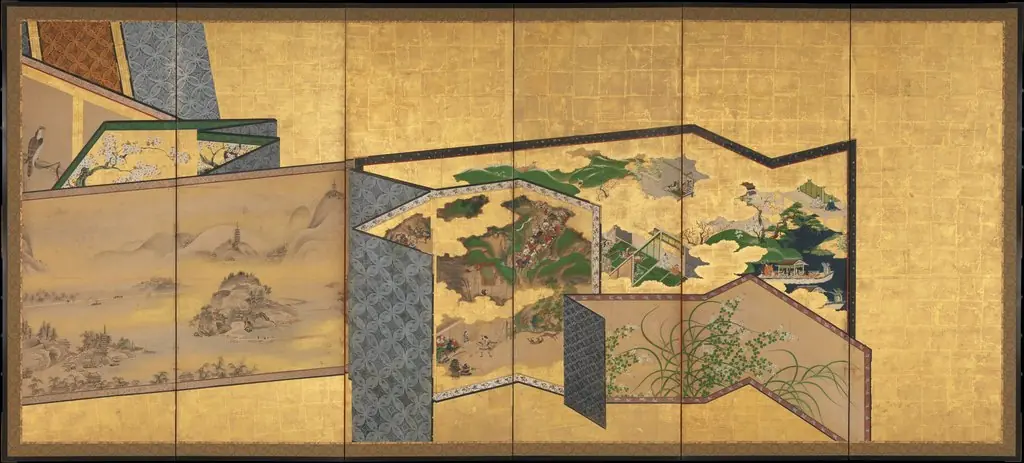 Screens within Screens
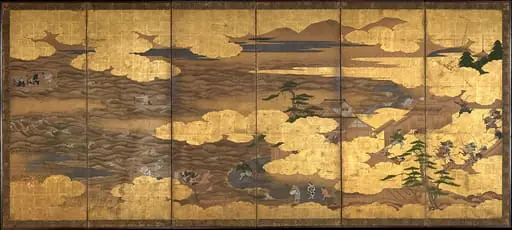 新曲図屏風|“Takebun,” from the Musical Drama “The New Piece” (“Shinkyoku”)
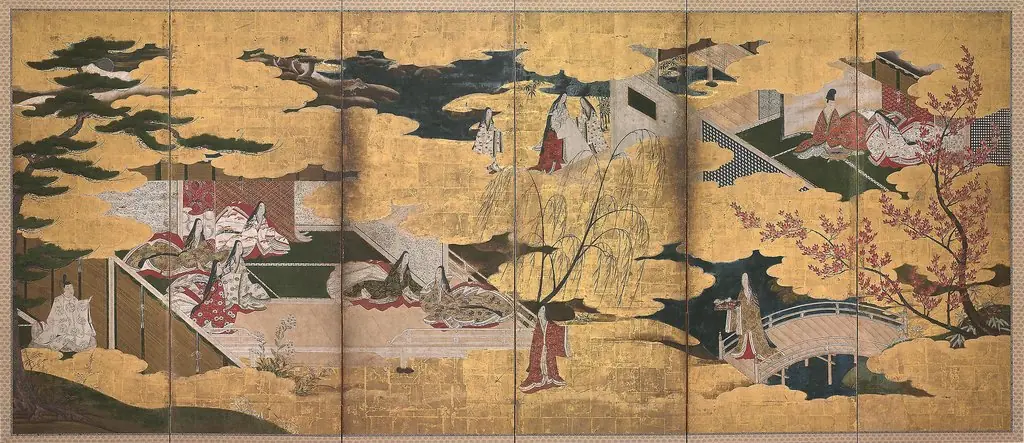 The Tale of Genji
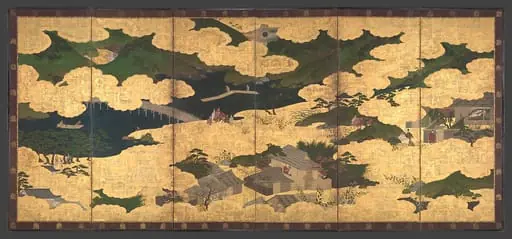 平家物語図屏風 「小督」 「大原御幸」|"Kogō" and "The Imperial Procession to Ōhara", from The Tale of the Heike (Heike monogatari)
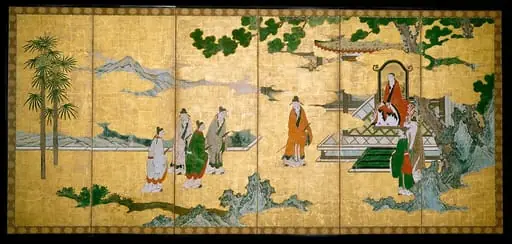 商山四皓・蘇東坡風水洞|The Return to Court of the Four Graybeards of Mount Shang (left); Su Shi’s Visit to the Wind and Water Cave (right
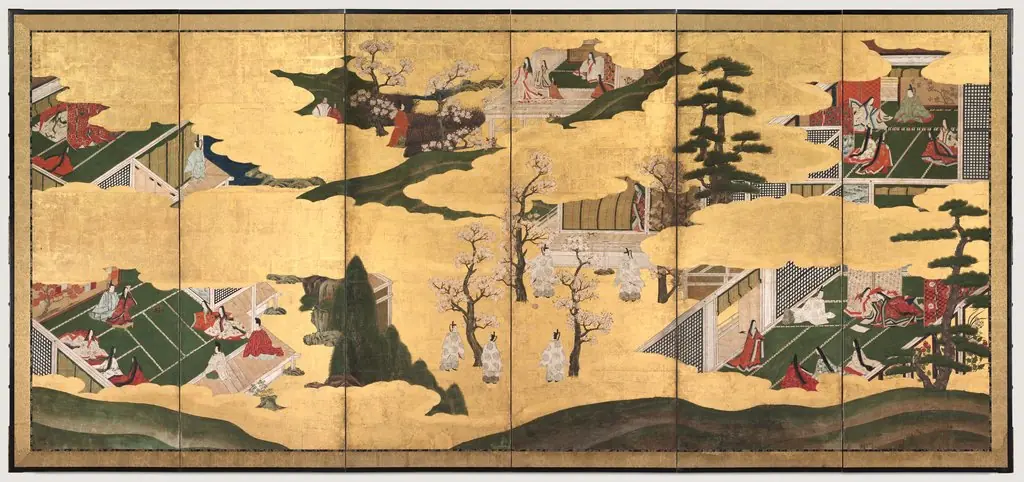 Scenes from the Tale of Genji
 Scene from "The Tale of Genji": from the chapter "The Maiden"
 The Tale of Genji
 花見・紅葉狩図屏風|Cherry-Blossom and Maple-Leaf Viewing