Artwork
Scenes from the Tale of Genji
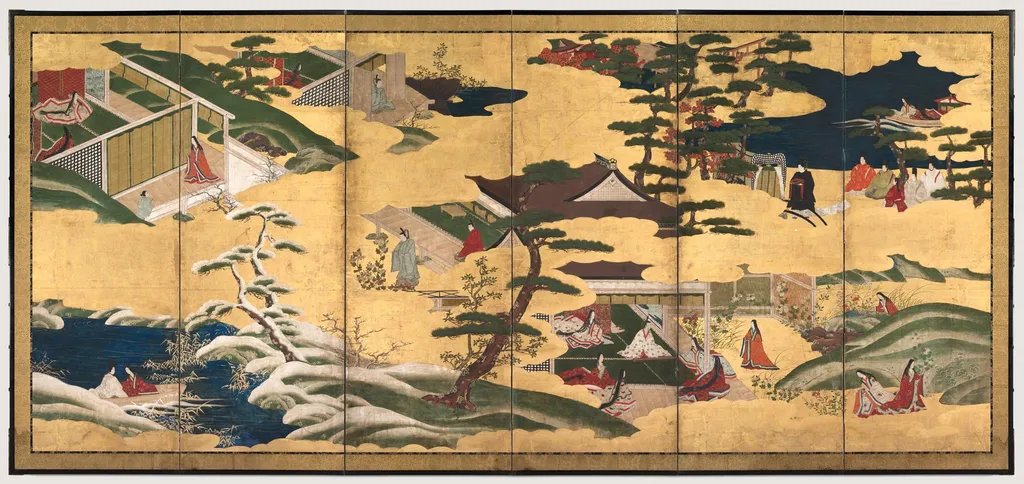
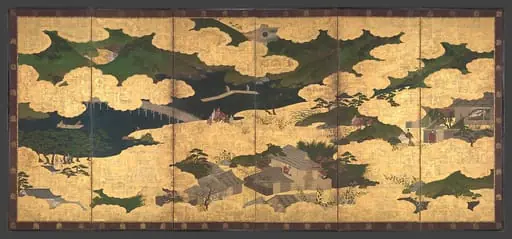
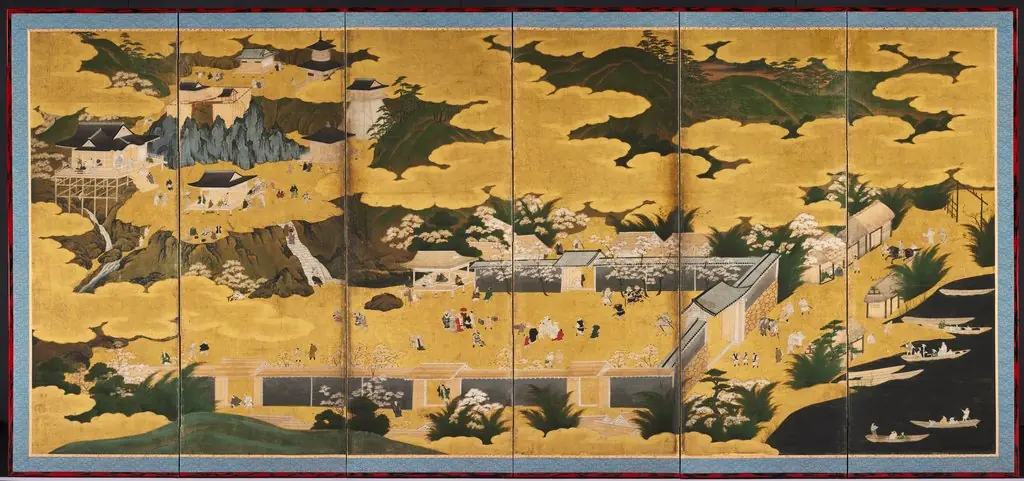
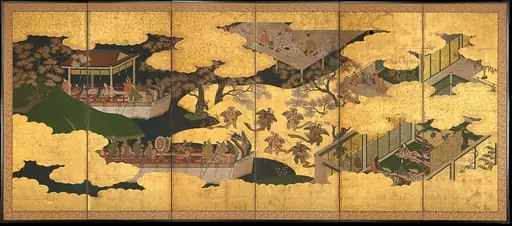
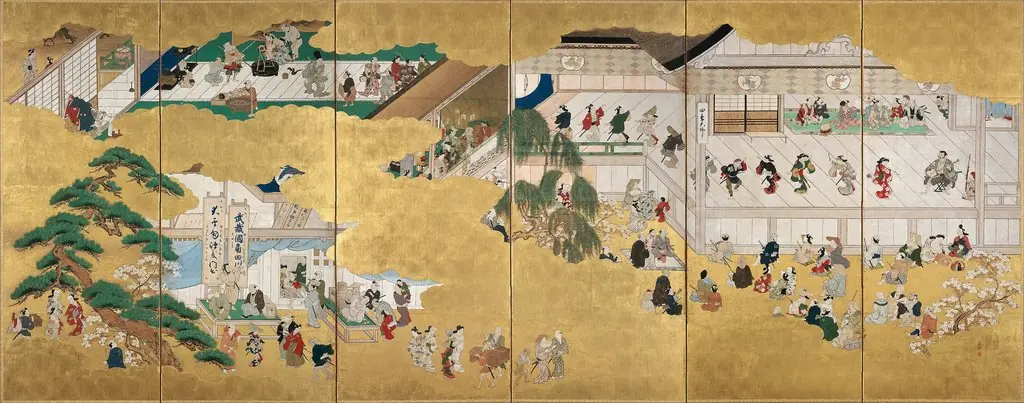
Scenes from the Tale of Genji is an unspecified painting. It dates from 1749 and is held in the collection of the Cleveland Museum of Art.
About this work
Technique & Style
The painting exhibits fine condition, retaining clear pigment definition and structural integrity of the silk support.
Scenes from the Tale of Genji is an ink painting on silk created in 1749 by the Tosa School in Japan. Executed on a vertical hanging scroll format, the work employs delicate brushwork and muted mineral pigments to render narrative moments from the Heian-era literary classic. The composition emphasizes flowing line and subtle gradation, characteristic of Edo-period Yamato-e style, with figures depicted in elegant, elongated silhouettes against minimal backgrounds.
The painting exhibits fine condition, retaining clear pigment definition and structural integrity of the silk support. Formal analysis notes the restrained palette of blues, reds, and ochres applied in thin washes, creating atmospheric depth while maintaining compositional balance through rhythmic figure placement and negative space.
History & Provenance
The painting titled Scenes from the Tale of Genji was created in 1749 in Japan and is attributed to the Tosa School. It entered the collection of the Cleveland Museum of Art, where it remains on view.
Provenance records indicate the work was produced during the Edo period and has been part of the museum's holdings since its acquisition.
The piece is classified as a painting within the museum's Japanese art collection.
Scenes from the Tale of Genji is held by the Cleveland Museum of Art, where it is catalogued under the accession number 1948.124.1. The painting, produced in 1749, was made in Japan and entered the museum's collection as part of its holdings of Japanese painting.
No exhibition history is documented in the available sources.
Overview
Scenes from the Tale of Genji is a painting depicting multiple intimate vignettes set amidst serene, snow-covered landscapes and meticulously tended gardens. Characterized by soft yet vibrant colors against a golden backdrop, the work exudes a sense of tranquility.
Subject & Meaning
The subject matter is derived from 'The Tale of Genji', a classic of Japanese literature. The peaceful scenes of figures in bright, traditional robes engaging in everyday activities (standing near residences, walking, or sitting by ponds) suggest a focus on capturing the serene and poetic moments from the tale.
Context
Given its thematic and stylistic elements, this painting reflects the Japanese aesthetic appreciation for nature and literature, specifically the enduring influence of 'The Tale of Genji' on art. The snowy landscapes and gardens evoke a sense of 'mono no aware' (the sadness or melancholy of things passing), a key concept in Japanese aesthetics.
Legacy
The painting's legacy is tied to its representation of Japanese literary and artistic traditions. It invites viewers to contemplate the intersection of nature, literature, and the daily life depicted in 'The Tale of Genji', contributing to the broader appreciation of Japanese cultural heritage.
Artist & collection

- Scenes from the Tale of Genji
 Scenes from the Tale of Genji
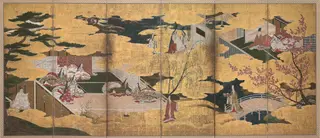 The Tale of Genji
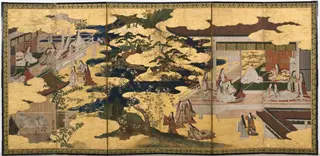 Scene from "The Tale of Genji": from the chapter "The Maiden"
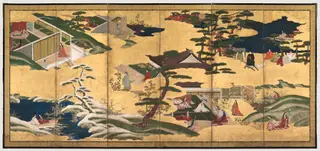 Scenes from the Tale of Genji
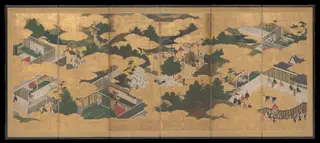 Scenes from the Tale of Genji
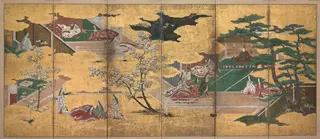 The Tale of Genji
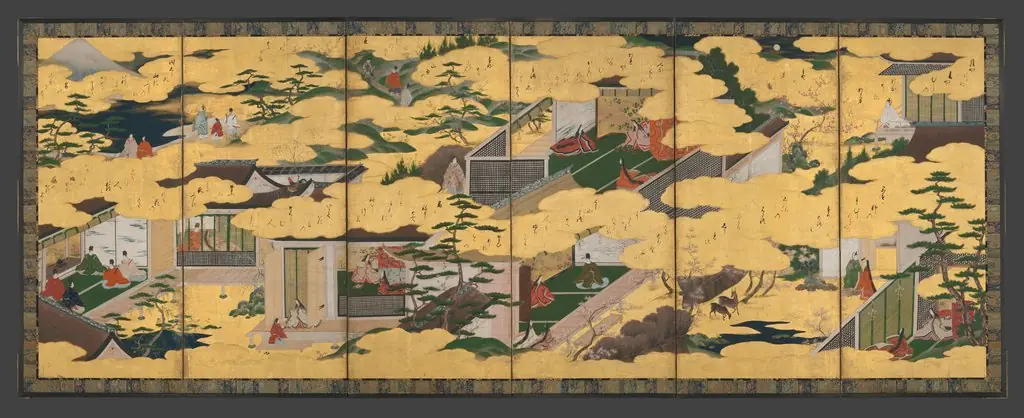 Scenes from the Tales of Ise
 The Tale of Genji
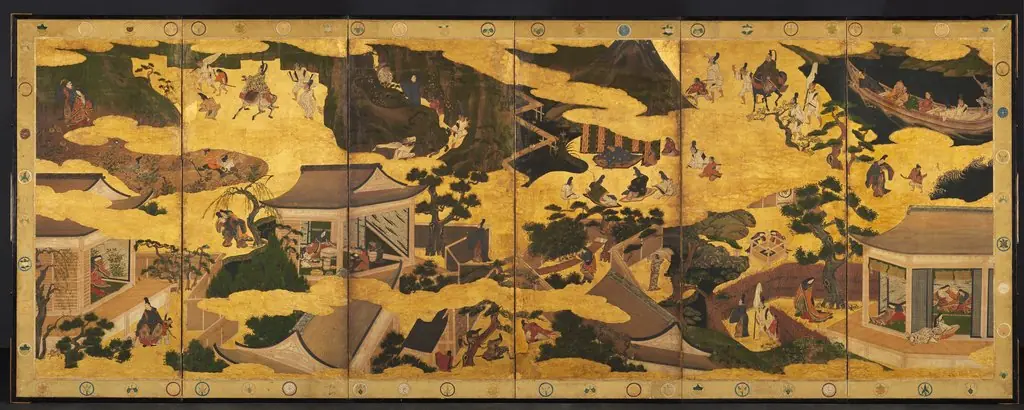 Scenes from the Tales of Ise
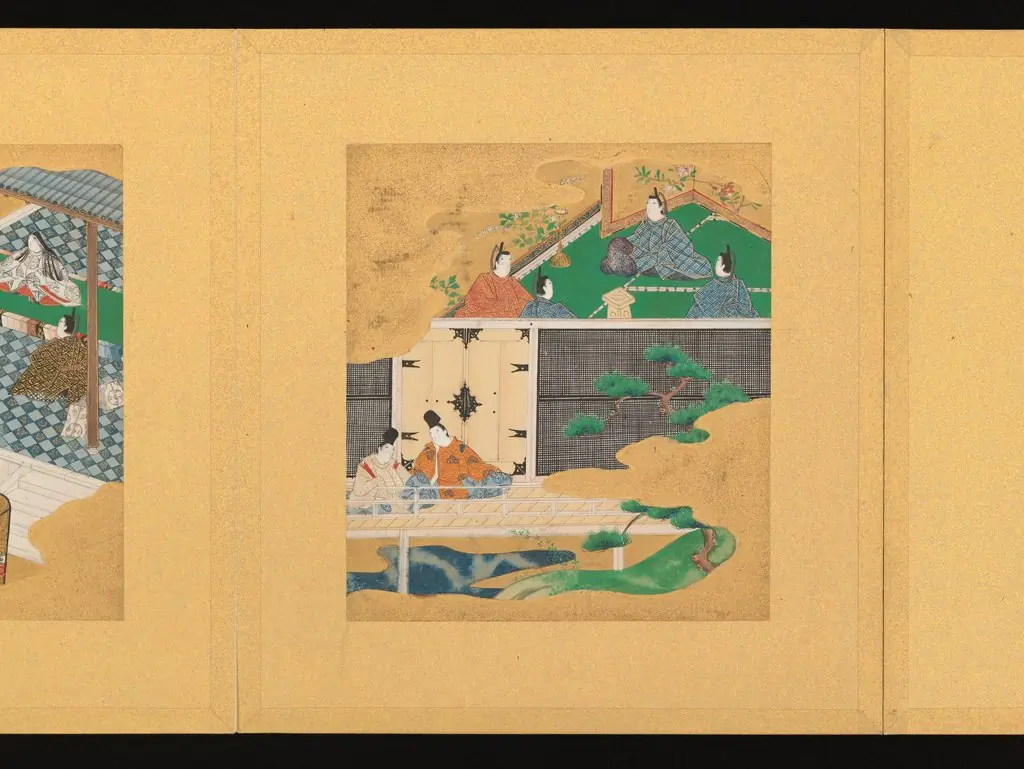 Scenes from The Tale of Genji (Genji monogatari)
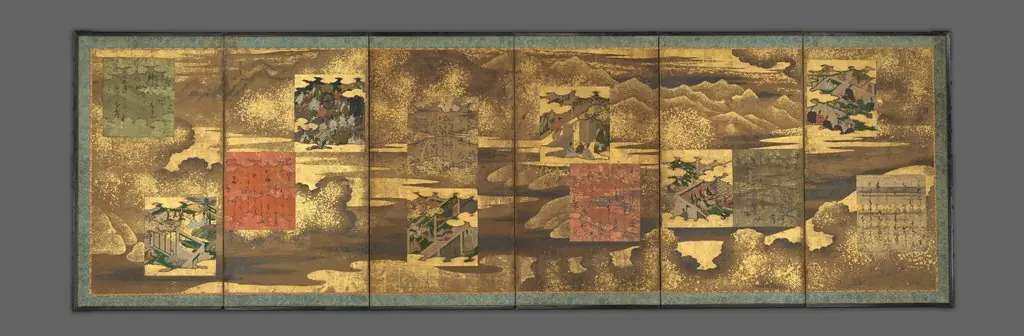 Tale of Genji Screen (Genji monogatari zu shikishi harimaze byōbu)