Artwork
狩野永納筆 唐子遊図屏風|One Hundred Boys
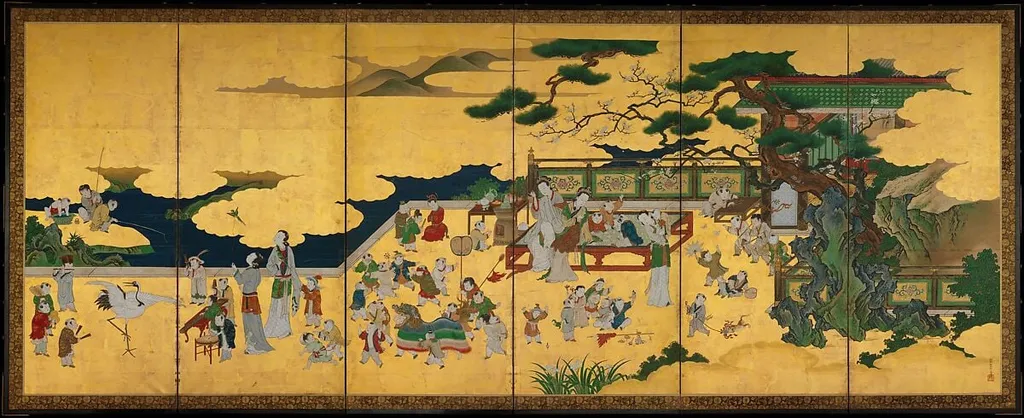
狩野永納筆 唐子遊図屏風|One Hundred Boys is an ink painting by the Baroque artist Kano Einō. It is held in the collection of the Metropolitan Museum of Art.
About this work
Subject & Meaning
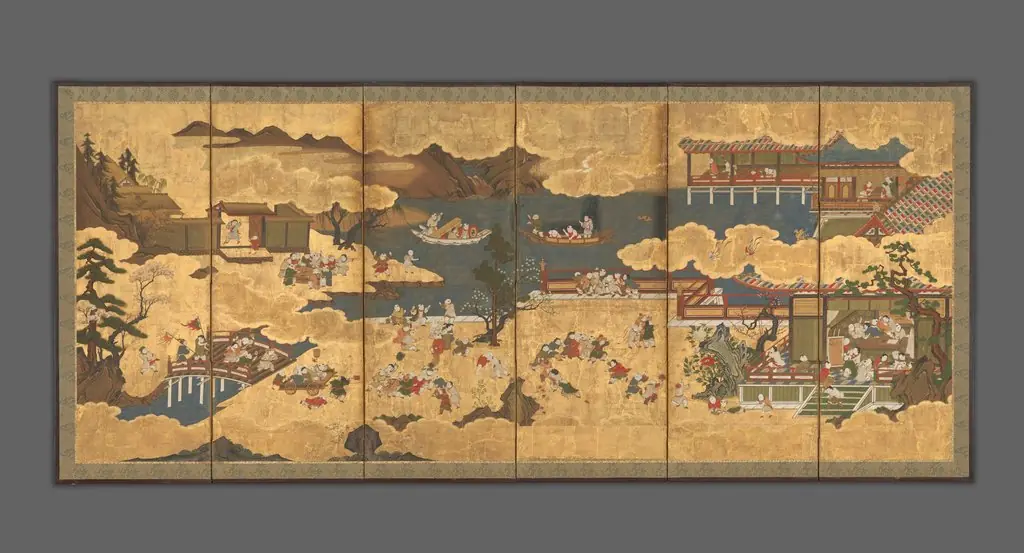
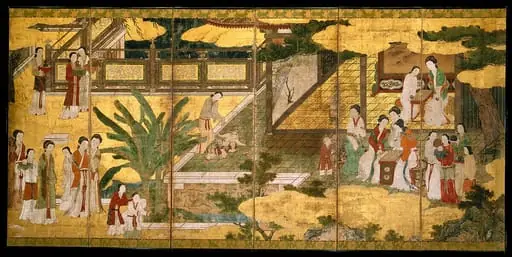
The work represents an allegorical scene of one hundred boys engaged in various playful activities across a pair of six-panel folding screens.
The work represents an allegorical scene of one hundred boys engaged in various playful activities across a pair of six-panel folding screens. Created by Kano Einō around 1700, the composition incorporates iconographic elements including flowers, roosters, and women alongside the central figures of the children. The inclusion of these additional figures and the genre classification as allegory suggest meanings beyond simple genre painting: depictions of children at play often carried auspicious connotations in Japanese art, alluding to wishes for fertility, the continuation of lineage, or the joy of childhood.
Rendered in ink, color, and gold on paper, the scenes are framed within the decorative idiom typical of the Kano school's screen painting.
Technique & Style
Created around 1700, this pair of six-panel folding screens by Kano Einō exemplifies the Edo period's sophisticated use of traditional Japanese painting materials. The artist applied ink and mineral pigments over a paper support, with extensive use of gold leaf to create a luminous background. Stylistically, the work features dynamic compositions depicting boys, flowers, roosters, and women, characteristic of the Kano school's synthesis of Chinese-inspired brushwork with Japanese decorative sensibilities, balancing fine ink outlines with vibrant color washes against the shimmering gold ground that was a hallmark of luxury screen painting.
History & Provenance
The pair of six-panel folding screens titled One Hundred Boys (唐子遊図屏風) was created by Kanō Einō around 1700. The screens entered the collection of the Metropolitan Museum of Art in New York in 2009, where they are catalogued under accession numbers 2009.260.1 and 2009.260.2 for the left and right screens respectively. Executed in ink, color, and gold on paper, they depict allegorical scenes of boys, flowers, roosters, and women, and remain part of the museum's permanent holdings.
Overview
This pair of six-panel folding screens, created by Kanō Einō around 1700, showcases lively scenes of children at play. Executed in ink, color, and gold on paper, the work features numerous boys engaged in various activities, alongside women, flowers, and roosters. Einō, a prominent artist of the Kyō-ganō sub-school, produced this piece within the established traditions of the larger Kanō school. The screens offer a vibrant depiction of childhood.
Context
This work was likely commissioned by an affluent family to commemorate a significant event: a child's first New Year celebration. Such screens served not only as decorative elements but also as auspicious gifts, conveying hopes for the child's future well-being and success. The imagery of numerous playful boys would have resonated with the celebratory occasion, symbolizing the family's aspirations for growth and prosperity.
Artist & collection
Artist
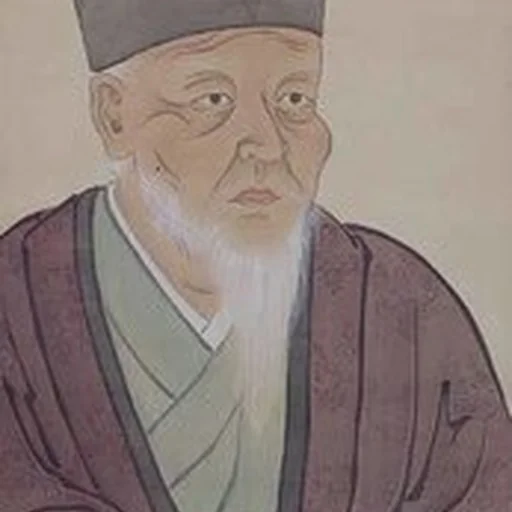
Kanō Einō (狩野 永納, 1631–1697) was a Japanese painter of the Kyō-ganō sub-school of the Kanō school of painting.

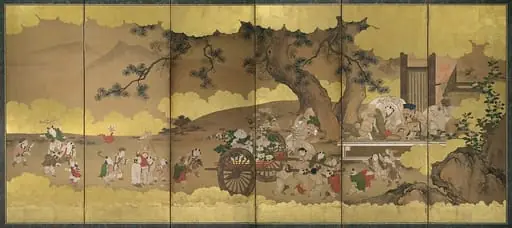
- 伝狩野永徳筆 唐美人唐子図屏風|Chinese Women and Children in a Palace Garden
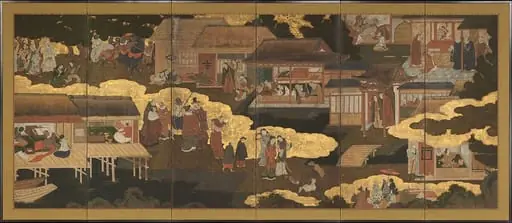 南蛮屏風|Arrival of the Europeans
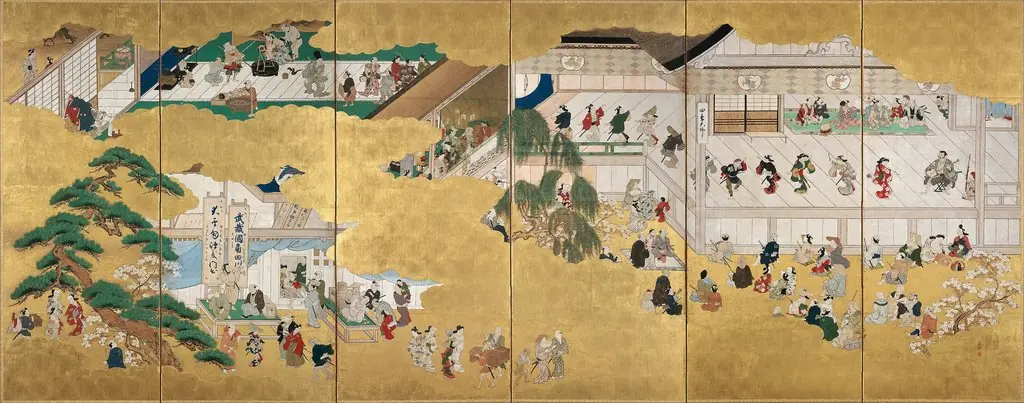 Scenes from the Nakamura Kabuki Theater
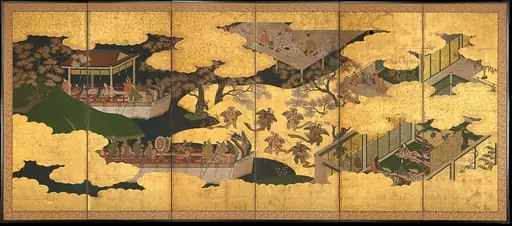
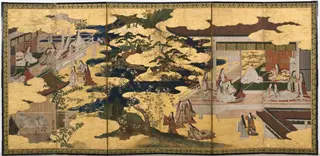 Scene from "The Tale of Genji": from the chapter "The Maiden"
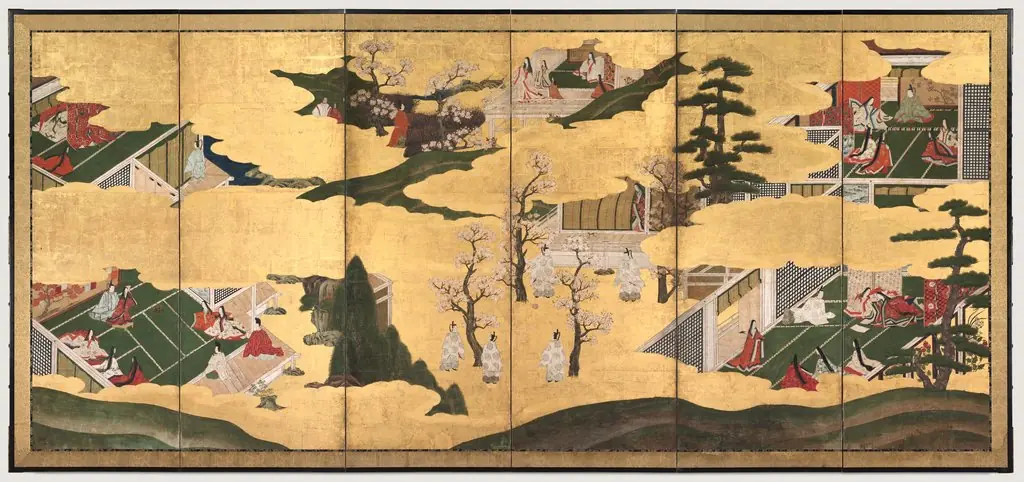 Scenes from the Tale of Genji
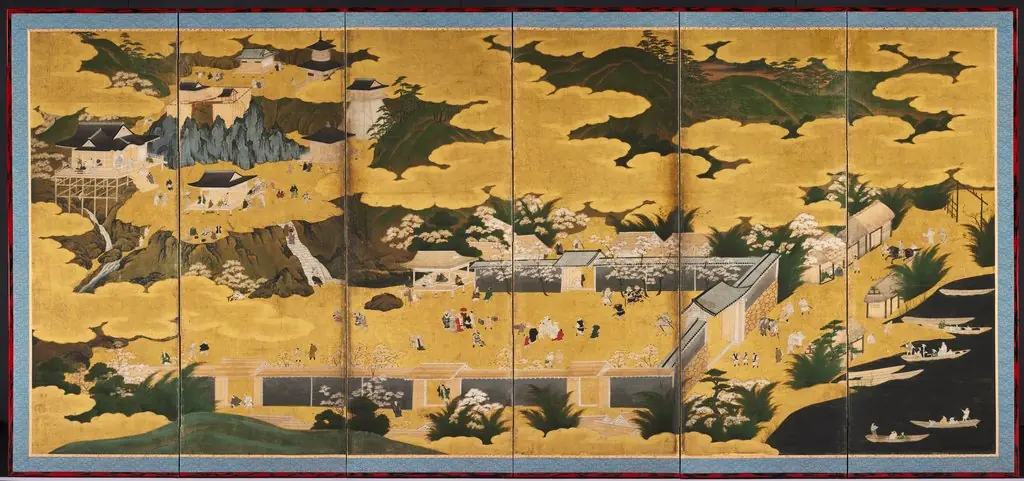 Famous Views of Ōmi
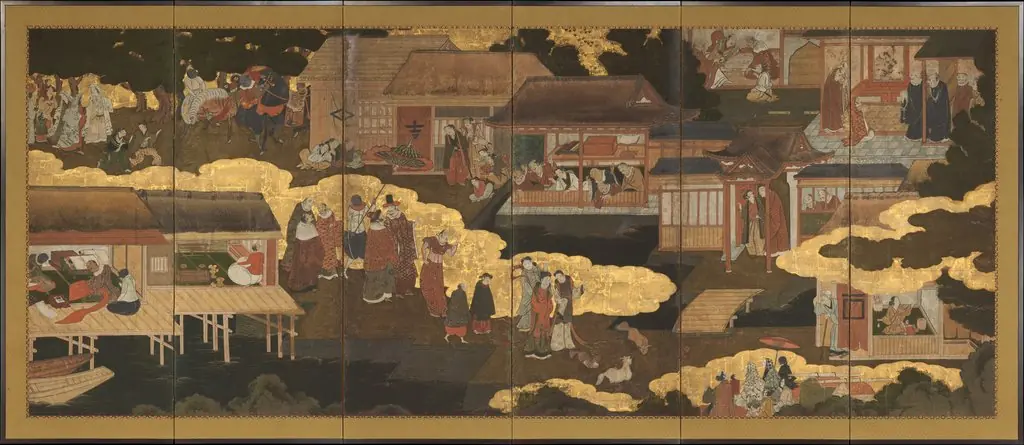 Arrival of the Europeans
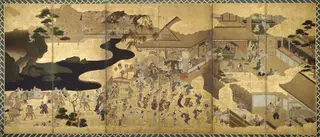 Genre Scenes (Fuzoku byobu)
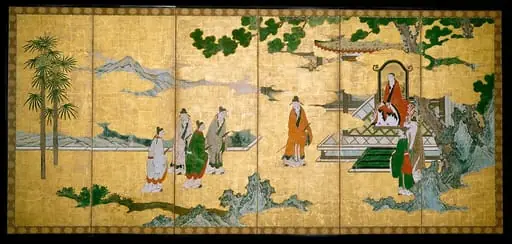 商山四皓・蘇東坡風水洞|The Return to Court of the Four Graybeards of Mount Shang (left); Su Shi’s Visit to the Wind and Water Cave (right