Artwork
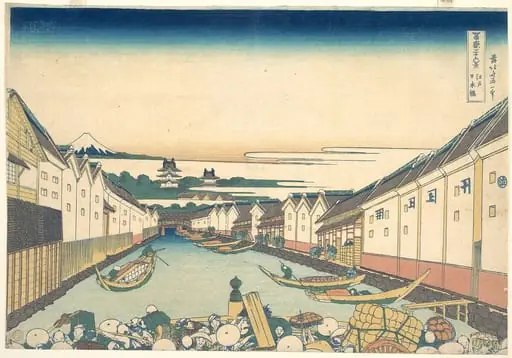
冨嶽三十六景 江戸日本橋|Nihonbashi in Edo (Edo Nihonbashi), from the series Thirty-six Views of Mount Fuji (Fugaku sanjūrokkei)
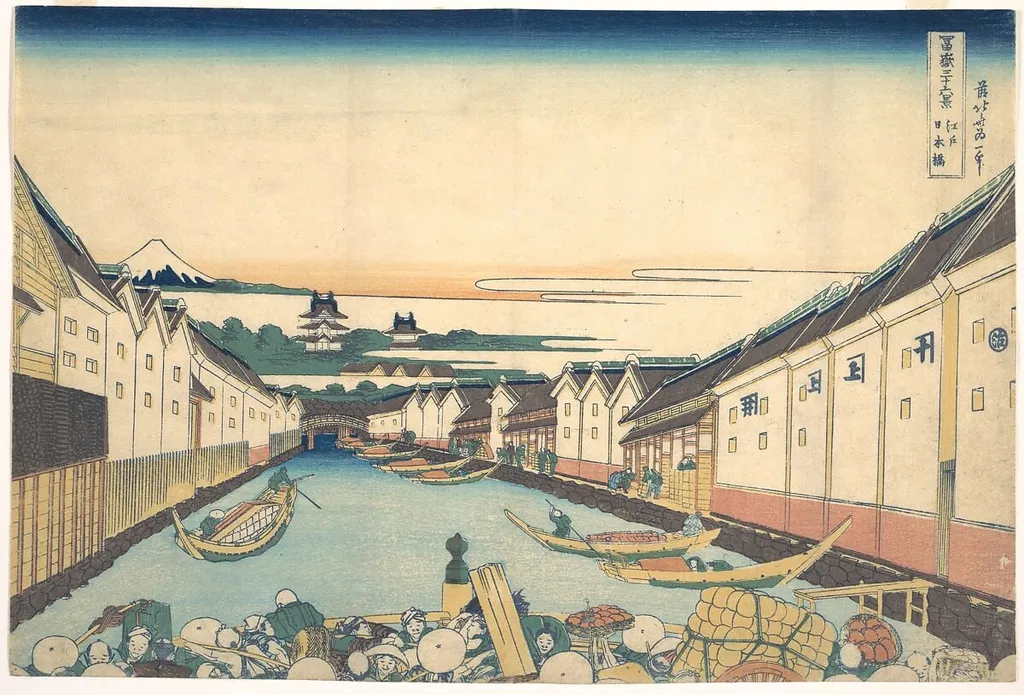
冨嶽三十六景 江戸日本橋|Nihonbashi in Edo (Edo Nihonbashi), from the series Thirty-six Views of Mount Fuji (Fugaku sanjūrokkei) is an ink print by the Japonisme artist Katsushika Hokusai. It dates from 1831 and is held in the collection of the Metropolitan Museum of Art.
- Accession no.
- JP2993
- Credit line
- Henry L. Phillips Collection, Bequest of Henry L. Phillips, 1939
About this work
Overview
The composition balances daily activity with the distant presence of Mount Fuji, rendered in pale blue sky and restrained color.
Created around 1831 by Katsushika Hokusai, this woodblock print is part of the series Thirty-six Views of Mount Fuji. It depicts the bustling Nihonbashi bridge in Edo, now Tokyo, with a canal lined by modest buildings and vessels. The composition balances daily activity with the distant presence of Mount Fuji, rendered in pale blue sky and restrained color.
The print exemplifies ukiyo-e’s capacity to merge urban life with natural grandeur through flat planes and precise linework.
Subject & Meaning
The scene captures a routine moment in Edo’s commercial heart, where merchants, laborers, and travelers move along the waterway. Mount Fuji, though small in scale, anchors the image as a constant, sacred presence amid human activity. Its placement suggests harmony between the natural and the man-made, reflecting a cultural reverence for the mountain as both geographic landmark and spiritual symbol.
Technique & Style
Hokusai employed traditional ukiyo-e woodblock methods, using layered blocks to apply ink and color with clarity. Forms are simplified, contours sharp, and hues muted, pale blues, greens, and ochres dominate. Despite the limited palette, the print conveys depth and motion through overlapping figures, angled rooftops, and the receding line of the bridge. Details are suggested rather than rendered, inviting the viewer to complete the scene mentally.
History & Provenance
The print was produced during the peak of Hokusai’s career, when the Thirty-six Views series gained widespread popularity. It entered The Metropolitan Museum of Art’s collection through established acquisitions of Japanese prints in the early 20th century. Multiple impressions were printed and circulated, making it one of the most reproduced images of the Edo period, though few original copies survive in pristine condition.
Context
In early 19th-century Edo, Nihonbashi served as the starting point of the Tōkaidō road and a hub for trade and travel. The print reflects the city’s growing merchant class and the rise of print culture as a medium for public imagery. Mount Fuji, visible from many parts of the region, was a familiar sight and a recurring motif in art, literature, and pilgrimage culture.
Legacy
This print, along with the rest of the series, influenced Western artists such as Van Gogh and Monet, who admired its compositional boldness and flattened perspective. It helped shape global perceptions of Japanese aesthetics and contributed to the Japonisme movement. Today, it remains a key reference in the study of printmaking, urban representation, and cross-cultural artistic exchange.
Artist & collection

Artist
Katsushika Hokusai spent his life in Edo, now Tokyo, where he drew and carved prints for a living.

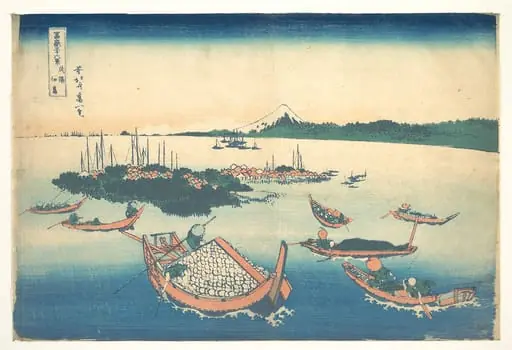
- 冨嶽三十六景 武陽佃島|Tsukudajima in Musashi Province (Buyō Tsukudajima), from the series Thirty-six Views of Mount Fuji (Fugaku sanjūrokkei)
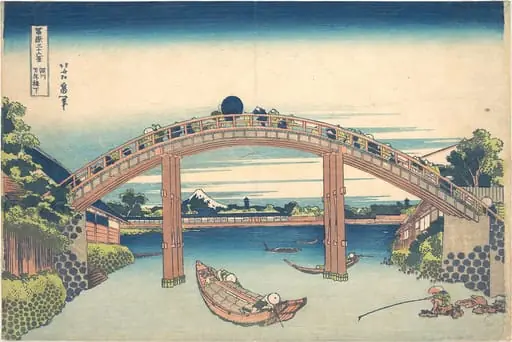 葛飾北斎画 冨嶽三十六景 深川万年橋下|Under the Mannen Bridge at Fukagawa (Fukagawa Mannenbashi shita), from the series Thirty-six Views of Mount Fuji (Fugaku sanjūrokkei)
 冨嶽三十六景 江戸日本橋|Nihonbashi in Edo (Edo Nihonbashi), from the series Thirty-six Views of Mount Fuji (Fugaku sanjūrokkei)
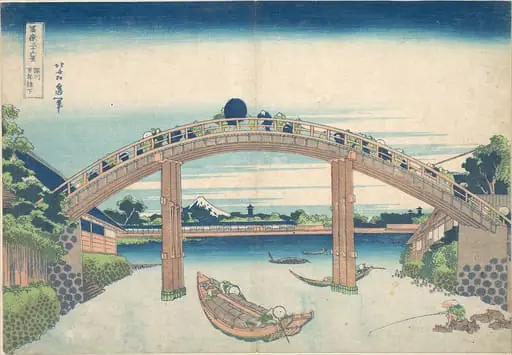 冨嶽三十六景 深川万年橋下|Under the Mannen Bridge at Fukagawa (Fukagawa Mannenbashi shita), from the series Thirty-six Views of Mount Fuji (Fugaku sanjūrokkei)
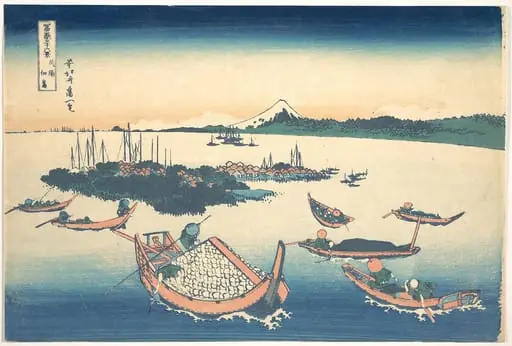 冨嶽三十六景 武陽佃島|Tsukudajima in Musashi Province (Buyō Tsukudajima), from the series Thirty-six Views of Mount Fuji (Fugaku sanjūrokkei)
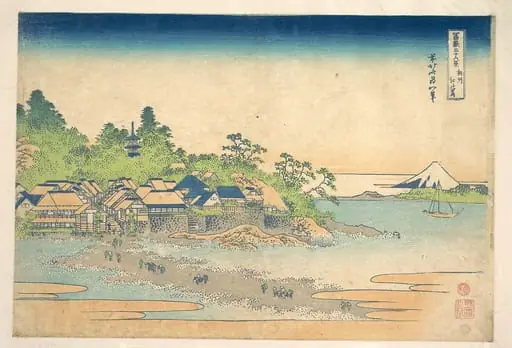 冨嶽三十六景 相州江の島|Enoshima in Sagami Province (Sōshū Enoshima), from the series Thirty-six Views of Mount Fuji (Fugaku sanjūrokkei)
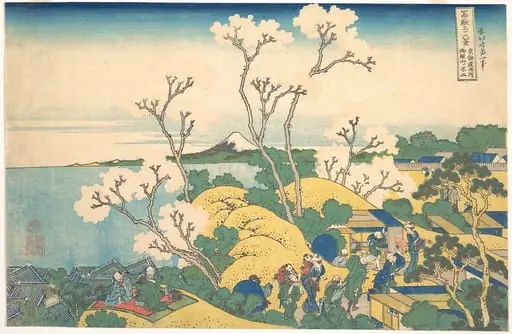 冨嶽三十六景 東海道品川御殿山の不二|Fuji from Gotenyama at Shinagawa on the Tōkaidō (Tōkaidō Shinagawa Gotenyama no Fuji), from the series Thirty-six Views of Mount Fuji (Fugaku sanjūrokkei)
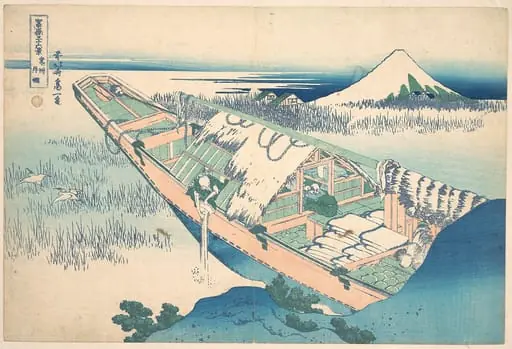 冨嶽三十六景 常州牛掘|Ushibori in Hitachi Province (Jōshū Ushibori), from the series Thirty-six Views of Mount Fuji (Fugaku sanjūrokkei)