Artwork
百人一首 うはかゑとき 持統天皇|Poem by Jitō Tenno (Empress Jitō), from the series One Hundred Poems Explained by the Nurse (Hyakunin isshu uba ga etoki)
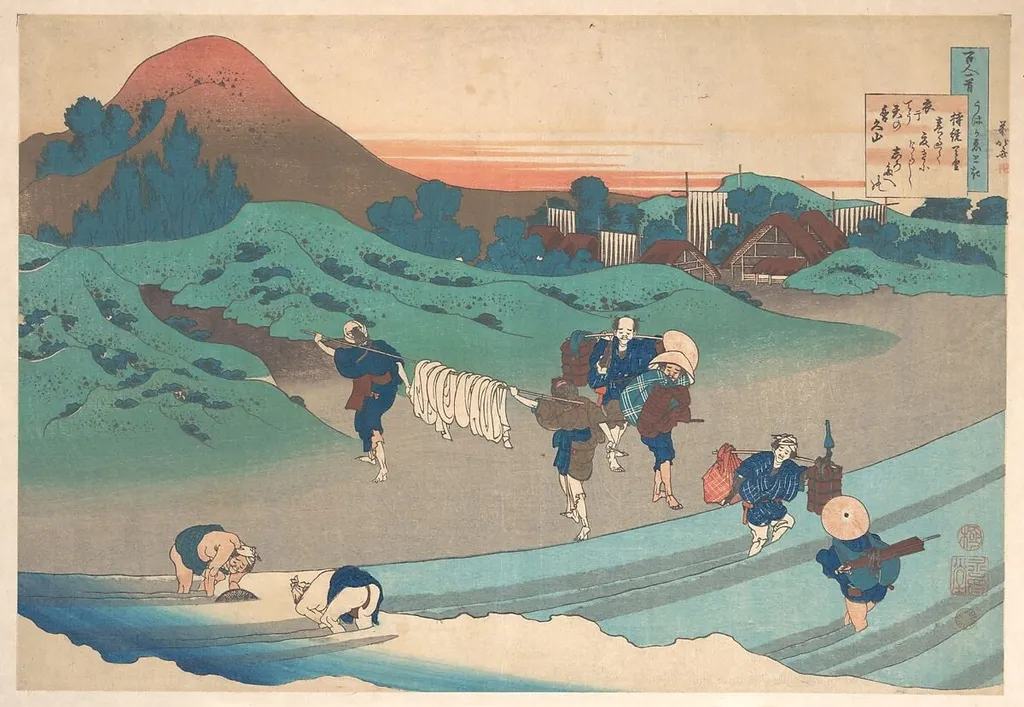
百人一首 うはかゑとき 持統天皇|Poem by Jitō Tenno (Empress Jitō), from the series One Hundred Poems Explained by the Nurse (Hyakunin isshu uba ga etoki) is an ink print by the Japonisme artist Katsushika Hokusai. It dates from 1839 and is held in the collection of the Metropolitan Museum of Art.
- Accession no.
- JP3
- Credit line
- Rogers Fund, 1914
About this work
Subject & Meaning
A peddler, equipped with a carrying pole (sao), a kasa, a wagasa, and a zaru, traverses the scene, crossing the river near modest minka dwellings.
The print illustrates the famous poem by Empress Jitō that recalls a springtime excursion to Mount Amanokagu and the Asuka River. Hokusai visualizes the poem's setting as a rural landscape, depicting the Asuka River and Mount Amanokagu as the natural backdrop. A peddler, equipped with a carrying pole (sao), a kasa, a wagasa, and a zaru, traverses the scene, crossing the river near modest minka dwellings.
The presence of the sarashi suggests a figure of common life, anchoring the classical verse in a contemporary, everyday ukiyo-e context. Through this combination of named landscape and humble traveler, the work represents the act of "uba ga etoki", making the classical poem accessible by translating its imagery into a familiar, visualized scene.
The work belongs to the mitate-e tradition, repurposing a revered Heian-era poem as a playful reinterpretation rather than a literal illustration.
Technique & Style
The work is a woodblock print produced in 1839 using ink and pigment on paper, a typical support for ukiyo‑e prints. Hokusai rendered the scene with fine line work and flat areas of color, emphasizing the Asuka River, Mount Amanokagu and a peddler bearing a carrying pole and accessories such as a kasa, sarashi and wagasa. The composition combines landscape elements with narrative detail, reflecting the mitate‑e approach that reinterprets classical poetry through contemporary street life.
The print measures approximately 25.7 cm in height and 37.5 cm in width, as recorded in the Metropolitan Museum of Art collection.
History & Provenance
The print belongs to the series One Hundred Poems Explained by the Nurse (Hyakunin isshu uba ga etoki), issued in 1839 by the publisher Moriya Jihei in Edo. It depicts the poem by Empress Jitō and features a scene at the Asuka River with Mount Amanokagu in the background.
The impression now in the Metropolitan Museum of Art, New York, measures 25.7 cm in height and 37.5 cm in width. The work entered the Museum’s collection through the Rogers Fund in 1919.
This woodblock print by Katsushika Hokusai, created in 1839, is held in the collection of the Metropolitan Museum of Art. The work, part of the series One Hundred Poems Explained by the Nurse, depicts Empress Jitō's poem alongside scenes of the Asuka River and Mount Amanokagu. While the source confirms the museum's possession of the piece, it does not provide a specific inventory or accession number for this particular print. The provided records do not list any exhibition history for this specific work.
Context
Created in 1839, this woodblock print by Katsushika Hokusai belongs to the series One Hundred Poems Explained by the Nurse and exemplifies the mitate-e genre, which reinterprets classical poetry through contemporary imagery. The work depicts the Asuka River scene with a peddler, carrying pole, and Mount Amanokagu, reflecting the cultural context of the 1830s and the ukiyo-e tradition of narrative landscape prints. Its production as a nishiki-e in full color and inclusion in the Metropolitan Museum of Art collection underscore its significance within Hokusai’s oeuvre and the broader development of Japanese printmaking.
Overview
This woodblock print, titled "Poem by Jitō Tenno (Empress Jitō)," was created by Katsushika Hokusai in 1839. Executed with ink and color on paper, it belongs to his extensive series "One Hundred Poems Explained by the Nurse (Hyakunin isshu uba ga etoki)." The artwork translates a classical Japanese poem into a visual landscape, characteristic of Hokusai's later career, offering an interpretation of ancient verse through contemporary printmaking.
Artist & collection

Artist
Katsushika Hokusai spent his life in Edo, now Tokyo, where he drew and carved prints for a living.

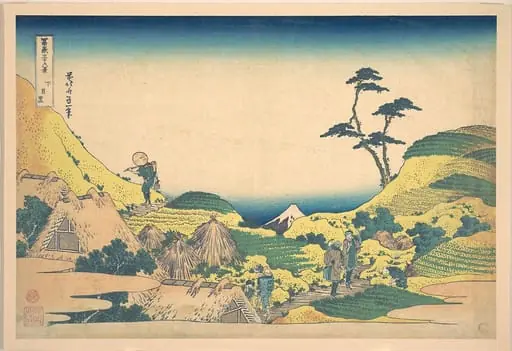 冨嶽三十六景 下目黒|Lower Meguro (Shimo Meguro), from the series Thirty-six Views of Mount Fuji (Fugaku sanjūrokkei)
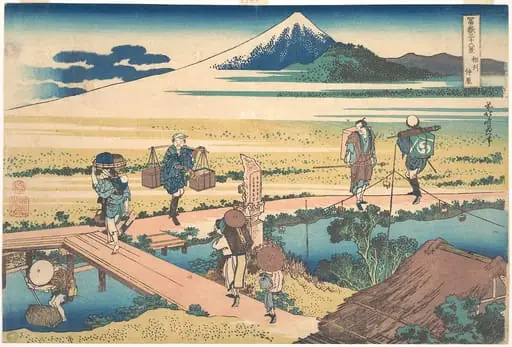 冨嶽三十六景 相州仲原|Nakahara in Sagami Province (Sōshū Nakahara), from the series Thirty-six Views of Mount Fuji (Fugaku sanjūrokkei)
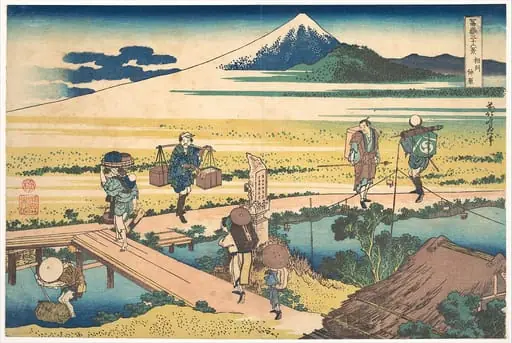 冨嶽三十六景 相州仲原|Nakahara in Sagami Province (Sōshū Nakahara), from the series Thirty-six Views of Mount Fuji (Fugaku sanjūrokkei)
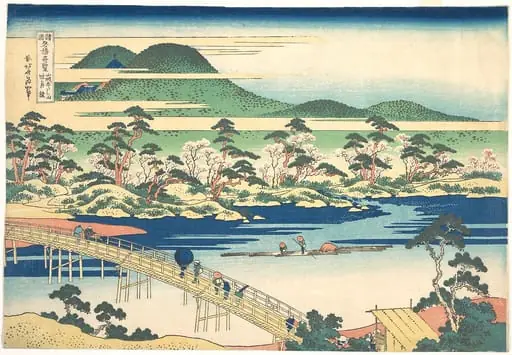 諸國名橋奇覧 山城あらし山吐月橋 |Togetsu Bridge at Arashiyama in Yamashiro, from the series Remarkable Views of Bridges in Various Provinces (Shokoku meikyō kiran)
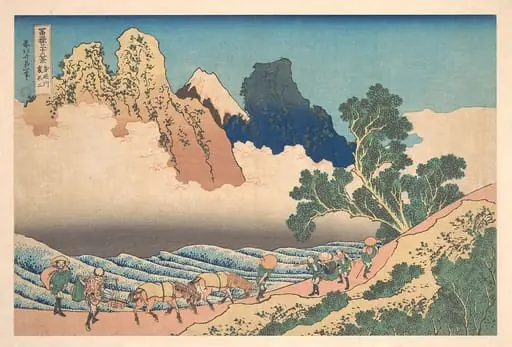 冨嶽三十六景 身延川裏不二|View from the Other Side of Fuji from the Minobu River (Minobugawa ura Fuji), from the series Thirty-six Views of Mount Fuji (Fugaku sanjūrokkei)
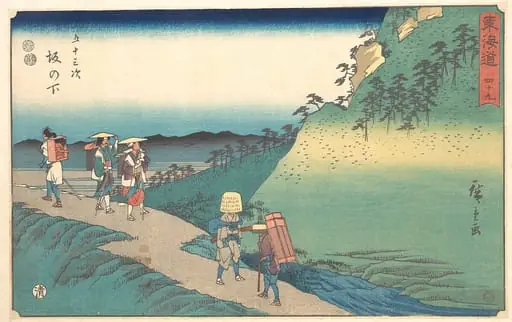 東海道五十三次 坂の下|Saka no Shita
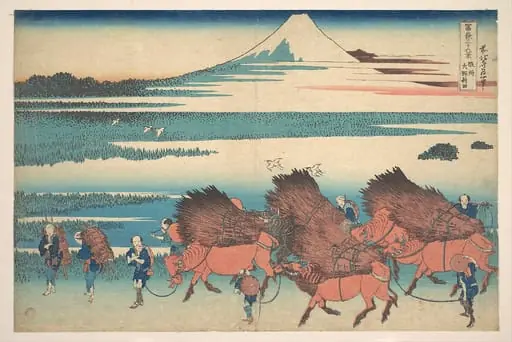 冨嶽三十六景 駿州大野新田|The New Fields at Ōno in Suruga Province (Sunshū Ōno shinden), from the series Thirty-six Views of Mount Fuji (Fugaku sanjūrokkei)
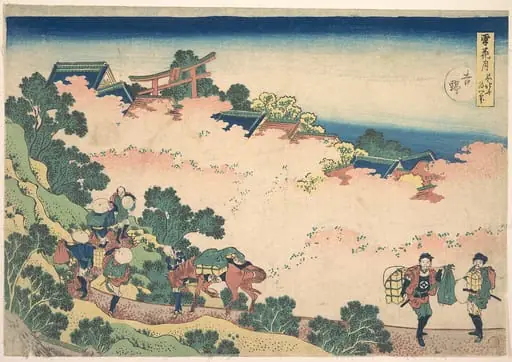 雪月花 吉野|Cherry Blossoms at Yoshino (Yoshino), from the series Snow, Moon, and Flowers (Setsugekka)