Artwork
冨嶽三十六景 甲州三坂水面|Reflection in Lake at Misaka in Kai Province (Kōshū Misaka suimen), from the series Thirty-six Views of Mount Fuji (Fugaku sanjūrokkei)
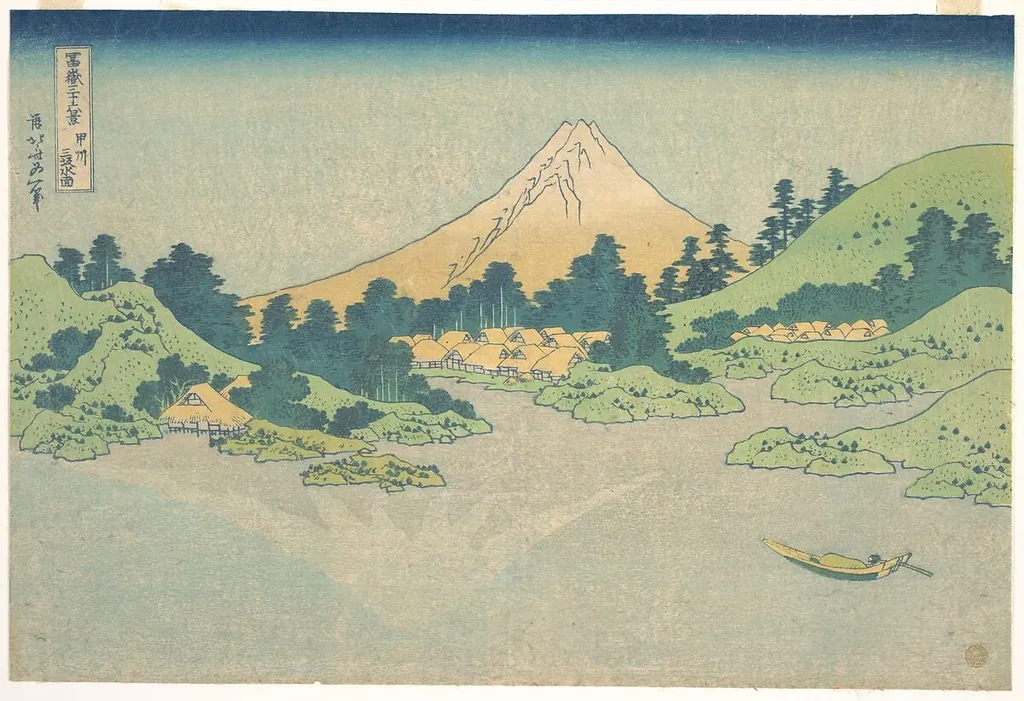
冨嶽三十六景 甲州三坂水面|Reflection in Lake at Misaka in Kai Province (Kōshū Misaka suimen), from the series Thirty-six Views of Mount Fuji (Fugaku sanjūrokkei) is an ink print by the Japonisme artist Katsushika Hokusai. It dates from 1831 and is held in the collection of the Metropolitan Museum of Art.
About this work
Overview
Printed in ink and color on paper, it exemplifies the ukiyo-e tradition of capturing natural landscapes with refined simplicity.
Created around 1831 by Katsushika Hokusai, this woodblock print is part of the Thirty-six Views of Mount Fuji series. It depicts a quiet lakeside scene in Kai Province, now part of Yamanashi Prefecture. The composition balances a distant mountain with a reflective body of water, framed by low hills and sparse vegetation.
Printed in ink and color on paper, it exemplifies the ukiyo-e tradition of capturing natural landscapes with refined simplicity.
Subject & Meaning
The print presents Mount Fuji as a distant, quiet presence rather than a dominant peak, emphasizing harmony between land and water. The still surface of the lake mirrors the mountain’s form, suggesting contemplation and the impermanence of perception. Human elements, a small boat and modest structures, are integrated subtly, reinforcing a sense of quiet coexistence with nature rather than dominance over it.
Technique & Style
Hokusai employed precise linework and layered color washes typical of ukiyo-e printing. The mountain is rendered in muted earth tones, while the water uses soft blues and greens to suggest depth and reflection. The foreground features delicate brushwork for trees and hills, contrasting with the flat, even planes of the lake. The use of Prussian blue, newly available at the time, enhances the atmospheric clarity of the scene.
History & Provenance
The print was produced during the peak of Hokusai’s career, when the Thirty-six Views series gained widespread popularity. It entered The Metropolitan Museum of Art’s collection through documented acquisitions in the early 20th century. As part of a commercial print series, original impressions were widely distributed, though surviving examples in good condition remain relatively rare.
Context
This work emerged during Japan’s Edo period, when travel became more accessible and landscape imagery appealed to urban audiences. Mount Fuji, a sacred and cultural symbol, was frequently depicted in art and literature. Hokusai’s series reimagined the mountain through diverse perspectives and seasons, reflecting both regional identity and a growing interest in natural beauty beyond religious or mythological themes.
Legacy
The Thirty-six Views of Mount Fuji influenced Western artists such as Van Gogh and Monet, contributing to Japonisme in 19th-century Europe. Hokusai’s compositional innovations, low horizons, cropped forms, and emphasis on atmosphere, helped redefine landscape representation. This print, among others in the series, remains a touchstone for its quiet elegance and technical precision in woodblock printing.
Artist & collection

Artist
Katsushika Hokusai spent his life in Edo, now Tokyo, where he drew and carved prints for a living.

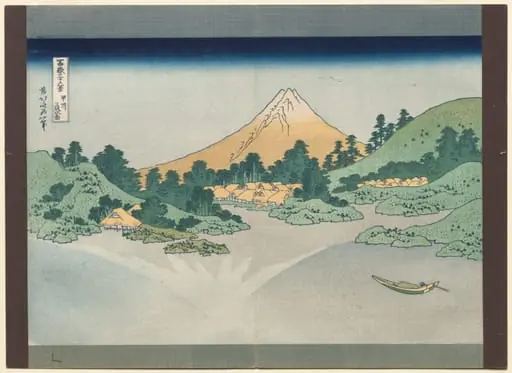
- Thirty-Six Views of Mt. Fuji: The Surface of Lake Misaka in Kai Province
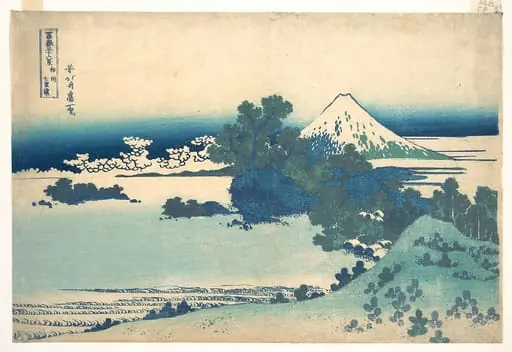 冨嶽三十六景 相州七里浜|Shichirigahama in Sagami Province (Sōshū Shichirigahama), from the series Thirty-six Views of Mount Fuji (Fugaku sanjūrokkei)
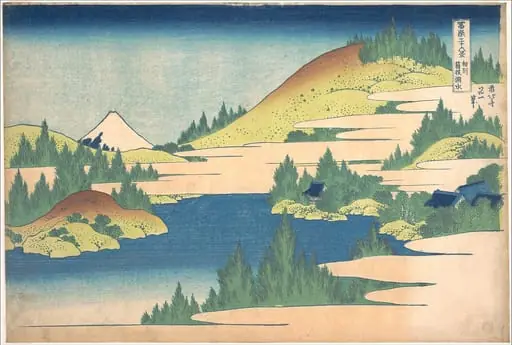 冨嶽三十六景 相州箱根湖水|The Lake at Hakone in Sagami Province (Sōshū Hakone kosui), from the series Thirty-six Views of Mount Fuji (Fugaku sanjūrokkei)
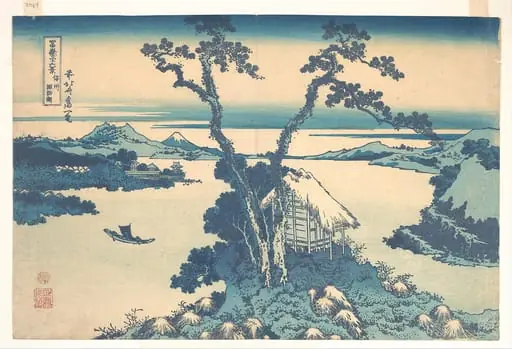 冨嶽三十六景 信州諏訪湖|Lake Suwa in Shinano Province (Shinshū Suwako), from the series Thirty-six Views of Mount Fuji (Fugaku sanjūrokkei)
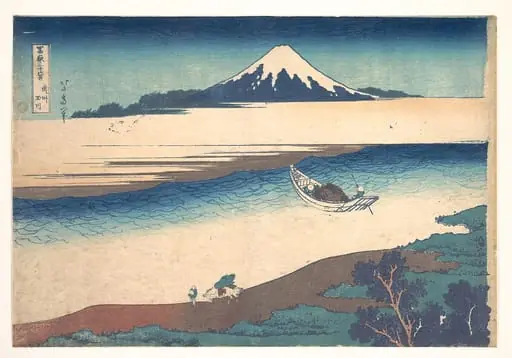 冨嶽三十六景 武州玉川|Tama River in Musashi Province (Bushū Tamagawa), from the series Thirty-six Views of Mount Fuji (Fugaku sanjūrokkei)
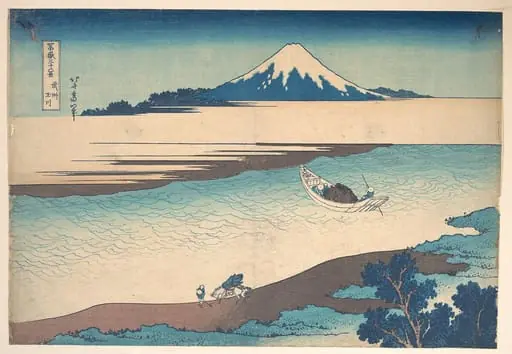 冨嶽三十六景 武州玉川|Fuji—The Tama River, Musashi Province, from the series Thirty-six Views of Mount Fuji (Fugaku sanjūrokkei)
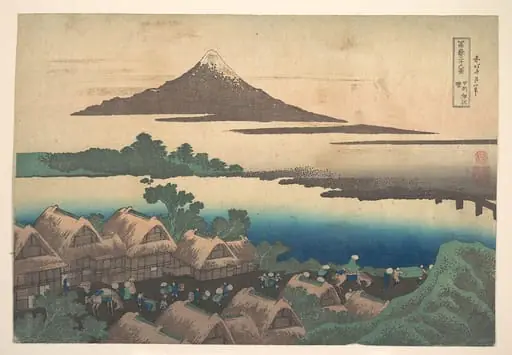 冨嶽三十六景 甲州伊沢暁|Dawn at Isawa in Kai Province (Kōshū Isawa no akatsuki), from the series Thirty-six Views of Mount Fuji (Fugaku sanjūrokkei)
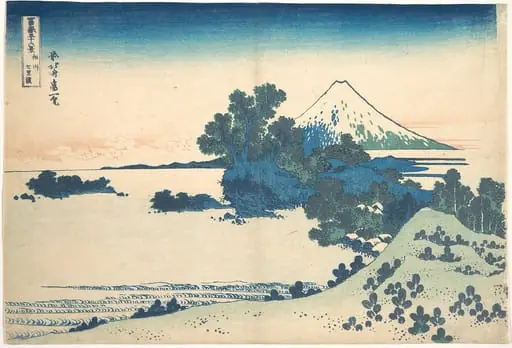 冨嶽三十六景 相州七里浜|Shichirigahama in Sagami Province (Sōshū Shichirigahama), from the series Thirty-six Views of Mount Fuji (Fugaku sanjūrokkei)
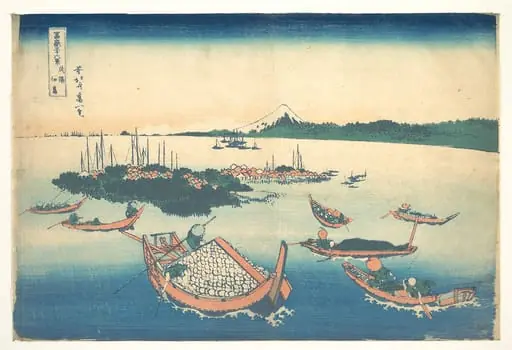 冨嶽三十六景 武陽佃島|Tsukudajima in Musashi Province (Buyō Tsukudajima), from the series Thirty-six Views of Mount Fuji (Fugaku sanjūrokkei)
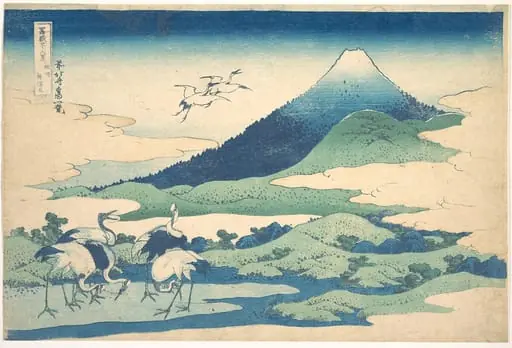 冨嶽三十六景 相州梅沢左|Umezawa Manor in Sagami Province (Sōshū Umezawa zai), from the series Thirty-six Views of Mount Fuji (Fugaku sanjūrokkei)
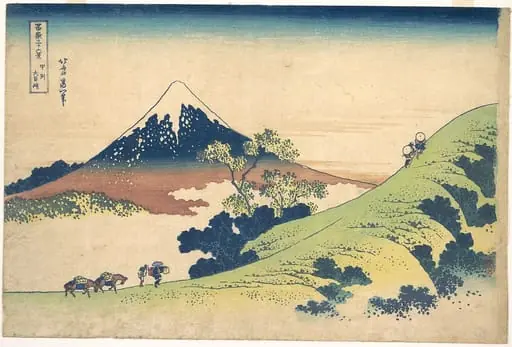 冨嶽三十六景 甲州犬目峠|The Inume Pass in Kai Province (Kōshū Inume tōge), from the series Thirty-six Views of Mount Fuji (Fugaku sanjūrokkei)
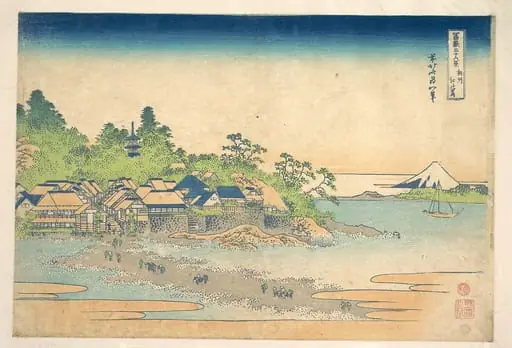 冨嶽三十六景 相州江の島|Enoshima in Sagami Province (Sōshū Enoshima), from the series Thirty-six Views of Mount Fuji (Fugaku sanjūrokkei)