Artwork
冨嶽三十六景 東海道江尻田子の浦略図|Tago Bay near Ejiri on the Tōkaidō (Tōkaidō Ejiri Tago no ura ryaku zu), from the series Thirty-six Views of Mount Fuji (Fugaku sanjūrokkei)
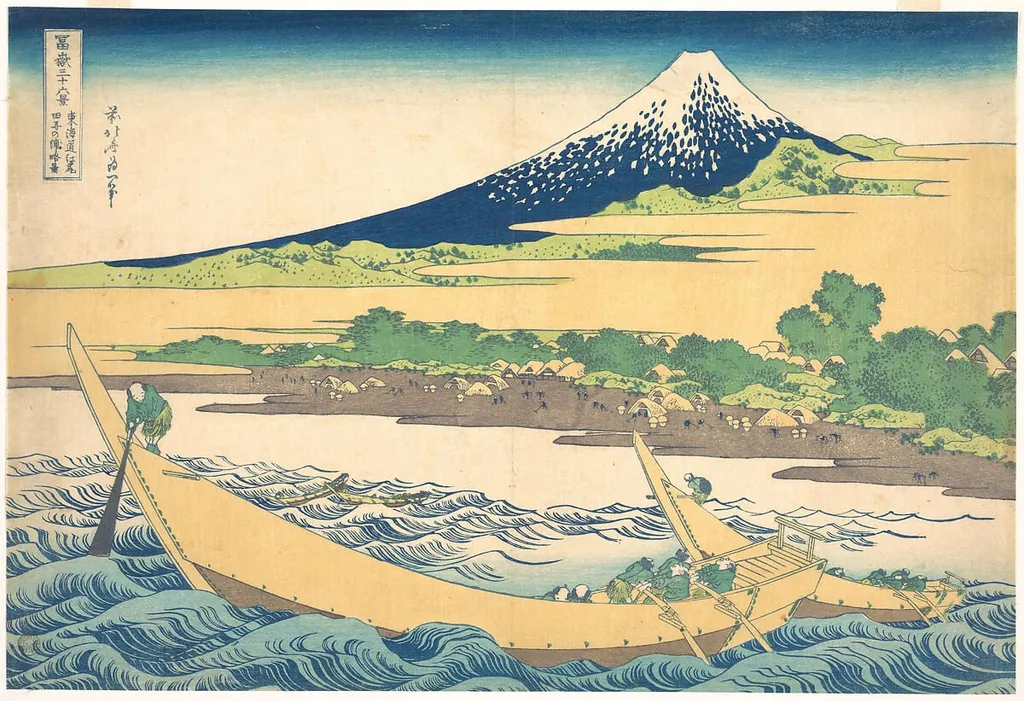
冨嶽三十六景 東海道江尻田子の浦略図|Tago Bay near Ejiri on the Tōkaidō (Tōkaidō Ejiri Tago no ura ryaku zu), from the series Thirty-six Views of Mount Fuji (Fugaku sanjūrokkei) is an ink print by the Japonisme artist Katsushika Hokusai. It dates from 1831 and is held in the collection of the Metropolitan Museum of Art.
About this work
Overview
Created around 1831 by the Japanese printmaker Katsushika Hokusai, this woodblock print belongs to his celebrated series Thirty‑six Views of Mount Fuji. It depicts a tranquil stretch of Tago Bay near the historic post town of Ejiri on the Tōkaidō road. The composition balances a distant, snow‑capped peak with a calm shoreline populated by modest dwellings and a few small vessels.
Subject & Meaning
The scene presents a quiet coastal landscape where everyday activity unfolds against the imposing presence of Mount Fuji. Fishermen’s boats rest on still water while pedestrians traverse the shore, suggesting a moment of repose in a travel corridor that linked Edo and Kyoto. The juxtaposition of human scale and the mountain underscores Fuji’s role as a cultural and spiritual landmark.
Technique & Style
Cross‑hatching in the foreground structures adds depth, and the limited palette of blues and muted earth tones reinforces the scene’s calm atmosphere.
Hokusai employed traditional ukiyo‑e woodblock methods, using ink and layered pigments on paper. The water’s surface is rendered with swift, undulating lines that convey subtle movement, while the mountain’s snow is built up through fine, overlapping strokes that create a textured surface. Cross‑hatching in the foreground structures adds depth, and the limited palette of blues and muted earth tones reinforces the scene’s calm atmosphere.
History & Provenance
The print was produced during the late Edo period, a time when travel guides and scenic series were popular among merchants and pilgrims. It entered the collection of the Metropolitan Museum of Art in the early 20th century, where it remains part of the museum’s Asian art holdings, documented as an example of Hokusai’s mature work within the Fuji series.
Context
Situated within the Thirty‑six Views of Mount Fuji, this image reflects Hokusai’s systematic exploration of the mountain from varied perspectives along Japan’s main highway. The Tōkaidō route was a vital artery for commerce and communication, and depictions of its stations catered to a growing market of travelers eager for visual souvenirs of their journeys.
Artist & collection

Artist
Katsushika Hokusai spent his life in Edo, now Tokyo, where he drew and carved prints for a living.

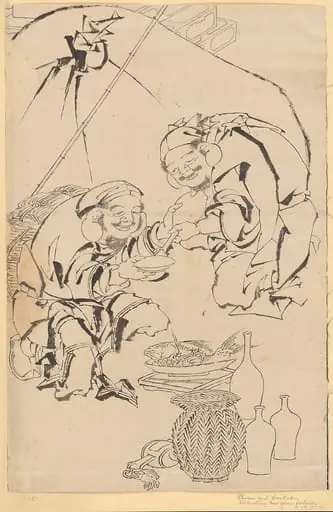
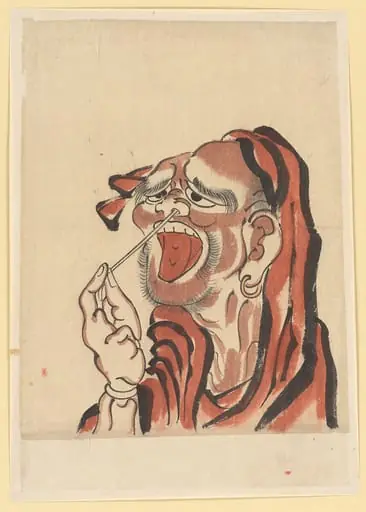
- 冨嶽三十六景 東海道江尻田子の浦略図|Tago Bay near Ejiri on the Tōkaidō (Tōkaidō Ejiri Tago no ura ryaku zu), from the series Thirty-six Views of Mount Fuji (Fugaku sanjūrokkei)
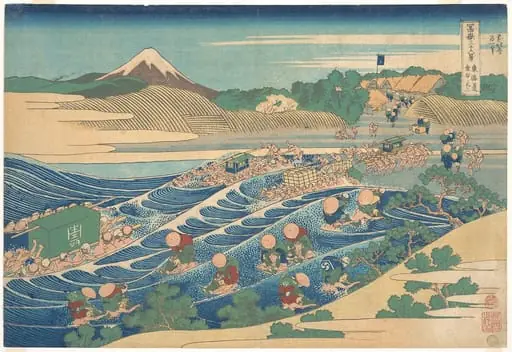 冨嶽三十六景 東海道金谷の不二|Fuji Seen from Kanaya on the Tōkaidō (Tōkaidō Kanaya no Fuji), from the series Thirty-six Views of Mount Fuji (Fugaku sanjūrokkei)
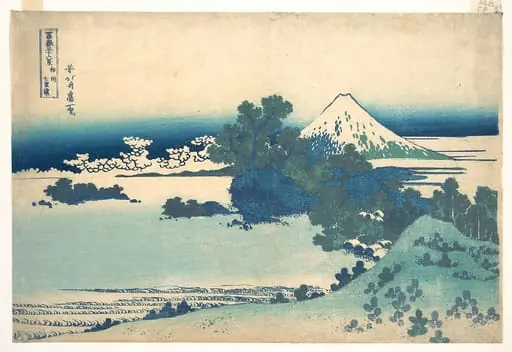 冨嶽三十六景 相州七里浜|Shichirigahama in Sagami Province (Sōshū Shichirigahama), from the series Thirty-six Views of Mount Fuji (Fugaku sanjūrokkei)
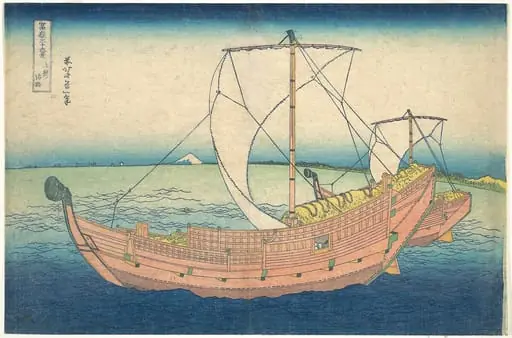 冨嶽三十六景 上総の海路|At Sea off Kazusa (Kazusa no kairo), from the series Thirty-six Views of Mount Fuji (Fugaku sanjūrokkei)
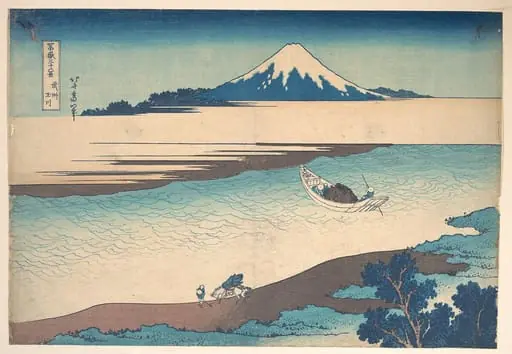 冨嶽三十六景 武州玉川|Fuji—The Tama River, Musashi Province, from the series Thirty-six Views of Mount Fuji (Fugaku sanjūrokkei)
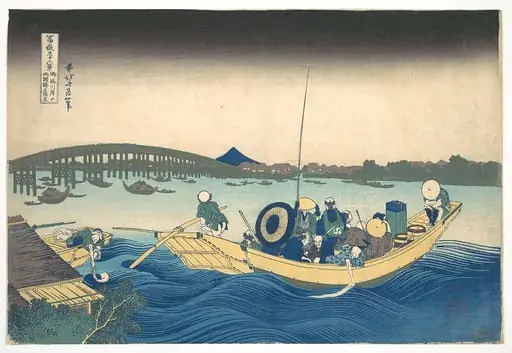 葛飾北斎画 冨嶽三十六景
御厩川岸より両国橋夕陽見|Viewing the Sunset over Ryōgoku Bridge from the Onmaya Embankment (Onmayagashi yori Ryōgokubashi sekiyō o miru), from the series Thirty-six Views of Mount Fuji (Fugaku sanjūrokkei)
葛飾北斎画 冨嶽三十六景
御厩川岸より両国橋夕陽見|Viewing the Sunset over Ryōgoku Bridge from the Onmaya Embankment (Onmayagashi yori Ryōgokubashi sekiyō o miru), from the series Thirty-six Views of Mount Fuji (Fugaku sanjūrokkei)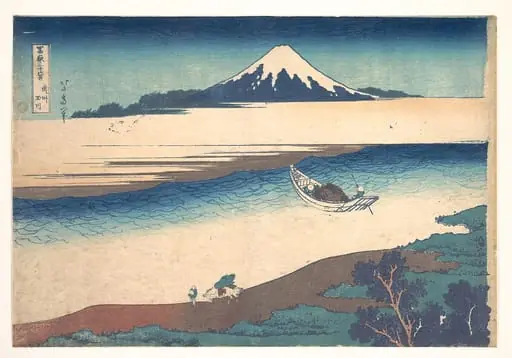 冨嶽三十六景 武州玉川|Tama River in Musashi Province (Bushū Tamagawa), from the series Thirty-six Views of Mount Fuji (Fugaku sanjūrokkei)
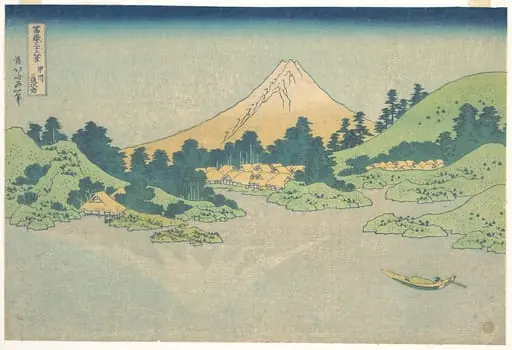 冨嶽三十六景 甲州三坂水面|Reflection in Lake at Misaka in Kai Province (Kōshū Misaka suimen), from the series Thirty-six Views of Mount Fuji (Fugaku sanjūrokkei)
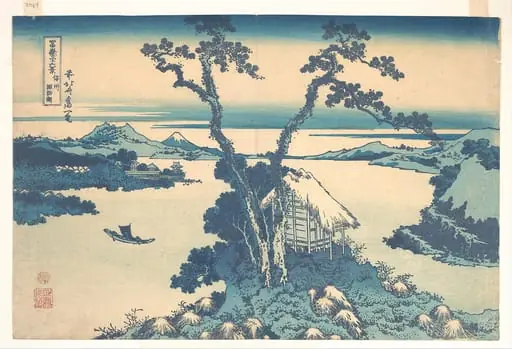 冨嶽三十六景 信州諏訪湖|Lake Suwa in Shinano Province (Shinshū Suwako), from the series Thirty-six Views of Mount Fuji (Fugaku sanjūrokkei)
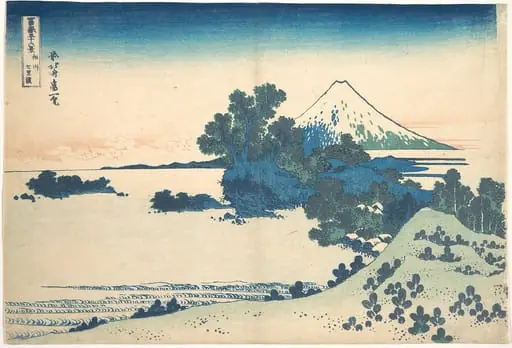 冨嶽三十六景 相州七里浜|Shichirigahama in Sagami Province (Sōshū Shichirigahama), from the series Thirty-six Views of Mount Fuji (Fugaku sanjūrokkei)