Artwork
葛飾北斎画 冨嶽三十六景 御厩川岸より両国橋夕陽見|Viewing the Sunset over Ryōgoku Bridge from the Onmaya Embankment (Onmayagashi yori Ryōgokubashi sekiyō o miru), from the series Thirty-six Views of Mount Fuji (Fugaku sanjūrokkei)
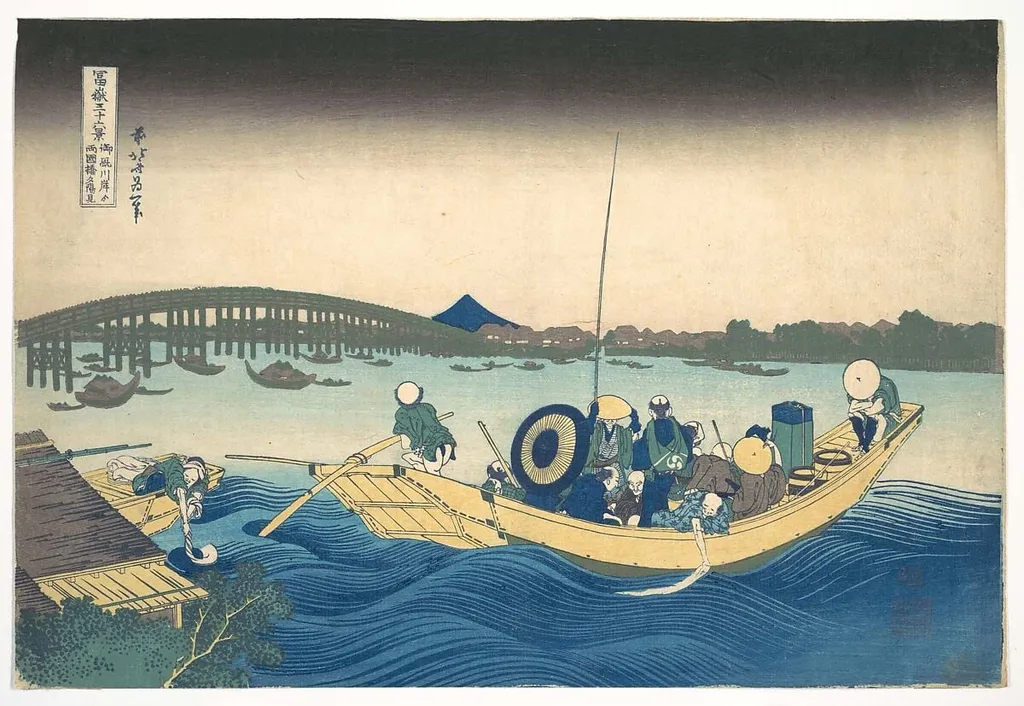
葛飾北斎画 冨嶽三十六景 御厩川岸より両国橋夕陽見|Viewing the Sunset over Ryōgoku Bridge from the Onmaya Embankment (Onmayagashi yori Ryōgokubashi sekiyō o miru), from the series Thirty-six Views of Mount Fuji (Fugaku sanjūrokkei) is an ink print by the Japonisme artist Katsushika Hokusai. It dates from 1831 and is held in the collection of the Metropolitan Museum of Art.
- Accession no.
- JP1331
- Credit line
- Rogers Fund, 1922
About this work
Overview
The composition balances a tranquil river scene with the distant silhouette of Mount Fuji, rendered in the flat, vivid hues characteristic of ukiyo‑e.
Created around 1831, this woodblock print by Katsushika Hokusai belongs to his celebrated series Thirty‑six Views of Mount Fuji. It depicts the sunset as seen from the Onmaya embankment, looking toward the long, low‑arched Ryōgoku Bridge spanning the Sumida River. The composition balances a tranquil river scene with the distant silhouette of Mount Fuji, rendered in the flat, vivid hues characteristic of ukiyo‑e.
Subject & Meaning
The image captures a bustling riverside moment: a flatboat crowded with figures in dark robes, some holding fans, and smaller vessels moored along the bank. The setting sun casts a pale glow over the water, while the bridge and looming mountain frame the human activity, suggesting the interplay of daily commerce and the enduring presence of the iconic peak.
Technique & Style
Executed with traditional woodblock methods, Hokusai employed bold outlines and uniform color planes to convey depth and motion. The carving emphasizes the bridge’s arches and the mountain’s contour, while the limited palette, muted sky, dark silhouettes, and a warm sunset band, creates a harmonious visual rhythm typical of early nineteenth‑century ukiyo‑e prints.
History & Provenance
The print is part of the original Thirty‑six Views series, which circulated widely in Edo (Tokyo) during the late Edo period. It entered the collection of The Metropolitan Museum of Art, where it is catalogued as an example of Hokusai’s mature work and the commercial print culture of the time.
Context
At the time of its production, Ryōgoku Bridge was a major thoroughfare linking the eastern and western districts of Edo, and the Sumida River served as a vital artery for transport and trade. Hokusai’s choice of this viewpoint reflects contemporary interest in urban landscapes, integrating the natural landmark of Mount Fuji into the bustling cityscape.
Artist & collection

Artist
Katsushika Hokusai spent his life in Edo, now Tokyo, where he drew and carved prints for a living.

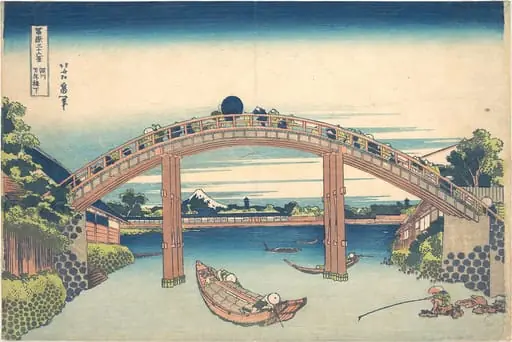
- 葛飾北斎画 冨嶽三十六景 深川万年橋下|Under the Mannen Bridge at Fukagawa (Fukagawa Mannenbashi shita), from the series Thirty-six Views of Mount Fuji (Fugaku sanjūrokkei)
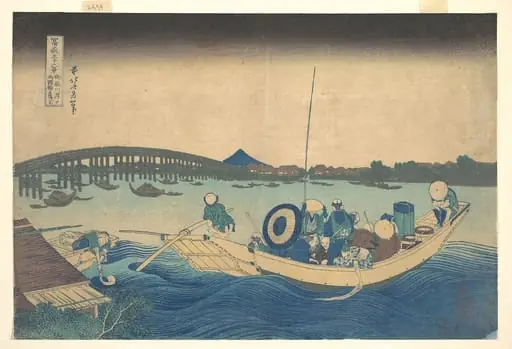 冨嶽三十六景 御厩川岸より両国橋夕陽見|Viewing the Sunset over Ryōgoku Bridge from the Onmayagashi Embankment (Onmayagashi yori Ryōgokubashi sekiyō o miru), from the series Thirty-six Views of Mount Fuji (Fugaku sanjūrokkei)
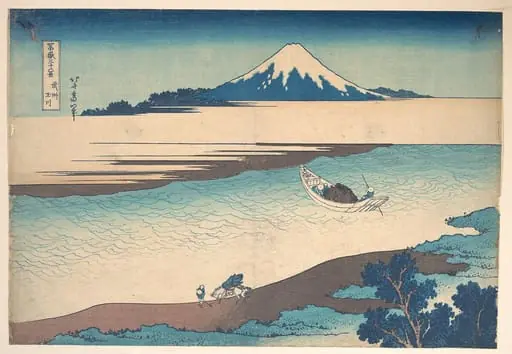 冨嶽三十六景 武州玉川|Fuji—The Tama River, Musashi Province, from the series Thirty-six Views of Mount Fuji (Fugaku sanjūrokkei)
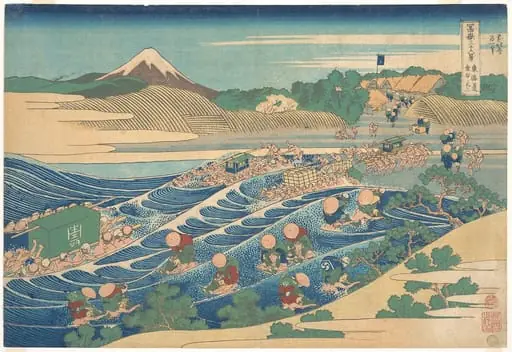 冨嶽三十六景 東海道金谷の不二|Fuji Seen from Kanaya on the Tōkaidō (Tōkaidō Kanaya no Fuji), from the series Thirty-six Views of Mount Fuji (Fugaku sanjūrokkei)
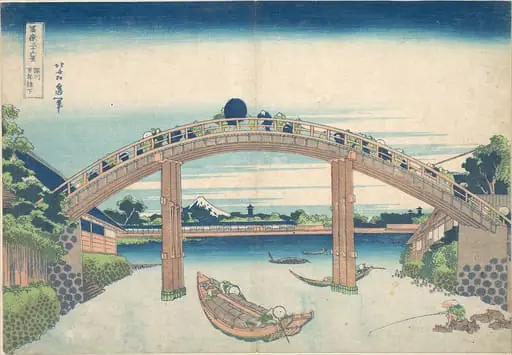 冨嶽三十六景 深川万年橋下|Under the Mannen Bridge at Fukagawa (Fukagawa Mannenbashi shita), from the series Thirty-six Views of Mount Fuji (Fugaku sanjūrokkei)
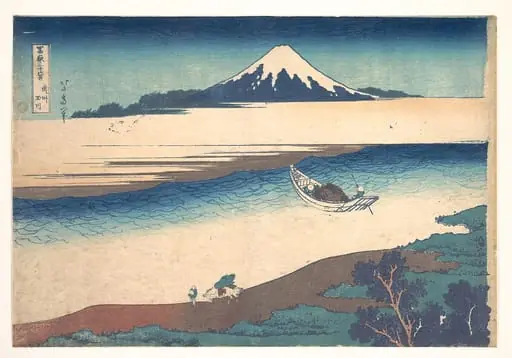 冨嶽三十六景 武州玉川|Tama River in Musashi Province (Bushū Tamagawa), from the series Thirty-six Views of Mount Fuji (Fugaku sanjūrokkei)
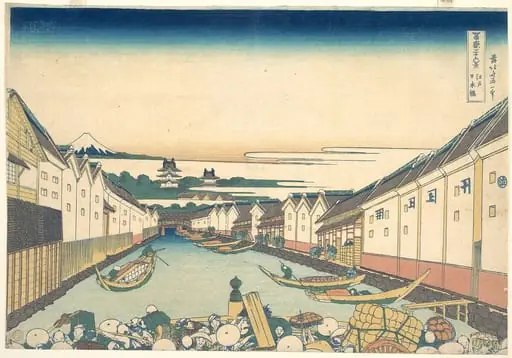 冨嶽三十六景 江戸日本橋|Nihonbashi in Edo (Edo Nihonbashi), from the series Thirty-six Views of Mount Fuji (Fugaku sanjūrokkei)