Artwork
猫図|Cat Seen from Behind
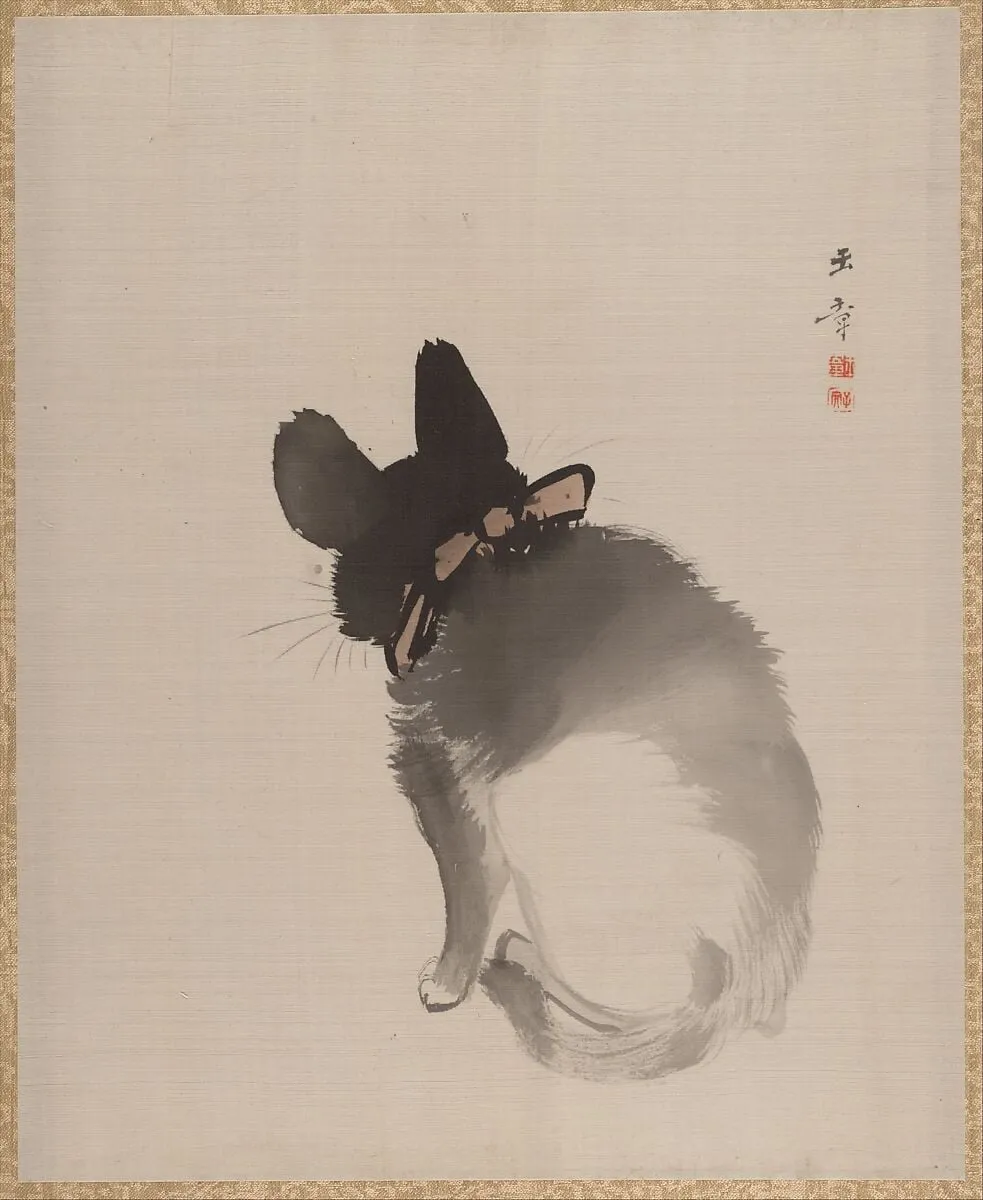
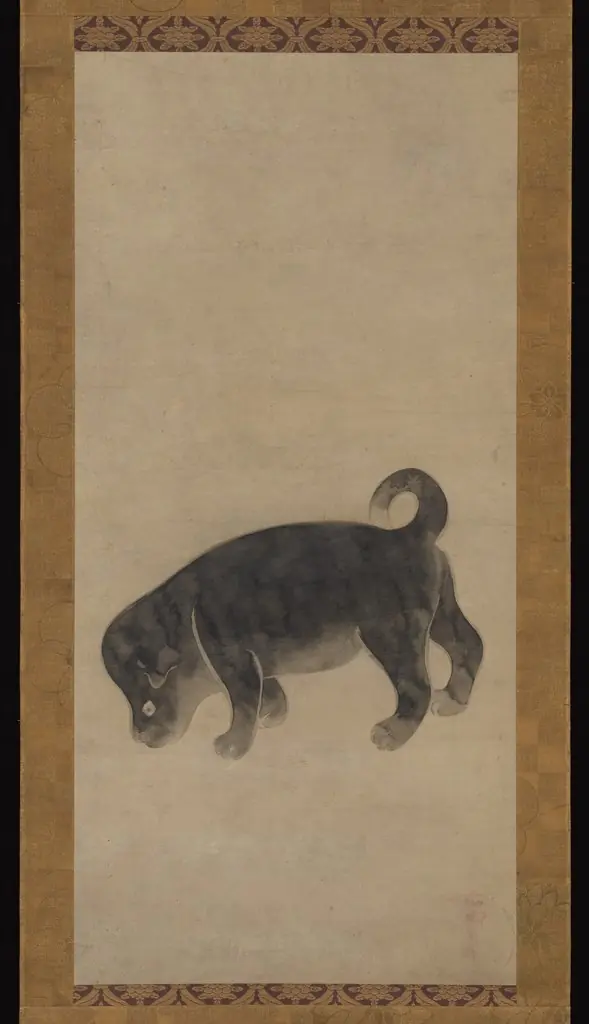
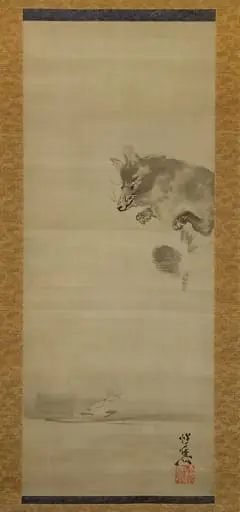
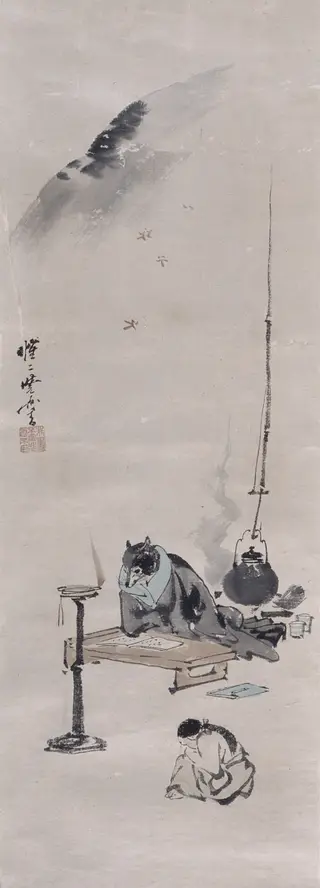
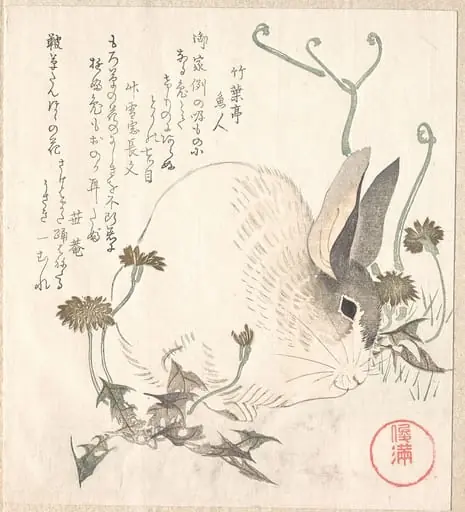
猫図|Cat Seen from Behind is an ink painting by the Impressionist artist Kawabata Gyokushō. It dates from 1890 and is held in the collection of the Metropolitan Museum of Art.
About this work
Subject & Meaning
Kawabata Gyokushō's 1868 album leaf presents a solitary cat viewed from behind, a composition that isolates the animal as the exclusive subject.
Kawabata Gyokushō's 1868 album leaf presents a solitary cat viewed from behind, a composition that isolates the animal as the exclusive subject. By depicting the feline with its back turned to the viewer, the work emphasizes the creature's physical form and posture rather than engaging in direct interaction or narrative storytelling. This specific perspective aligns with the still-life genre classification assigned to the piece, treating the living animal with the observational detachment typically reserved for inanimate objects.
The image serves as a focused study of the cat's presence within the pictorial space, utilizing ink and color on silk to render the subject without additional symbolic context or background elements.
Technique & Style
Cat Seen from Behind is executed as an album leaf utilizing ink and color applied to a silk support. Created by Kawabata Gyokushō in 1868, the work belongs to the genre of still life and depicts a cat. The painting measures 34.3 cm in height and 27.6 cm in width. As a work on silk, the medium allows for the delicate handling of ink and pigment characteristic of the artist's approach to this subject.
History & Provenance
The album leaf painting Cat Seen from Behind by Kawabata Gyokushō is dated to 1868, aligning with the late Edo period. The work was created in Japan and depicts a domestic cat viewed from the rear, rendered in ink and color on silk. The painting entered the collection of the Metropolitan Museum of Art, where it is currently held. Its dimensions are 34.3 cm in height and 27.6 cm in width.
The painting Cat Seen from Behind (1868) by Kawabata Gyokushō is held in the collection of the Metropolitan Museum of Art in New York. It is recorded as a still‑life painting on silk, depicting a cat from behind, and its dimensions are 34.3 cm in height by 27.6 cm in width. The work is listed in the museum’s Department of Asian Art inventory but no accession number is specified in the available documentation.
Exhibition records consulted do not mention this piece in any past shows, and no further provenance details are provided.
Overview
Created around 1890, this ink and color work on silk by Kawabata Gyokushō presents a solitary cat viewed from behind. Rendered on an album leaf, the composition isolates the animal against an empty space, emphasizing its form and the quiet intimacy of the scene. The piece belongs to the broader tradition of Japanese animal studies that flourished in the late nineteenth century.
Artist & collection