Artwork
Suprematist Composition: White on White
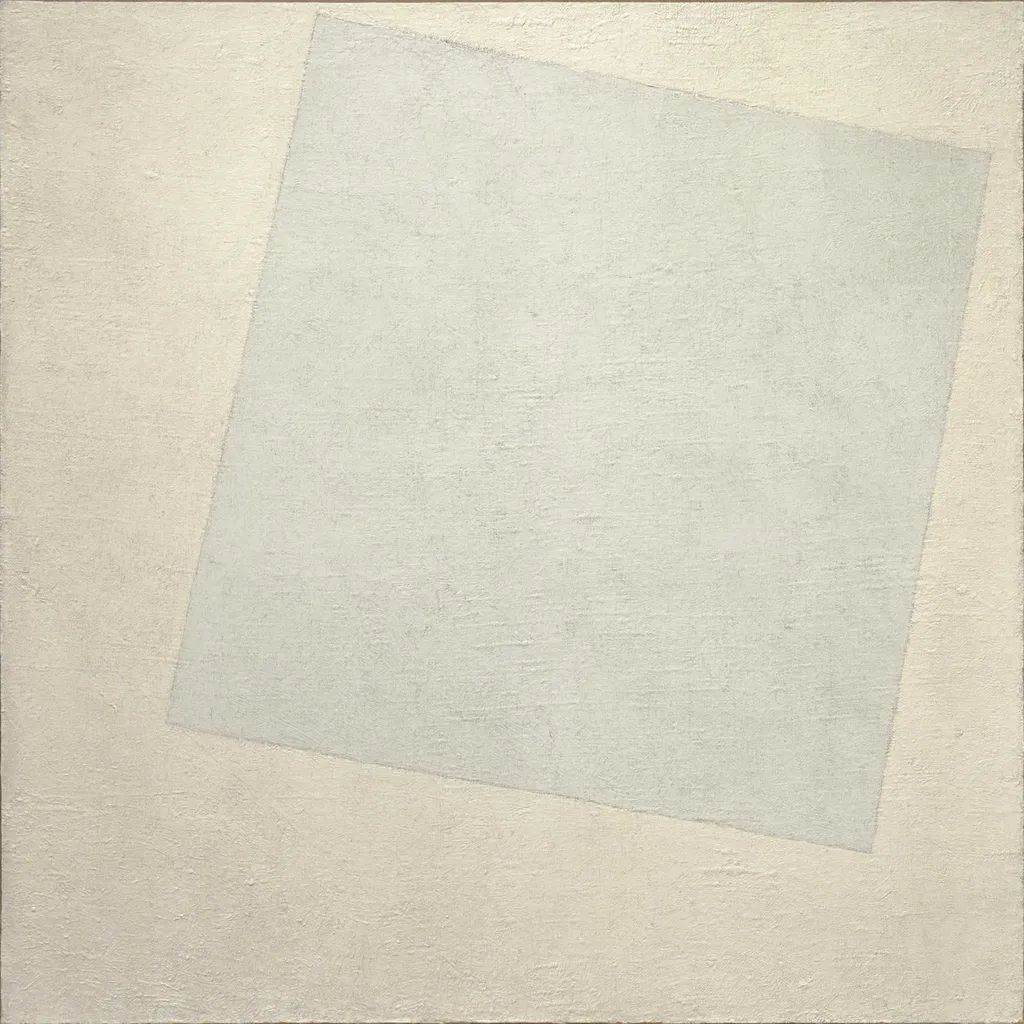
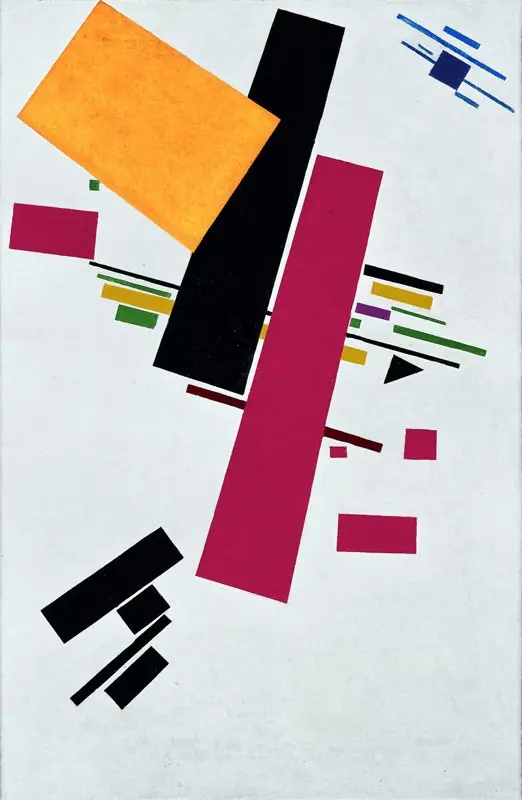
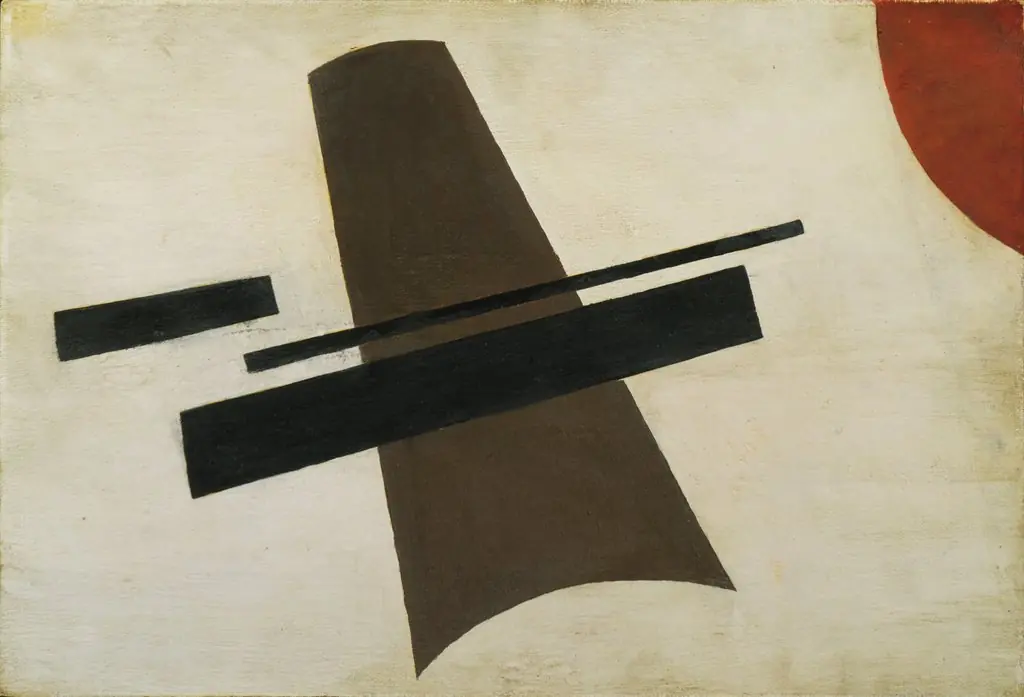
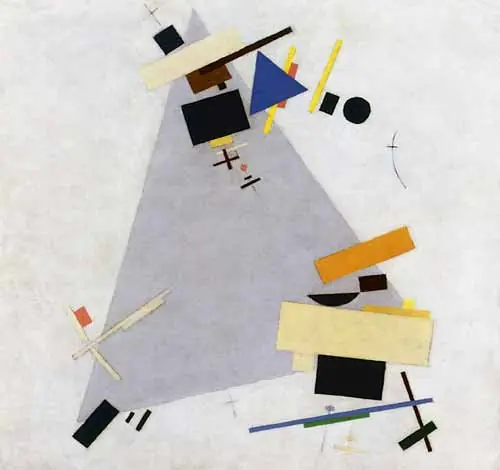
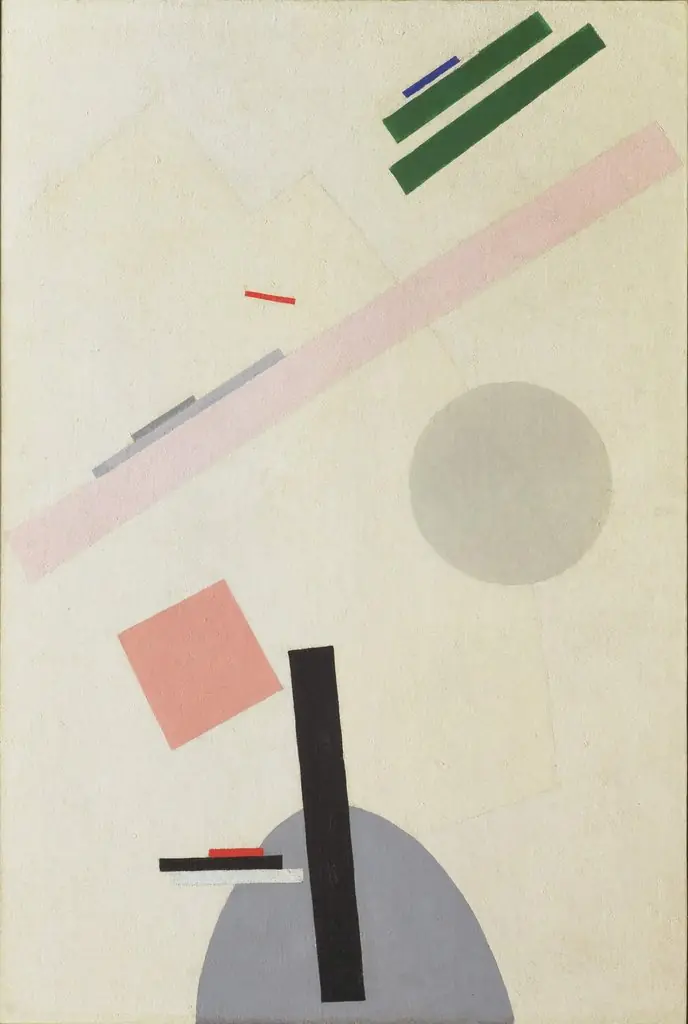
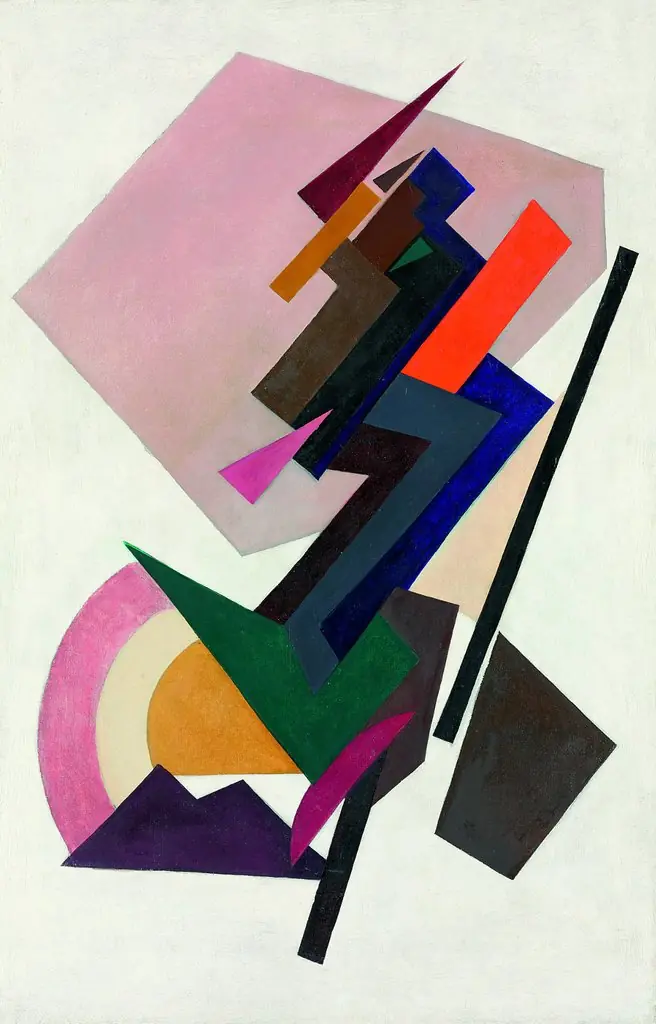
Suprematist Composition: White on White is an oil painting by the Suprematist artist Kazimir Malevich. It dates from 1918 and is held in the collection of the Museum of Modern Art.
About this work
Overview
The work reduces visual language to a single tilted white square on a nearly identical white ground, eliminating representational content entirely.
Painted in 1918, Suprematist Composition: White on White is an abstract oil painting by Kazimir Malevich. It belongs to the Suprematist movement, which sought to express pure artistic feeling through geometric forms. The work reduces visual language to a single tilted white square on a nearly identical white ground, eliminating representational content entirely. Its minimalism reflects a radical departure from traditional subject matter in art.
Subject & Meaning
The painting has no recognizable subject; its focus is on the spatial relationship between form and field. The faintly discernible white square, slightly off-center and rotated, suggests movement and instability. Malevich intended such works to transcend material reality, evoking spiritual or metaphysical experience through pure form. The absence of color and detail invites contemplation beyond the physical world.
Technique & Style
Malevich applied thin layers of white oil paint to create subtle tonal variations between the square and its background. The brushwork is deliberate but unobtrusive, avoiding texture or visible strokes. The square’s slight tilt introduces dynamism without symmetry, challenging classical composition. This restrained technique emphasizes perception over representation, aligning with Suprematism’s goal of pure abstraction.
History & Provenance
Created shortly after the October Revolution, the painting emerged during a period of intense cultural experimentation in Russia. Malevich exhibited it in 1919 as part of his Suprematist series, which included earlier black and red squares. It entered the collection of the Museum of Modern Art in New York in 1979, where it remains today as a key example of early 20th-century abstraction.
Context
Suprematism developed in Russia amid political upheaval and artistic innovation. Malevich rejected figurative art as outdated, proposing instead a visual language based on geometric purity. White on White was part of a broader effort to redefine art’s purpose after the collapse of imperial structures. It aligned with other avant-garde movements seeking to break from tradition and explore new sensory experiences.
Legacy
The painting influenced later minimalist and conceptual art practices by demonstrating how reduction could carry conceptual weight. Its emphasis on perception over representation paved the way for artists exploring monochrome and spatial ambiguity. Though controversial in its time, it became a touchstone for discussions about the limits of painting and the role of abstraction in modern art.
Own this work as a print
Artist & collection

Artist
Kazimir Severinovich Malevich (23 February 1879 – 15 May 1935) was a Russian avant-garde artist and art theorist, whose work and writings pioneered the development of abstract painting in the 20th century.