Artwork
Woman with Pails: Dynamic Arrangement
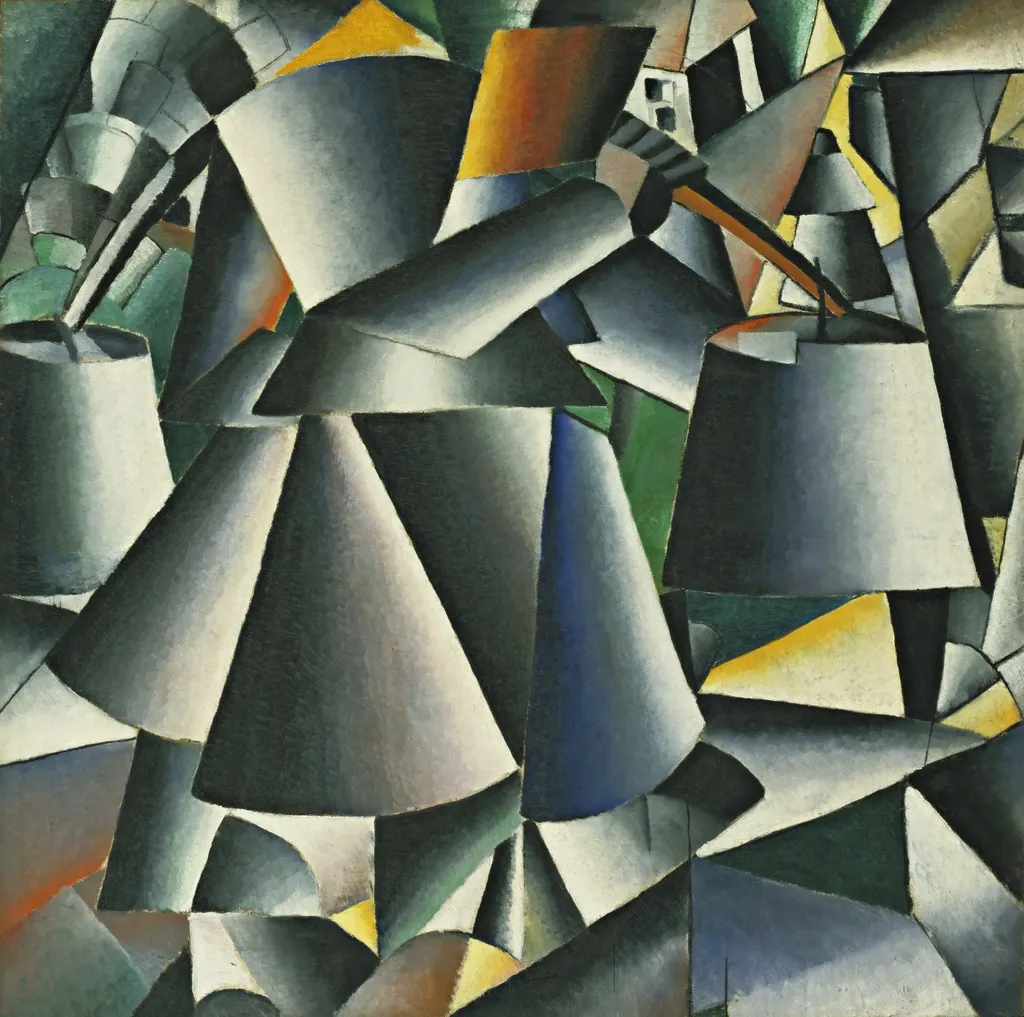
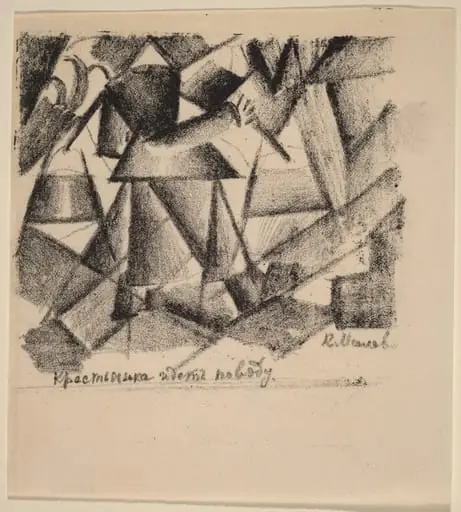
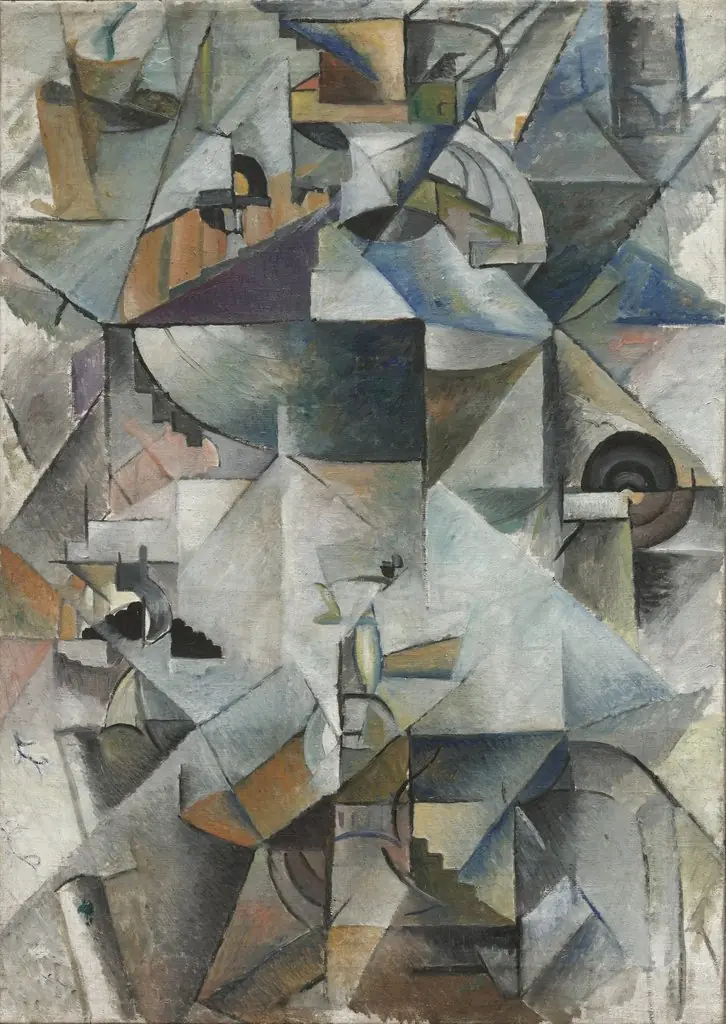
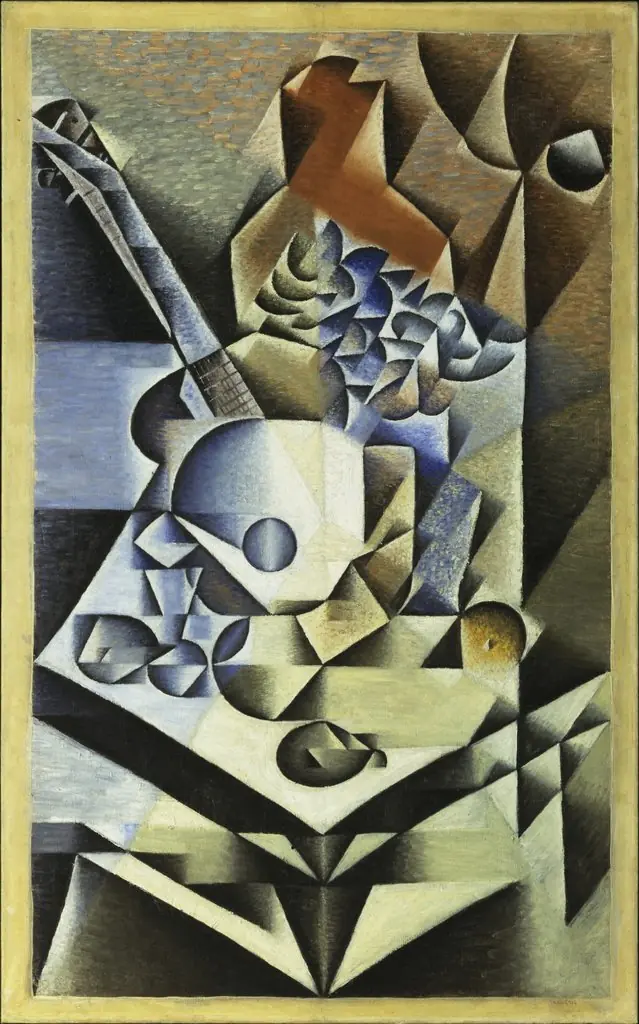
Woman with Pails: Dynamic Arrangement is an oil painting by the Cubism Analytic artist Kazimir Malevich. It dates from 1912 and is held in the collection of the Museum of Modern Art.
About this work
Overview
The painting is part of the Museum of Modern Art’s collection, representing a transitional phase in Malevich’s artistic evolution.
Kazimir Malevich painted Woman with Pails: Dynamic Arrangement in 1912 using oil on canvas. The work emerged during his early engagement with Cubist principles, before his later development of Suprematism. It captures a rural woman in motion, rendered through fractured planes and overlapping forms.
The painting is part of the Museum of Modern Art’s collection, representing a transitional phase in Malevich’s artistic evolution.
Subject & Meaning
The subject is a peasant woman carrying pails, a common figure in Russian rural life. Malevich does not idealize her but presents her as a structural element within a larger compositional system. The emphasis is not on individual identity but on the energy of movement and the spatial relationships between body and environment. The figure becomes a vehicle for exploring form and rhythm rather than narrative.
Technique & Style
Malevich employs fragmented, angular shapes to deconstruct the figure and surrounding space, aligning with analytic Cubism’s approach to breaking down form. Colors, greens, yellows, and grays, are applied in flat, contrasting planes to suggest volume without traditional modeling. Brushwork is deliberate but not expressive; the focus lies in the arrangement of shapes rather than texture or brushstroke.
History & Provenance
Created in 1912, the painting predates Malevich’s fully abstract Suprematist works. It reflects his experimentation with Western avant-garde styles while rooted in Russian subject matter. The work entered the Museum of Modern Art’s collection in the mid-20th century, where it remains as part of a broader survey of early modernist experimentation in Eastern Europe.
Context
In early 1910s Russia, artists like Malevich were absorbing influences from French Cubism while seeking new modes of expression tied to local culture. Woman with Pails sits at the intersection of these impulses: it adapts Cubist fragmentation to depict a distinctly Russian peasant figure, bridging folk imagery with modernist abstraction before Malevich abandoned representation entirely.
Legacy
Though overshadowed by Malevich’s later Suprematist compositions, this painting illustrates his methodical shift from figuration to abstraction. It demonstrates how traditional subjects could be reimagined through geometric abstraction, paving the way for his radical departure into non-objective art. The work remains a key example of how Russian modernism engaged with, then moved beyond, European avant-garde trends.
Own this work as a print
Artist & collection

Artist
Kazimir Severinovich Malevich (23 February 1879 – 15 May 1935) was a Russian avant-garde artist and art theorist, whose work and writings pioneered the development of abstract painting in the 20th century.