Artwork
The Italian Brigand's Wife
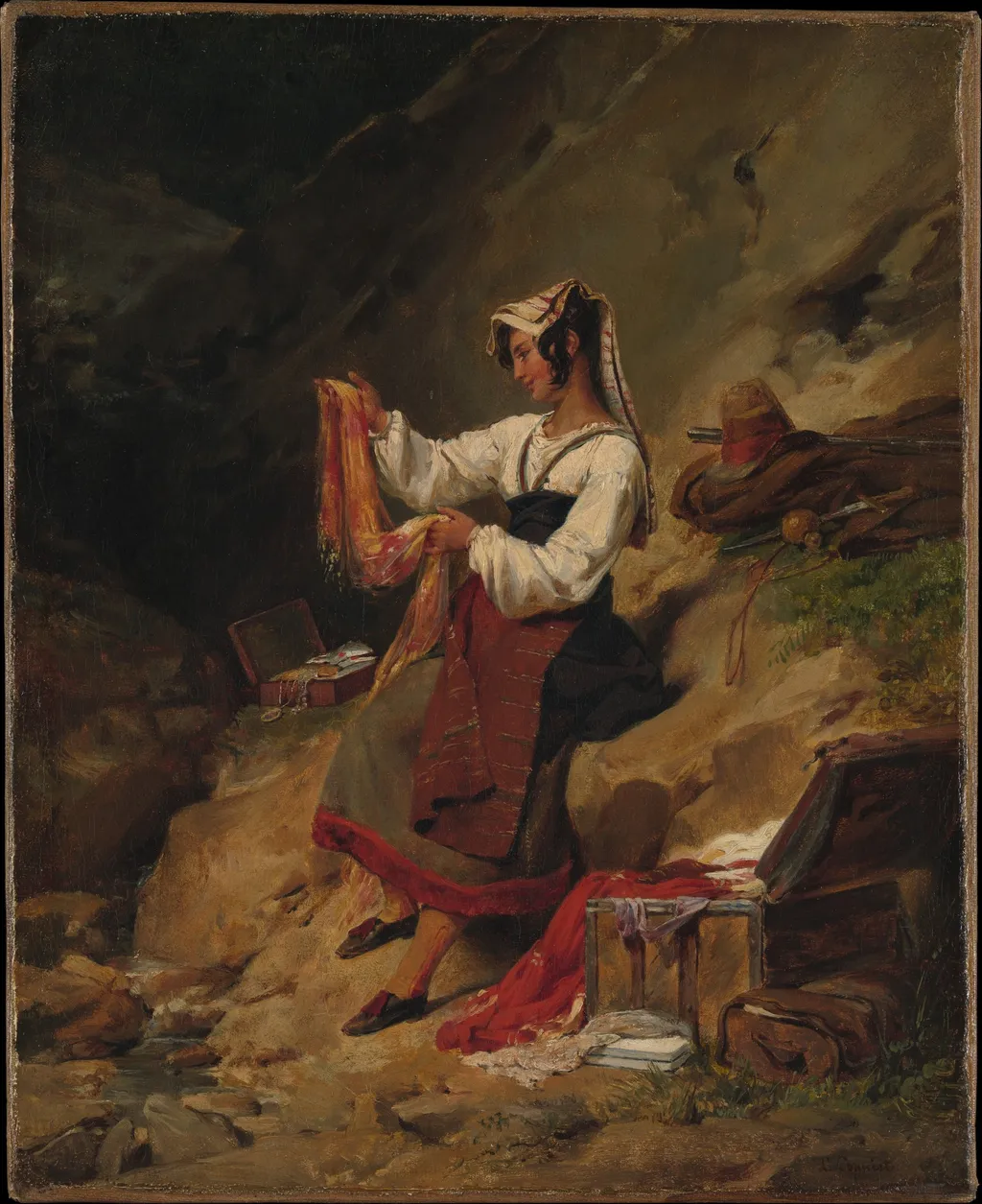
The Italian Brigand's Wife is an oil painting by the French Romanticist artist Léon Cogniet. It dates from 1825 and is held in the collection of the Metropolitan Museum of Art.
About this work
Subject & Meaning
The work functions as a pendant piece to a painting by Achille-Etna Michallon that portrays a brigand chief, creating a narrative pair focused on outlaw life.
The painting depicts the wife of a brigand in the hills of Southern Italy, shown examining plundered goods taken from a traveler. She is specifically portrayed holding up a length of silk for inspection, surrounded by clothing and other stolen items. This subject matter aligns with the romantic era's fascination with Italian outlaws as a common artistic theme.
The work functions as a pendant piece to a painting by Achille-Etna Michallon that portrays a brigand chief, creating a narrative pair focused on outlaw life. By focusing on the female figure and her interaction with the loot, the composition highlights the domestic or personal aspect of the brigand's existence rather than the act of violence itself.
History & Provenance
Léon Cogniet created this oil on canvas work between 1825 and 1826, producing three distinct versions during this period. The artist likely intended to exhibit one of these iterations at the Salon of 1827. Conceived as a pendant to a painting of a brigand chief by his friend Achille-Etna Michallon, the piece reflects the Romantic era's fascination with Italian outlaws.
One of the known versions currently resides in the collection of the Metropolitan Museum of Art in New York.
The Italian Brigand's Wife is housed in the Metropolitan Museum of Art in New York, where it is part of the museum's collection of paintings. The work, an oil on canvas genre scene dating to 1825, measures 25.1 cm by 20.6 cm and was created by the French artist Léon Cogniet. Contemporary accounts suggest that Cogniet produced three versions between 1825 and 1826 with the intention of exhibiting one at the Salon of 1827, although no exhibition record has been located.
The painting entered the Met's holdings at an undocumented date and remains on view in the European paintings galleries.
Overview
Created by the French artist Léon Cogniet in 1825, The Italian Brigand's Wife is an oil painting that exemplifies the French Romanticism movement. This work portrays a woman dressed in traditional attire, offering a glimpse into a specific moment of everyday life. The painting is part of the collection at The Metropolitan Museum of Art.
Technique & Style
Executed in oil paint, The Italian Brigand's Wife aligns with the aesthetic principles of French Romanticism prevalent in the 1820s. Cogniet, recognized for his contributions to both history painting and portraiture, applied his skills to this genre scene, demonstrating the movement's interest in individual expression and evocative subjects.
Context
Léon Cogniet was a prominent French artist of his era. Beyond his own artistic output, he was highly regarded for his extensive teaching career, mentoring over a hundred students who would go on to shape the next generation of artists. This educational role established his significant influence within the Parisian art world.
Own this work as a print
Artist & collection
Artist
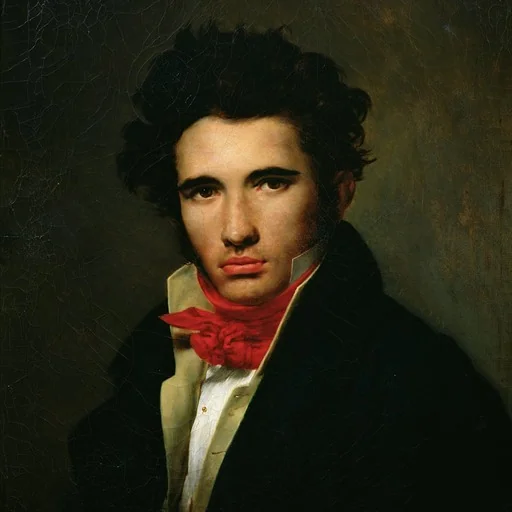
Léon Cogniet (29 August 1794 – 20 November 1880) was a French history and portrait painter. He is probably best remembered as a teacher, with more than one hundred students, some of them notable.