Artwork
Pont de la Tournelle, Paris
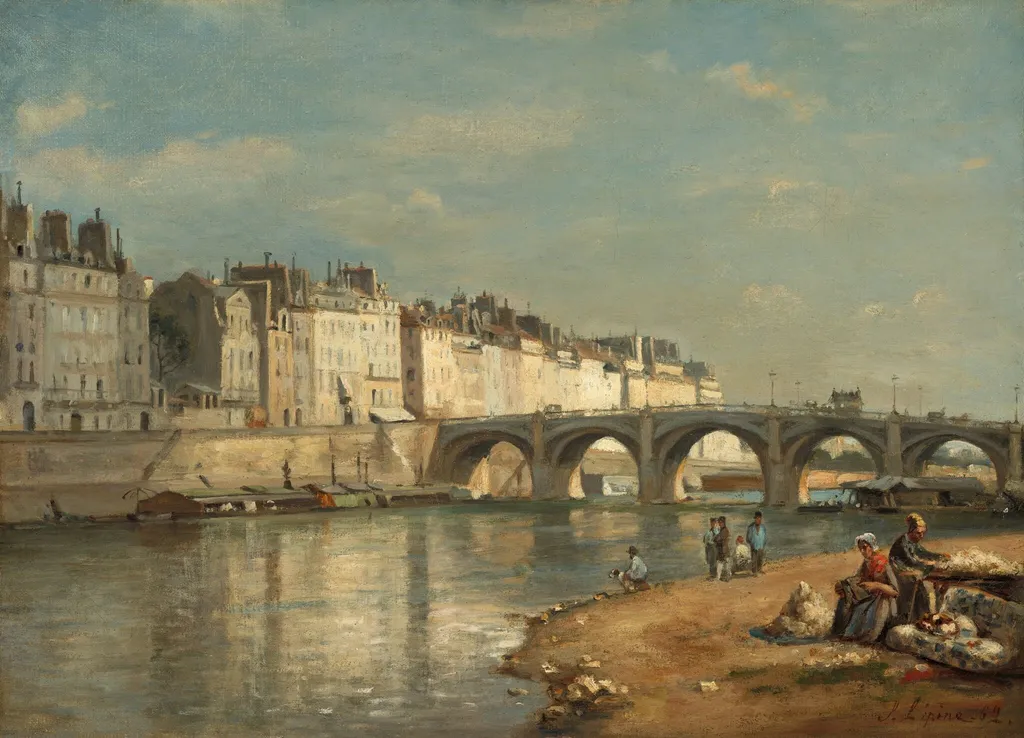
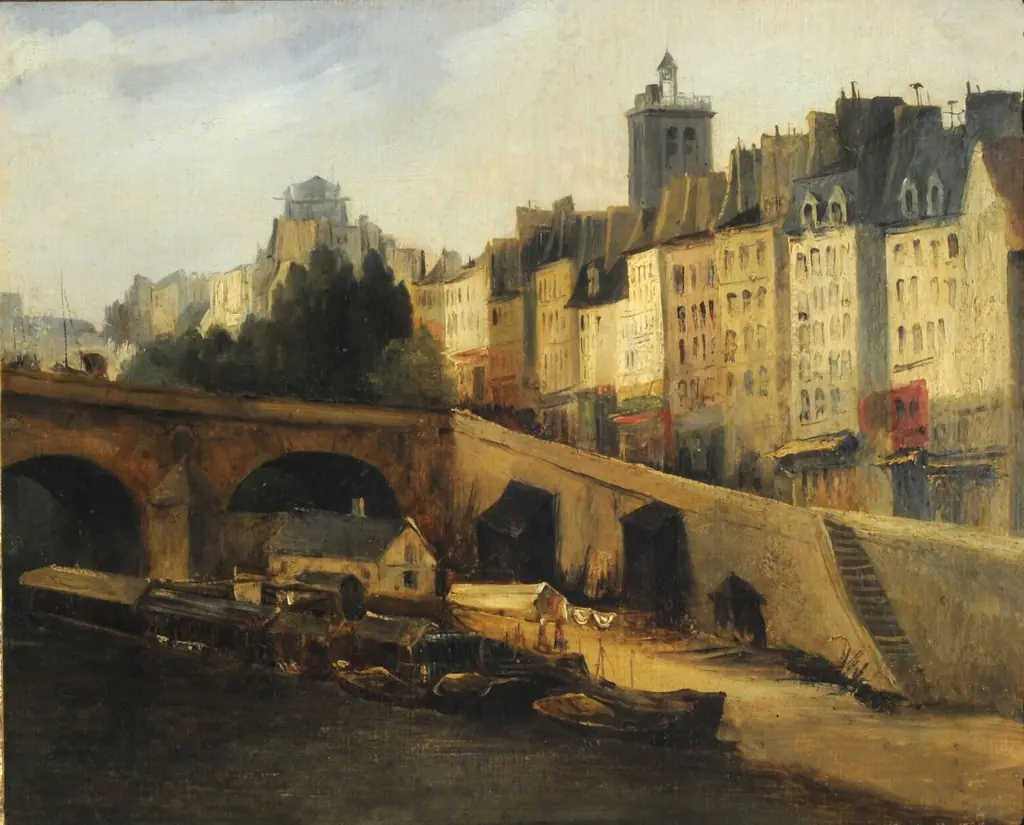
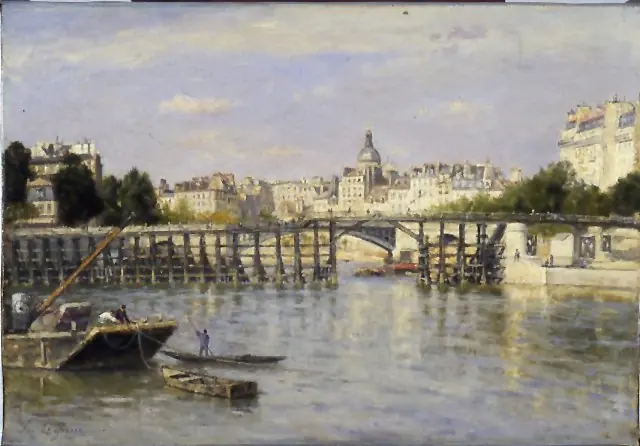
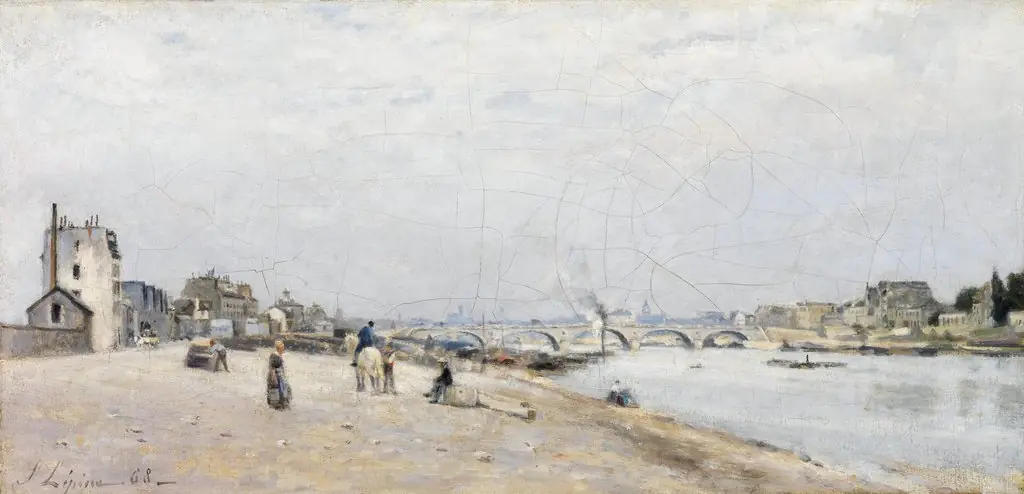
Pont de la Tournelle, Paris is an oil painting by the Impressionist artist Stanislas Lépine. It dates from 1862 and is held in the collection of the National Gallery of Art.
- Inscription
- Inscribed:lower right: S. Lepine - 62.
About this work
Subject & Meaning
As a work by Stanislas Lépine, it embodies his focus on everyday Parisian scenes and his contribution to mid-nineteenth-century French landscape painting.
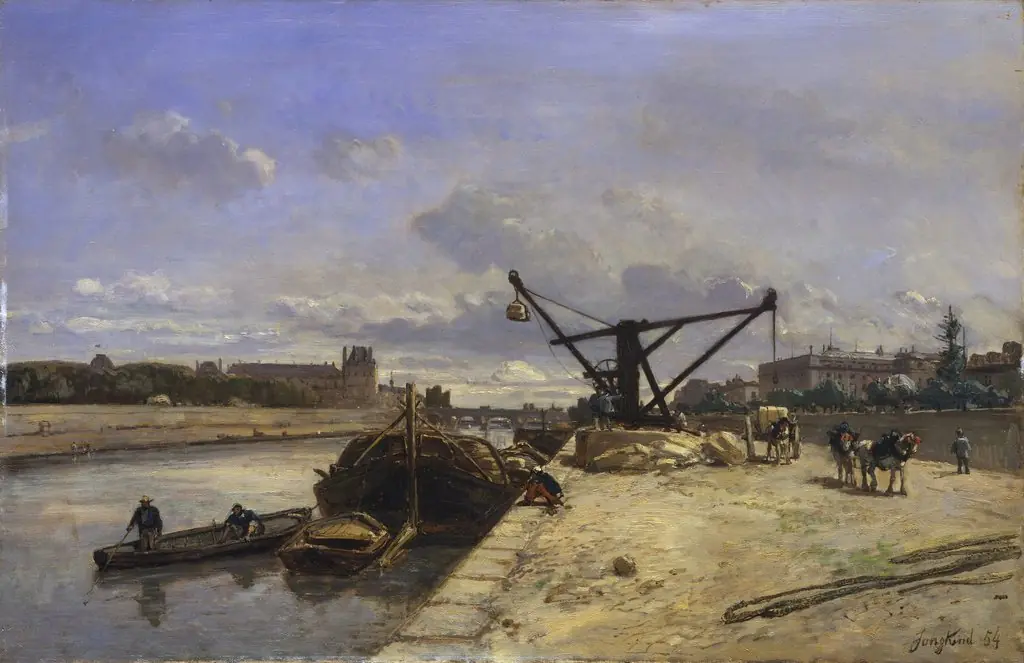
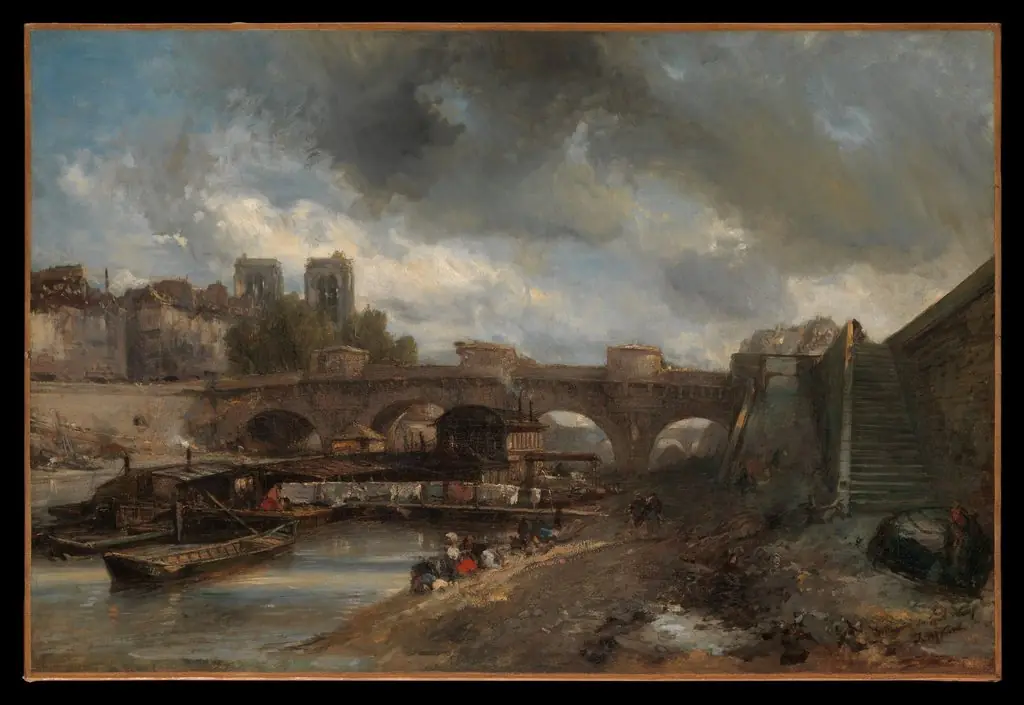
Pont de la Tournelle, Paris depicts the titular stone bridge spanning the Seine in the 5th arrondissement of Paris, symbolizing the city's enduring connection between its left and right banks. The composition emphasizes the bridge's architectural solidity against a soft, atmospheric sky, reflecting the Romantic fascination with urban landmarks and the interplay of nature and civilization. As a work by Stanislas Lépine, it embodies his focus on everyday Parisian scenes and his contribution to mid-nineteenth-century French landscape painting.
Technique & Style
Pont de la Tournelle, Paris is executed in oil on canvas, a standard support for Stanislas Lépine's mid-nineteenth-century practice. The painting is relatively modest in scale, measuring 40.2 cm in height by 55.1 cm in width, with the horizontal orientation suited to a panoramic riverside view of the Seine and the Parisian bridge. The landscape format and oil medium are consistent with Lépine's established method of recording the city's quays, islands, and bridges in a naturalistic manner.
The work is held in the collection of the National Gallery of Art in Washington, D.C., having entered the institution through a 1970 bequest. Its provenance traces back through Parisian collections of the early twentieth century before passing to Ailsa Mellon Bruce in 1955.
History & Provenance
Stanislas Lépine created the oil painting Pont de la Tournelle, Paris in 1862. The work first belonged to Georges Lutz in Paris until his death in 1901. It was sold at the Lutz auction on May 26, 1902, and subsequently acquired by Ernest Cognacq.
Upon Cognacq's death in 1928, the painting passed by inheritance to his grand-nephew, Gabriel Cognacq. Gabriel sold the piece at auction in Paris on May 14, 1952. The London dealer Alex Reid & Lefevre likely purchased it for Captain Edward H. Molyneux, who sold it on August 15, 1955, to Ailsa Mellon Bruce in New York. Mellon Bruce bequeathed the work to the National Gallery of Art in Washington, D.C., in 1970.
The painting is held by the National Gallery of Art in Washington, D.C., having entered the collection in 1970 as part of the bequest of Ailsa Mellon Bruce, who had purchased it on 15 August 1955.
Prior to its acquisition by the NGA, the work passed through several hands. It was owned by Georges Lutz in Paris until his death in 1901, then offered at the Lutz sale in Paris on 26 May 1902 (lot 97). It subsequently entered the collection of Ernest Cognacq in Paris, passing by inheritance to his grand-nephew Gabriel Cognacq; it was then offered at the Cognacq sale in Paris on 14 May 1952 (lot 42).
It was acquired by Alex Reid & Lefevre, London, probably for Captain Edward H. Molyneux, Paris, before being sold to Ailsa Mellon Bruce in 1955.
The work was included in the 1952 United States exhibition of Molyneux's collection.
Overview
Stanislas Lépine’s 1862 oil painting presents a tranquil view of the Pont de la Tournelle spanning the Seine in Paris. Executed within the Realist tradition, the canvas records a modest urban landscape, foregrounded by a few pedestrians and river vessels, and rendered with a subdued palette that emphasizes the ordinary atmosphere of the riverbank.
Context
Lépine’s focus on bridges and riverbanks coincided with a period of rapid urban transformation under Haussmann’s renovation of Paris. While many artists highlighted grand boulevards, Lépine turned to modest, functional structures, offering a counterpoint that records the city’s infrastructural fabric amid broader modernization.
Own this work as a print
Artist & collection

Artist
Stanislas Victor Edouard Lépine was a French painter who specialized in landscapes, especially views of the Seine.