Artist
Stanislas Lépine

France
Stanislas Lépine is a France Impressionism artist. 22 works are cataloged here, principally at Art Institute of Chicago.
Stanislas Victor Edouard Lépine was a French painter who specialized in landscapes, especially views of the Seine.
Overview
Stanislas Victor Edouard Lépine (October 3, 1835, September 28, 1892) was a French landscape painter whose quiet, atmospheric views of the Seine and Parisian environs occupy a distinctive place between pre-Impressionism and Impressionism. Born in Caen, Normandy, he spent his adult life in Paris, producing small-scale plein-air studies and larger salon paintings that captured the mutable effects of light on water and urban landscapes. Though he exhibited alongside the Impressionists at their inaugural 1874 exhibition, he maintained his independence from any single movement. Today he is recognized as a sensitive chronicler of nineteenth-century Parisian river life and a bridge between the pastoral traditions of Camille Corot and the modern landscape painting that followed.
Biography & dates
Lépine was born on October 3, 1835, in Caen, Normandy, the son of Stanislas-Edmond-Louis Lépine, a cabinetmaker aged twenty, and Marie-Louise Hérier. He moved to Paris in 1855, settling in Montmartre, where he would live for the remainder of his life at various addresses including 20 chaussée de Clignancourt, rue des Rosiers, rue de la Fontenelle (1870-1887), and finally 18 rue de Clignancourt. Initially self-taught, he began his career painting maritime views in the manner of Johan Barthold Jongkind. In 1859 he debuted at the Salon with Port de Caen, Effet clair de lune, and would exhibit there regularly until 1880, later showing at the Salon des artistes français from 1881 to 1889. The same year he met Camille Corot in Normandy, becoming his pupil in 1860 and copying works in his studio. Through Corot he met Henri Fantin-Latour, whose friendship brought periodic financial assistance. The collector Hazard and later Count Armand Doria provided crucial support; Doria sheltered Lépine and Adolphe-Félix Cals at his Château d'Orrouy. Art dealer Paul Durand-Ruel began acquiring his work around 1870, and Lépine participated in Durand-Ruel's 1871 London exhibition, though the economic crisis of 1873-1879 interrupted this relationship. In 1874 he organized his first auction at Hôtel Drouot, selling thirty-four paintings, followed by twenty-three more in 1875. He was awarded a gold medal at the Exposition Universelle of 1889 for Pont de l'Estacade. Despite this recognition, he died in poverty on September 28, 1892, in his Paris apartment in the 18th arrondissement; his friends collected funds for his burial at the Cimetière parisien de Saint-Ouen. A retrospective opened at Galerie Durand-Ruel in December 1892.
Style & movement
Lépine's work occupies an intermediate position between pre-Impressionism and Impressionism. Working primarily outdoors, he developed a visual vocabulary that captured nature's changeability, substituting atmospheric impression for literal reproduction. His palette was notably lighter than that of the Barbizon school, built upon delicate gray tones that precisely registered light quality. His paintings are distinguished by their placid mood, small scale, and restrained color range. From the 1880s, his subject matter expanded to include anecdotal scenes in Parisian parks and gardens, couples promenading, schoolchildren at play, and nurses with young children, an unusual turn for an artist who typically minimized human presence. Throughout his career, he maintained a division between small pochades often painted on panel and larger atelier-conceived salon works measuring up to 110 by 170 cm. His landscapes of Montmartre specifically sought the quarter's remaining village character, its isolated courtyards, old walls, and garden lanes, rather than the bustling boulevards.
Major works
Lépine's oeuvre centers on three interconnected themes: views of Paris, its suburban surroundings, and the Normandy coast. His most celebrated works include La Rue Saint Vincent (circa 1875), now at the Musée d'Orsay; Paris, le pont des Arts (1880); and the gold medal-winning La Seine à l'Estacade, exhibited at the Salon of 1885. For the latter, he produced numerous small preparatory studies now held at the Walters Art Museum, Baltimore, the Norton Simon Museum, Pasadena, and in private collections. Vue du pont de Sèvres, a mid-sized canvas, is at the Museo Thyssen-Bornemisza. Bridge in a French City (circa 1870), an oil on canvas measuring 50 by 40 cm, belongs to the Österreichische Galerie Belvedere, Vienna. The Harbor of Rouen (38 by 55.7 cm) is at the Musée des Beaux-Arts, Reims. His Montmartre series, comprising approximately fifty street views, includes paintings of rue Cortot, rue des Saules (circa 1872), rue de l'Abreuvoir, and rue Saint Vincent.
Influences & students
Lépine's principal artistic influences were Camille Corot and Johan Barthold Jongkind. Corot proved decisive after their 1859 meeting in Normandy; Lépine entered his studio in 1860 and developed a personal style that mediated between Corot's pastoral compositions and the atmospheric landscapes of the emerging Impressionists. Jongkind's influence is evident in Lépine's early maritime subjects and his lifelong preoccupation with water and riverside motifs. Within his circle, Lépine enjoyed the esteem of fellow artists rather than broad public recognition. Henri Fantin-Latour became a close friend and occasional financial supporter. Count Armand Doria acted as patron to Lépine and Adolphe-Félix Cals, providing both material support and residence at Château d'Orrouy. Paul Durand-Ruel championed his work from approximately 1870. The sources do not record Lépine himself as a teacher or identify pupils among the next generation.
Legacy
Lépine's posthumous reputation was secured in part by the December 1892 retrospective at Galerie Durand-Ruel, organized shortly after his death. Though he never achieved the popularity of his contemporaries during his lifetime, his position as a chronicler of Seine-side Paris from the 1860s to 1892 has gained scholarly recognition. His work is now understood as offering a comprehensive visual record of working and leisure life along the river, from Charenton and Bercy to Sèvres. Collectively, his paintings trace the evolution of plein-air landscape painting toward modernism without fully committing to Impressionist orthodoxy. Institutions holding his work include the Musée d'Orsay, the Musée des Beaux-Arts in Reims, the Österreichische Galerie Belvedere in Vienna, the Walters Art Museum, the Norton Simon Museum, and the Museo Thyssen-Bornemisza. The sources do not provide specific auction records or detailed market history beyond the artist-organized sales of 1874 and 1875.
Works by Stanislas Lépine
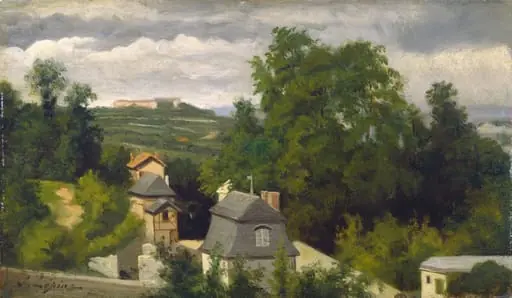 View on the Outskirts of Caen
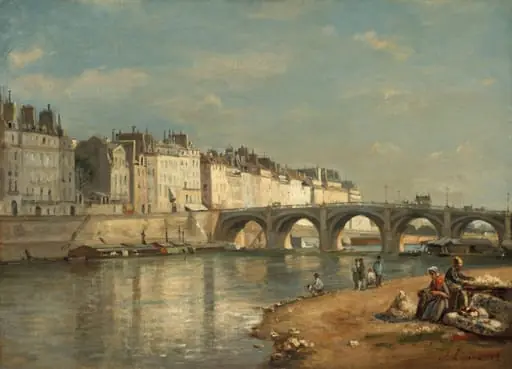 Pont de la Tournelle, Paris
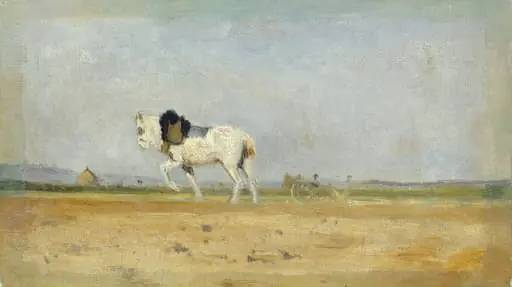 A Plow Horse in a Field
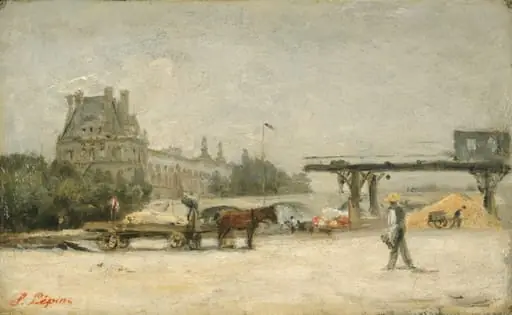 View of the Louvre
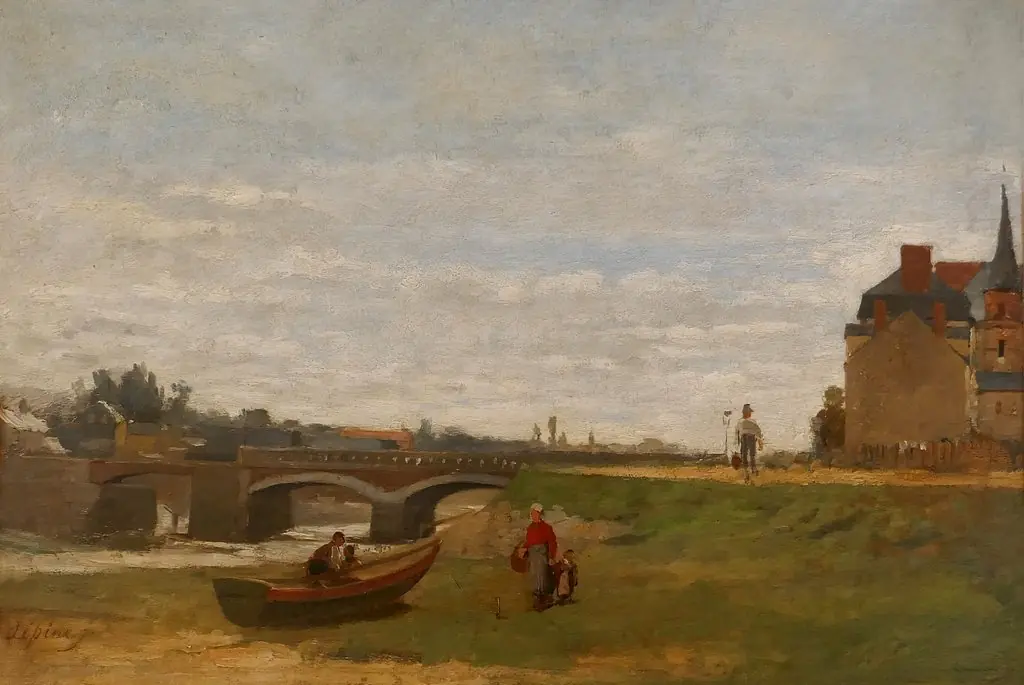 Landscape with a Bridge
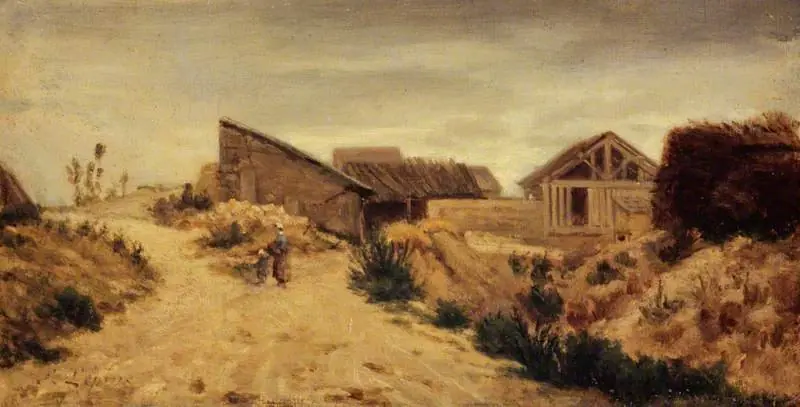 Landscape with Farm Buildings
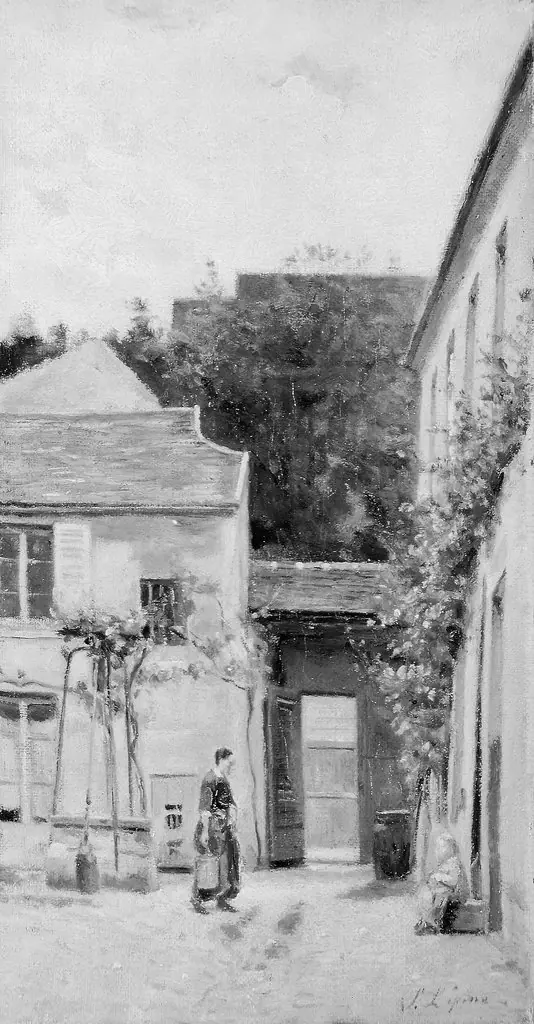 The Courtyard
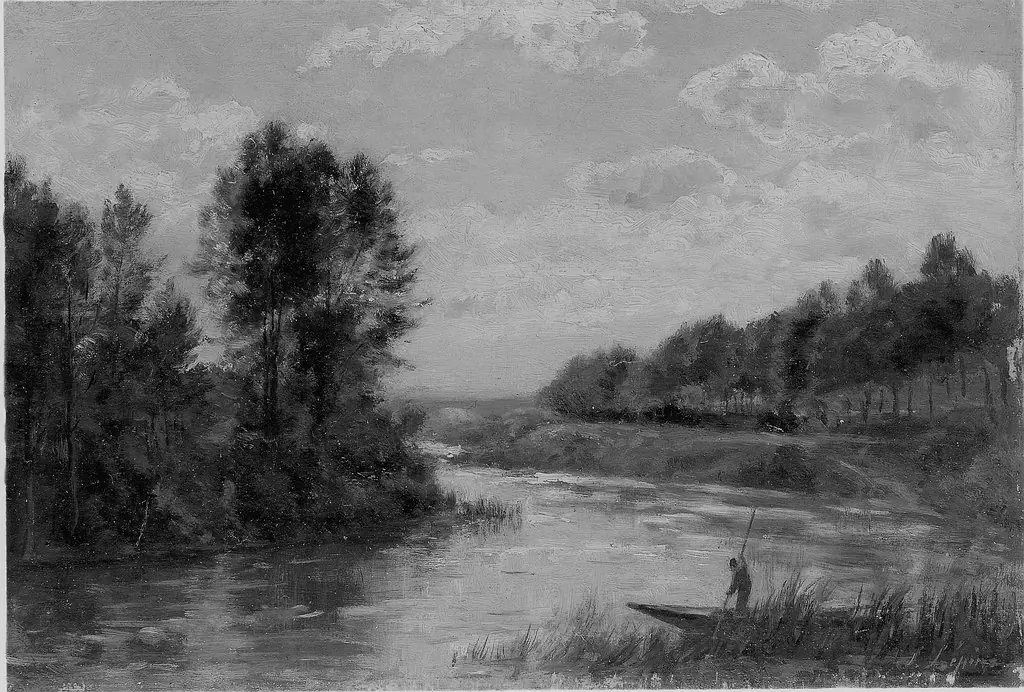 A Stream in France
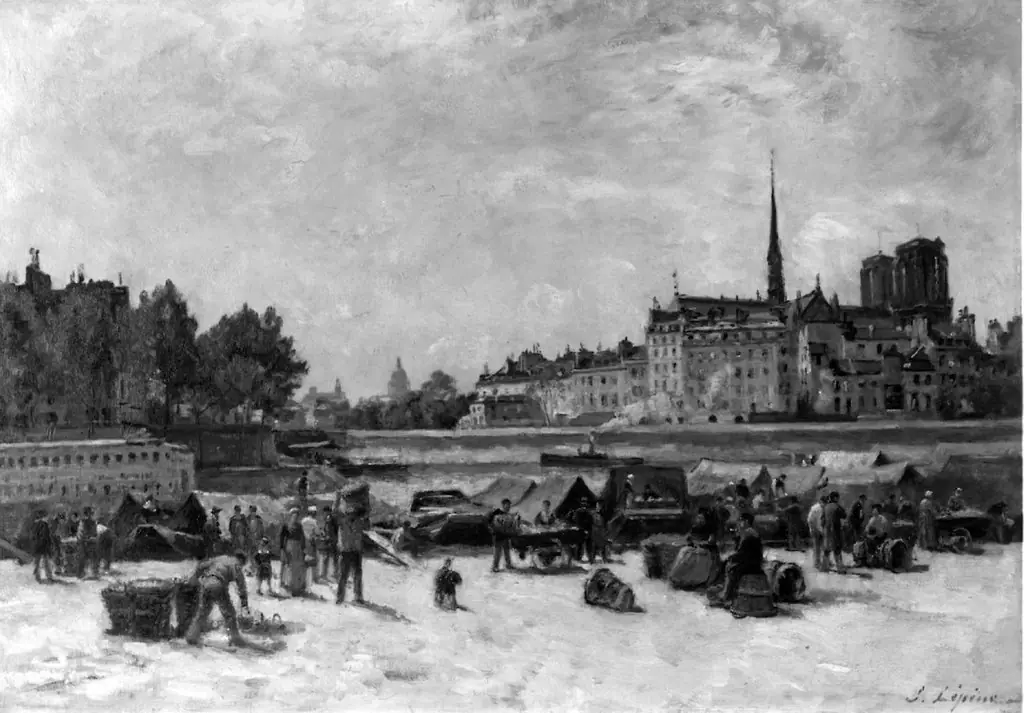 The Apple Market
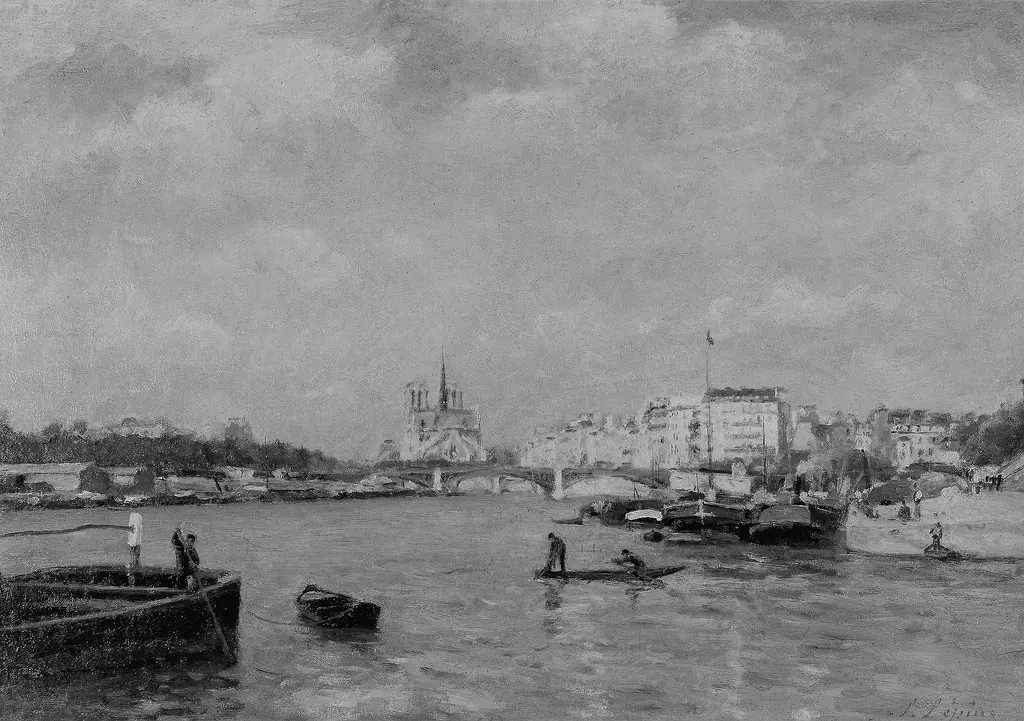 View on the Seine, Paris
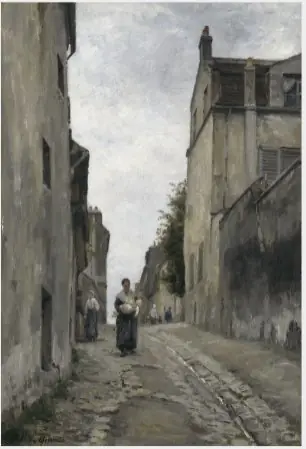 Rue Mont-Cenis, Montmartre
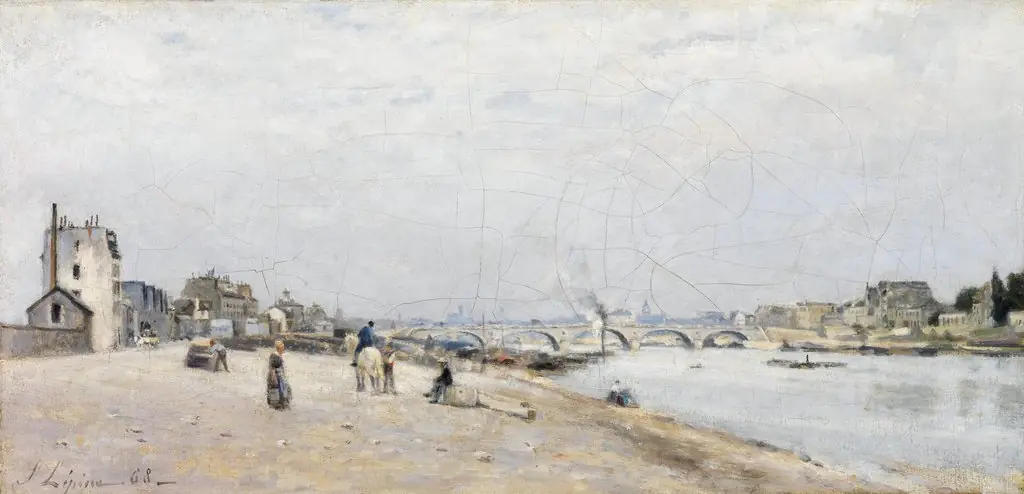 The Seine à Bercy
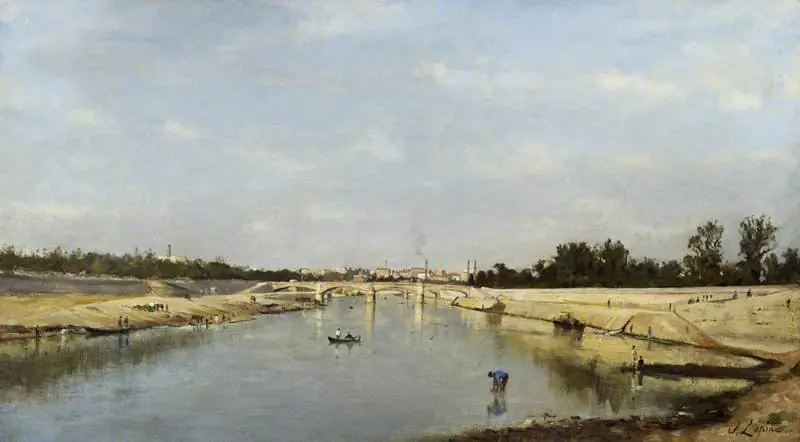 The Pont de l'Alma near Paris
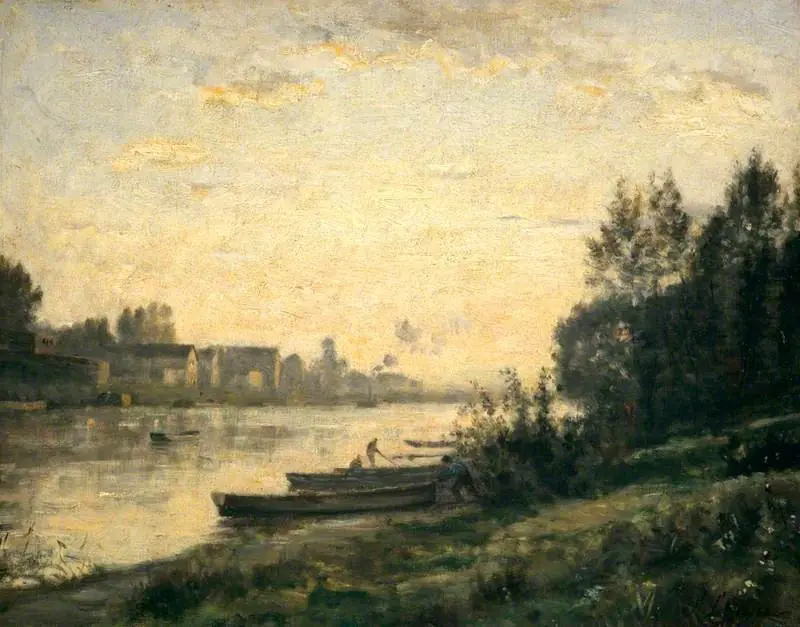 Sunset on a River
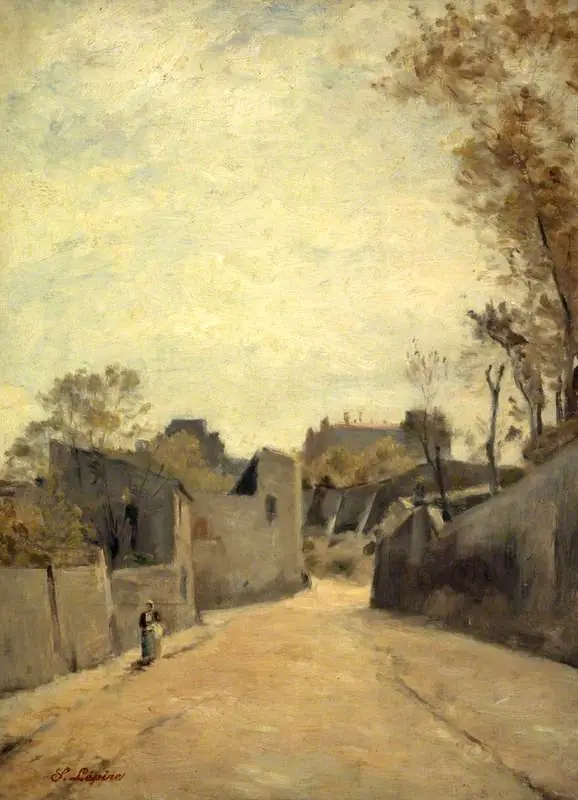 Montmartre
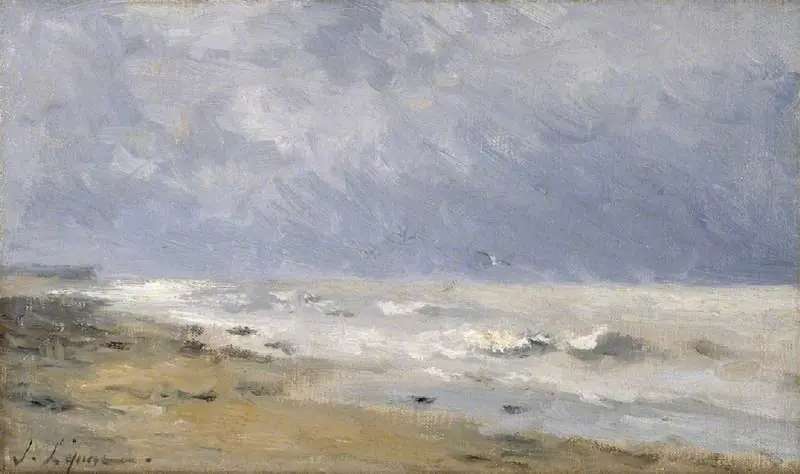 The coast of Normandy
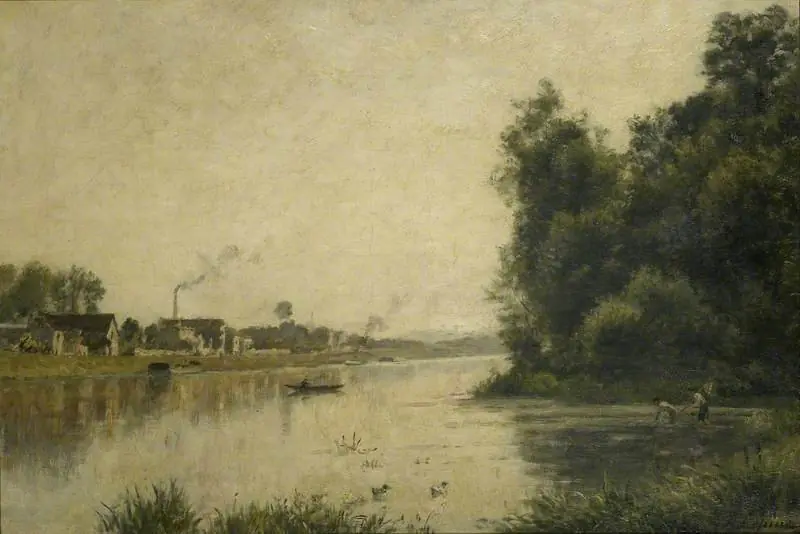 The Seine at La Garenne Saint-Denis
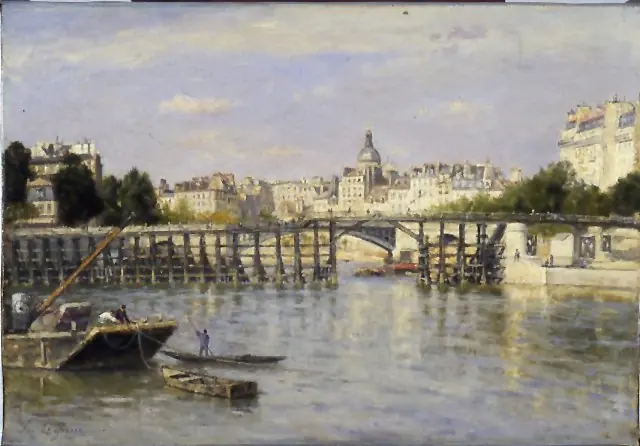 The Estacade Bridge
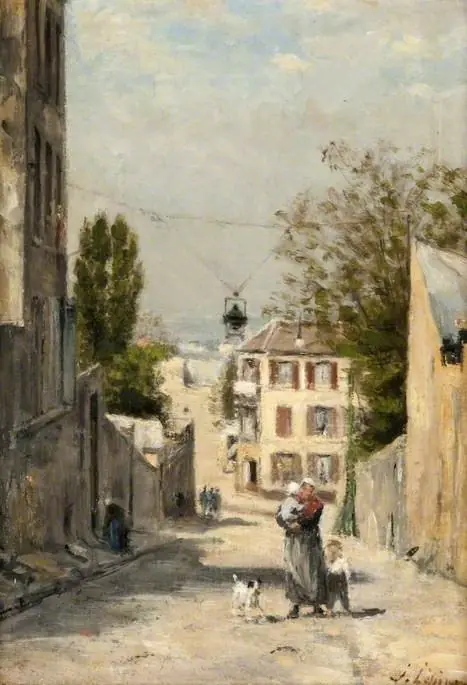 The Rue de Norvins, Montmartre
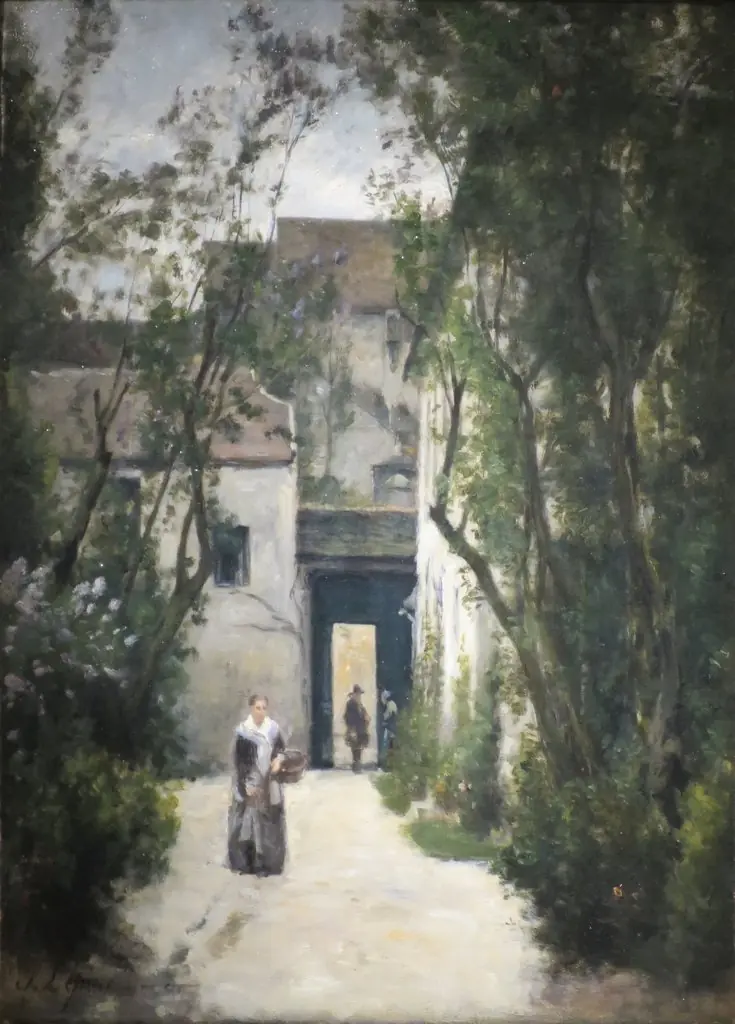 A Courtyard on the rue de la Fontenelle
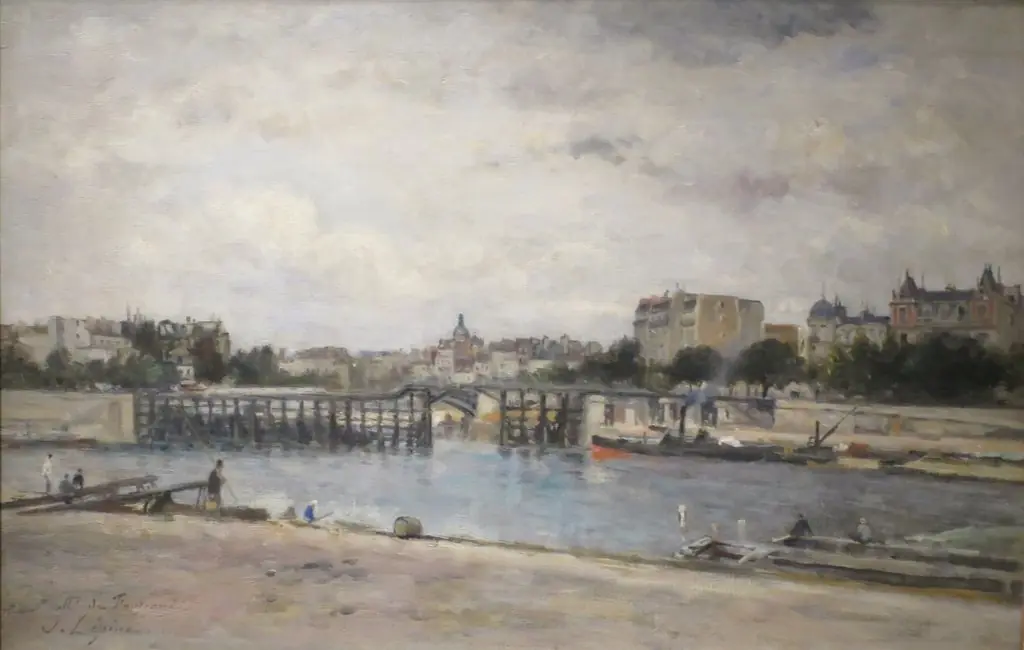 The Pont de l'Estacade, Paris
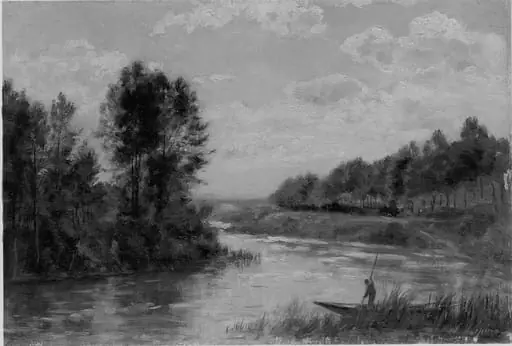 A Stream in France
Collections represented


Artists in a similar vein