Artwork
Edward C. Cunningham
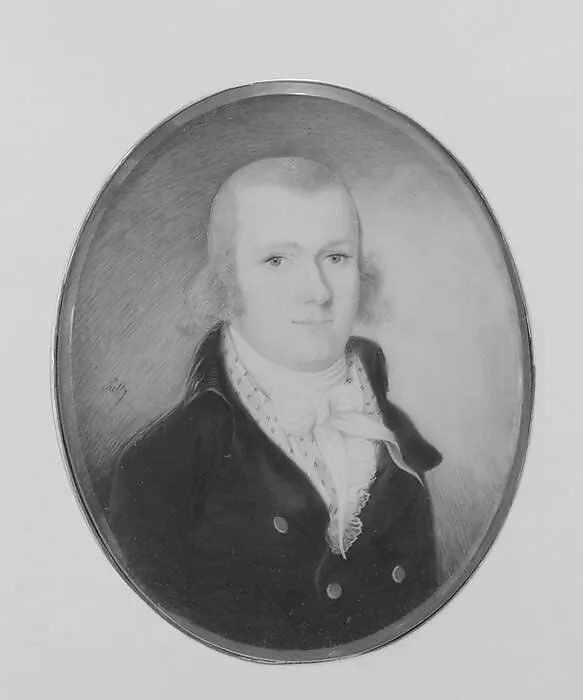
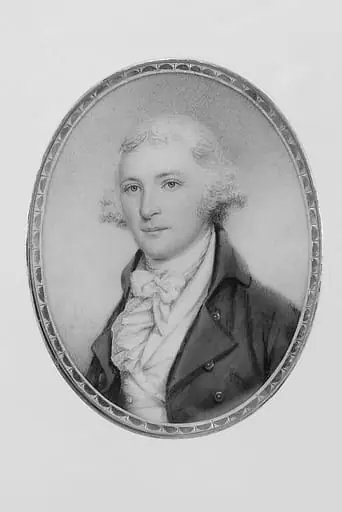
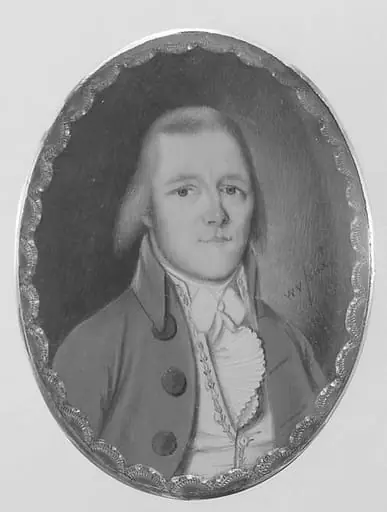
Edward C. Cunningham is a watercolor painting by the Rococo painting artist Lawrence Sully. It dates from 1800 and is held in the collection of the Metropolitan Museum of Art.
About this work
Technique & Style
The work is a portrait miniature executed in watercolor on a thin ivory support, a technique documented for early‑19th‑century American portraiture.
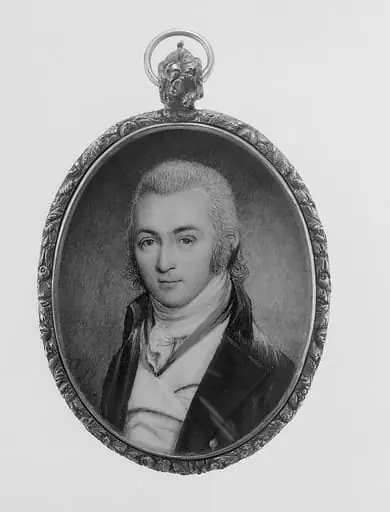
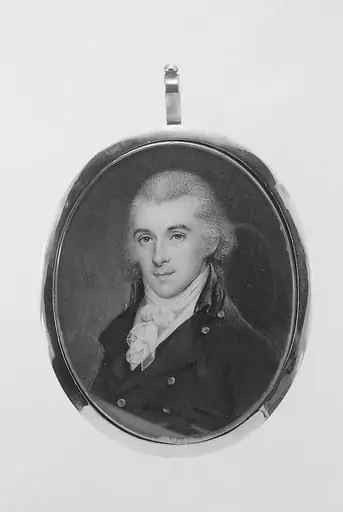
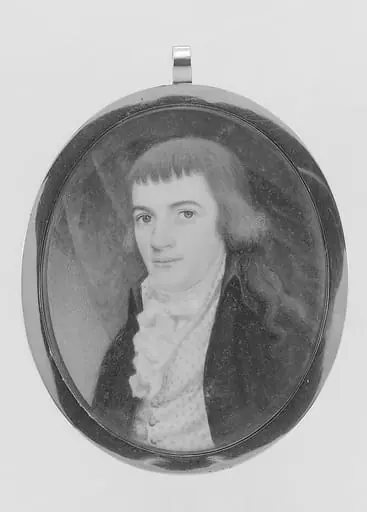
The work is a portrait miniature executed in watercolor on a thin ivory support, a technique documented for early‑19th‑century American portraiture. Its dimensions measure about 6.3 cm in height by 5.1 cm in width, indicating a small‑scale format typical of miniatures. Lawrence Sully applies fine brushwork to render the sitter’s facial features and clothing with subtle tonal shifts, while the limited palette of pinks and blues is characteristic of watercolor on ivory.
The composition presents a three‑quarter view of a seated white male sitter, rendered with a restrained formalism that balances realistic likeness against the decorative edge of the ivory panel. The piece is housed in the Metropolitan Museum of Art and dates to 1800.
History & Provenance
The work titled "Edward C. Cunningham" is a watercolor on ivory portrait painted by Lawrence Sully in 1800. It was created as a likeness of the sitter and later entered the collection of the Metropolitan Museum of Art, where it is displayed in The American Wing. The piece measures approximately 6.3 × 5.1 cm and is classified as a miniature portrait.
Its material consists of watercolor pigments applied to an ivory support, a technique documented in contemporary records. The painting’s provenance traces from its commission by the subject to its acquisition by the museum, after which it has remained in the museum’s permanent holdings.
Edward C. Cunningham, a 1800 watercolor-on-ivory miniature by Lawrence Sully, is held in the collection of the Metropolitan Museum of Art, where it is classified under The American Wing. The work measures 6.3 by 5.1 centimeters and depicts a portrait of a man. No specific accession number, acquisition date, or prior exhibition history is documented in the available records.
Overview
This watercolor portrait, created around 1800 by Lawrence Sully, depicts Edward C. Cunningham. Executed on a small piece of ivory, it represents a common form of personal portraiture during the period. The work is part of The American Wing collection, offering insight into early American artistic practices and the visual culture of its time.
Subject & Meaning
Edward C. Cunningham is presented in a direct gaze, his features softly illuminated. The small scale of the portrait suggests it was intended for private contemplation or as a cherished keepsake. Such miniatures often served as personal mementos, exchanged between family members or carried as a token of affection, reflecting a desire for portable and intimate representations of loved ones.
Context
During the late eighteenth and early nineteenth centuries, portrait miniatures like this one offered an alternative to more formal, large-scale oil paintings. While oil on canvas dominated public and grand commissions, watercolor on ivory provided a more accessible and personal option for capturing individual likenesses. These small-format works were often set into lockets or frames, emphasizing their role as private, portable treasures.
Artist & collection