Artwork
Portrait of a Lady
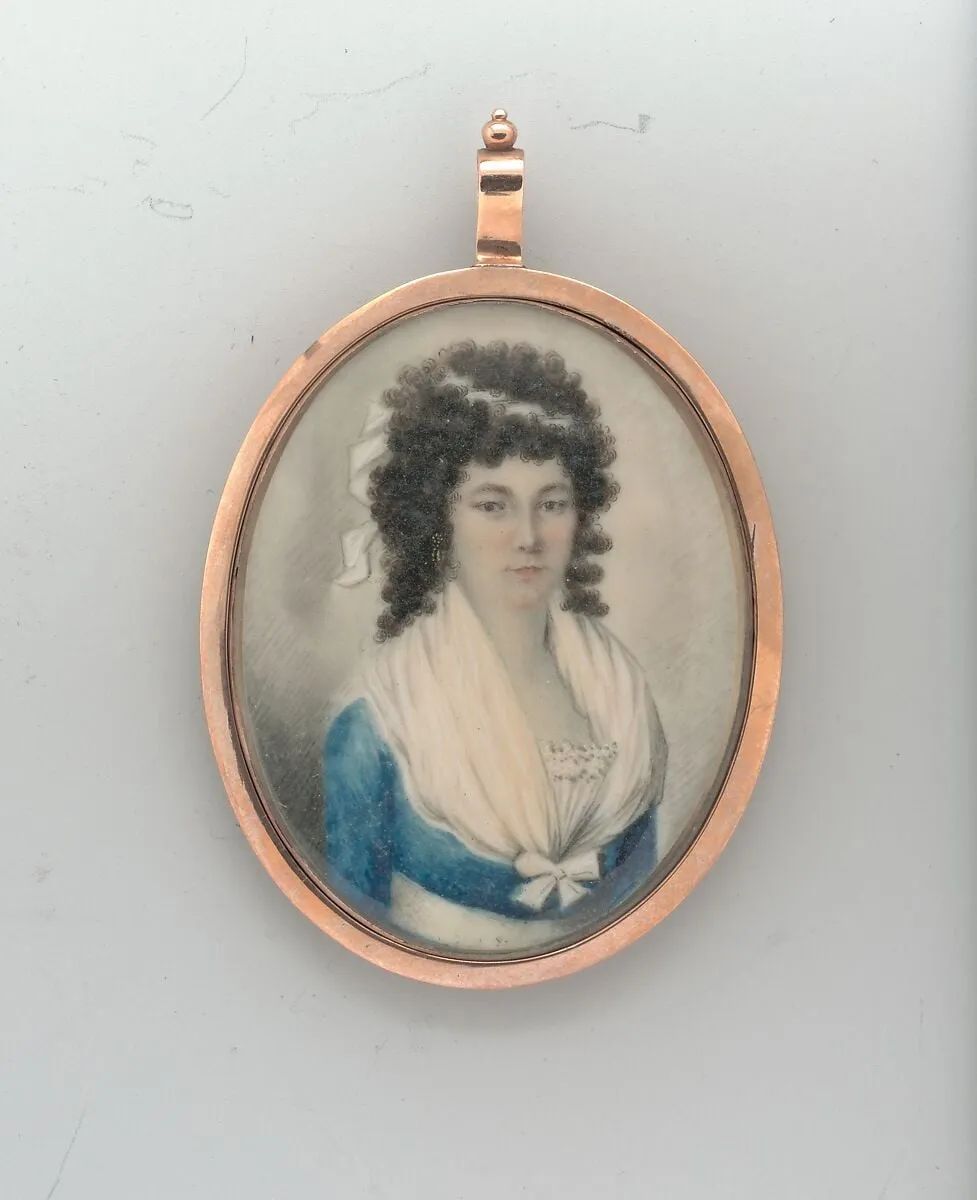
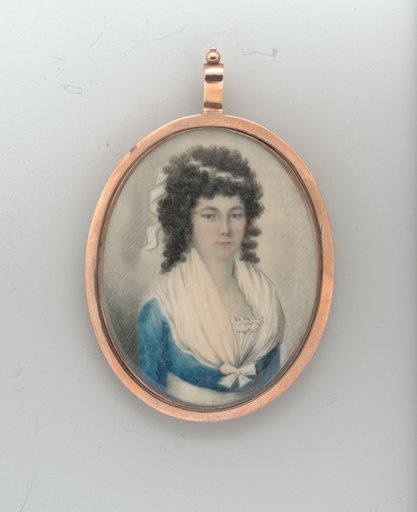
Portrait of a Lady is a watercolor painting by the American Folk Art artist Lawrence Sully. It dates from 1795 and is held in the collection of the Metropolitan Museum of Art.
About this work
Subject & Meaning
The painting’s subject is thus situated within a tradition of elite domestic representation, where dress and accessories signal social standing.
The work portrays a young woman rendered as a miniature on ivory, identified as a white subject. According to the documented description, the figure is adorned with a bow, an earring, and a fichu, all highlighted in the composition. These accessories, together with the miniature format, emphasize a formal, genteel presentation typical of late‑18th‑century portraiture.
The painting’s subject is thus situated within a tradition of elite domestic representation, where dress and accessories signal social standing. The depiction is catalogued within The American Wing’s collection of early American portraiture.
Technique & Style
Executed in 1795, the portrait is a miniature painted in watercolor on ivory, measuring 4.8 cm in height and 3.7 cm in width. The refined handling employs delicate stippling and smooth washes to articulate the sitter’s fichu and facial features, while the ivory support imparts a luminous ground that enhances the translucency of the flesh tones. Stylistically, the work adheres to the neoclassical conventions of the period, with careful attention to linear precision and restrained modeling, typical of Sully’s approach to portrait miniatures.
History & Provenance
The Portrait of a Lady is a watercolor on ivory miniature painted by Lawrence Sully in 1795. The work entered the Metropolitan Museum of Art through the collections of Edward Sheppard and Gloria Manney, who are listed as former owners in the museum’s provenance record. Prior to their stewardship, the miniature’s ownership history is not documented in the available sources, but its creation date and medium are firmly established by Sully’s inscription and the object’s catalogue entry.
Thus, the painting’s provenance traces from the artist’s studio to the Sheppard‑Manney holdings and finally to its current home in the Met’s American Wing.
The watercolor on ivory miniature titled Portrait of a Lady, created by Lawrence Sully in 1795, is held in the collection of the Metropolitan Museum of Art. Within the museum, the work is classified under The American Wing. The object's provenance includes prior ownership by Edward Sheppard and Gloria Manney before its acquisition by the institution.
While specific accession numbers are not provided in the available records, the work is cataloged with precise dimensions of 4.8 units in height and 3.7 units in width. The provided sources do not contain information regarding a specific exhibition history for this piece, limiting the documentation to its current institutional location and previous private holders.
Legacy
The inclusion of Lawrence Sully’s Portrait of a Lady in The American Wing of the Metropolitan Museum has cemented its status as a reference point for scholarship on early American portraiture, particularly in studies of women’s representation in the late 18th century. Its presence in the museum’s distinguished collection, assembled by Edward Sheppard and Gloria Manney, underscores its recognized significance within the canon of American decorative arts. Consequently, the work informs contemporary exhibitions and academic discourse on miniature portraiture, reinforcing its enduring reputation as a benchmark for artistic technique and historical insight.
Overview
Painted in 1795, Lawrence Sully's Portrait of a Lady is a miniature executed in watercolor on ivory. The work depicts an unidentified woman in a dark dress, captured in a three-quarter view as she looks back over her shoulder. A distinct pink bow adorns her neck, providing a focal point of color against the somber attire.
The medium of watercolor on ivory was standard for the genre, allowing the translucent paint to interact with the smooth, pale surface to create a soft, luminous effect for the sitter's skin. Measuring only a few inches, the piece was designed as a portable object of intimacy, intended to be worn as jewelry or kept in a pocket. This work exemplifies Sully's contribution to early American portraiture, a period where such miniatures served as essential tokens of affection and social connection.
Sully, active in the United States during the late 18th century, produced numerous similar commissions that documented the fashion and physiognomy of the era's elite. The composition relies on a tight framing and direct gaze to establish a personal connection between the viewer and the subject, characteristic of the miniature tradition.
Context
During the early American period, miniature portraits like this one served a significant social role. Rather than merely adorning walls, these small-scale images functioned as cherished personal keepsakes. They were often carried or worn as jewelry, allowing individuals to maintain a constant, intimate connection with the depicted person. Artists such as Sully produced numerous examples, reflecting the era's demand for portable, sentimental mementos.
Artist & collection

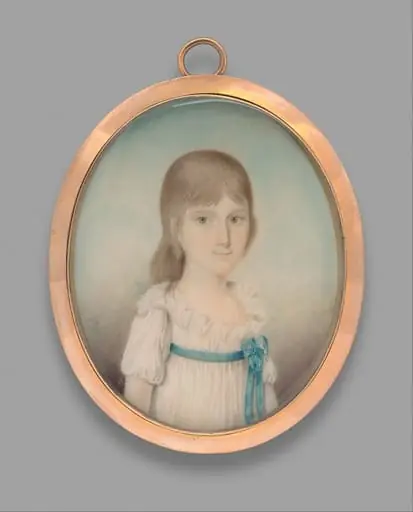
- Clarissa Storrs
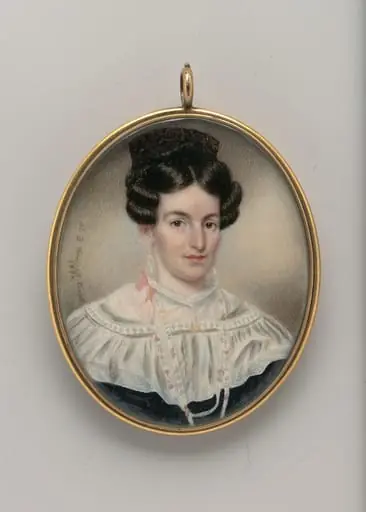 Portrait of a Lady
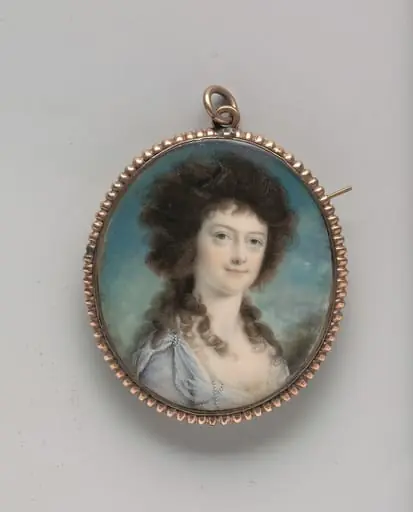 Mrs. James Bleecker (Elizabeth Garland Bache)
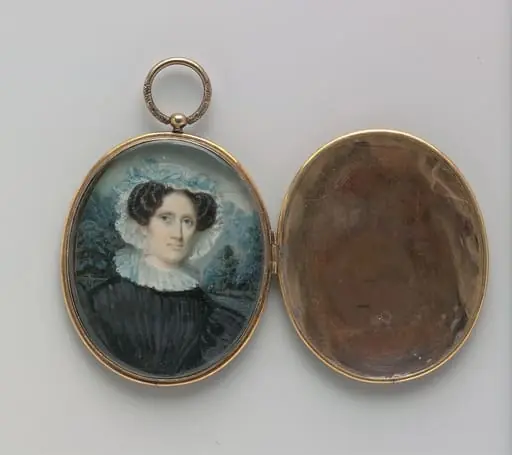 Portrait of a Lady
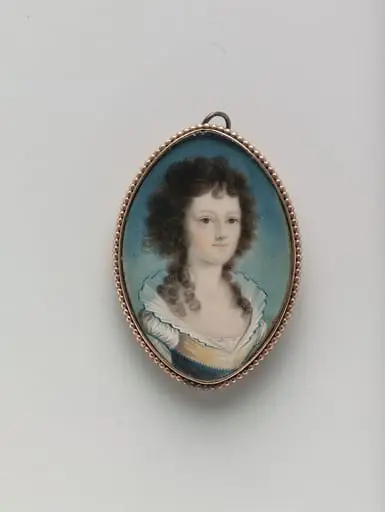 Mrs. James Bleecker (Sarah Bache)
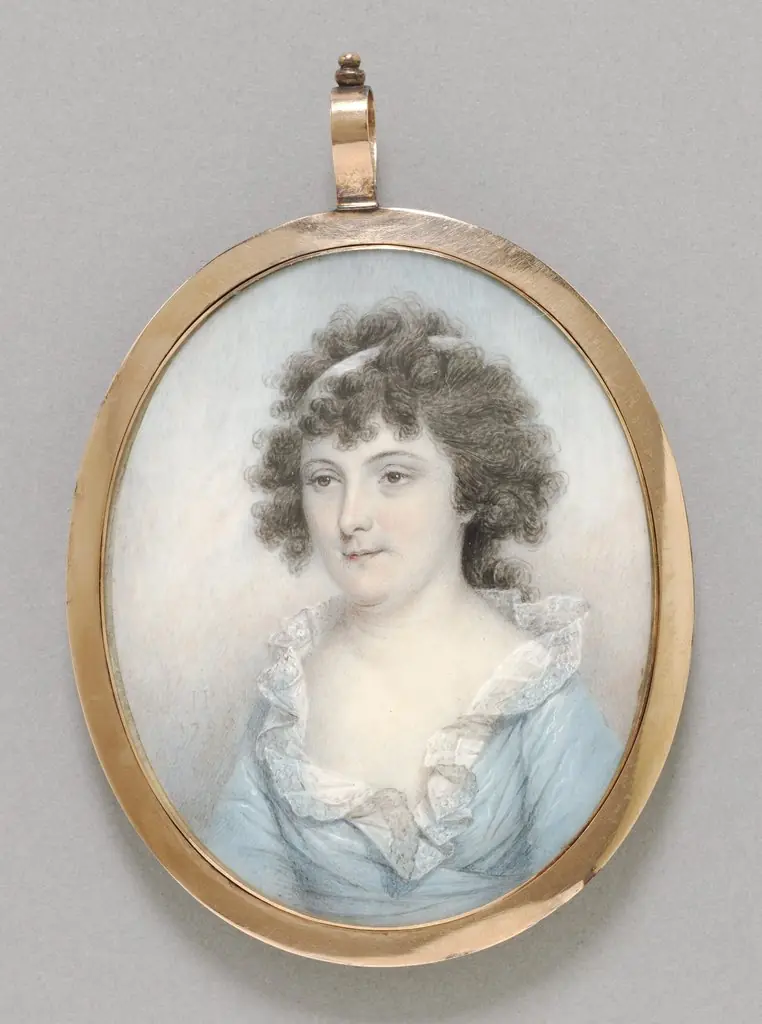 Portrait of Susan Coren Towers
 Portrait of Susan Coren Towers
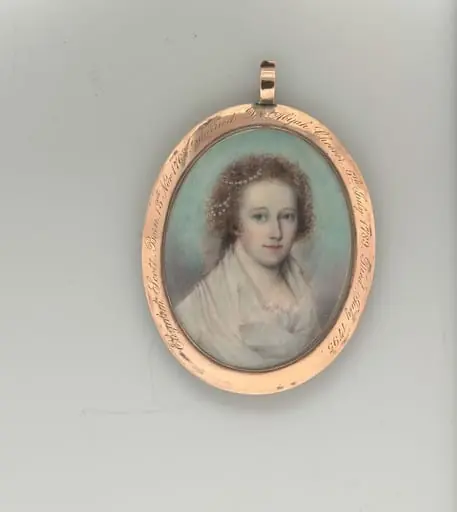 Mrs. Abijah Cheever (Elizabeth Scott)
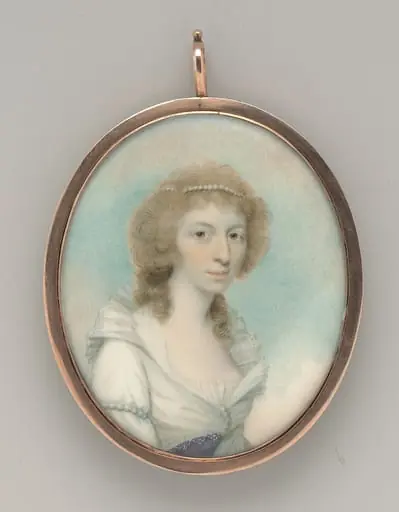 Mrs. Gabriel Manigault (Margaret Izard)
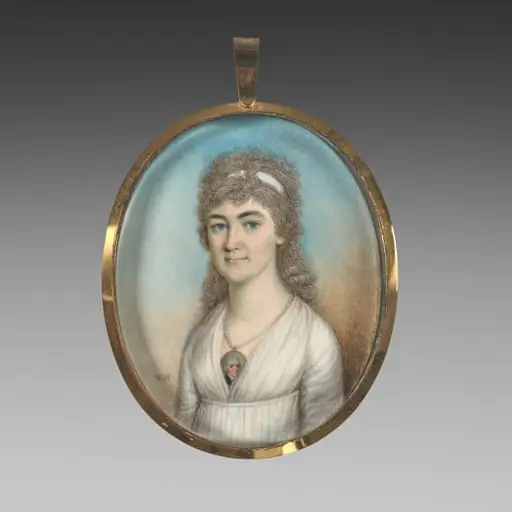 Portrait of a Woman Wearing a Miniature
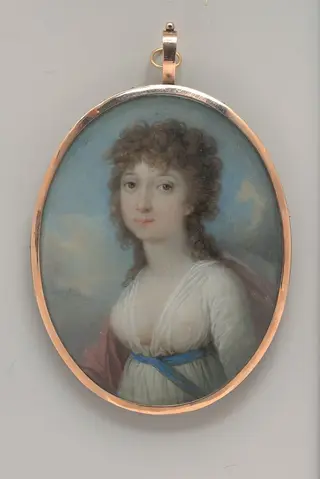 Portrait of a Lady
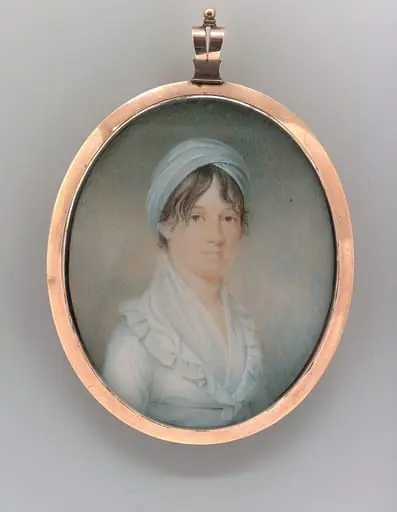 Mrs. Jonathan Pinkney, Jr. (Elizabeth Munroe)