Artwork
Portrait of a Gentleman
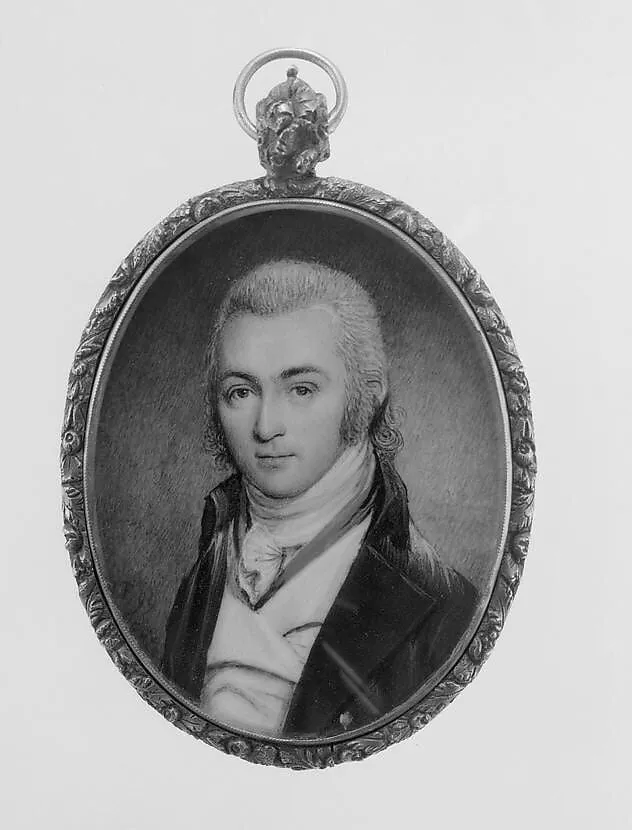
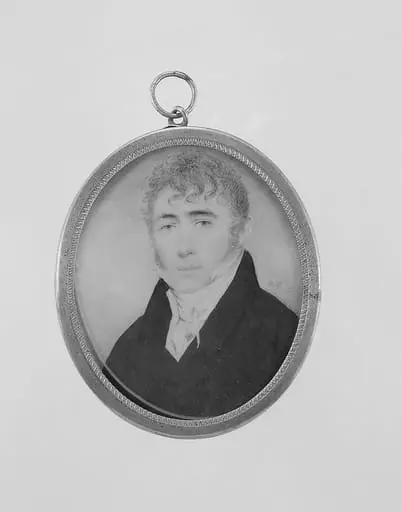
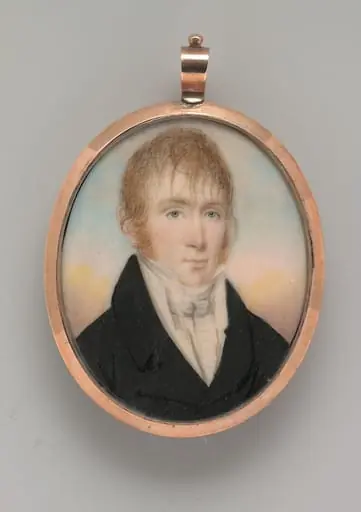
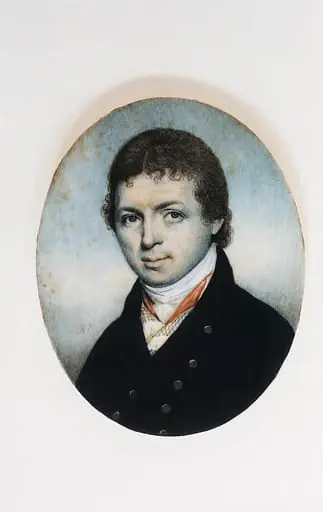
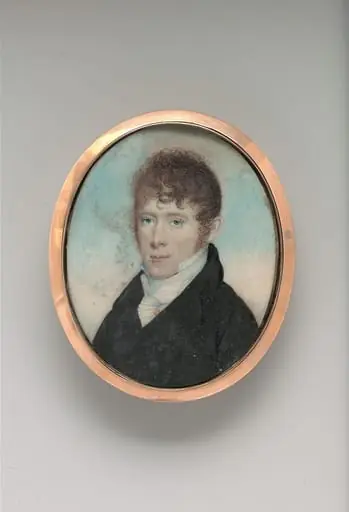
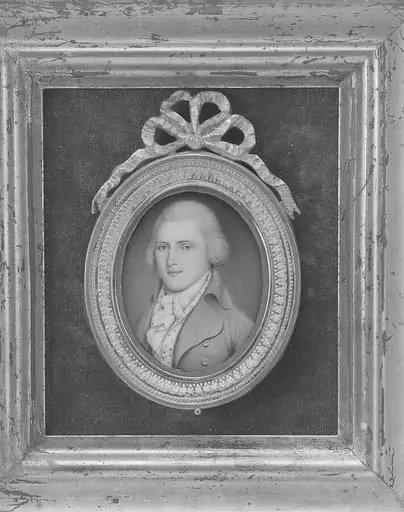
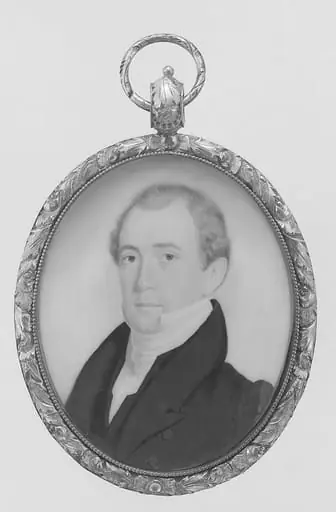
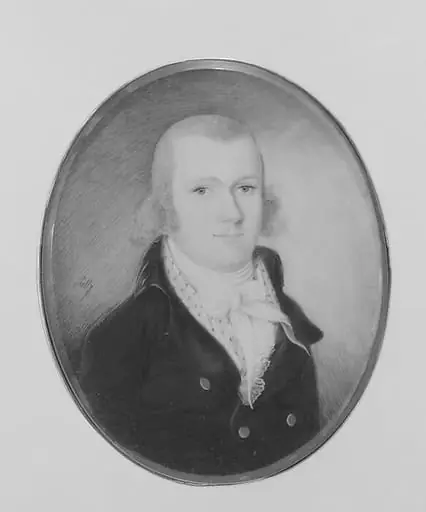
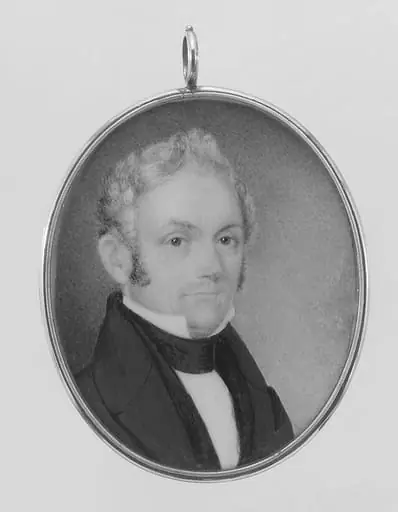
Portrait of a Gentleman is a watercolor painting by the American Folk Art artist Raphaelle Peale. It dates from 1799 and is held in the collection of the Metropolitan Museum of Art.
About this work
Technique & Style
8 cm, consistent with the intimate scale and refined finish typical of late-eighteenth-century American portrait miniatures.
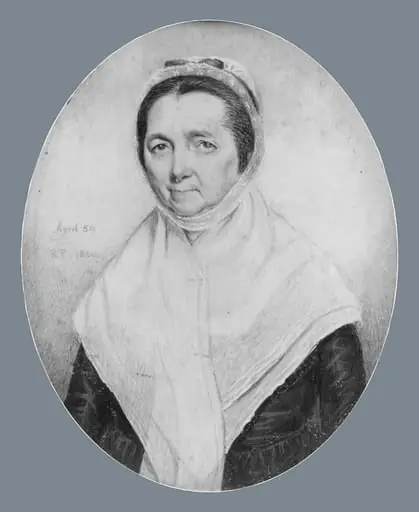
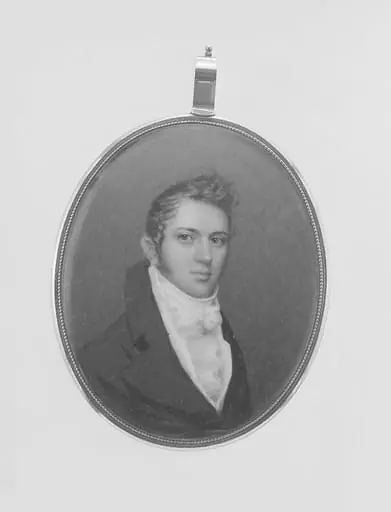
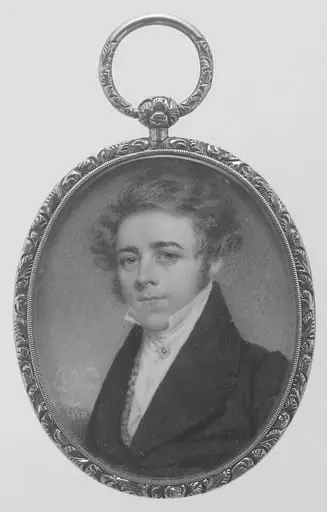
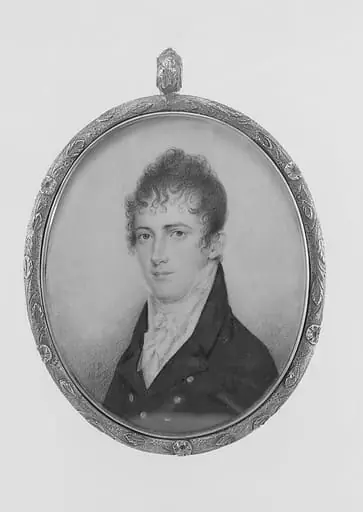
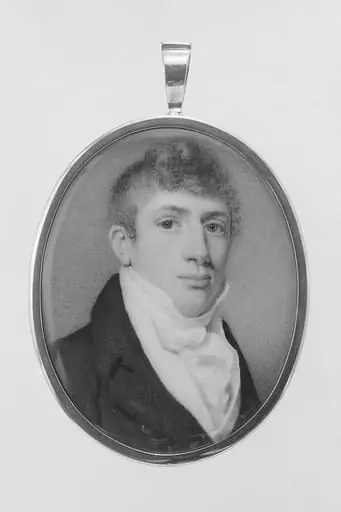
Executed in 1799, the miniature employs watercolor on a small ivory support measuring 6.1 by 4.8 cm, consistent with the intimate scale and refined finish typical of late-eighteenth-century American portrait miniatures. The handling is delicate, with fine stippling and smooth glazes used to model the sitter’s facial features, cravat, and coat, while restrained hatching defines the hair and background. The ivory’s translucency is exploited to convey luminous skin tones and subtle shifts in light.
Stylistically, the work aligns with Raphaelle Peale’s early manner, favoring crisp contours and a restrained palette of muted ochers and umbers to articulate form and status. No later overpainting is recorded, and the surface remains intact with only minor abrasions along the ivory edges.
History & Provenance
The Portrait of a Gentleman was created by Raphaelle Peale in 1799. Executed as a watercolor on ivory, this miniature work measures 6.1 cm in height and 4.8 cm in width. The piece is currently held within the collection of the Metropolitan Museum of Art in New York, where it is classified under the American Wing.
While the specific commission details and original ownership chain prior to the museum's acquisition are not detailed in the available records, the work's creation date is firmly established as the year 1799. The museum acquired the miniature under accession number 2006.235.146, securing its place in their permanent holdings of American art.
Overview
Raphaelle Peale's Portrait of a Gentleman, created in 1799, is a watercolor on ivory. This miniature depicts an unidentified man, reflecting Peale's engagement with portraiture alongside his pioneering work in still life. The piece exemplifies early American artistic endeavors and the emerging folk art tradition, showcasing the artist's versatility in a challenging medium.
Subject & Meaning
The unidentified subject of this portrait gazes directly forward, presenting a composed demeanor. He is depicted wearing a dark coat and a crisp white cravat, with his lips pressed firmly. The plain brown background emphasizes the figure, drawing attention to his features and attire, which were typical of gentlemen's fashion at the close of the 18th century.
Context
Raphaelle Peale, recognized as the first professional still-life painter in America, also contributed to the portrait tradition during his active career in the late 18th and early 19th centuries. Born in 1774, he was part of a generation of artists shaping the nascent American art scene. This work aligns with the American folk art movement, characterized by its directness and often self-taught or less formally academic approach to representation.
Artist & collection

Artist
Raphaelle Peale (sometimes spelled Raphael Peale; February 17, 1774 – March 4, 1825) is considered the first professional American painter of still-life.