Artwork
Honoré Fragonard
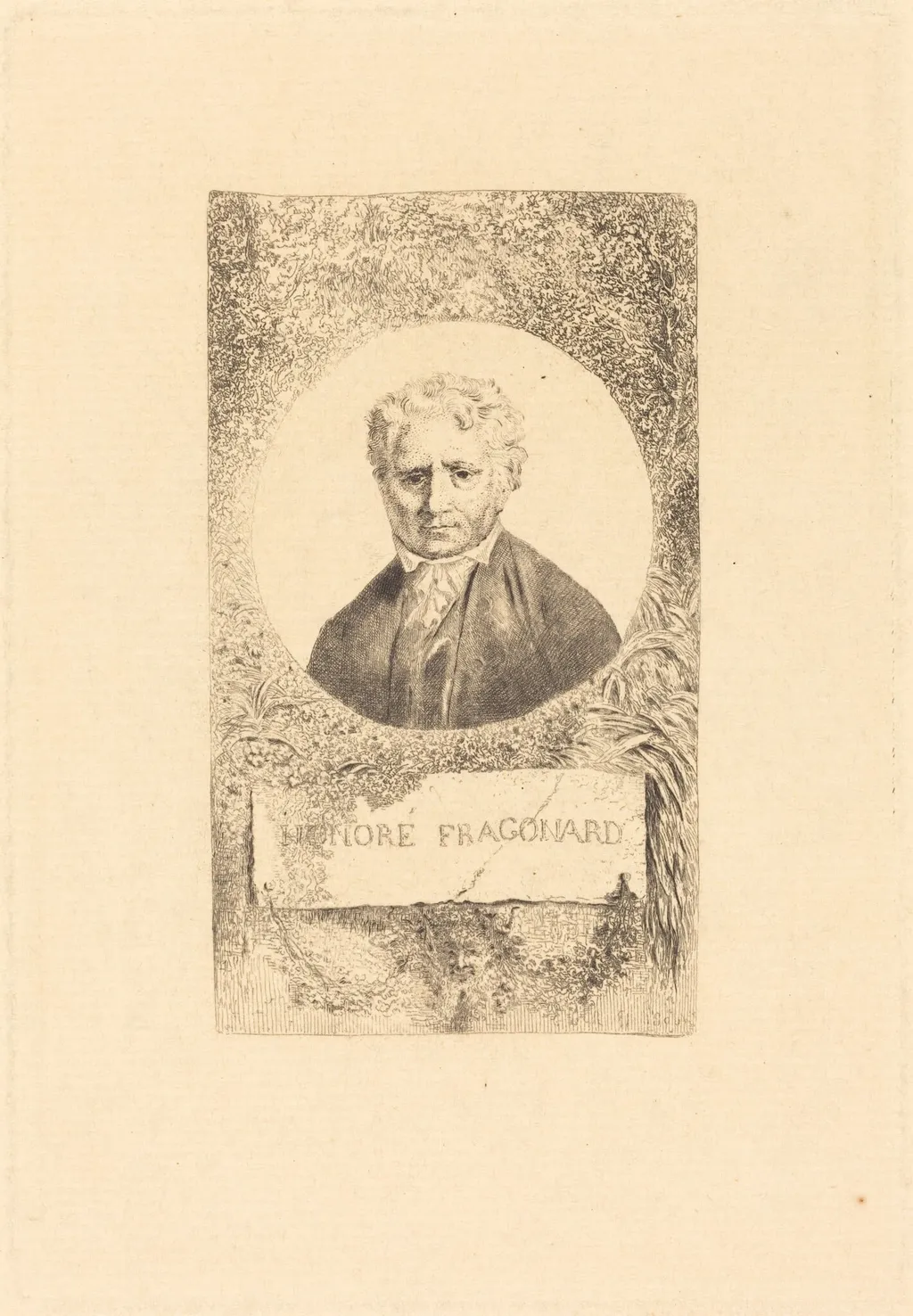
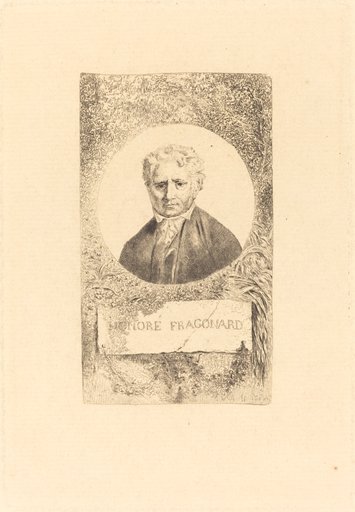
Honoré Fragonard is an ink print by the Romanticist artist Charles Le Carpentier. It dates from 1806 and is held in the collection of the National Gallery of Art.
- Inscription
- Inscribed:across bottom in plate: HONORE FRAGONARD; lower right in plate: 1806; by later hand, upper left verso in graphite: Ch. Le Carpentier / 1803.
About this work
Overview
The composition centers on Fragonard seated before a stone ledge adorned with floral motifs, his expression calm and contemplative.
This 1806 print by Charles Le Carpentier depicts Honoré Fragonard, a French artist known for his anatomical wax models. Executed in etching and engraving on laid paper, the portrait presents a formal, monochromatic likeness. The composition centers on Fragonard seated before a stone ledge adorned with floral motifs, his expression calm and contemplative. The work reflects early 19th-century printmaking conventions, emphasizing precision and textual clarity.
Subject & Meaning
Honoré Fragonard, father of the more famous Jean-Honoré Fragonard, was a respected anatomist and sculptor whose wax models advanced medical education. The portrait honors his scholarly legacy rather than his artistic output. The inclusion of flowers on the ledge may symbolize life, transience, or the natural subjects of his anatomical studies. His dignified posture and attire convey intellectual authority, aligning the image with Enlightenment ideals of scientific reverence.
Technique & Style
Le Carpentier employed fine etched lines and engraved details to render Fragonard’s features and the delicate foliage with precision. The contrast between the textured hair, the smoothness of the coat, and the intricate leaf veins demonstrates mastery of intaglio methods. The use of laid paper, with its characteristic chain lines, adds subtle texture. The composition avoids embellishment, focusing instead on clarity and tonal gradation to convey realism.
History & Provenance
Created in 1806, the print was likely produced to commemorate Fragonard’s contributions to medical science. It may have been distributed among academic institutions or collected by patrons interested in scientific portraiture. No record of early ownership is widely documented, but its survival suggests it was preserved within scholarly or familial circles, reflecting the enduring respect for Fragonard’s work in anatomical circles.
Context
In early 19th-century France, portraiture in print form served both commemorative and educational purposes, especially for figures in science and medicine. Etching and engraving were dominant techniques for reproducing likenesses with high detail. This work aligns with a broader trend of honoring intellectual figures through visual media, distinct from the decorative styles favored in fine art circles at the time.
Legacy
Though not widely exhibited today, the print remains a documented representation of Honoré Fragonard, preserving his image for historical study. It contributes to the visual record of 18th- and early 19th-century scientific figures, offering insight into how academia honored its practitioners. Its technical quality ensures its continued relevance as an example of precision printmaking in a scholarly context.
Own this work as a print
Artist & collection