Artwork
The Prima Macchina for the Chinea of 1744: The Glorification of Virgil
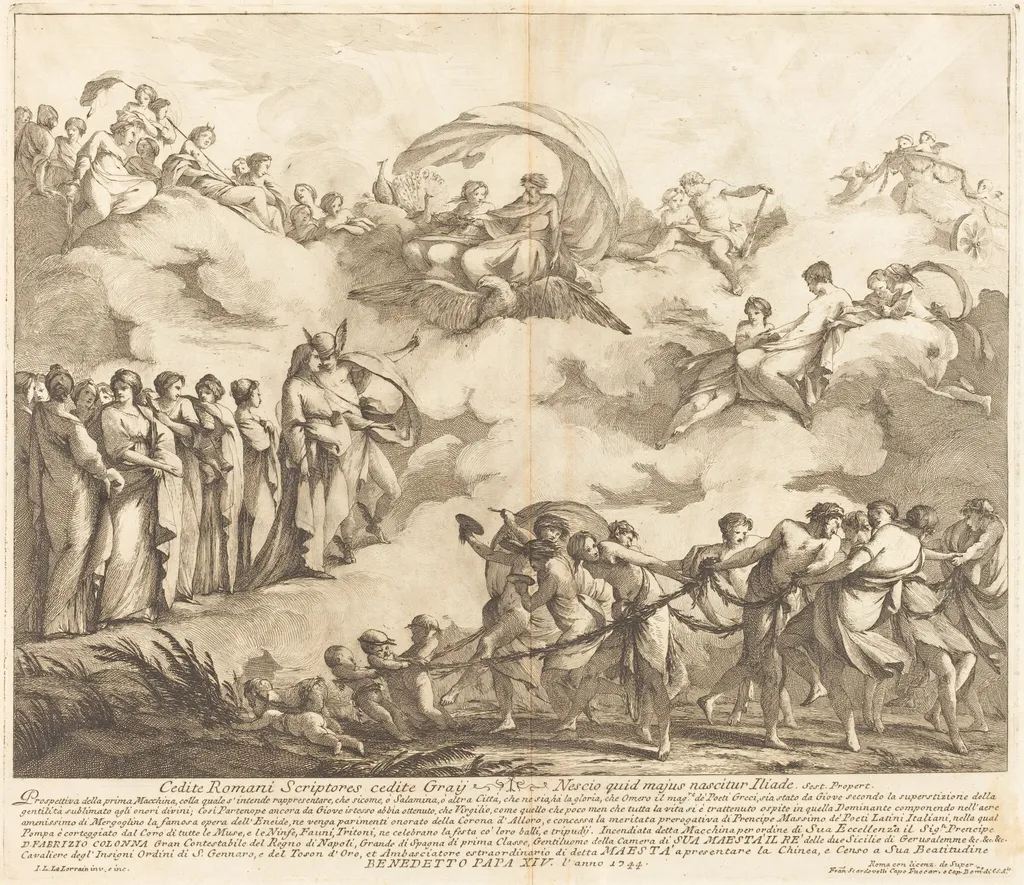
The Prima Macchina for the Chinea of 1744: The Glorification of Virgil is an ink print by the Baroque artist Louis-Joseph Le Lorrain. It dates from 1744 and is held in the collection of the National Gallery of Art.
- Inscription
- Inscribed:across bottom in plate: Cedite Romani Scriptores cedite Graij. Nescio quid majus nascitur Iliade. Sest. Propert. / Prospettiva della prima Macchina, colla quale s'intende rappresentare, che sicome, ò Salamina, ò altra Città, che ne sia, hà la gloria, che Omero il mag.re de'Poeti Greci, sia stato da Giove secondo la superstizione della / gentilità sublimato agli onori divini; Così Partenope ancora da Giove istesso abbia ottenuto, che Virgilio, come quello che poco men che tutta la vita si è trattenuto ospite ... MAESTA a presentare la Chinea, e Censo a Sua Beatitudine / BENEDETTO PAPA XIV. l'anno 1744. / I. L. Le Lorrain inv., e inc. / Roma con licenz. de Super. / Fran. Scardovelli Capo Fuocar.o Capo Bombar.di.re di C.S.A.o
About this work
Overview
The Prima Macchina for the Chinea of 1744: The Glorification of Virgil is a print created by Louis-Joseph Le Lorrain in 1744 using etching and engraving techniques on laid paper.
Subject & Meaning
The print depicts a complex scene with multiple figures, including people in classical robes, cherubs, and winged figures, likely celebrating the legacy of the poet Virgil. The Latin text at the bottom describes the event as a 'Prima Macchina', a grand theatrical spectacle.
Technique & Style
The print's crowded and dynamic composition is achieved through the use of dark lines and shading, giving it a sense of depth and energy. The combination of etching and engraving techniques allows for detailed rendering of figures and textures.
Context
The print is associated with the Chinea, an annual event that featured elaborate theatrical spectacles. The scene's mix of gods, poets, and musicians suggests a celebration of Virgil's literary legacy.
Own this work as a print
Artist & collection


 Three Figures Dressed for a Masquerade
 The Seconda Macchina for the Chinea of 1745: Triumphal Arch for the Return of King Charles of Bourbon to Naples
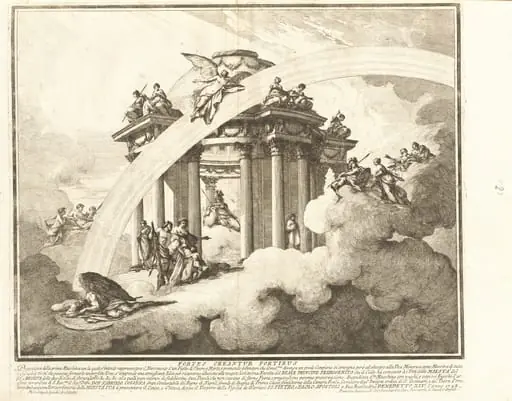 The Prima Macchina for the Chinea of 1748: The Son of Venus and Mars Presented to the Temple of Minerva
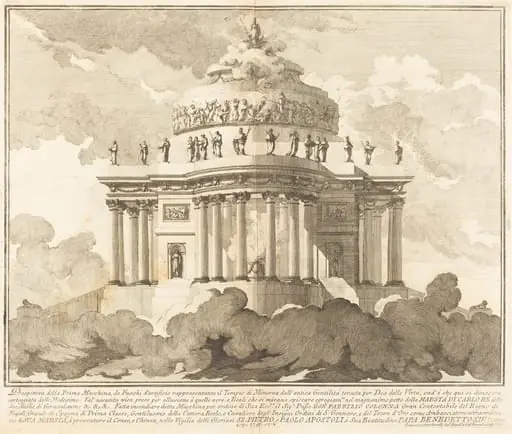 The Prima Macchina for the Chinea of 1746: The Temple of Minerva
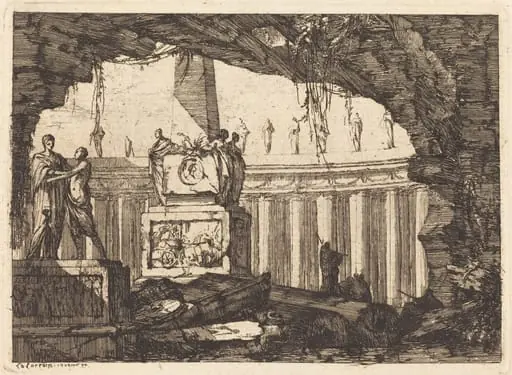 Architectural Fantasy with an Obelisk and Arcade
- The Prima Macchina for the Chinea of 1738: Allegory of Regal Providence
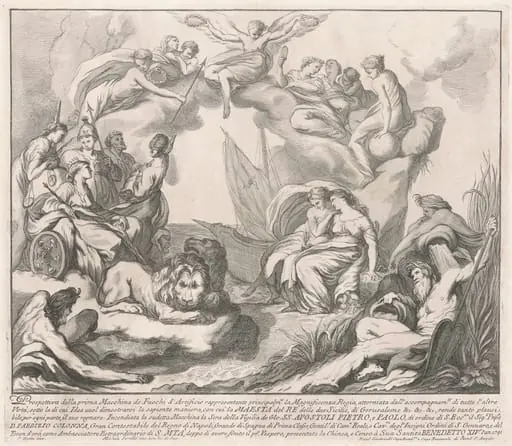 The Prima Macchina for the Chinea of 1741: Allegory of Regal Magnificence
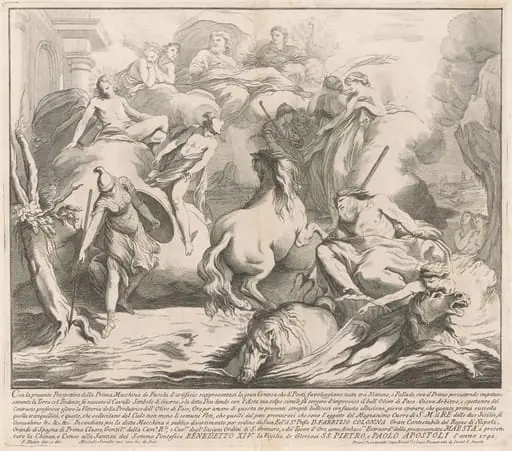 The Prima Macchina for the Chinea of 1742: The Contest of Neptune and Minerva
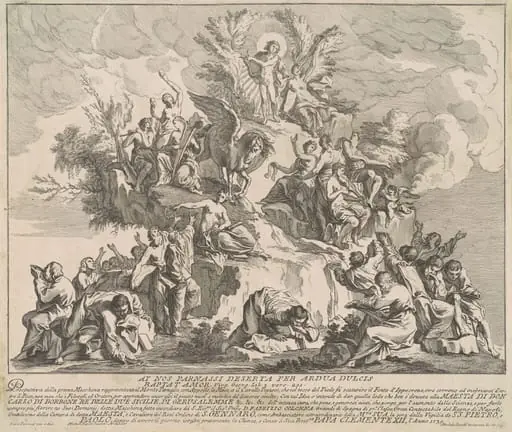 The Prima Macchina for the Chinea of 1739: Mount Parnassus with Apollo, the Muses, and Pegasus
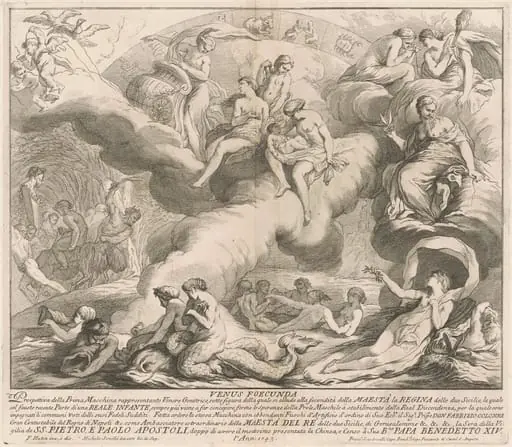 The Prima Macchina for the Chinea of 1743: Venus Genetrix
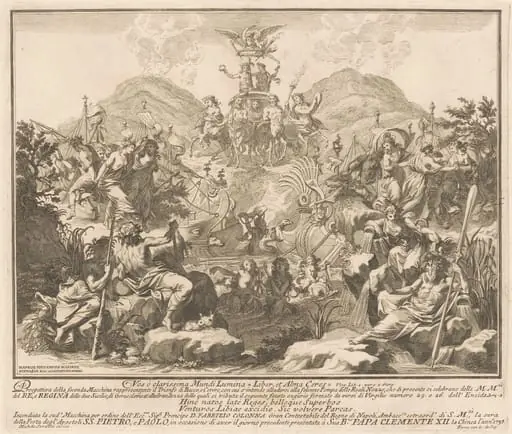 The Seconda Macchina for the Chinea of 1738: The Triumph of Bacchus and Ceres