Artwork
The Prima Macchina for the Chinea of 1742: The Contest of Neptune and Minerva
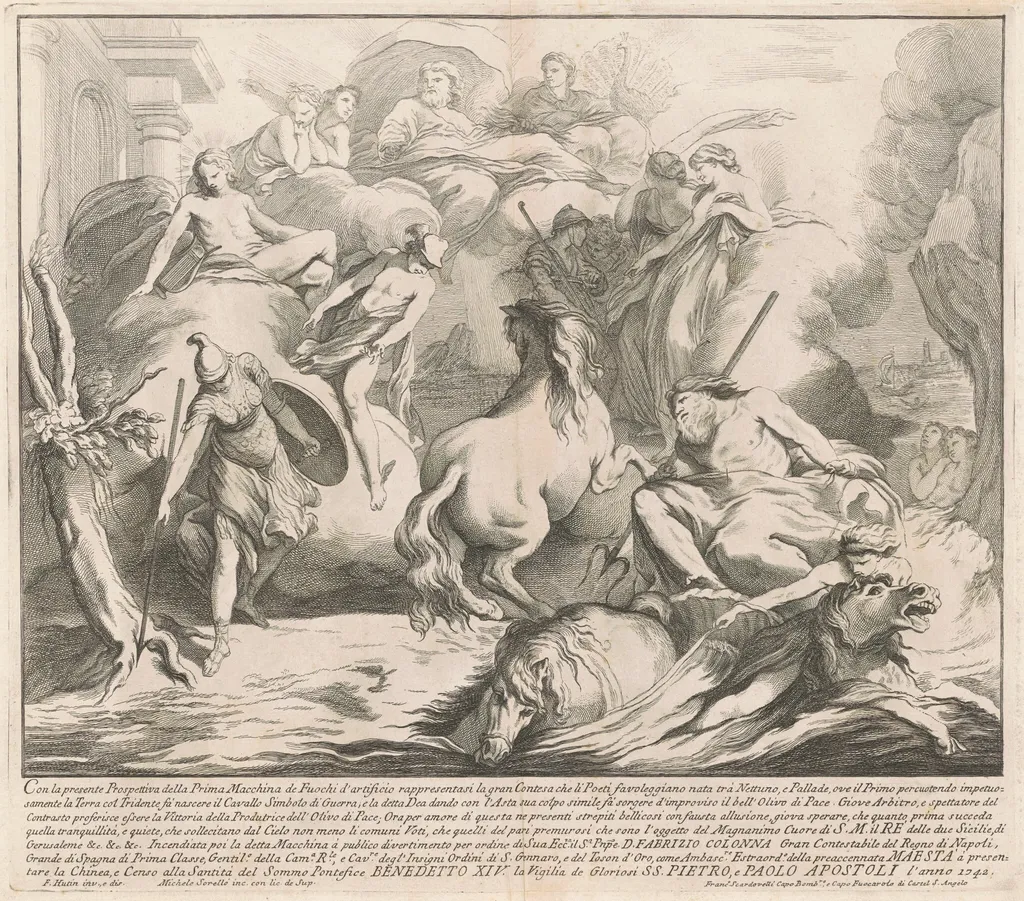
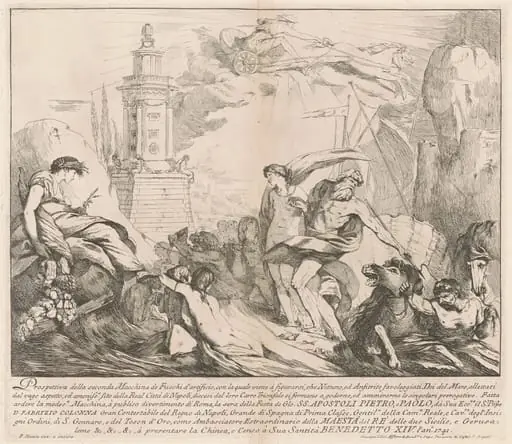
The Prima Macchina for the Chinea of 1742: The Contest of Neptune and Minerva is an ink print by the Baroque artist Miguel de Sorellò. It dates from 1742 and is held in the collection of the National Gallery of Art.
- Inscription
- Inscribed:Lettered LL: "F. Hutin inv. e dis." and "Michele Sorello' inc. con lic. de Sup." Lettered LC: "Con la presente Prospettiva della Prima Macchina de Fuochi d'artigicio rappresentasi la gran Contesa che li Poeti favoleggiano nata tra Nettuno e Pallade [...] l'anno 1742"
About this work
Overview
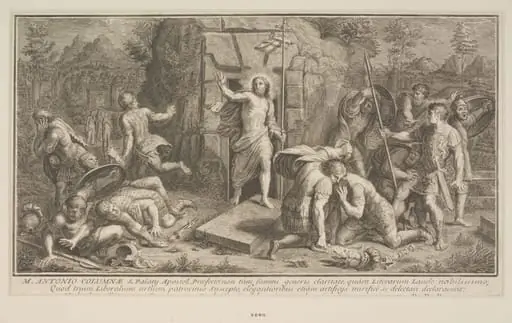
The work titled The Prima Macchina for the Chinea of 1742: The Contest of Neptune and Minerva is an etching executed in 1742 by the Italian printmaker Miguel de Sorellò. It belongs to the tradition of mythological prints, illustrating a dramatic encounter between two classical deities within a richly detailed composition.
Subject & Meaning
The scene portrays a lively contest between the sea god Neptune, identifiable by his trident and mounted on a horse, and the goddess Minerva, seated upon a throne‑like platform. A centaur bearing a spear occupies the foreground, while a sparse architectural backdrop and rugged terrain frame the mythic narrative, suggesting themes of divine rivalry and heroic intervention.
Technique & Style
Sorellò employs the fine line work characteristic of eighteenth‑century etching, achieving a convincing sense of depth through varied hatching and cross‑hatching. The intricate incisions render textures of stone, fabric, and muscle, while subtle tonal gradations give the rocky landscape and distant structures a palpable atmospheric presence.
Context
Created as part of the Prima Macchina series for the annual Chinea ceremony, a Florentine tradition honoring the Pope, the print reflects the period’s fascination with classical allegory and civic pageantry. Its mythological subject matter aligns with contemporary efforts to link contemporary political events to ancient heroic ideals.
Legacy
While not as widely reproduced as later prints, this etching exemplifies Sorellò’s skill in translating complex narrative scenes into the monochrome medium. It remains a valuable reference for scholars studying the interplay of myth, ritual, and print culture in mid‑eighteenth‑century Italy.
Own this work as a print
Artist & collection


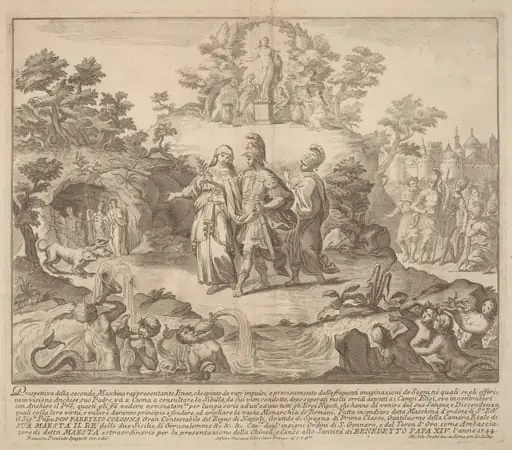 The Seconda Macchina for the Chinea of 1744: Aeneas and Cumaean Sibyl
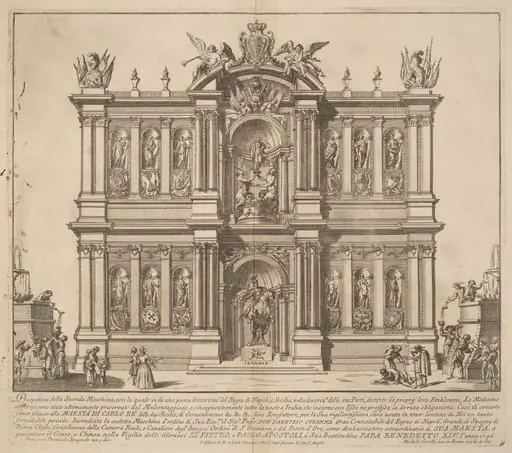 The Seconda Macchina for the Chinea of 1746: The Territories of the Kingdom of Naples
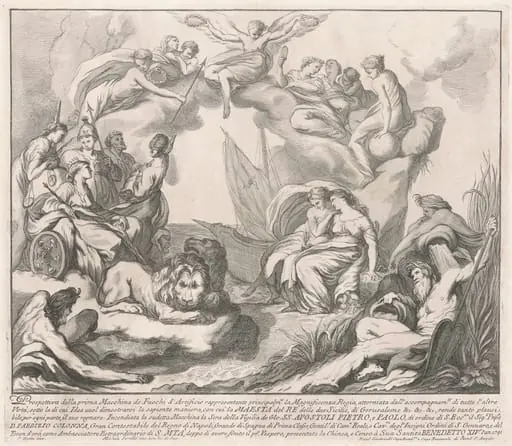
- The Prima Macchina for the Chinea of 1741: Allegory of Regal Magnificence
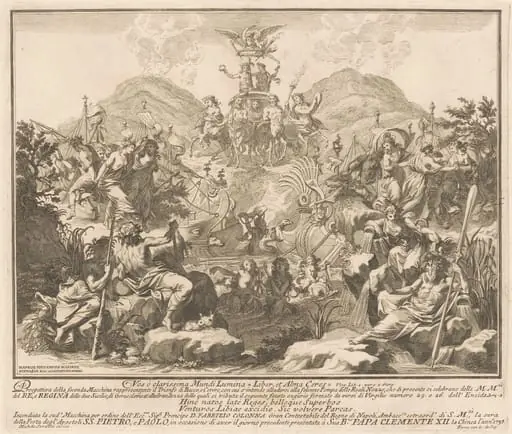 The Seconda Macchina for the Chinea of 1738: The Triumph of Bacchus and Ceres
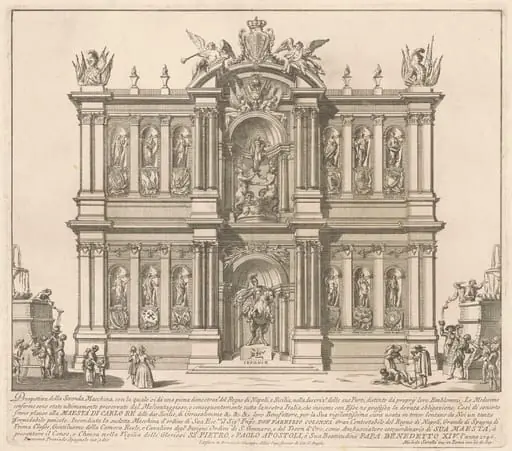 The Seconda Macchina for the Chinea of 1746: The Territories of the Kingdom of Naples
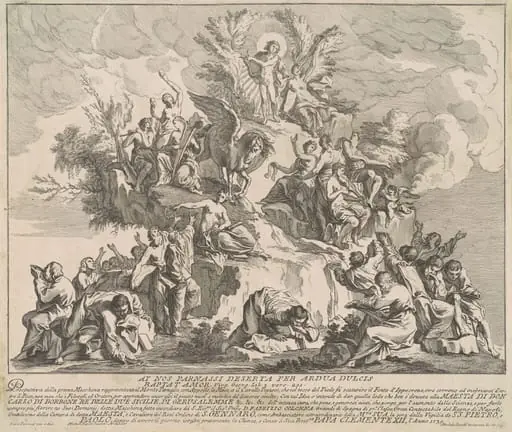 The Prima Macchina for the Chinea of 1739: Mount Parnassus with Apollo, the Muses, and Pegasus
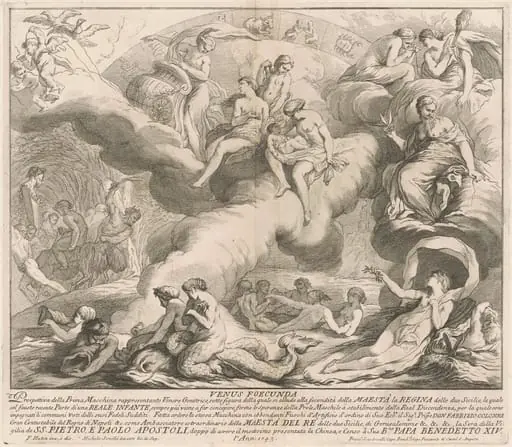 The Prima Macchina for the Chinea of 1743: Venus Genetrix
 Tapestries in the Vatican, after designs by Raphael