Artwork
The Prima Macchina for the Chinea of 1748: The Son of Venus and Mars Presented to the Temple of Minerva
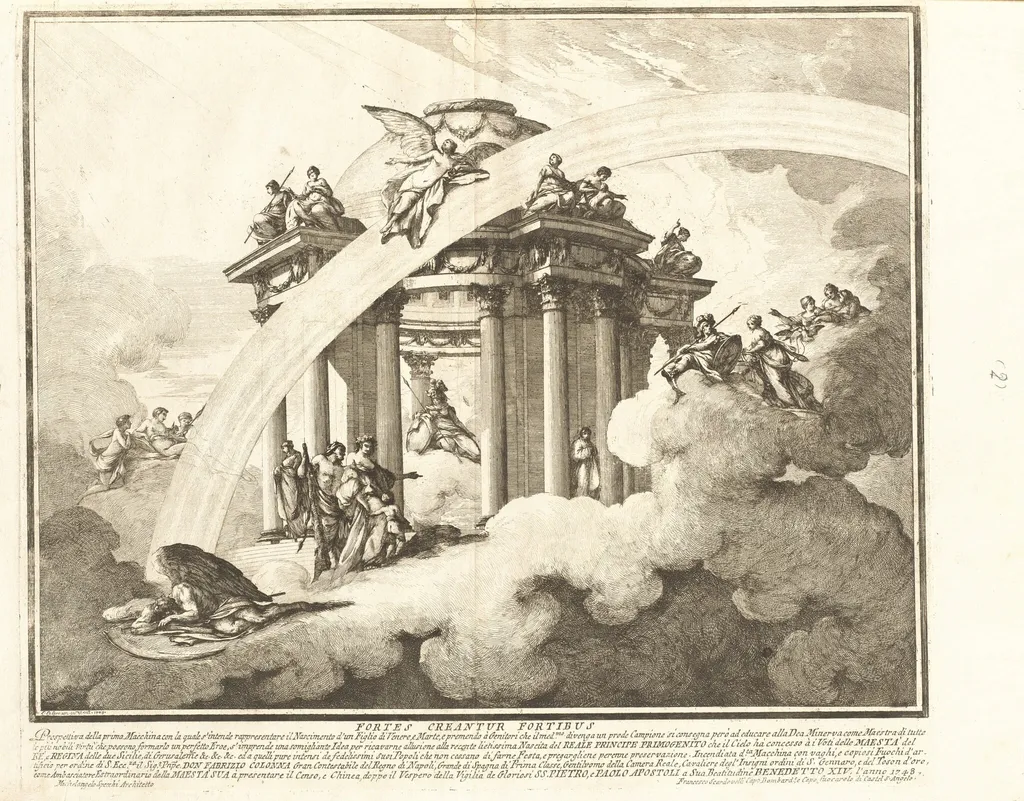
The Prima Macchina for the Chinea of 1748: The Son of Venus and Mars Presented to the Temple of Minerva is an ink print by the Baroque artist Louis-Joseph Le Lorrain. It dates from 1748 and is held in the collection of the National Gallery of Art.
- Inscription
- Inscribed:Lettered LL: "L. Le Lorrain inv. et cut. 1748" Lettered LC, below image: "FORTES CREANTUR FORTIBUS / Prospettiva della prima Macchina con la quale s'intende rappresentare il Nascimento d'un Figlio di Venere e Marte [...] l'anno 1748"
About this work
Overview
Louis-Joseph Le Lorrain’s 1748 etching, titled The Prima Macchina for the Chinea of 1748: The Son of Venus and Mars Presented to the Temple of Minerva, depicts a theatrical mythological tableau. Executed as a print, the work combines a central temple, swirling clouds, and a cast of classical figures, angels, and winged beings, all arranged in a dynamic, Baroque composition.
Subject & Meaning
The scene illustrates the legendary birth of the offspring of Venus and Mars being offered to Minerva, the goddess of wisdom. The narrative is conveyed through a procession of robed figures below the temple and celestial beings above, suggesting a ritual presentation that links love, war, and intellect within a single mythic episode.
Technique & Style
Le Lorrain employed the etching process, incising lines into a copper plate with a needle before applying acid to create tonal variation. The resulting print showcases the Baroque penchant for movement, dramatic contrast, and elaborate ornamentation, evident in the swirling clouds, the fallen bird, and the intricate drapery of the participants.
History & Provenance
Created as the primary design for the 1748 Chinea, a ceremonial tribute from the Papal States to the French monarchy, the print functioned as a visual program for the associated festivities. It remains a documented example of Le Lorrain’s involvement in state-sponsored artistic projects of mid‑18th‑century France.
Context
The work reflects the broader 18th‑century fascination with classical mythology as allegory for contemporary political and cultural themes. By juxtaposing the divine offspring of Venus and Mars with Minerva’s temple, the composition aligns the virtues of love, martial prowess, and wisdom, resonating with the diplomatic symbolism of the Chinea ceremony.
Own this work as a print
Artist & collection


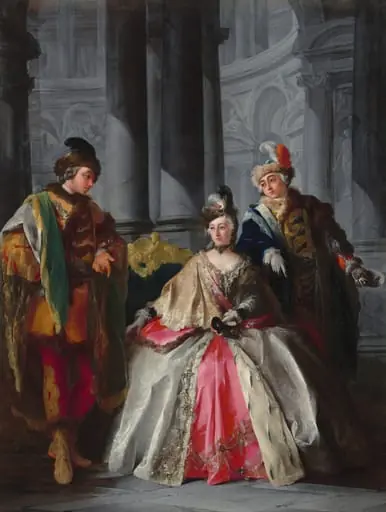 Three Figures Dressed for a Masquerade
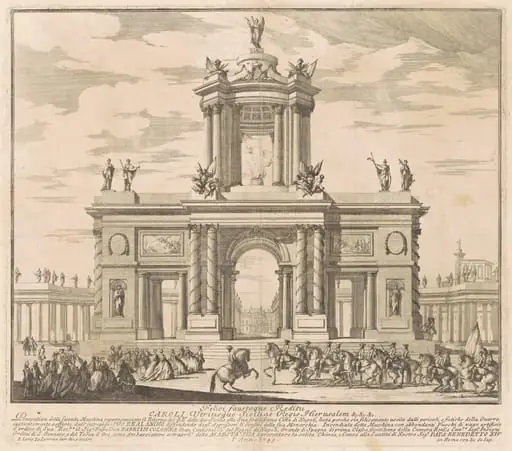 The Seconda Macchina for the Chinea of 1745: Triumphal Arch for the Return of King Charles of Bourbon to Naples
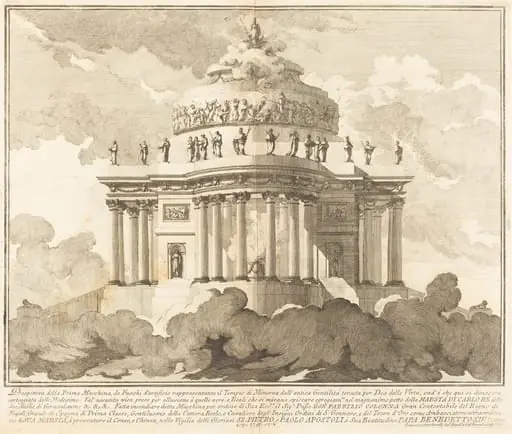
- The Prima Macchina for the Chinea of 1746: The Temple of Minerva
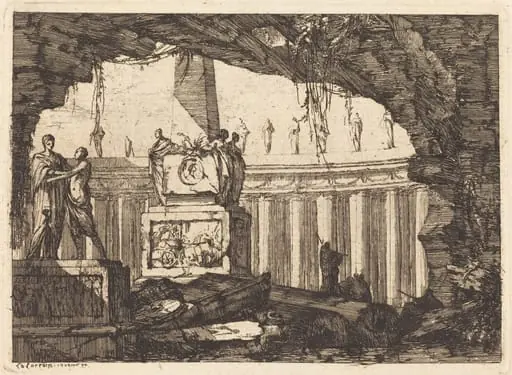 Architectural Fantasy with an Obelisk and Arcade
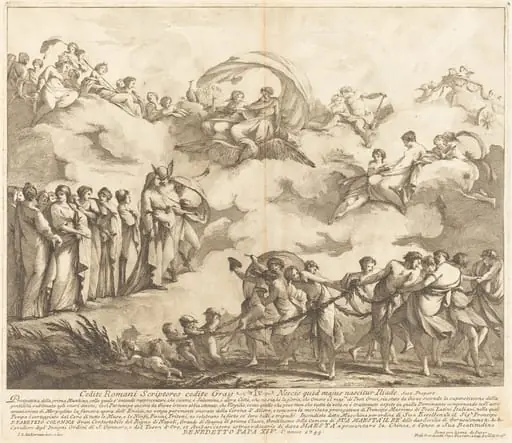 The Prima Macchina for the Chinea of 1744: The Glorification of Virgil
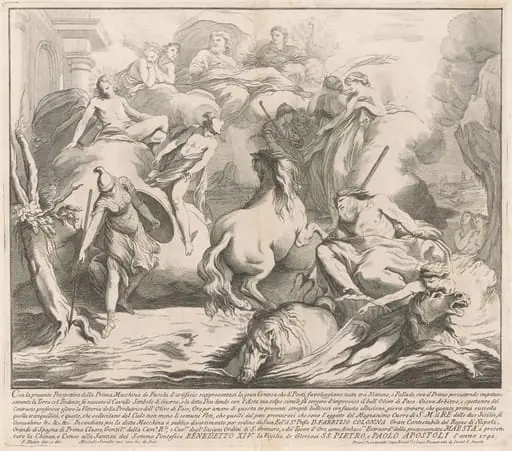 The Prima Macchina for the Chinea of 1742: The Contest of Neptune and Minerva
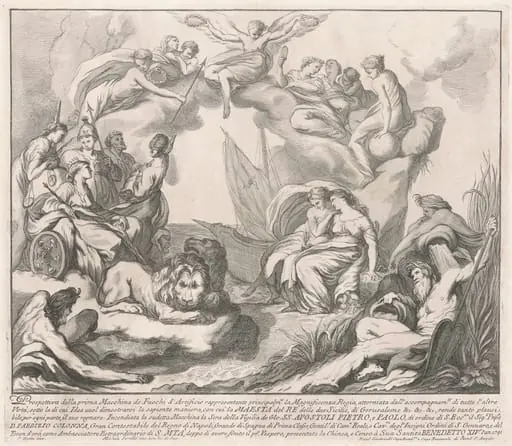 The Prima Macchina for the Chinea of 1741: Allegory of Regal Magnificence
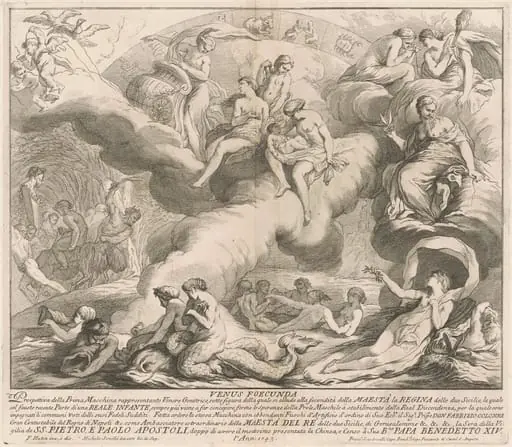 The Prima Macchina for the Chinea of 1743: Venus Genetrix
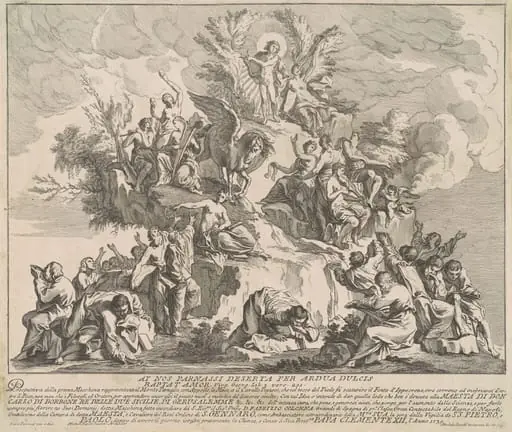 The Prima Macchina for the Chinea of 1739: Mount Parnassus with Apollo, the Muses, and Pegasus
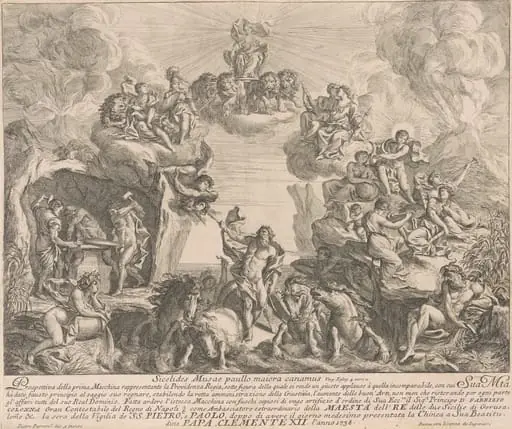 The Prima Macchina for the Chinea of 1738: Allegory of Regal Providence
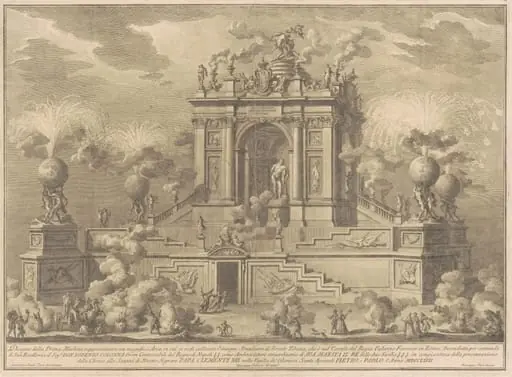 The Prima Macchina for the Chinea of 1767: A Triumphal Arch with the Farnese Hercules
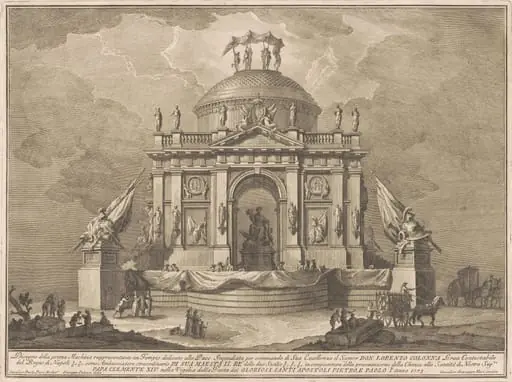 The Prima Macchina for the Chinea of 1773: The Temple of Peace
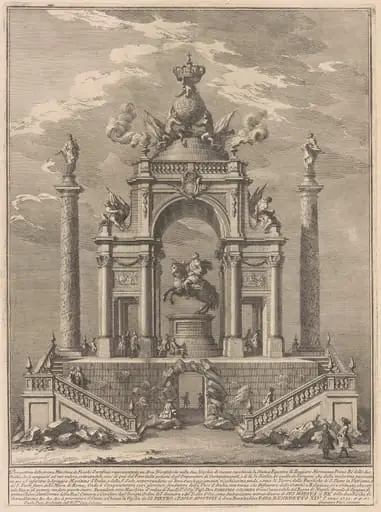 The Prima Macchina for the Chinea of 1751: Triumphal Arch for Roger I of Sicily