Artwork
Masada
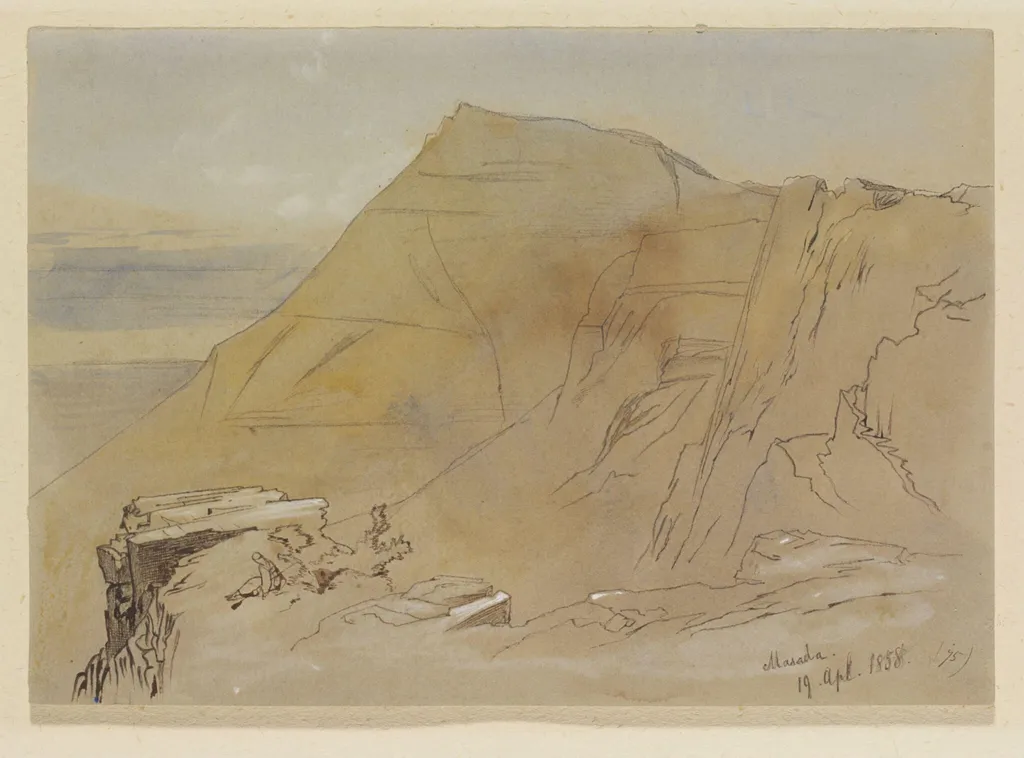
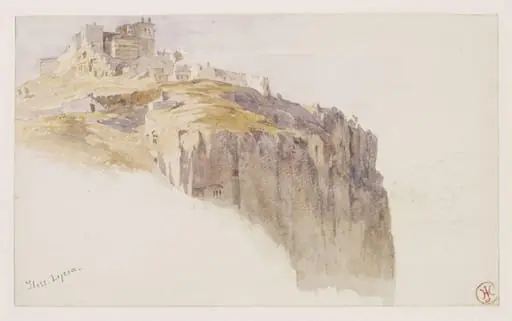
Masada is a watercolor work on paper by the Impressionist artist Edward Lear. It dates from 1858 and is held in the collection of the Victoria and Albert Museum.
About this work
Overview
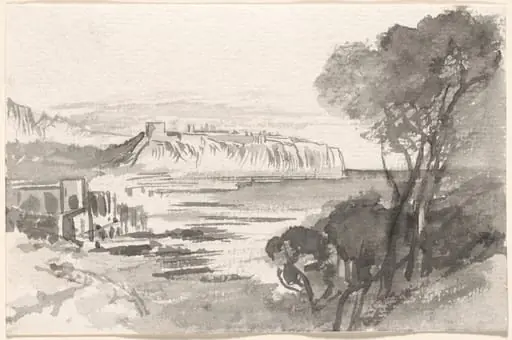
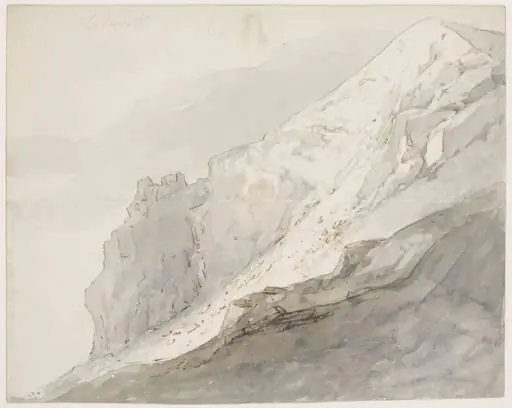
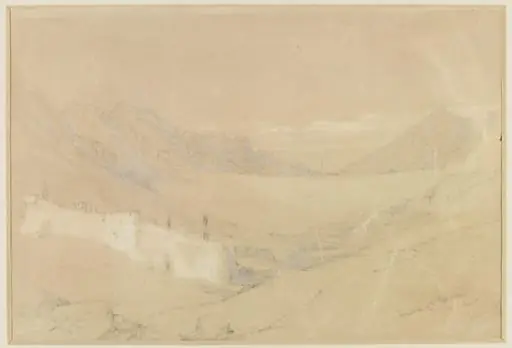
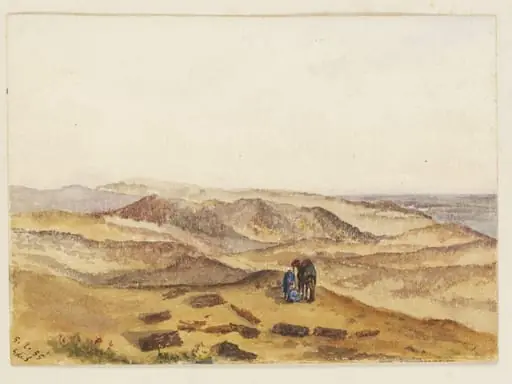
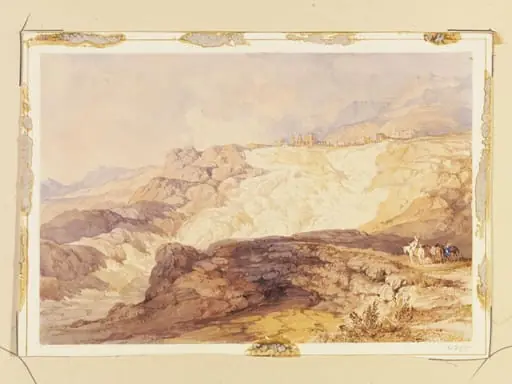
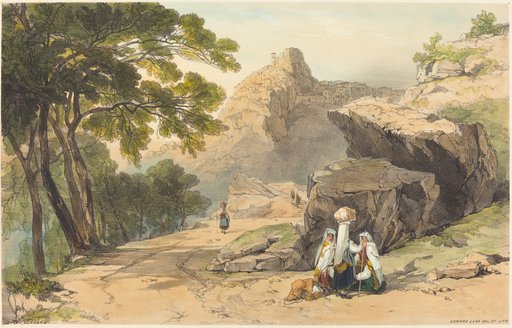
Edward Lear’s 1858 watercolour captures the ancient fortress of Masada as seen during his overland journey from Petra to Jerusalem. The composition presents a stark, rocky promontory rising from a barren landscape, framed by a pale sky and a distant stretch of water that recedes toward the horizon.
Subject & Meaning
The work records the dramatic topography of Masada, emphasizing its isolation and the harshness of the surrounding desert. By foregrounding the sheer cliffs and the expansive sky, Lear conveys both the strategic significance of the site and its awe‑inspiring natural setting.
Technique & Style
Lear employs a limited palette of earthy ochres, siennas and muted blues, applying loose, expressive brushwork that suggests texture and movement across the stone surfaces. Subtle contrasts of light and shadow model the terrain, while the soft, wispy clouds add atmospheric depth without overt detail.
History & Provenance
Created alongside a larger watercolour and a seven‑foot oil painting of the same subject, the piece formed part of a series of Masada studies exhibited in 1861. After remaining in private hands, the watercolour was auctioned at Christie’s in 1977, where it entered its current collection.
Own this work as a print
Artist & collection
Artist
Edward Lear (12 May 1812 – 29 January 1888) was an English artist, illustrator, musician, author and poet, who is known mostly for his literary nonsense in poetry and prose and especially his limericks, a form he popularised but which term…