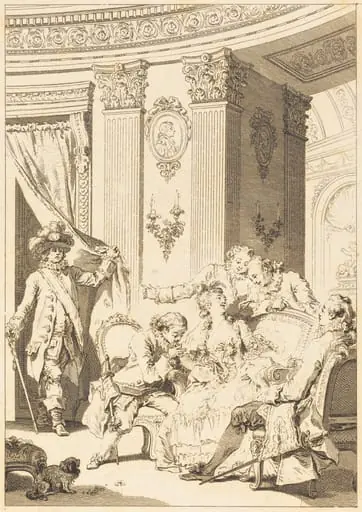
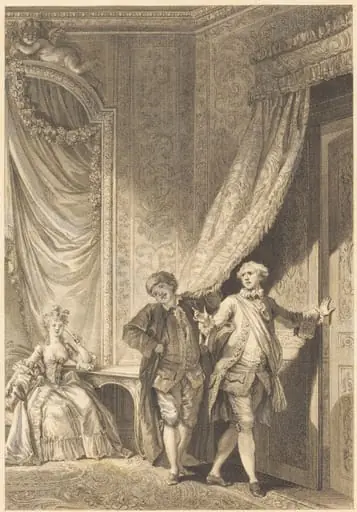
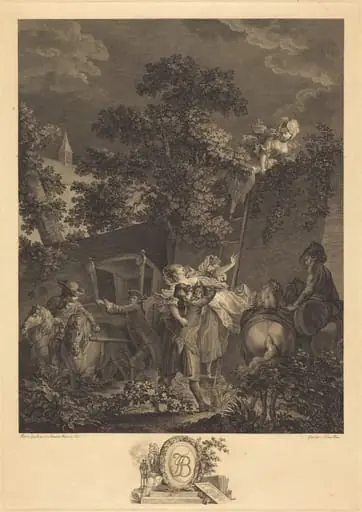
Artwork
Nous n'avons pas le patience d'attendre que nous fussions seuls
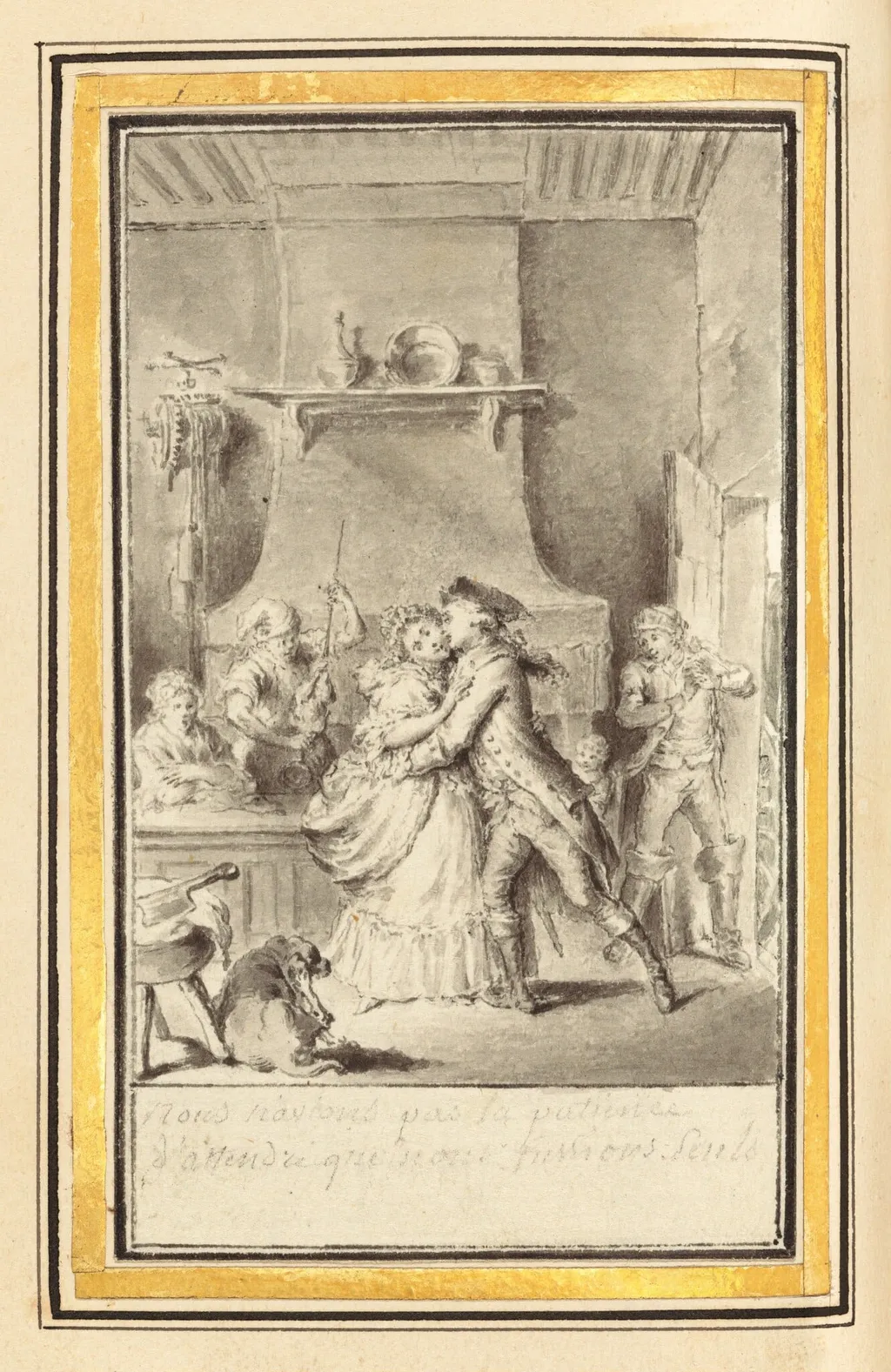
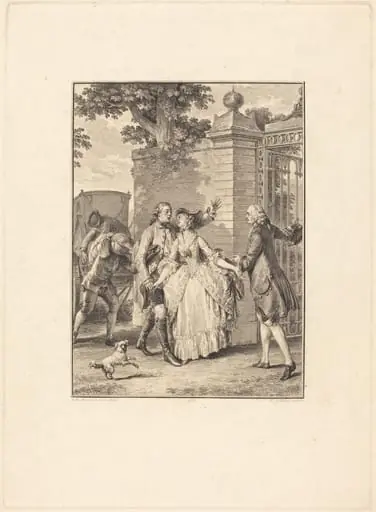
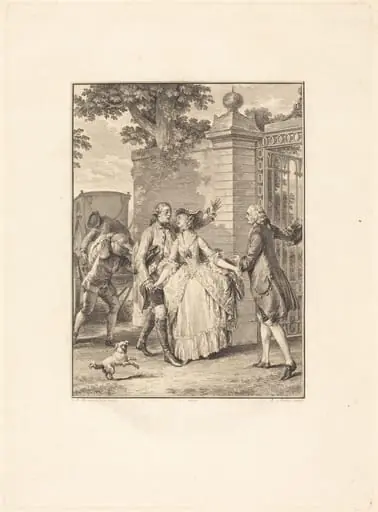
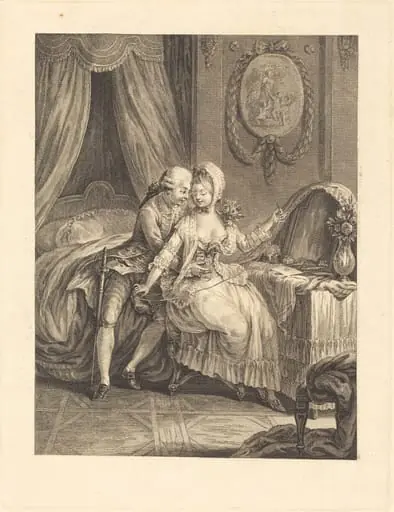
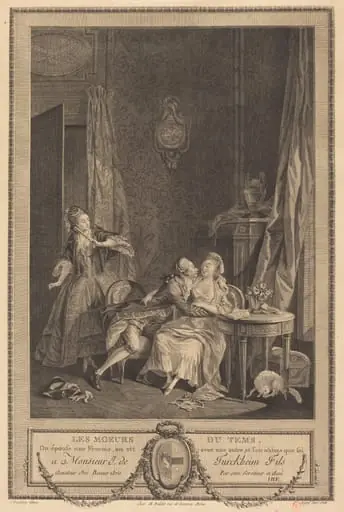
Nous n'avons pas le patience d'attendre que nous fussions seuls is an ink drawing by the Romanticist artist Louis-Joseph Lefevre. It dates from 1797 and is held in the collection of the National Gallery of Art.
About this work
Overview
Louis-Joseph Lefèvre’s 1797 drawing, titled Nous n’avons pas le patience d’attendre que nous fussions seuls, captures a bustling interior scene rendered in pen, black ink, brushwork, and a subtle gray wash. Executed as a quick sketch rather than a polished composition, the work conveys a momentary glimpse of social interaction within an elegant domestic setting.
Subject & Meaning
The composition centers on a couple in refined attire, a man in a long coat and a woman in a dress, cradling a child, surrounded by a crowd of onlookers. Various figures hold accessories such as a cane, a fan, and a dog rests nearby, suggesting a lively gathering. The title, evoking impatience and solitude, invites speculation about the narrative behind the assembled group.
Technique & Style
Lefèvre employs rapid, sketchy lines and cross‑hatching to suggest movement and texture, while a light gray wash adds depth to the background. The handling of ink is loose, emphasizing immediacy over detail, and the limited palette focuses attention on the figures and their gestures rather than decorative elements.
History & Provenance
Created in 1797, the drawing reflects Lefèvre’s practice of producing preparatory studies and genre scenes during the late eighteenth century. Its provenance traces back to private collections before entering a museum holding, where it is displayed as an example of the artist’s draftsmanship and social observation.
Context
The work emerges from a period when French artists frequently depicted domestic interiors populated by the bourgeoisie, using drawing as a means to explore everyday life and social customs. Lefèvre’s choice of ink and wash aligns with contemporary practices of producing rapid studies for later, more elaborate works.
Legacy
Although not a finished painting, the drawing illustrates Lefèvre’s skill in capturing narrative moments with economy of line. It continues to serve as a reference for scholars studying late‑eighteenth‑century French genre drawing and the visual culture of private gatherings.
Own this work as a print
Artist & collection