Artwork
Drinking Trough, 2nd plate (L'abreuvoir)
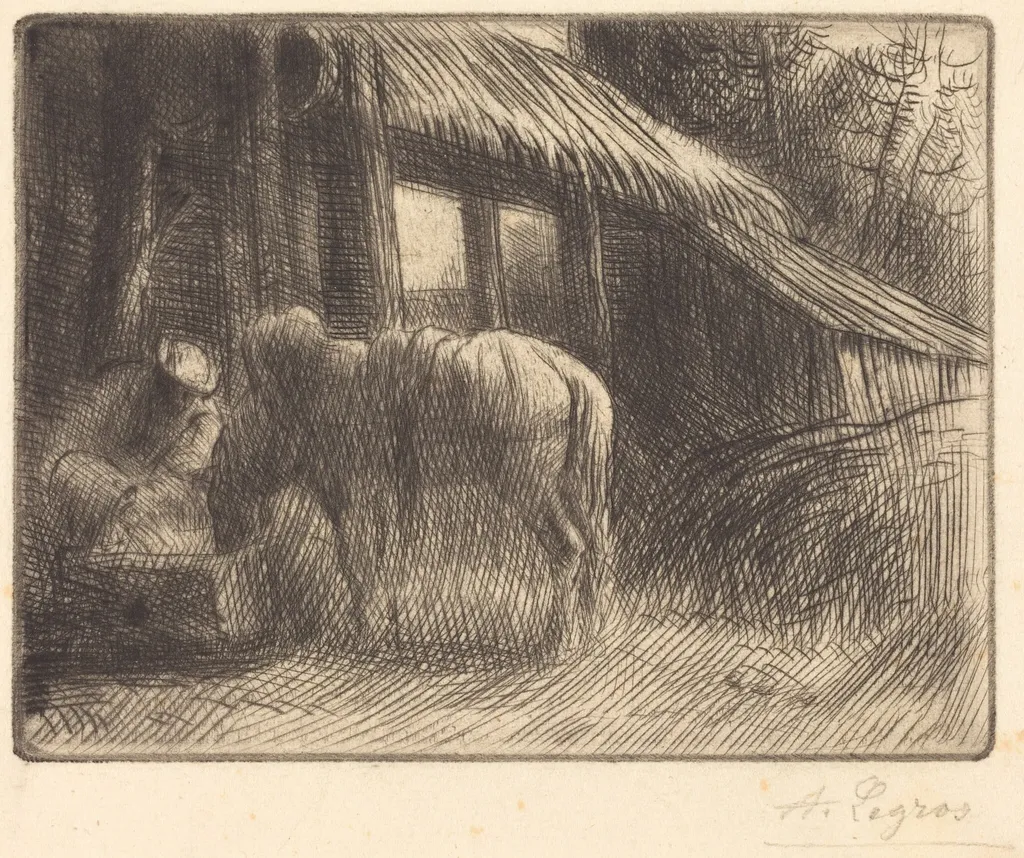
Drinking Trough, 2nd plate (L'abreuvoir) is an ink print by the Romanticist artist Alphonse Legros. It dates from 1874 and is held in the collection of the National Gallery of Art.
About this work
Overview
His technical focus on drypoint contributed to a broader revival of etching in Victorian Britain, where he taught at the Slade School of Art.
Created in 1874, Drinking Trough, 2nd plate (L'abreuvoir) is a drypoint print by Alphonse Legros, a French artist who settled in London in 1863 and became a British citizen. The work belongs to a series exploring rural life and reflects Legros’s engagement with printmaking as a serious artistic medium. His technical focus on drypoint contributed to a broader revival of etching in Victorian Britain, where he taught at the Slade School of Art.
Subject & Meaning
The scene captures a cow drinking from a wooden trough beneath a thatched roof, a quiet moment in agricultural life. No narrative or symbolism is imposed; instead, the focus lies in the ordinary rhythm of farmstead existence. The composition avoids idealization, presenting the animal and structure with unembellished presence, emphasizing the physicality of the environment over sentiment.
Technique & Style
Legros employed drypoint to create dense, scratchy lines that build form through accumulation rather than smooth gradation. The overlapping strokes generate texture and shadow, with no use of wash or tone. The thick, irregular marks convey a sense of immediacy, as if drawn directly from observation.
Light enters faintly through a distant window, but the overall effect is one of tactile roughness, rooted in the medium’s inherent grain.
History & Provenance
The print was made during Legros’s early years in England, a period when he was deeply involved in the British art scene. It was likely produced for private circulation or academic study, as drypoint prints of this type were often limited in edition. No public record of its early ownership exists, but it aligns with Legros’s broader practice of producing multiple states of a single subject to refine his technique.
Context
In the 1870s, British printmaking was undergoing a resurgence, with artists turning away from industrial themes toward rural and domestic subjects. Legros, influenced by French Realism and Dutch genre painting, brought a direct, unpolished aesthetic to his work. His drypoints stood in contrast to the polished engravings of the time, offering a more intimate, hand-made quality that resonated with emerging modern sensibilities.
Legacy
Legros’s drypoints, including this work, helped redefine etching as a vehicle for expressive, non-illustrative art. His emphasis on the physical act of mark-making influenced a generation of British printmakers. Though less widely known today, his pedagogical role and technical rigor left a lasting imprint on the teaching of printmaking in Britain, particularly through his tenure at the Slade.
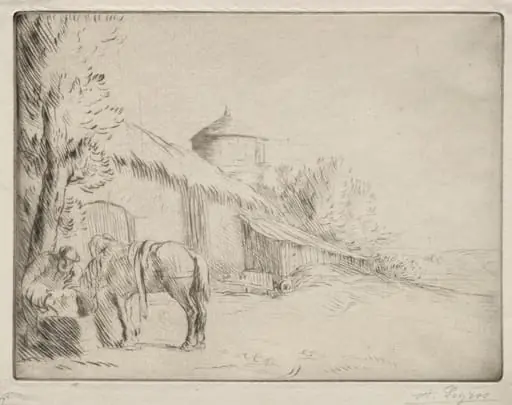
Own this work as a print
Artist & collection

Artist
Alphonse Legros (French pronunciation:; 8 May 1837 – 8 December 1911) was a French, later British, painter, etcher, sculptor, and medallist.

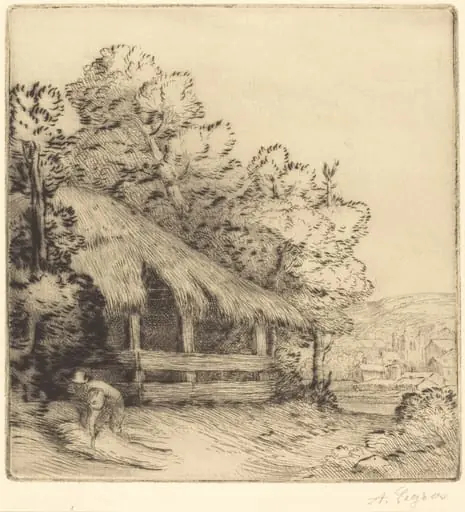 Little Shelter (Le petit hangar)
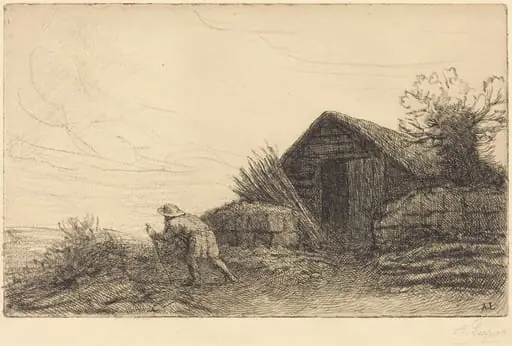 Along the Top of the Hill (Sur le haut de la colline)
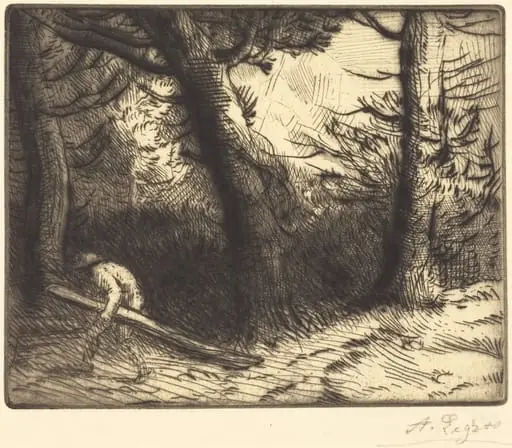 Edge of a Forest in Bourgogne (Un coin de foret en Bourgogne)
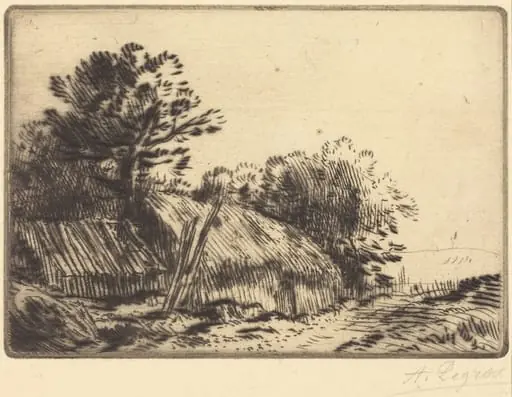 Rustic Scene (Scene rustique)
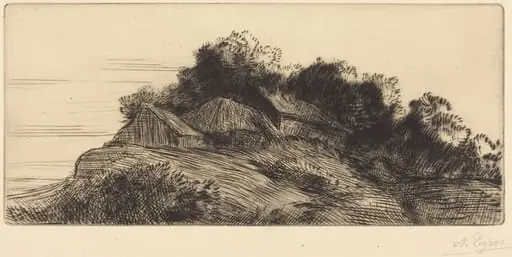 Landscape (Paysage)
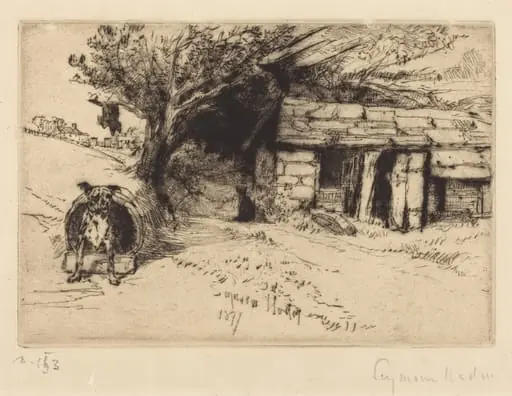 The Cabin
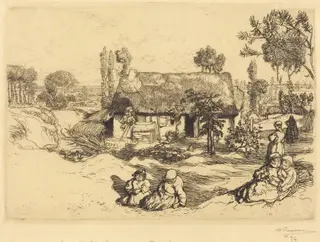 Shelter for the Poor, Vendee (Le nid de pauvres, Vendee)
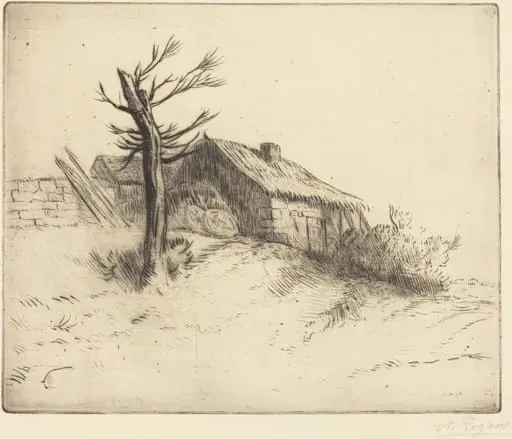 Thatched Cottage (Chaumiere)
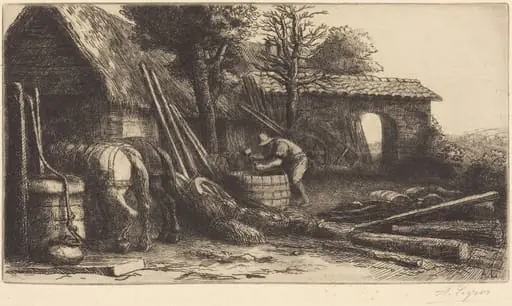 The Cooper (Le tonnelier)
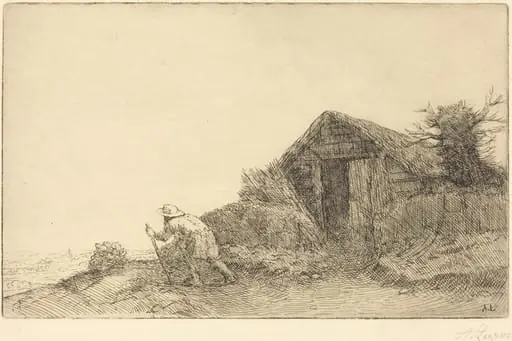 Along the Top of the Hill (Sur le haut de la colline)
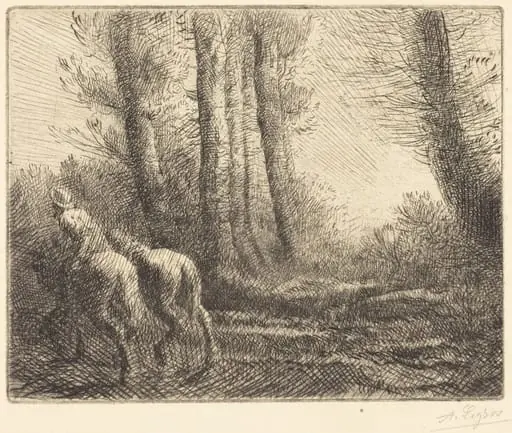 Return from the Plowing (Le retour de labourage)
- The Watering Place (2nd Plate)