Artwork
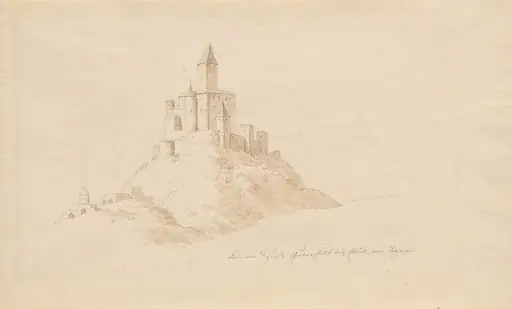
Schloss Landstuhl b. Kaisers, Lautern, den Prinzen v. Sickingen gehürig
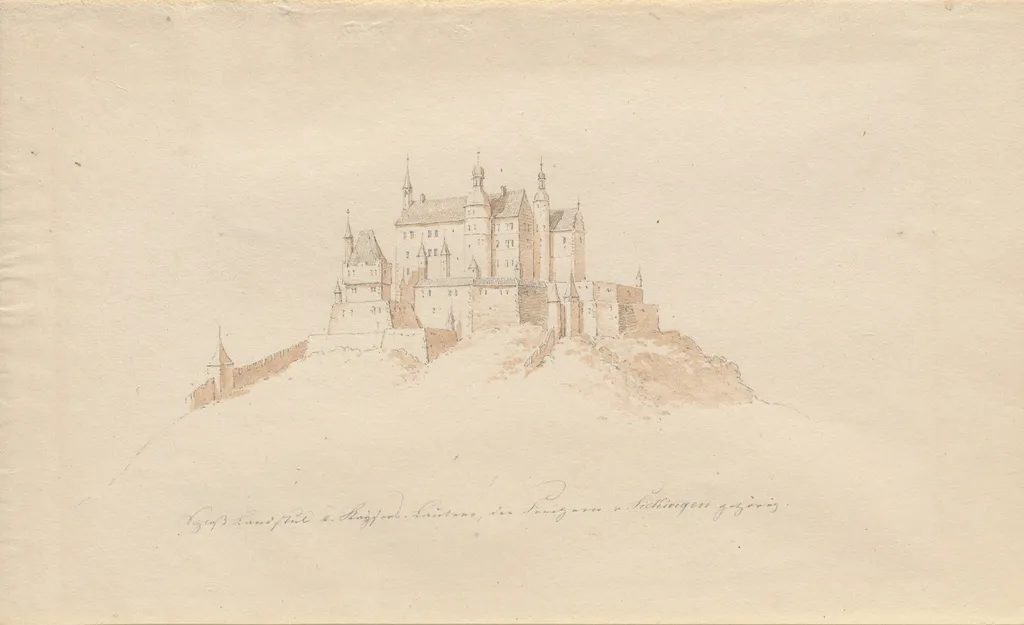
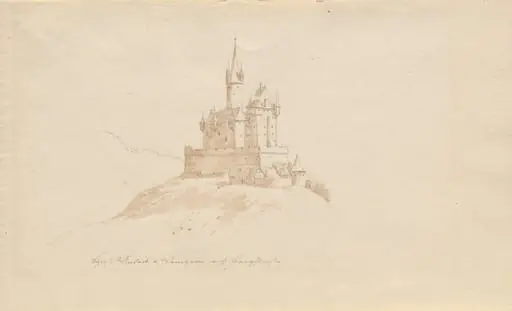
Schloss Landstuhl b. Kaisers, Lautern, den Prinzen v. Sickingen gehürig is a graphite drawing by the Romanticist artist Karl Julius von Leypold. It dates from 1840 and is held in the collection of the National Gallery of Art.
- Inscription
- Inscribed:across bottom of page in graphite: Schloss Landstuhl b. Kaisers, Lautern, den Prinzen v. Sickingen gehürig
About this work
Overview
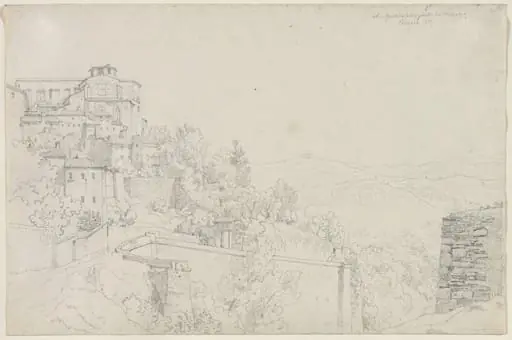
Sickingen gehürig, presents a fortified castle perched atop a craggy hill.
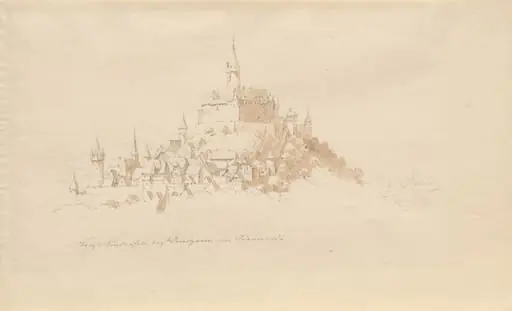
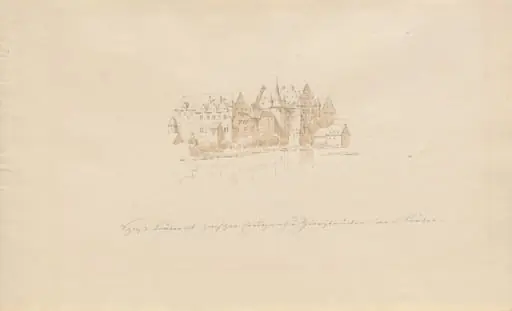
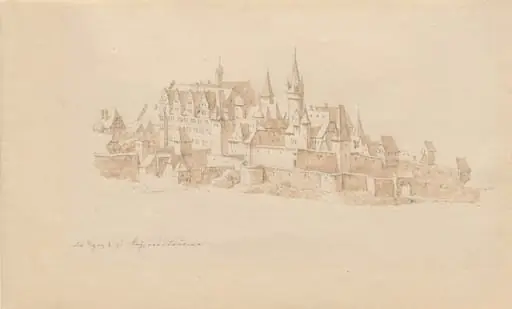
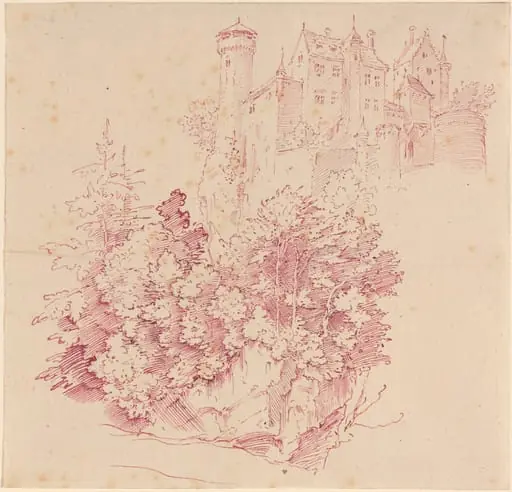
Karl Julius von Leypold’s 1840 drawing, titled Schloss Landstuhl b. Kaisers, Lautern, den Prinzen v. Sickingen gehürig, presents a fortified castle perched atop a craggy hill. Rendered in graphite with a brown wash on wove paper from a sketchbook, the composition captures the structure’s imposing towers, steeply pitched roofs, and massive stone walls, while a modest church nestles near the hill’s base on the left.
Subject & Meaning
The work depicts the historic Schloss Landstuhl, a medieval stronghold associated with Prince Franz von Sickingen. By situating the castle dramatically against a rugged landscape, the drawing emphasizes the site’s defensive character and its role as a symbol of regional power, while the adjacent church hints at the intertwined religious and secular authority of the era.
Technique & Style
Leypold employs a restrained graphite line combined with a subtle brown wash to model form and convey atmospheric depth. The soft tonal gradations and delicate hatching create a sense of volume, while the limited palette of browns and grays reinforces the Romantic fascination with ruins and the sublime qualities of nature.
History & Provenance
Created in 1840, the sketch originates from a personal sketchbook, suggesting it was a preparatory study rather than a finished work for exhibition. The drawing has remained within private collections before entering a museum holding focused on 19th‑century German art, where it serves as documentation of Leypold’s interest in historic architecture.
Own this work as a print
Artist & collection