Artwork
Alma Anna Maria Florin (1848-1859)
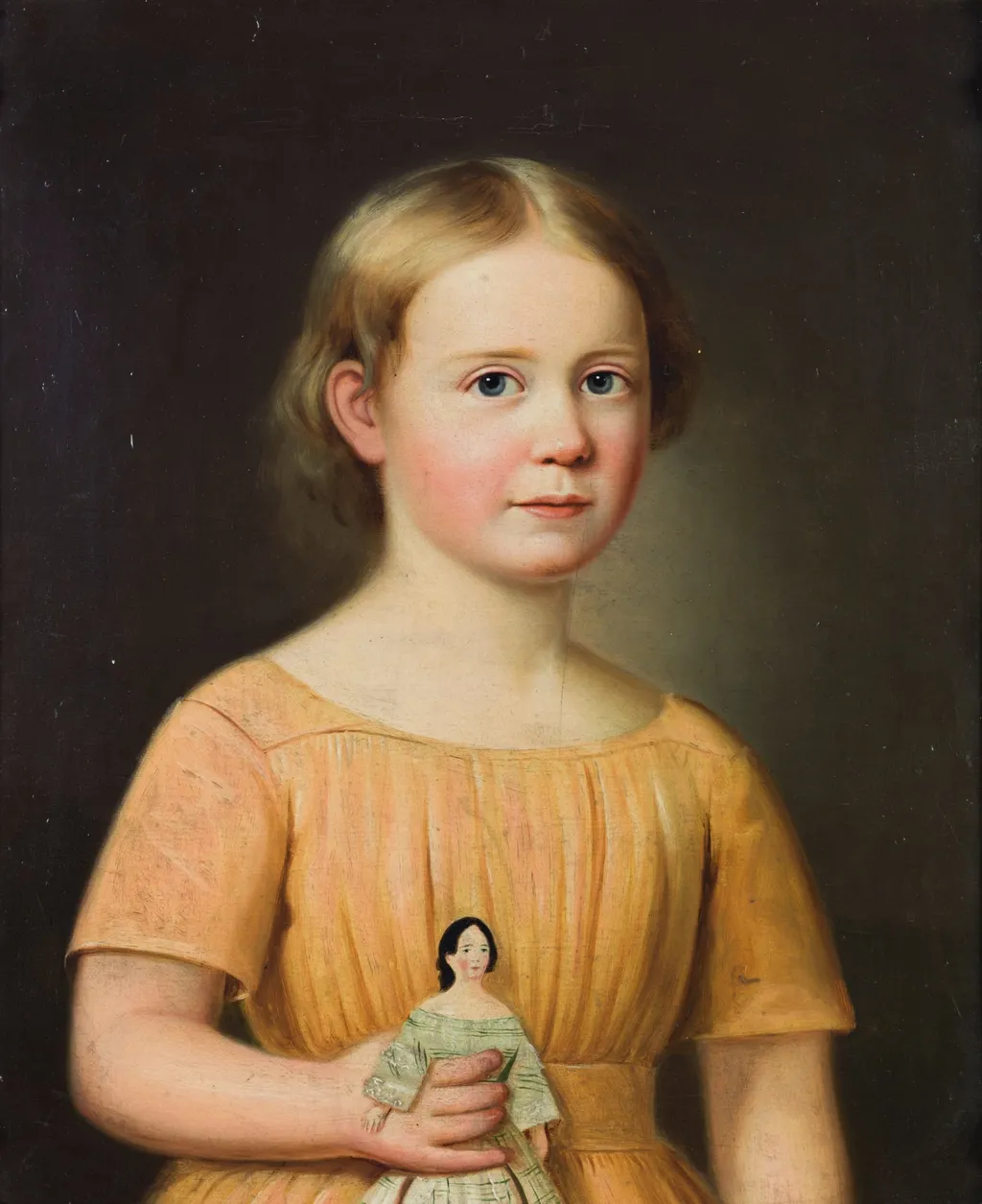
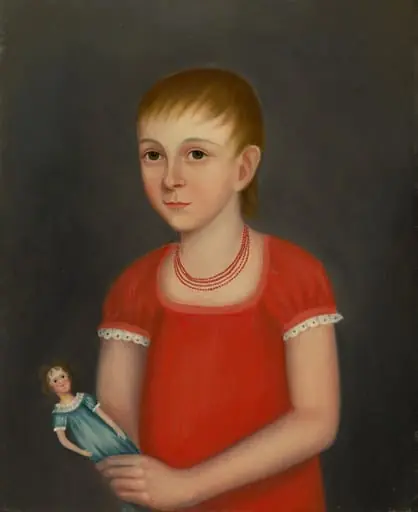
Alma Anna Maria Florin (1848-1859) is a drawing by Johan Erik Lindh. It is held in the collection of the Helsinki City Museum. This portrait depicts Alma Anna Maria Florin, a child who lived between 1848 and 1859.
About this work
Overview
The composition is deliberately minimal, with a dark, unadorned background that isolates the figure and draws attention to her expression and posture.
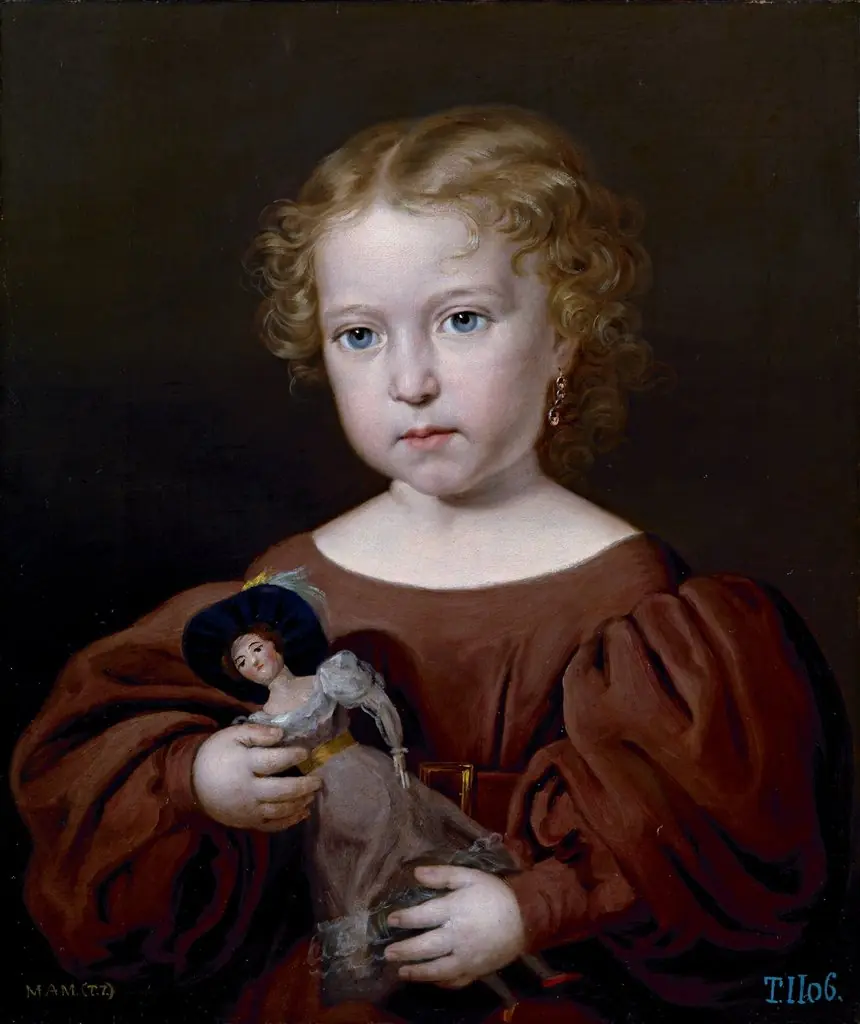
This portrait depicts Alma Anna Maria Florin, a child who lived between 1848 and 1859. Painted in oil on canvas, the work captures her seated with a small doll in her arms. The composition is deliberately minimal, with a dark, unadorned background that isolates the figure and draws attention to her expression and posture. The artist, Johan Erik Lindh, focuses on quiet intimacy rather than elaborate detail.
Subject & Meaning
The girl, Alma, holds a doll with both hands, her grip firm despite her calm facial expression. This contrast suggests an emotional weight beyond childhood play, perhaps a reflection of familial bonds, loss, or the transition from innocence to awareness. The doll, dressed in a light outfit with a dark hat, mirrors her own attire in miniature, reinforcing a connection between child and object.
Technique & Style
Lindh employs soft brushwork to render the girl’s light hair and delicate dress, while the doll’s fabric is rendered with slightly sharper definition. The dark background enhances the luminosity of her yellow dress and pale skin. Lighting is even and diffuse, avoiding dramatic shadows, which contributes to the painting’s restrained, contemplative mood. The style aligns with mid-19th-century Scandinavian portraiture focused on psychological subtlety.
History & Provenance
The painting was created during the artist’s active years in Sweden, likely commissioned by the Florin family. Its survival suggests it remained within private hands, possibly passed down through generations. No public exhibition history is documented prior to its inclusion in institutional collections, indicating a long period of domestic preservation rather than public display.
Context
In mid-19th-century Sweden, portraiture of children often emphasized moral virtue and familial devotion. Dolls were common symbols of nurturing and preparation for domestic roles. Lindh’s approach, avoiding idealization, reflects a growing trend toward psychological realism in Scandinavian art, where inner states were valued over external grandeur.
Legacy
The painting remains a quiet example of Lindh’s sensitivity to childhood subject matter. Though not widely exhibited, it contributes to the understanding of how Swedish artists portrayed domestic life with restraint and emotional nuance. Its preservation offers insight into the private world of a middle-class family during a period of social transition.
Artist & collection
Artist
Johan Erik Lindh filled small sheets with soft pencil portraits of Finnish families in the early 1800s.