Artwork
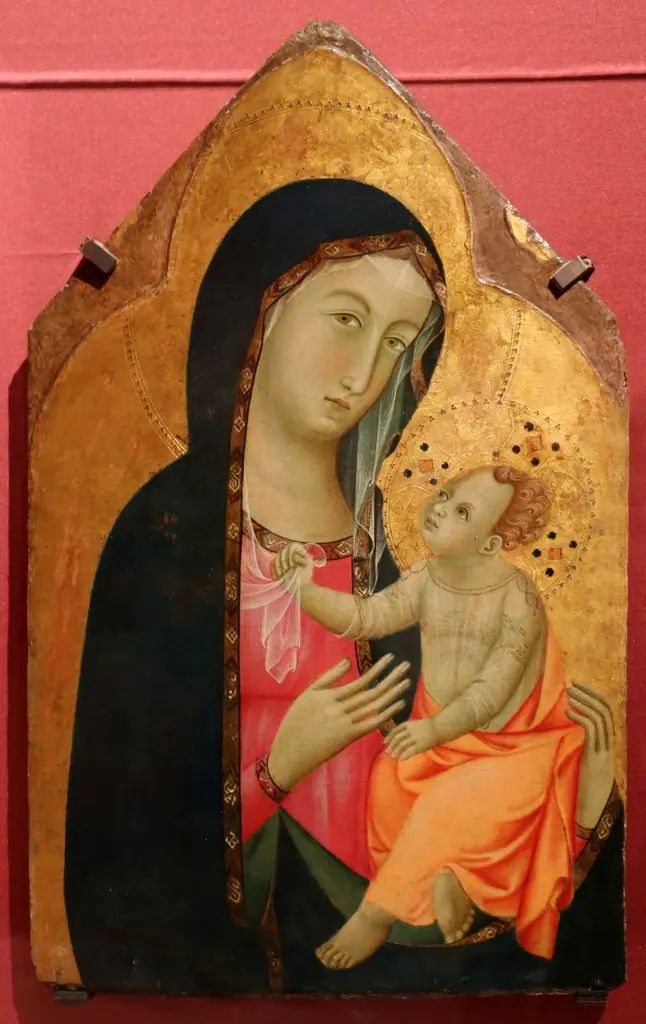
Maria mit dem Kind
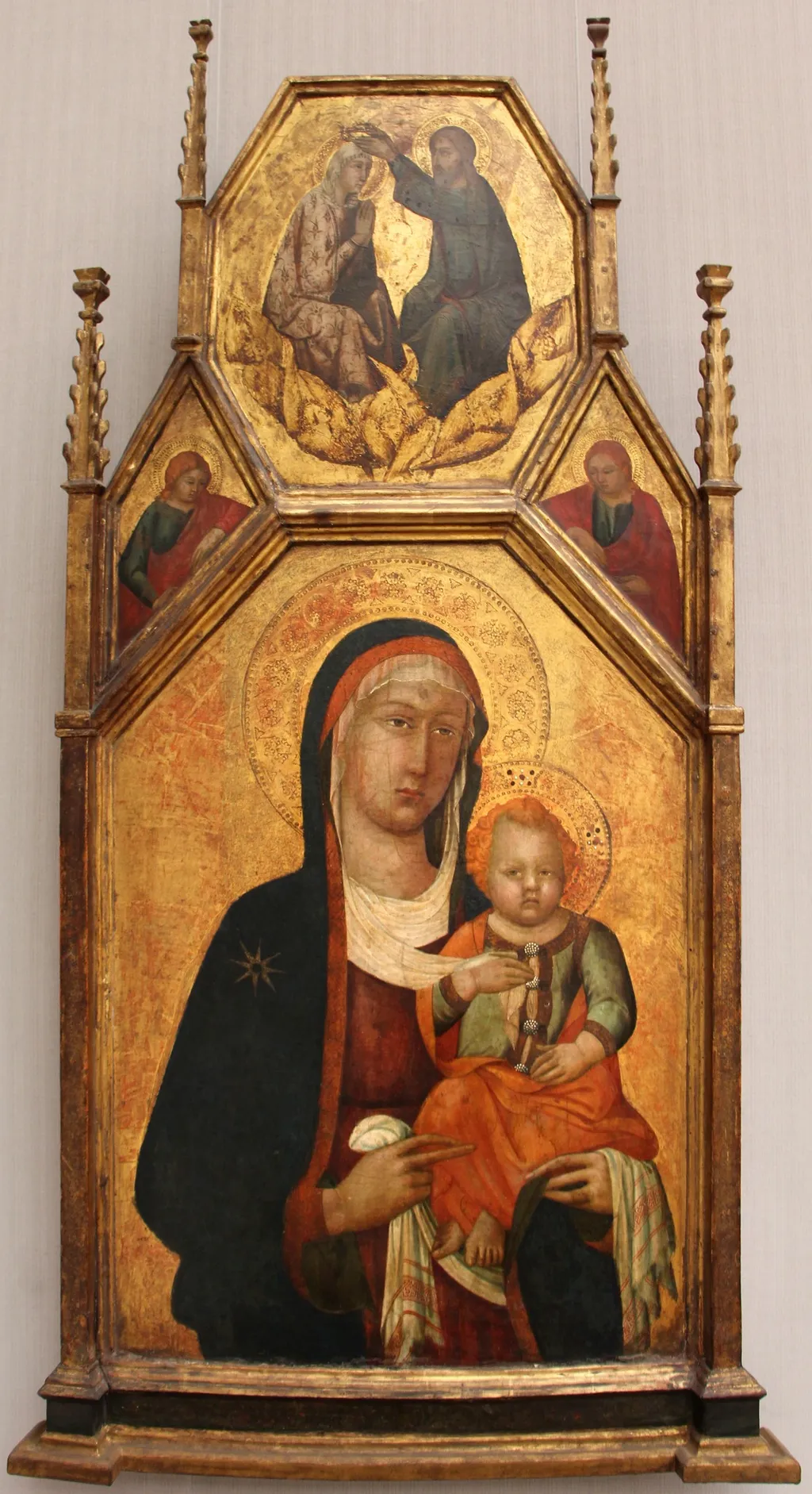
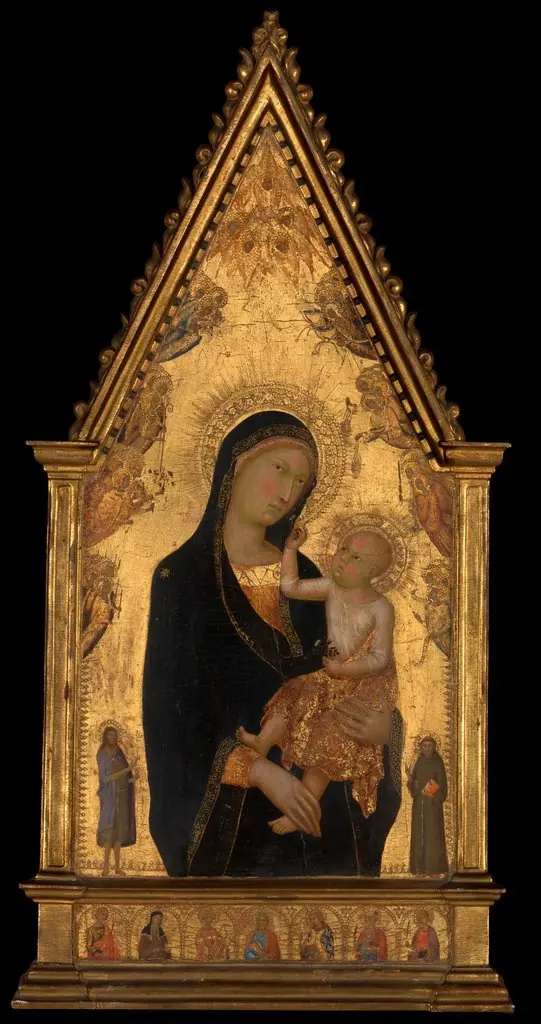
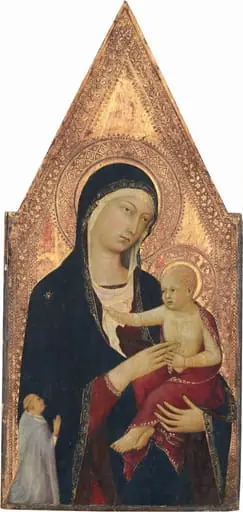
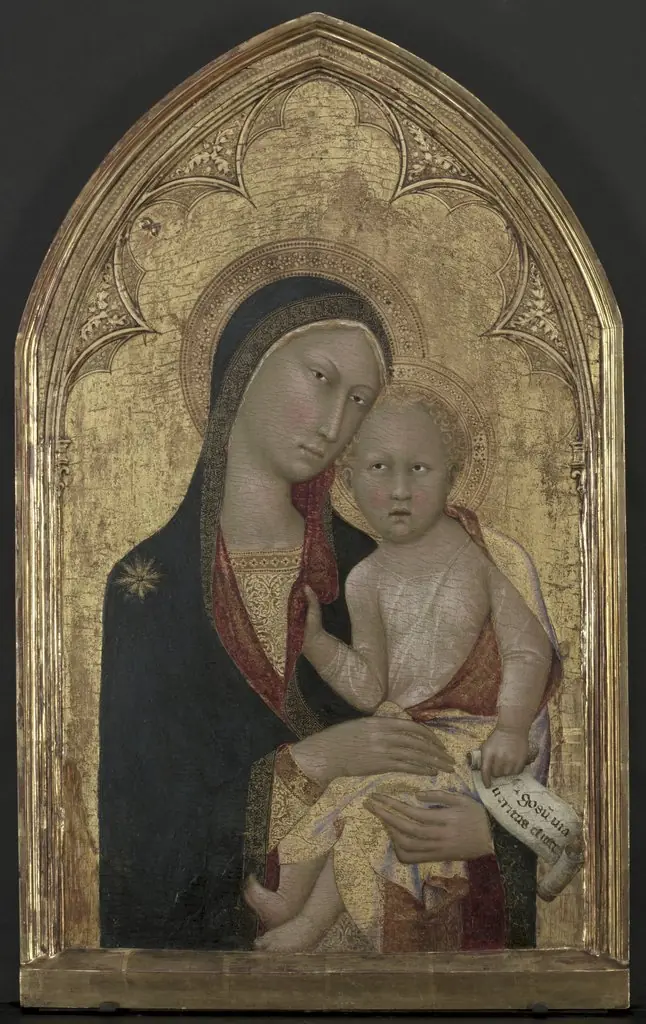
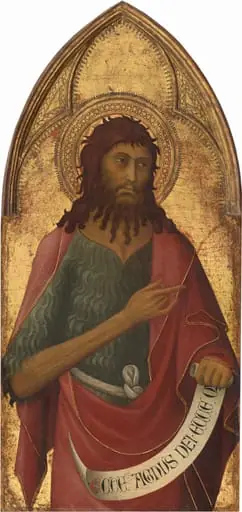
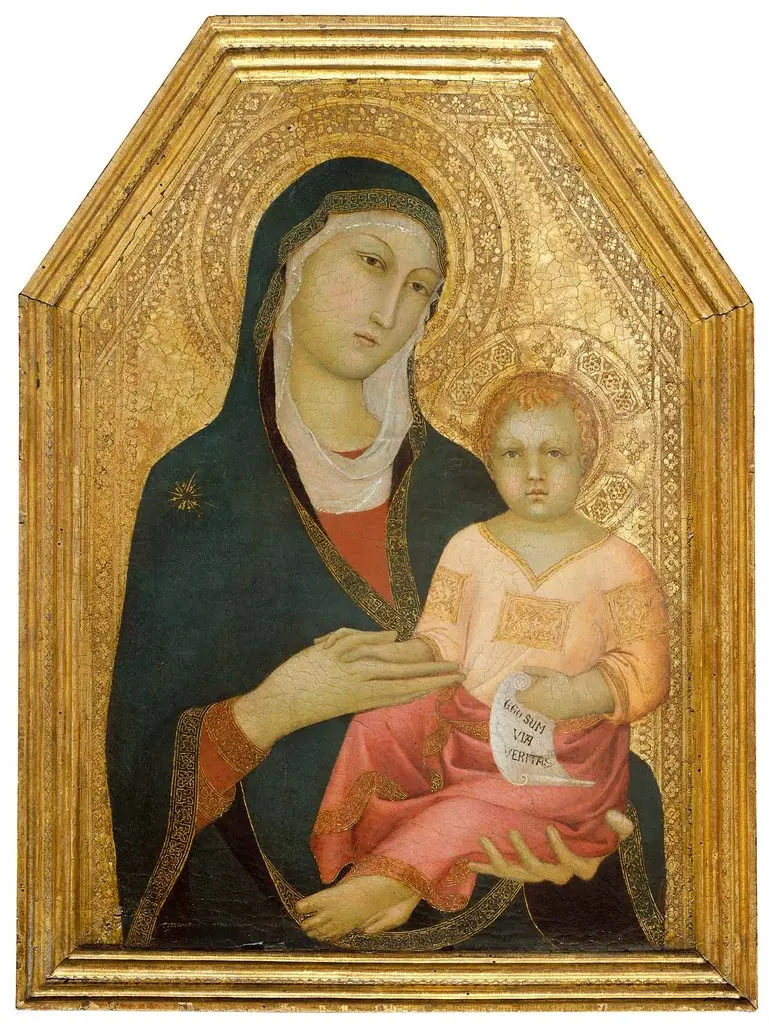
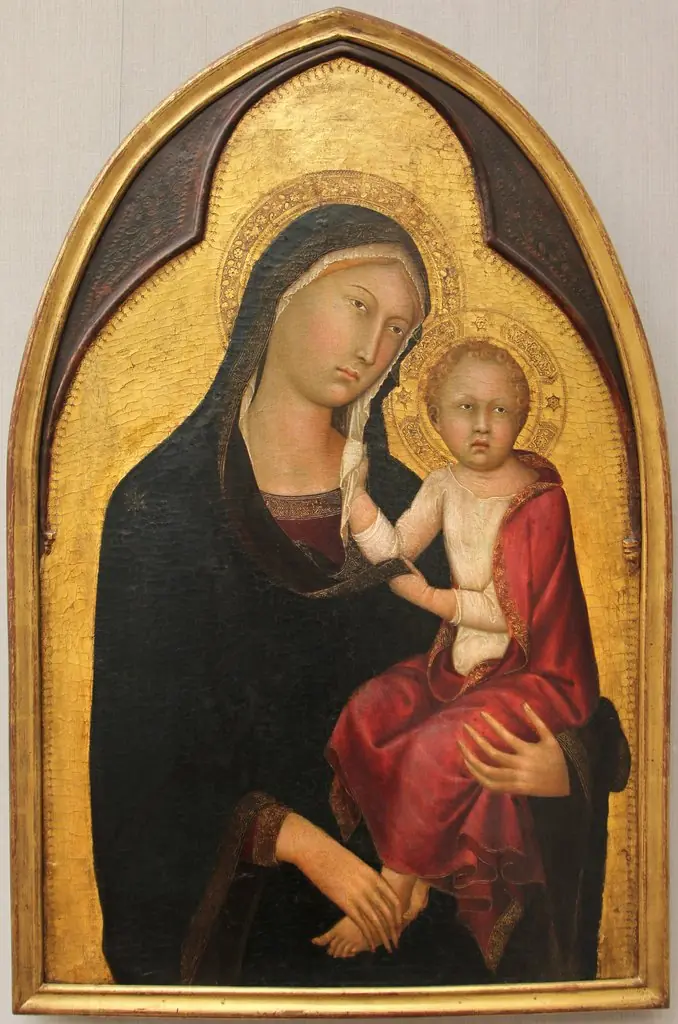
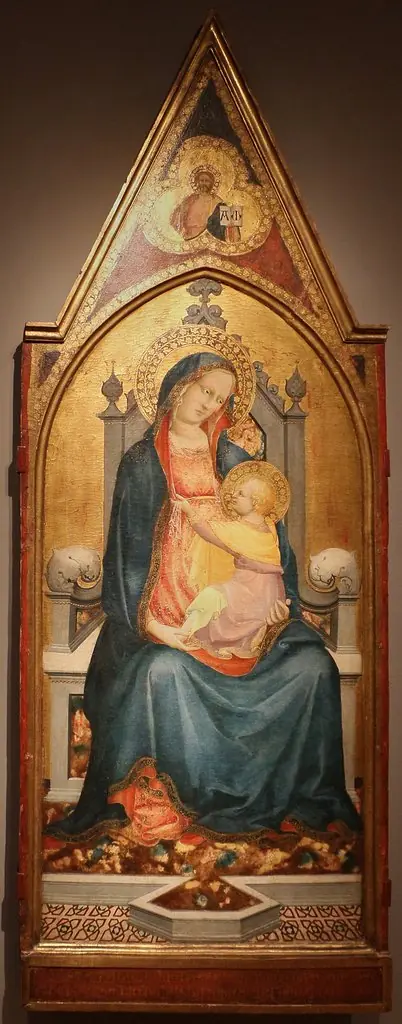
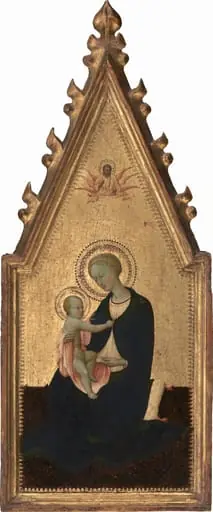
Maria mit dem Kind is a paint painting by the Byzantine icon painting artist Lippo Memmi. It dates from 1340 and is held in the collection of the Gemäldegalerie Berlin.
About this work
Overview
It is held in the Gemäldegalerie, Staatliche Museen zu Berlin, where it is displayed in the Italian painting 13th-15th-century room 40.
Maria mit dem Kind is a gilt panel painting by the Sienese artist Lippo Memmi, dated to around 1330-1340. The work, executed in tempera and gold on poplar panel, depicts the Virgin Mary seated with the Christ Child on her lap. It is held in the Gemäldegalerie, Staatliche Museen zu Berlin, where it is displayed in the Italian painting 13th-15th-century room 40. The painting is significant as a surviving fragment from a larger polyptych, the Polyptych of Colle di Val d'Elsa, and exemplifies the refined Sienese Trecento style that Memmi helped shape alongside his more famous brother-in-law, Simone Martini.
Subject & Meaning
The central subject is a Madonna and Child composition, with Mary seated and holding the infant Jesus on her lap. The Christ Child grasps a scroll bearing a truncated biblical quotation: NULLUS SURREXIT MAIOR JOHANNIS BATIS(TAE), a reference to John the Baptist drawn from Matthew 11:11. This inscription, which translates as "No one has arisen greater than John the Baptist," is unusual in a Madonna and Child context and may reflect the original altarpiece's dedication or patronal interests. The figures are haloed with tooled patterns, marking their sacred status. Memmi renders the interaction between mother and child with notable intimacy: Mary supports her son with her left hand while gently touching his foot with her right, and Jesus clutches both her mantle and veil. These tactile details, inherited from Byzantine prototypes yet softened with greater human warmth, lend the figures a sense of private domesticity within their formal, sacred presentation.
Technique & Style
The painting is executed in tempera and gold on a poplar panel, measuring 66.5 x 27.4 cm for the triangular gable (Dreiecksgiebel) and 66.7 x 27.8 cm for the frame exterior. The panel and its frame are carved from a single piece of wood, creating an integral architectural unit. The overall palette is dominated by gold, deep blue, vermilion, and green. Mary wears a dark blue mantle with red lining, while the Christ Child is dressed in orange and green garments. The background is entirely covered in gold leaf with visible tooling and patterning. Stylistically, the figures are rendered with flat, even light and minimal shadow, with linear drapery folds and stylized facial features. The paint surface shows fine cracking throughout. The frame features pointed arches, decorative pinnacles, and molded gilt edges, consistent with Sienese polyptych design of the period.
History & Provenance
The panel originated from the dismembered Polyptych of Colle di Val d'Elsa, where it was housed in the church of San Francesco. The work was acquired in 1841-42 by Gustav Friedrich Waagen for the Gemäldegalerie Berlin, purchasing from the collection of the painter Francesco Galgani in Siena. It entered the museum's collection with the inventory number 1081A. The reverse of the panel bears a seal with the inscription "Insigne Campo Santo di Pisa," indicating an earlier association with the Camposanto in Pisa, though the precise nature of this connection remains unclear. The panel's triangular gable form indicates it originally crowned one of the main sections of the polyptych.
Context
Lippo Memmi, active in Siena from approximately 1291 until his death in 1356, was a significant figure in the Sienese school of the fourteenth century. He was the brother-in-law of Simone Martini, and scholarly attribution has sometimes involved both artists, with the Gemäldegalerie listing both names in connection with this work. The painting belongs to the period of Sienese painting's international prestige, when artists combined Byzantine formal traditions with increasingly naturalistic observation. The work's original setting in San Francesco, Colle di Val d'Elsa, places it within the context of Franciscan patronage in Tuscany. The inscription referring to John the Baptist may reflect specific devotional interests of that order or of local patrons. The panel's acquisition by Waagen in the mid-nineteenth century was part of a broader effort by the Prussian state to build a comprehensive collection of early Italian painting, making it one of the earliest Sienese Trecento works to enter a major German public collection.
Legacy
As a surviving fragment of the Polyptych of Colle di Val d'Elsa, Maria mit dem Kind serves as crucial evidence for reconstructing Memmi's early career and the appearance of a major dispersed altarpiece. The work has been recognized in modern scholarship for its delicate handling of the mother-child relationship, anticipating developments in later Sienese and Florentine painting. Its presence in the Gemäldegalerie has made it a standard reference point for studies of Memmi's oeuvre and of Sienese panel painting more broadly. The panel's excellent state of preservation, despite fine cracking, allows viewers to appreciate the original luminosity of its gold ground and the refined tempera technique that distinguished the Sienese school. The dismemberment of the original polyptych, while regrettable from an art historical standpoint, has allowed this particular panel to be studied and exhibited as an independent masterpiece of Memmi's devotional imagery.
Artist & collection

Artist
Lippo Memmi (c. 1291 – 1356) was an Italian painter from Siena. He was the foremost follower of Simone Martini, who was his brother-in-law. Together with Martini, in 1333 he painted what is regarded as one of the…