Artwork
Saint John the Baptist
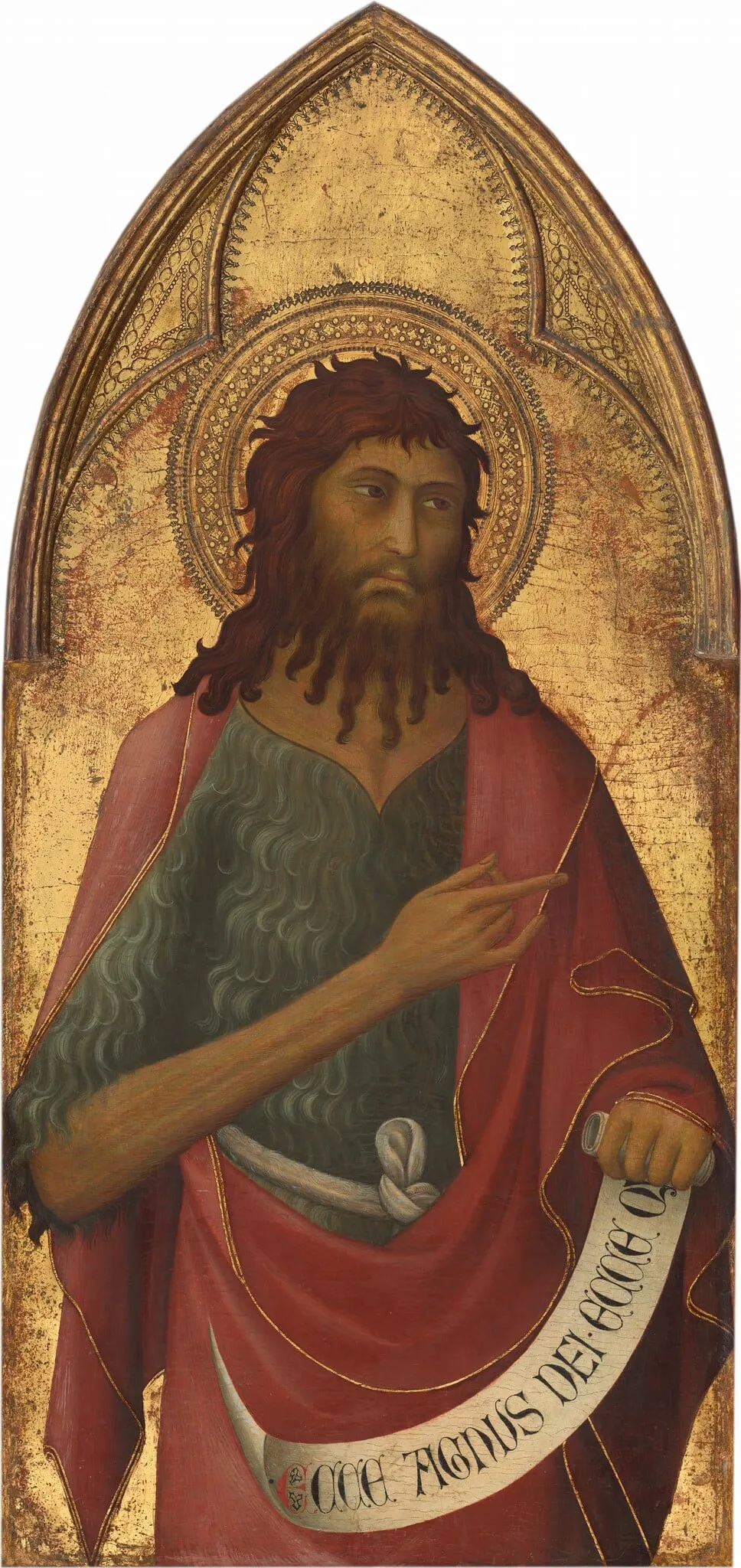
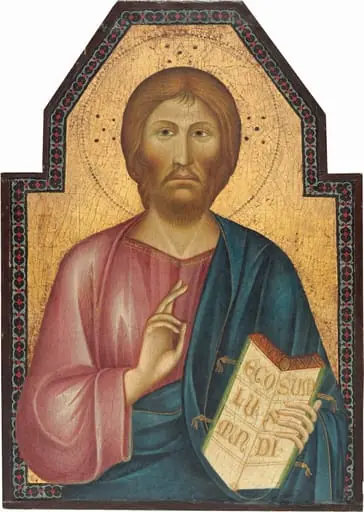
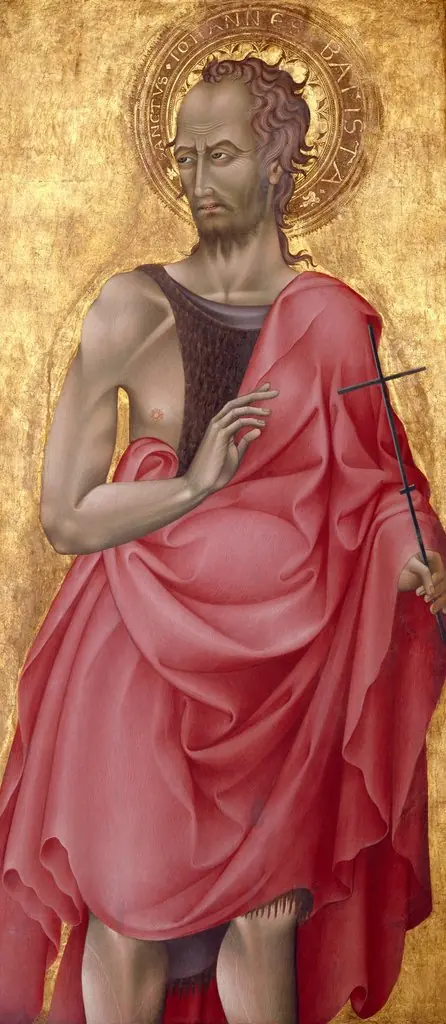
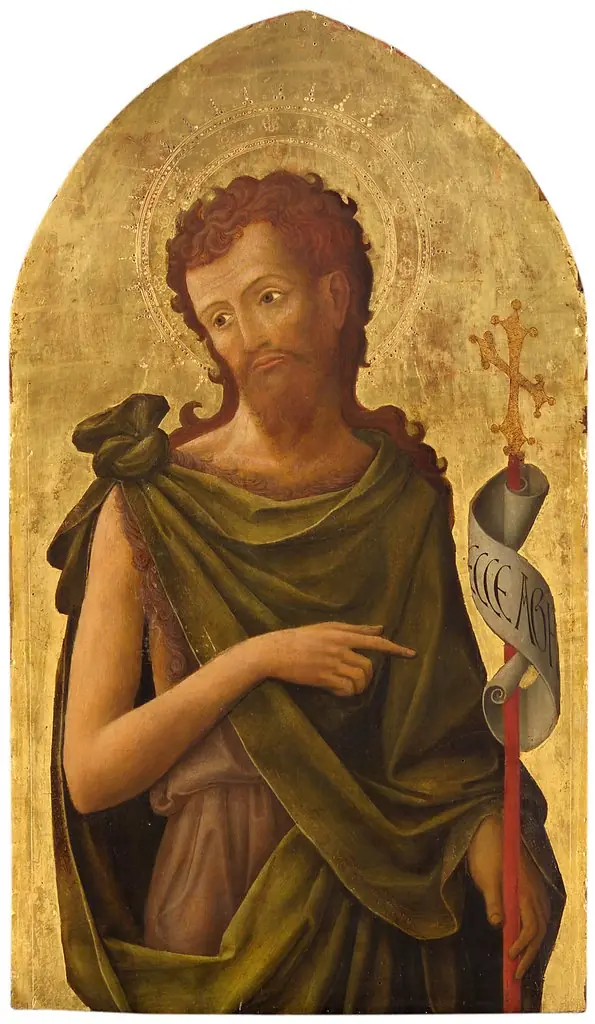
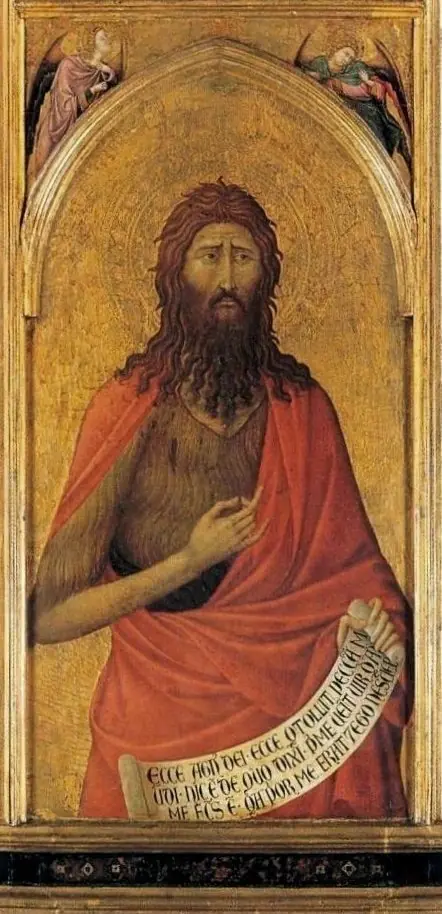
Saint John the Baptist is a tempera painting by the Byzantine icon painting artist Lippo Memmi. It dates from 1325 and is held in the collection of the National Gallery of Art.
- Inscription
- Inscribed:on the saint's scroll: ECCE AGNUS DEI.ECCE Q[UI TOLLIT PECCATUM MUNDI] (Behold the Lamb of God; behold him who [taketh away the sins of the world]; from John 1:29)
About this work
Subject & Meaning
As a religious work, the painting focuses on John the Baptist, who baptized Jesus Christ and prepared the way for his ministry.
Lippo Memmi's tempera panel depicts Saint John the Baptist, a prominent figure in Christian tradition. As a religious work, the painting focuses on John the Baptist, who baptized Jesus Christ and prepared the way for his ministry. In early 14th-century Italian religious art, John the Baptist was typically identified through specific attributes, his customary camel-hair garment, a reed cross, and a scroll bearing the phrase 'Ecce Agnus Dei' ('Behold the Lamb of God'), which symbolize his ascetic life in the wilderness and his role as a prophet proclaiming the coming of the Messiah. The work originally functioned as part of a larger altarpiece intended for devotional contexts within Tuscan churches.
Technique & Style
The Saint John the Baptist by Lippo Memmi is executed in tempera on a wooden panel, a common medium for panel painting in fourteenth-century Italy. The handling is characterized by fine, linear precision typical of the Sienese Gothic style, with delicate modeling of facial features and drapery folds that convey volume without strong chiaroscuro. The composition emphasizes verticality and symmetry, aligning with the devotional function of the work within a polyptych or altarpiece.
Stylistic qualities include elongated proportions, attenuated fingers, and a delicate, almost linear treatment of the saint's camel-skin garment, reflecting Memmi's training in the workshop of Simone Martini. The figure's contemplative gaze and the restrained palette, dominated by earth tones, gold leaf in the nimbus, and muted greens and reds, further align with Sienese pictorial conventions of the 1320s.
History & Provenance
Attributed to Lippo Memmi and dated to approximately 1325, this tempera-on-panel painting likely originated in the church of San Francesco in San Gimignano, where it remained until 1553. It subsequently moved to the church of San Giovanni Battista in the same city until the late 18th century, before being transferred to the church of San Francesco in Colle Val d'Elsa between 1787 and the mid-19th century. The work later entered the collection of Graf von Oriola at Schloss Budesheim, appearing as a Taddeo di Bartolo in an Amsterdam sale in April 1932.
By 1934 it was held by Jacques Goudstikker in Amsterdam. In February 1937 Duveen Brothers acquired the piece through Paul Cassirer & Co., selling it to the Samuel H. Kress Foundation in June 1938. The foundation gifted the painting to the National Gallery of Art in Washington, D.C., in 1939.
Overview
Lippo Memmi, a Sienese painter active in the early 14th century, created Saint John the Baptist around 1325. Executed in tempera on panel, this painting exemplifies the religious themes prevalent in his work. It reflects the artistic currents of its era, blending established iconographic traditions with emerging stylistic developments characteristic of the Sienese school. This piece offers insight into Memmi's individual contribution to the period's devotional art.
Context
Lippo Memmi was a prominent figure within the Sienese school, closely associated with his brother-in-law and mentor, Simone Martini. Their artistic collaboration, notably on works like the Annunciation, highlights their shared influence on the International Gothic style. Memmi's career extended beyond Siena, encompassing significant commissions for institutions such as Orvieto Cathedral and engagements at the Papal court in Avignon, underscoring his reputation and reach.
Artist & collection

Artist
Lippo Memmi (c. 1291 – 1356) was an Italian painter from Siena. He was the foremost follower of Simone Martini, who was his brother-in-law. Together with Martini, in 1333 he painted what is regarded as one of the…

![Saint James Major [right panel], by Grifo di Tancredi](https://artifactworldgallery.com/img/grifo-di-tancredi--saint-james-major-right-panel--dc190378c0cddc8f-w320.webp)