Artwork
Lily and Butterflies
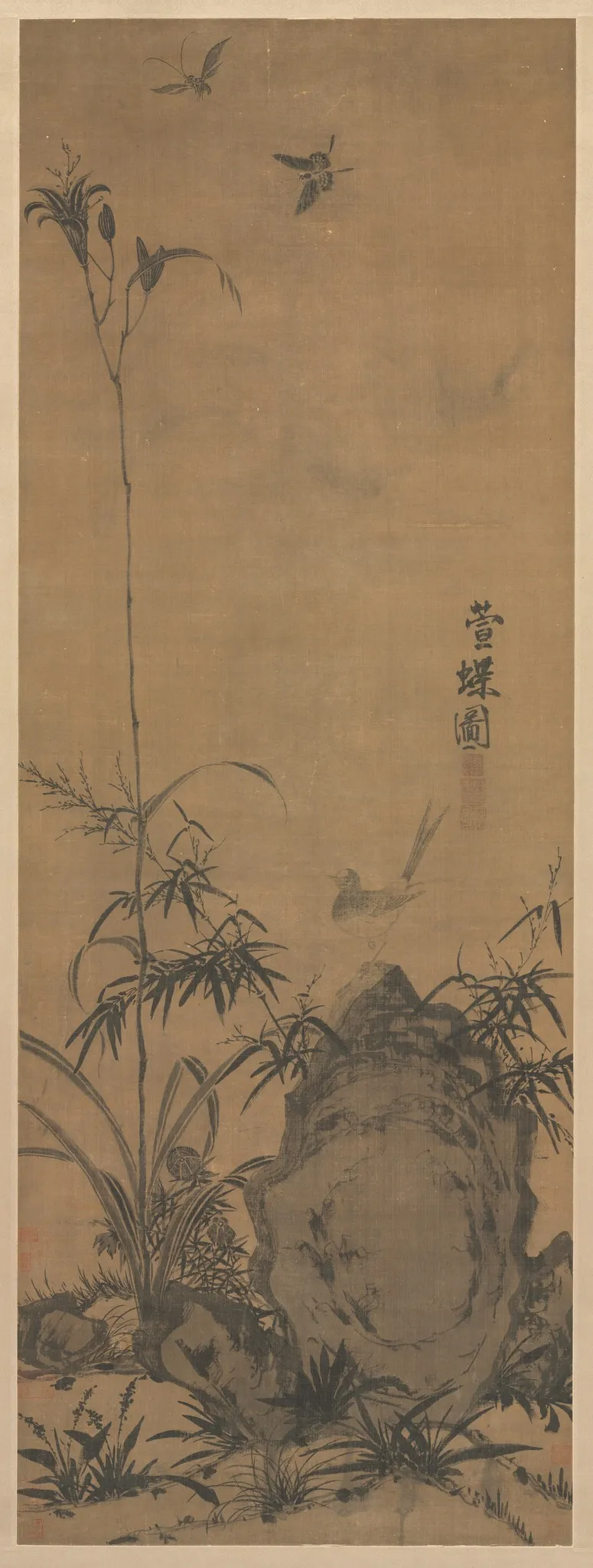
Lily and Butterflies is an unspecified painting by the Ming dynasty painting artist Liu Shanshou. It dates from 1350 and is held in the collection of the Cleveland Museum of Art.
About this work
History & Provenance
It has been part of the museum's collection since its acquisition, though specific exhibition records are not detailed in the provided sources.
Liu Shanshou created the painting Lily and Butterflies around 1350 in China. The work entered the collection of the Cleveland Museum of Art, where it remains on view. Its provenance traces to the museum's acquisition, documented as part of the institution's holdings.
The painting is housed in the Cleveland Museum of Art, where it is cataloged as accession number 1971.132. It has been part of the museum's collection since its acquisition, though specific exhibition records are not detailed in the provided sources.
Overview
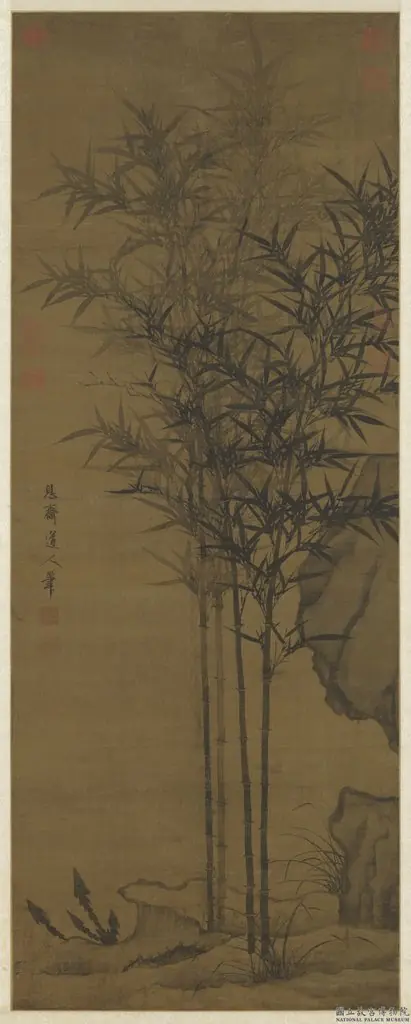
Liu Shanshou’s painting Lily and Butterflies, dated to around 1350, is an ink work on paper in the collection of the Cleveland Museum of Art. The composition centers on a slender bamboo stalk rendered in dark, expressive lines, set against an unadorned background that emphasizes the brushwork’s immediacy.
Subject & Meaning
The scene presents a solitary bamboo plant with its elongated leaves, a small bird perched on a nearby rock, and two butterflies drifting above. The juxtaposition of the steadfast bamboo and the fleeting butterflies evokes a contrast between endurance and transience, a theme often explored in Chinese literati painting.
Technique & Style
Liu employs minimalistic ink strokes to convey the bamboo’s height and texture, allowing variations in line density to suggest both form and movement. The rock and bird are rendered with similarly restrained marks, creating a balanced composition where negative space enhances the visual impact of the dark lines.
Context
Bamboo frequently appears in Chinese painting as a symbol of resilience and moral integrity. Liu’s treatment aligns with the broader Yuan‑dynasty tradition of ink landscapes that prioritize expressive brushwork over detailed representation, situating the piece within a lineage of scholarly art.
Artist & collection

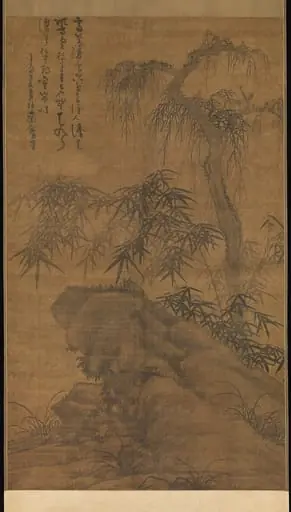
- 元 吳鎮 高節凌雲圖 軸|Bamboo, old tree, and rock
 Lily and Butterflies
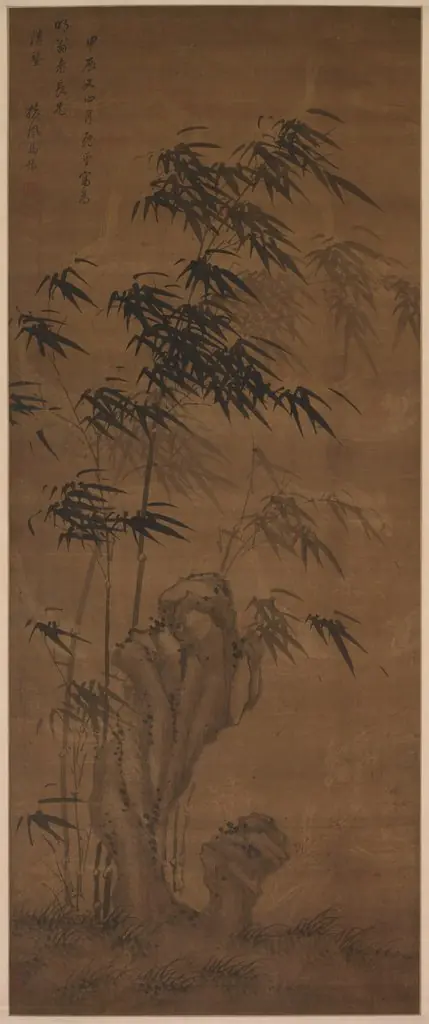 Bamboo in the Wind
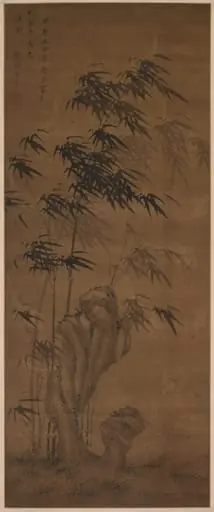 Bamboo in the Wind
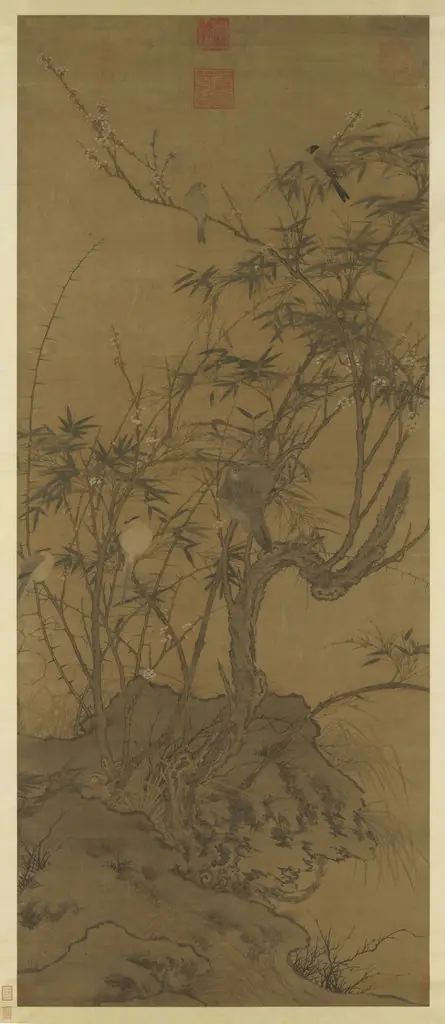 Plum Tree, Bamboo, and a Gathering of Birds
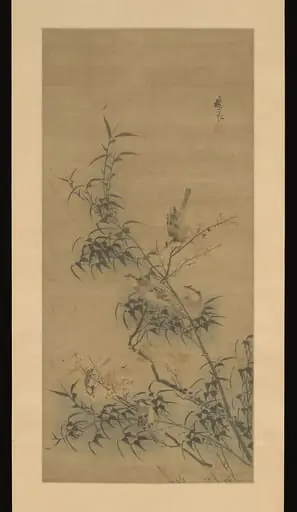 明 佚名 仿林良 喜上梅梢圖 軸|Birds Amidst Blossoming Plum and Bamboo
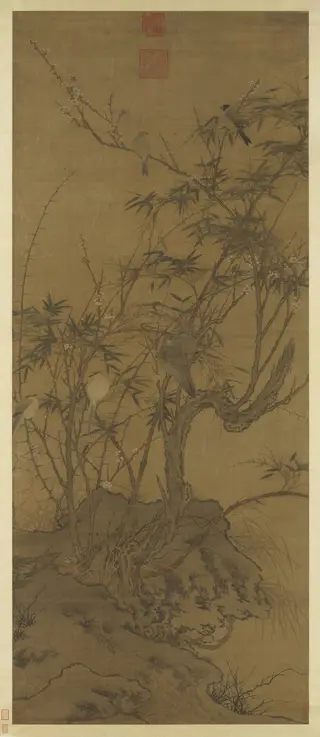 宋人梅竹聚禽圖 軸
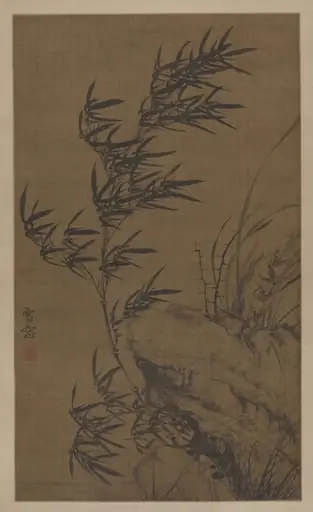 Bamboo in the Wind
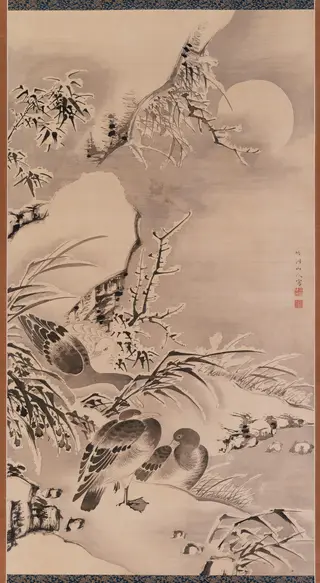 Ducks in the Winter Moonlight
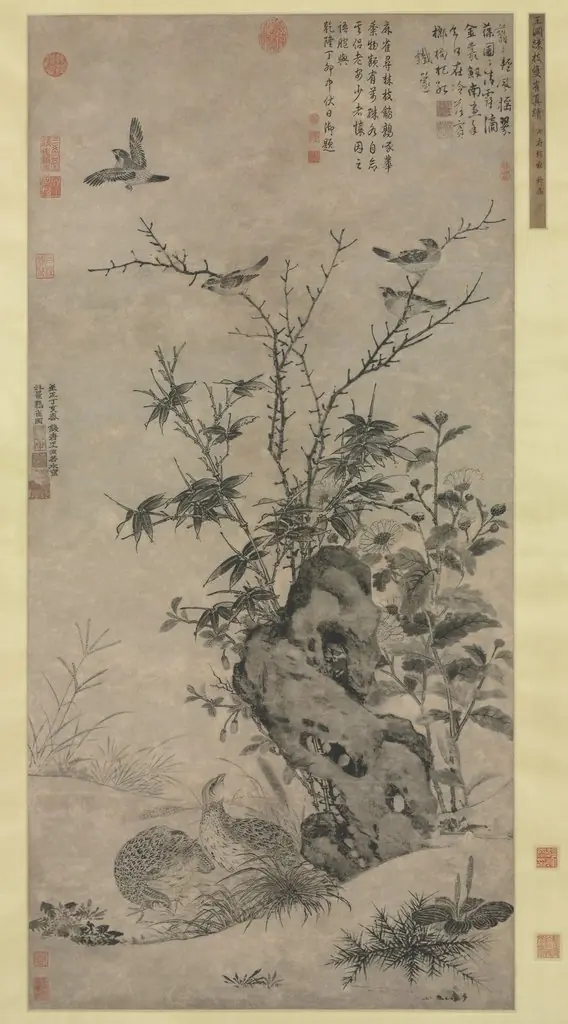 Quails and Sparrows in an Autumn Scene
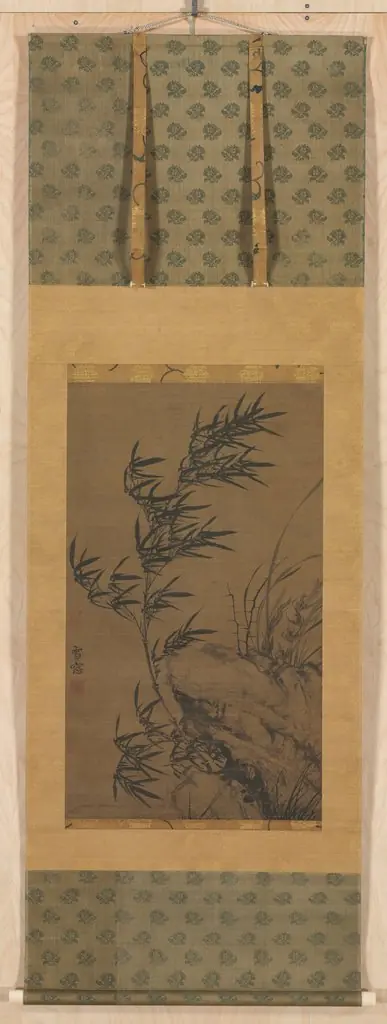 Bamboo in the Wind
 元李衎四季平安圖 軸