Artwork
Orpheus and the Animals
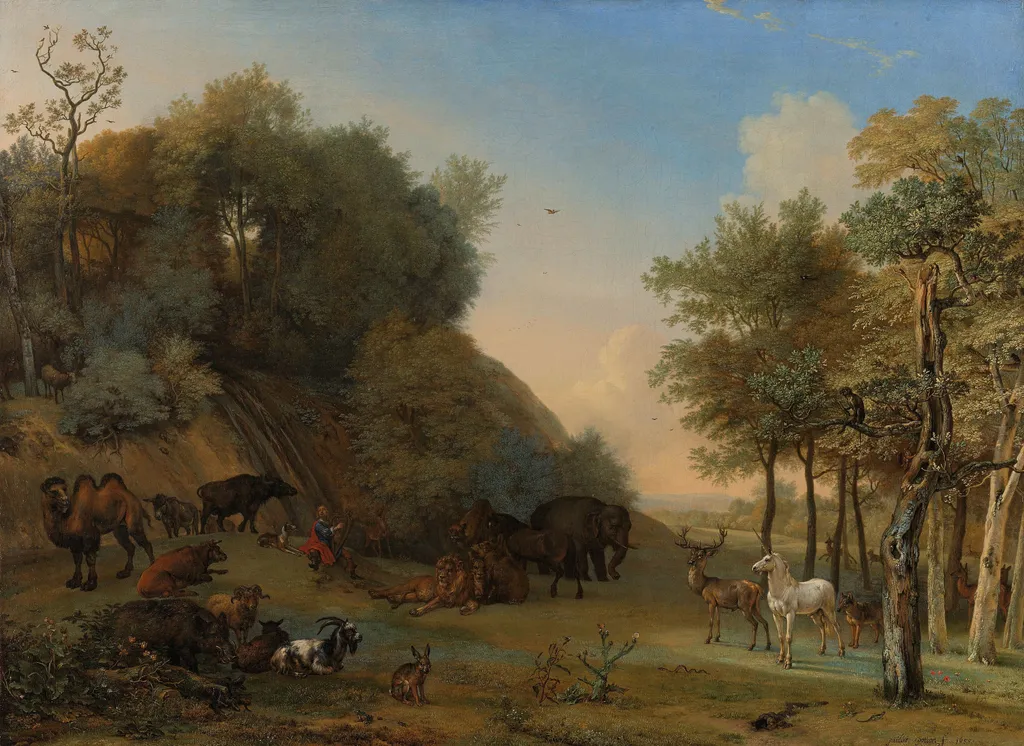
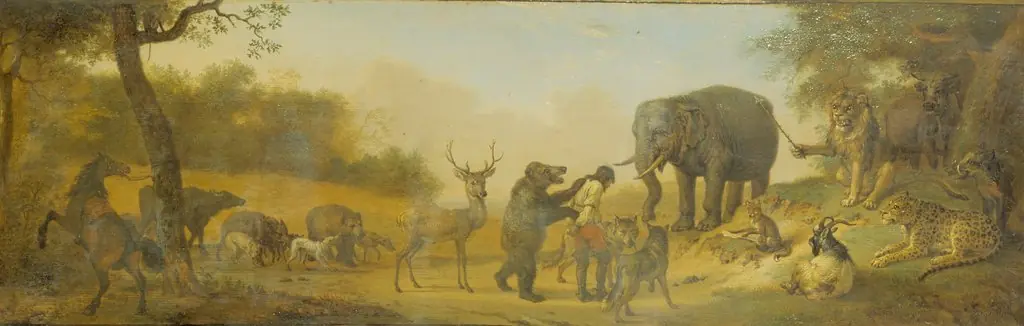
Orpheus and the Animals is an oil painting by the Dutch Golden Age artist Paulus Potter. It dates from 1650 and is held in the collection of the Rijksmuseum.
About this work
Subject & Meaning
By including the unicorn alongside real and mythical beasts, the work aligns with the tradition of mythological painting while functioning as a landscape.
Paulus Potter's 1650 oil painting depicts the mythological figure Orpheus playing his lyre amidst a gathering of diverse animals. The composition features a menagerie that includes a horse, elephant, stag, dog, lion, ram, and a unicorn, illustrating the legendary power of Orpheus's music to charm all creatures regardless of their nature. By including the unicorn alongside real and mythical beasts, the work aligns with the tradition of mythological painting while functioning as a landscape.
The scene symbolizes the harmonious unity of the natural world under the influence of art and music, a central theme in the Orpheus myth where the musician's song transcends the boundaries between the wild and the tame.
Technique & Style
Executed in 1650, this work by Paulus Potter is an oil painting on canvas. The composition measures 67 by 89 centimeters and integrates mythological subject matter with landscape elements. Stylistically, the piece features a gathering of diverse fauna, including a horse, elephant, stag, dog, lion, ram, and unicorn, arranged around the central figure of Orpheus.
The application of oil paint allows for the detailed rendering of these various animals within a unified outdoor setting, characteristic of the artist's approach to combining naturalistic observation with classical themes.
History & Provenance
Orpheus and the Animals is a 1650 oil-on-canvas work by Paulus Potter, recorded as a mythological landscape in contemporary classifications. The painting measures 67 × 89 cm and depicts the legendary poet amid a menagerie of horses, elephants, stags, dogs, lions, rams and a unicorn. It entered the collection of the Rijksmuseum through successive owners Willem Lormier, Adriaan Leonard van Heteren Gevers and Henrica Cunera Lormier-van Olden, having been held in the Kabinet van Heteren Gevers before museum acquisition.
No evidence of a specific commission or patron is noted in the sources. The work was included in the 2015 exhibition "Unicorn: The Mythical Beast in Art."
Legacy
Paulus Potter's 1650 canvas Orpheus and the Animals, housed in the Rijksmuseum, is referenced in discussions of Dutch Golden Age mythological painting. Its appearance in the exhibition "Unicorn: The Mythical Beast in Art" highlighted its relevance to studies of mythic subjects and to Potter's blending of landscape with classical narrative.
Overview
Paulus Potter's Orpheus and the Animals, painted around 1650, is an oil on canvas from the Dutch Golden Age. This work exemplifies Potter's specialization in animal-filled landscapes, depicting the mythological figure Orpheus charming a diverse gathering of creatures with his music. The painting is a significant piece within his limited oeuvre, now housed in the Rijksmuseum collection.
Own this work as a print
Artist & collection
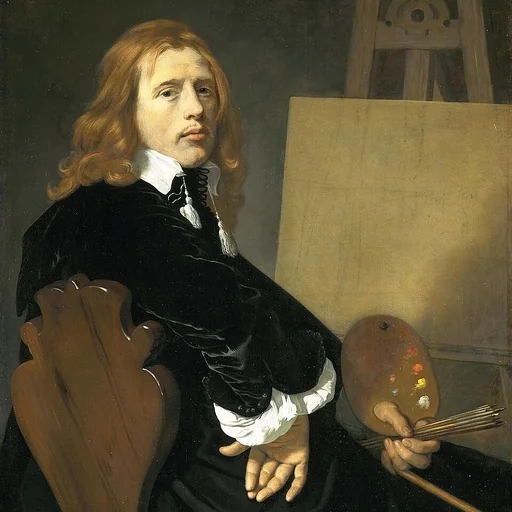
Artist
Paulus Potter (Dutch pronunciation:; 20 November 1625 (baptised) – 17 January 1654 (buried)) was a Dutch painter who specialized in landscapes featuring animals, often from a low vantage point.