Artwork
Posthumous portrait of Aucke Stellingwerff, Admiral of Friesland, killed in 1665 at Lowestoft by a cannon-ball
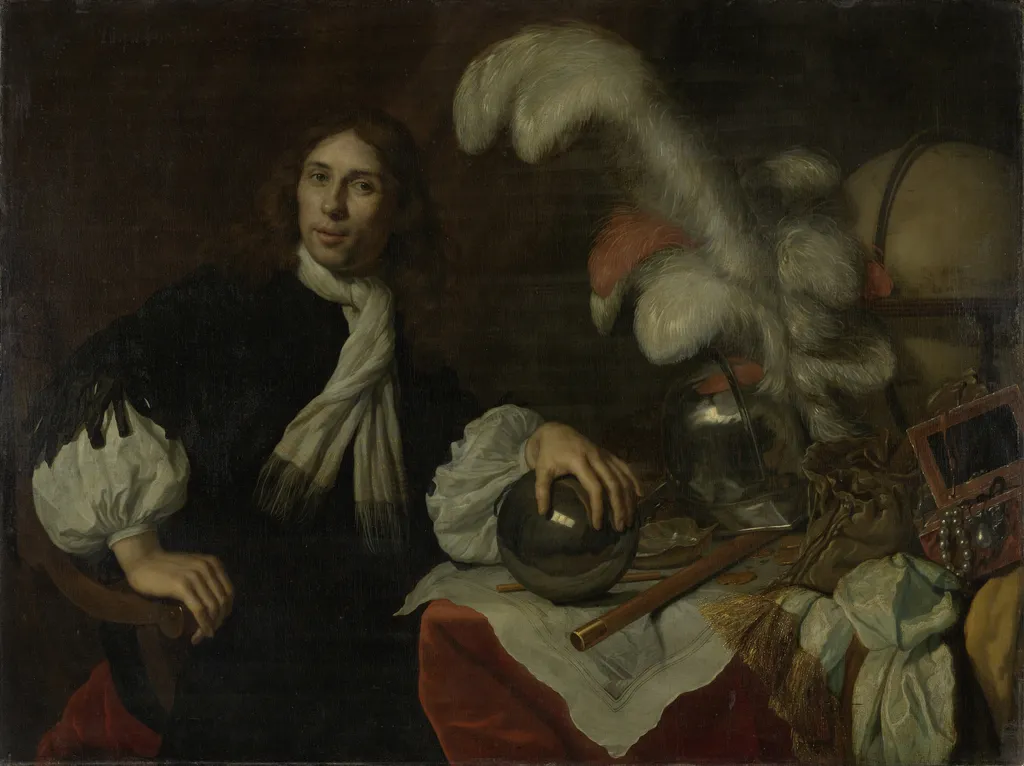
Posthumous portrait of Aucke Stellingwerff, Admiral of Friesland, killed in 1665 at Lowestoft by a cannon-ball is an oil painting by the Dutch Golden Age artist Lodewijk van der Helst. It dates from 1670 and is held in the collection of the Rijksmuseum.
About this work
Technique & Style
As a formal portrait, it depicts the Frisian Admiral Aucke Stellingwerff, who was killed in action at the Battle of Lowestoft in 1665.
Executed in 1670 by Lodewijk van der Helst, this posthumous portrait is an oil painting on canvas. The work measures 103 cm in height and 136 cm in width. As a formal portrait, it depicts the Frisian Admiral Aucke Stellingwerff, who was killed in action at the Battle of Lowestoft in 1665.
The piece is classified within the genre of portraiture and is currently held in the collection of the Rijksmuseum.
History & Provenance
The posthumous portrait of Admiral Aucke Stellingwerff was painted in 1670 by Lodewijk van der Helst. It entered the collection of the Rijksmuseum in Amsterdam and has remained in the museum's holdings. The work was commissioned to commemorate the admiral who died in the 1665 Battle of Lowestoft and was completed a few years after his death. The painting measures 103 cm in height and 136 cm in width.
Context
The posthumous portrait of Admiral Aucke Stellingwerff, painted by Lodewijk van der Helst in 1670, exemplifies Dutch Golden Age portraiture’s emphasis on dignified commemoration of civic and military figures. The work, housed in the Rijksmuseum, reflects the era’s practice of memorializing naval heroes through formalized likenesses that blend realism with symbolic grandeur, situating it within van der Helst’s broader oeuvre of group portraits and civic commissions. Its creation shortly after Stellingwerff’s 1665 death at the Battle of Lowestoft underscores the cultural impulse to honor fallen leaders through art, a theme prominent in 17th-century Dutch Republic portraiture.
Overview
Lodewijk van der Helst’s oil painting, executed in 1670, serves as a posthumous commemoration of Aucke Stellingwerff, the Frisian admiral who fell at the Battle of Lowestoft in 1665. The work resides in the Rijksmuseum’s collection, where it is displayed as a representative example of Dutch portraiture from the late seventeenth century.
Subject & Meaning
The sitter is presented seated at a table, dressed in dark garments accented by a white scarf. His right hand rests on a crystal sphere, while a helmet, sword and globe lie on the surface, symbols that underscore his naval command and broader worldly authority. The inclusion of the crystal ball hints at an intellectual curiosity beyond mere martial prowess.
Own this work as a print
Artist & collection