Artwork
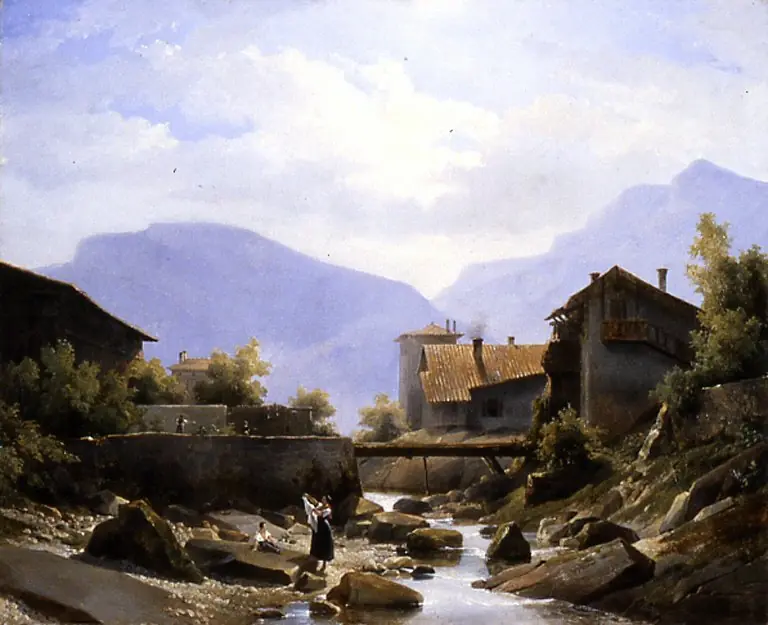
A Mill in a mountainous Landscape
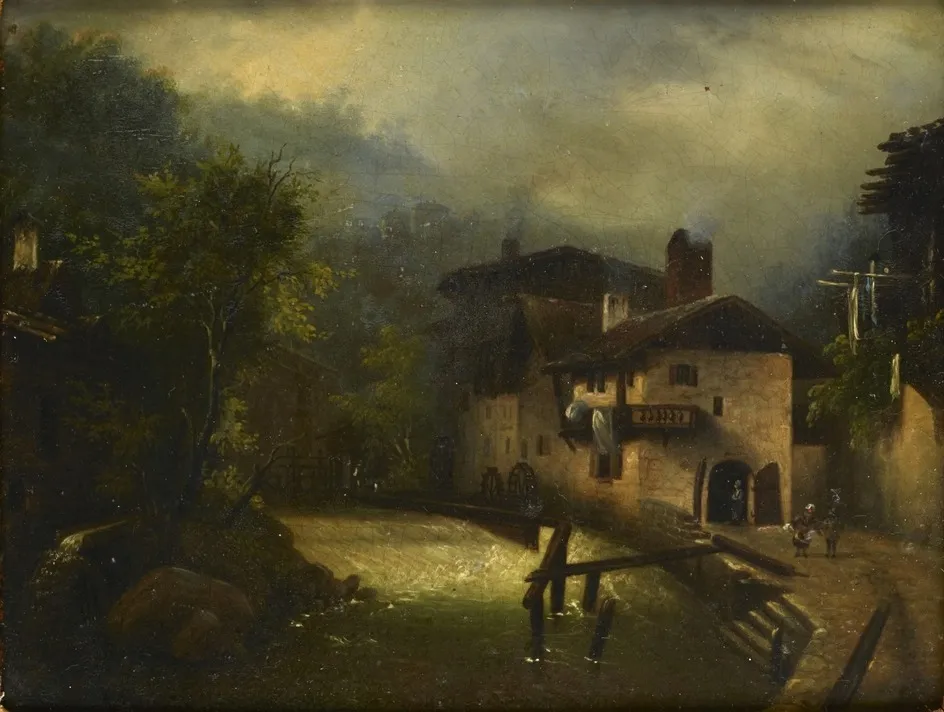
A Mill in a mountainous Landscape is an oil painting by the Romanesque artist Louis Etienne Watelet. It dates from 1830 and is held in the collection of the Ashmolean Museum.
About this work
Overview
Painted around 1830 on a copper support, this landscape by Louis Étienne Watelet depicts a rural mill nestled within rugged terrain. The work is part of the Ashmolean Museum’s collection and exemplifies a quiet, observational approach to natural scenery. The choice of copper as a support contributes to a smooth, reflective surface that enhances the play of light and shadow across the composition.
Subject & Meaning
The scene centers on a stone mill with a rising chimney, positioned beside a winding river and a narrow bridge. Surrounding it are dense trees and distant peaks, suggesting a remote, working countryside. The absence of human figures and the gentle plume of smoke imply quiet industry, reinforcing a mood of stillness and self-sufficiency rather than narrative drama or social commentary.
Technique & Style
Watelet employed chiaroscuro to model forms with subtle gradations of light and dark, lending volume to the rocks, trees, and architecture. The copper support allowed for fine detail and a luminous quality, particularly in the reflections on water and the soft haze of distant mountains. Brushwork is precise yet restrained, favoring atmospheric cohesion over overt brushstroke expression.
History & Provenance
The painting was created in the early 1830s, during a period when French artists increasingly turned to tranquil rural subjects. It entered the Ashmolean Museum’s collection through documented acquisition, though its earlier ownership remains unrecorded in public sources. Its survival in good condition reflects careful preservation since its completion.
Context
Watelet worked in the tradition of French landscape painting that emphasized harmony with nature, influenced by earlier 18th-century precedents. While not aligned with Romantic grandeur or political symbolism, his work reflects a growing 19th-century appreciation for unembellished, contemplative views of the countryside, resonating with broader cultural shifts toward pastoral idealism.
Legacy
Though Watelet is not widely known today, this painting contributes to the understanding of minor French landscape artists who sustained quiet, detailed depictions of rural life. Its presence in a major public collection underscores its role as a representative example of early 19th-century topographical painting, valued for its technical restraint and serene atmosphere.
Artist & collection


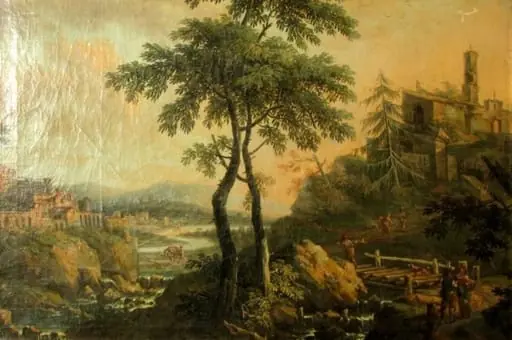 Peisaj stâncos cu ruine; pandant: Peisaj muntos cu ruine
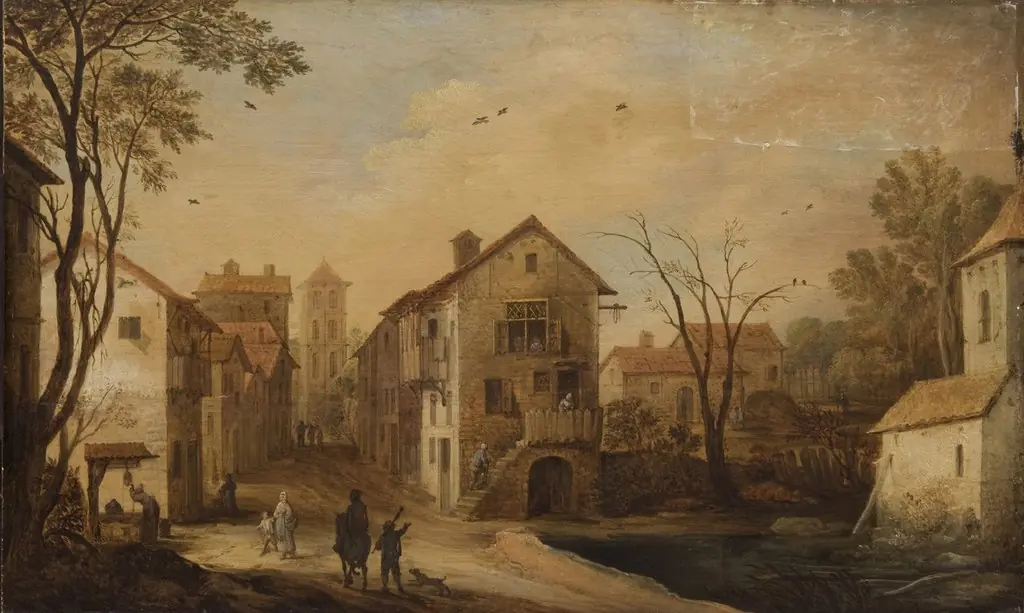 Street in an Italian Village
 Mic peisaj cu copaci; pandant: Mic peisaj deluros
 Stone Bridge
 Peisaj citadin venețian
 Mic peisaj cu lac
 View of Savoy
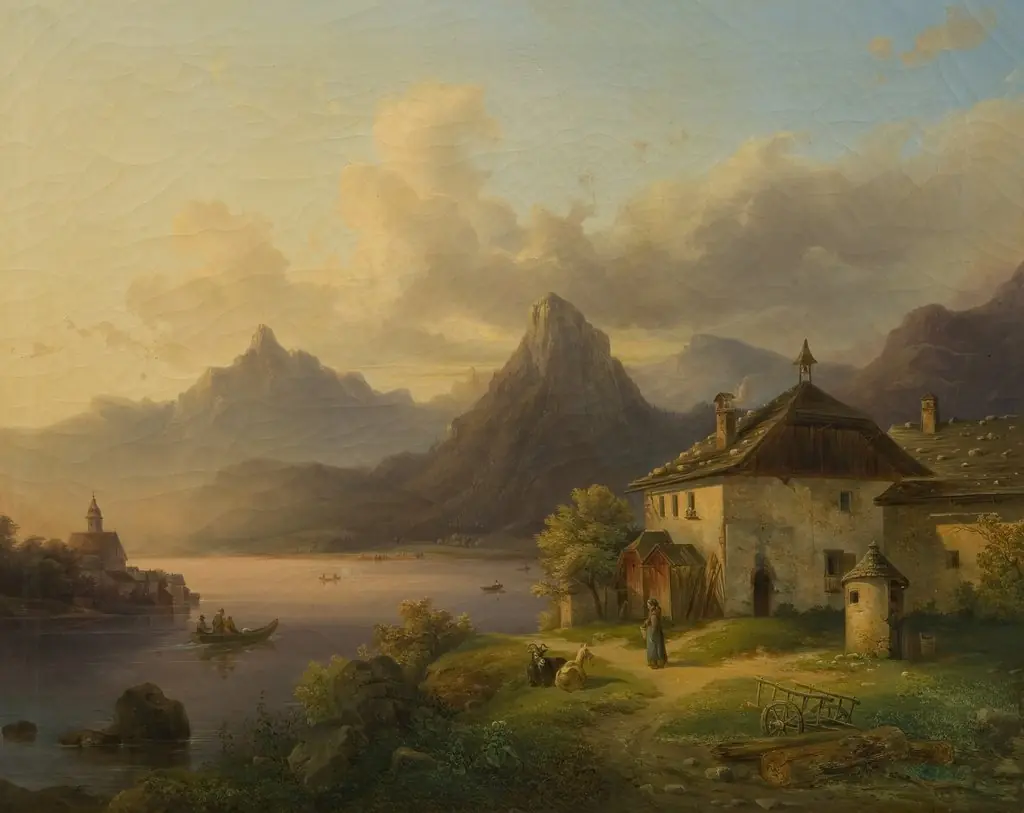 Landschaft mit Bergsee
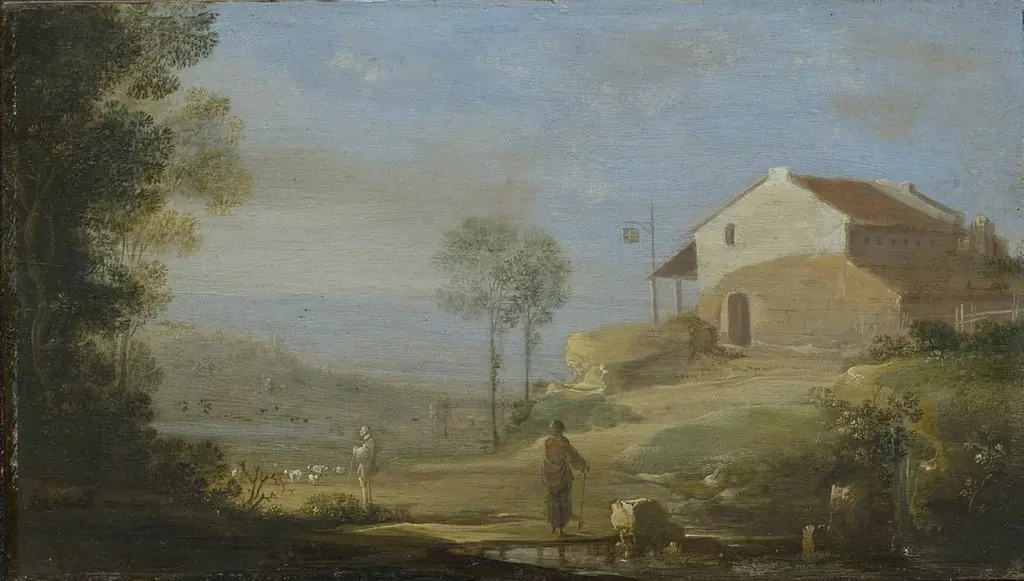 Italienische Landschaft mit Brücke
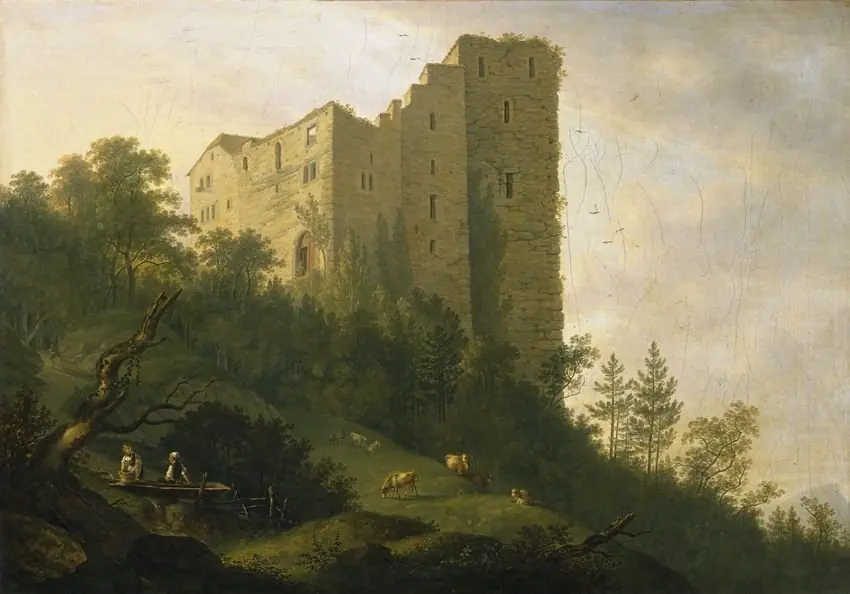 Umgebung der Ruine Habsburg
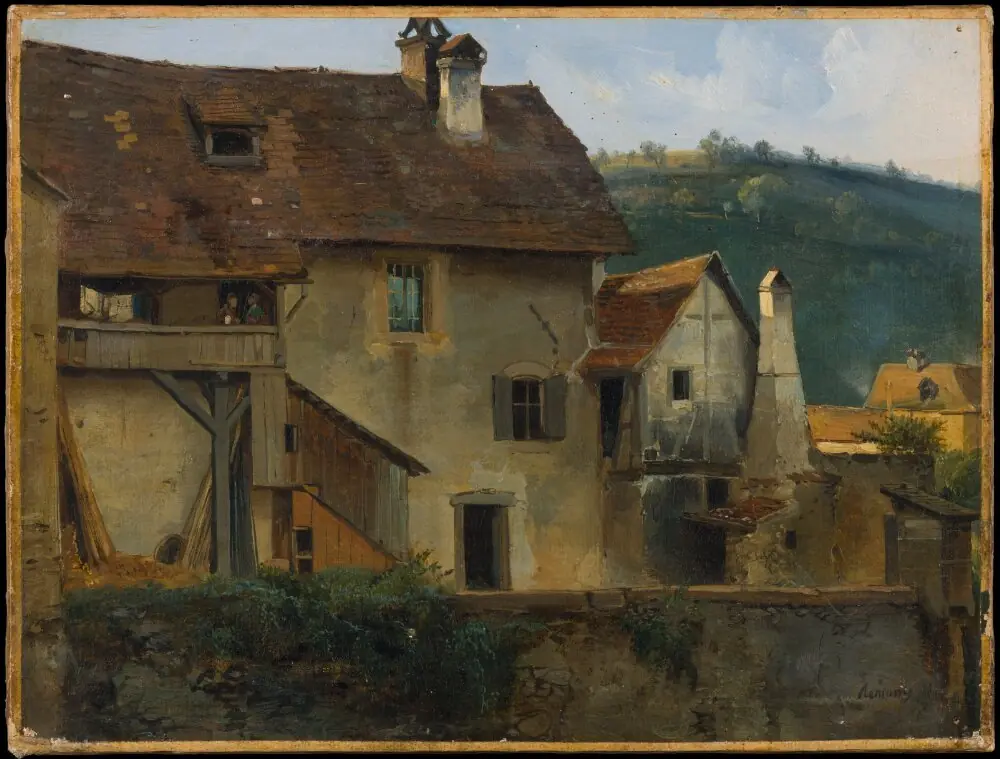 Buildings in Sainte Marie aux Mines, Haut Rhin
- Peisaj cu râu și în dreapta castel cu ruine. Pandant: Peisaj cu râu și în stânga castel cu ruine