Artwork
A Chatri, Ulwur
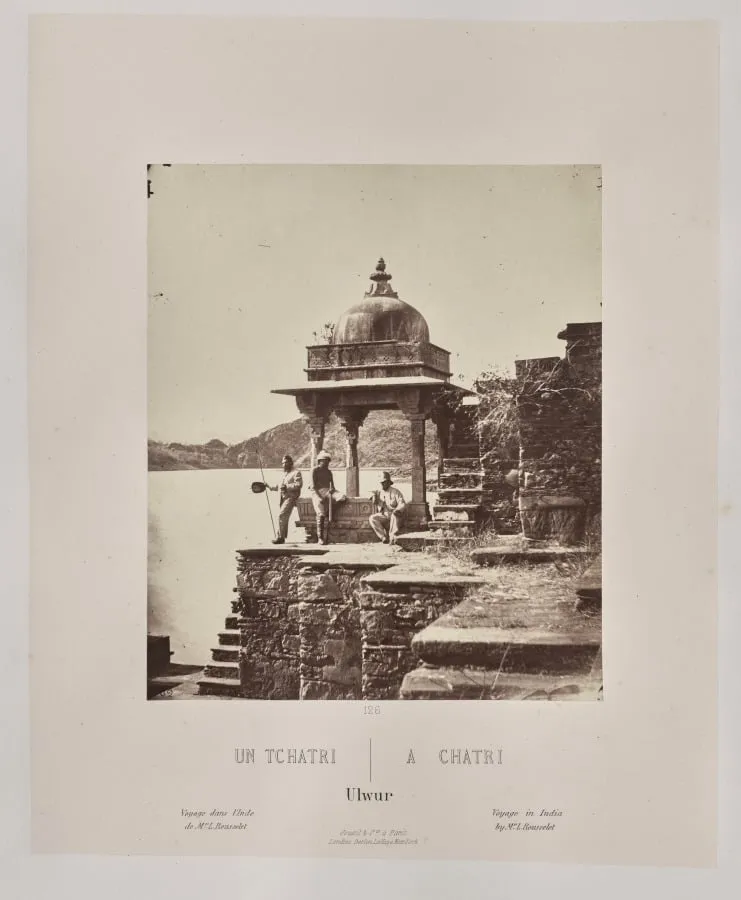
A Chatri, Ulwur is a photography by the Impressionist artist Louis-Théophile Marie Rousselet. It dates from 1866 and is held in the collection of the Cleveland Museum of Art.
- Accession no.
- 2022.58.6
- Credit line
- Alma Kroeger Fund
About this work
He worried his sketches weren’t showing the buildings clearly enough, so he learned photography there, something few Europeans had done.
You see a stone tower with small windows, rising above a crowd of people in long robes and turbans.
Rousselet drew this while traveling in India in the 1860s. He worried his sketches weren’t showing the buildings clearly enough, so he learned photography there, something few Europeans had done. The tower is a chatri, a kind of open pavilion common in Indian architecture.
If you like this, look up more works in the subject france, 19th century.
Overview
This mid‑19th‑century photograph captures a stone chatri, an open‑pillared pavilion typical of Indian architecture, rising above a gathering of figures dressed in long robes and turbans. The composition balances the verticality of the structure with the horizontal spread of the crowd, offering a clear view of the pavilion’s small windows and its setting within a bustling scene.
Subject & Meaning
The image documents a communal space centered on the chatri, a structure often used for ceremonial or memorial purposes in northern India. By situating the pavilion among a crowd, the photograph reflects the social function of such architecture as a focal point for public gatherings, religious observance, or civic events.
Technique & Style
Taken by French artist‑traveler Jules Rousseau in the 1860s, the photograph demonstrates his early adoption of the medium in India, a rarity among European visitors at the time. Rousseau’s compositional skill is evident in the careful framing of the pavilion against the surrounding figures, employing a balanced perspective that emphasizes both architectural detail and human activity.
History & Provenance
Rousselet, originally a draughtsman, turned to photography while traveling in India to achieve greater fidelity in recording monuments. The print originates from his series that surveyed sites across the Sultanate, Rajput, and Mughal regions, including Varanasi and Alwar, and was later compiled in a volume of his Indian photographs.
Context
The photograph belongs to a broader visual record of northern Indian architecture produced during a period of heightened European interest in the subcontinent’s historic sites. Rousselet’s work complements contemporary sketches and written accounts, providing a more precise visual reference for structures that were often only described in text.
Artist & collection
Artist
Louis-Théophile Marie Rousselet
Louis-Théophile Marie Rousselet (1845–1929) was a French artist.

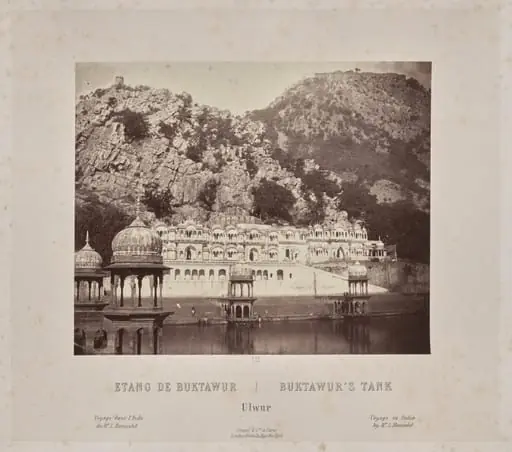
- Buktawur's Tank, Ulwur
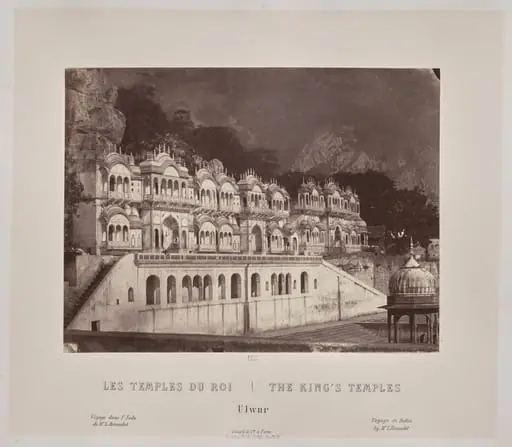 The King's Temples, Ulwur
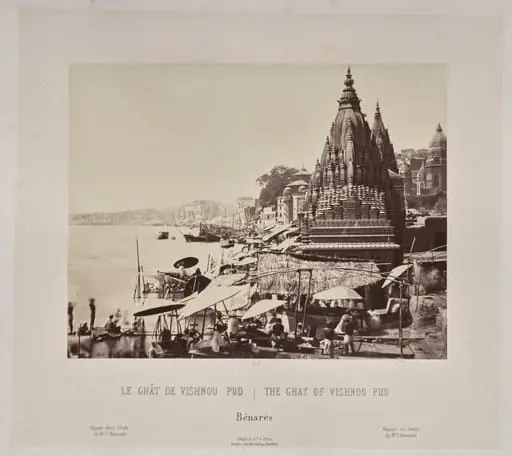 The Ghat of Vishnoo Pud, Bénarès
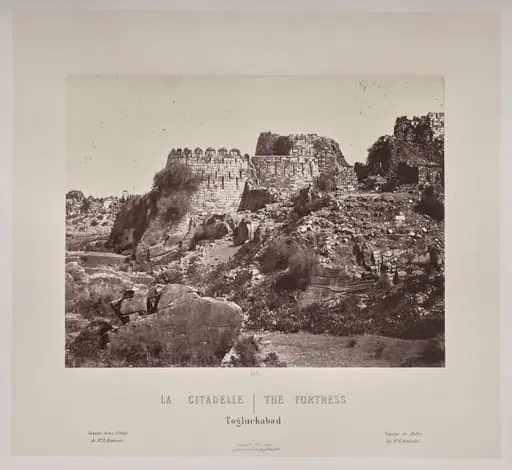 The Fortress, Togluckabad
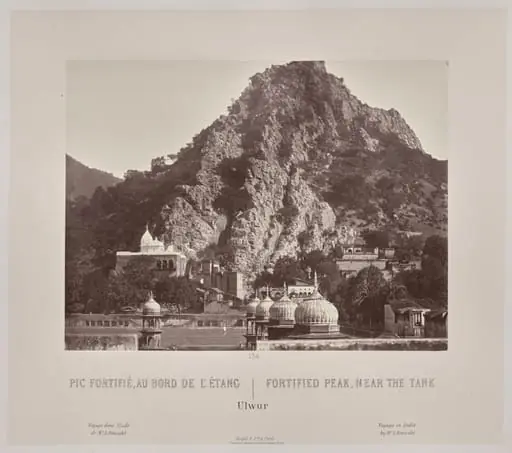 Fortified Peak, Near the Tank, Ulwur
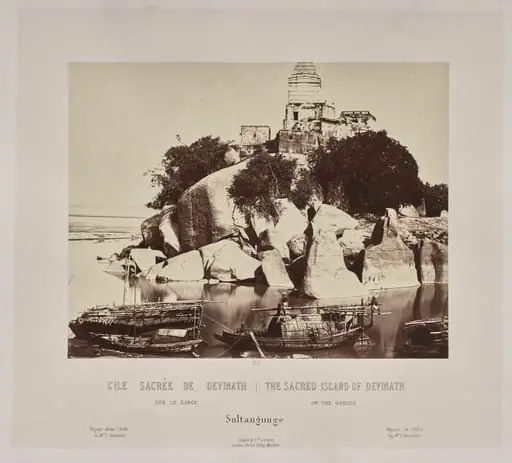 The Sacred Island of Devinath on the Ganges, Sultangunge
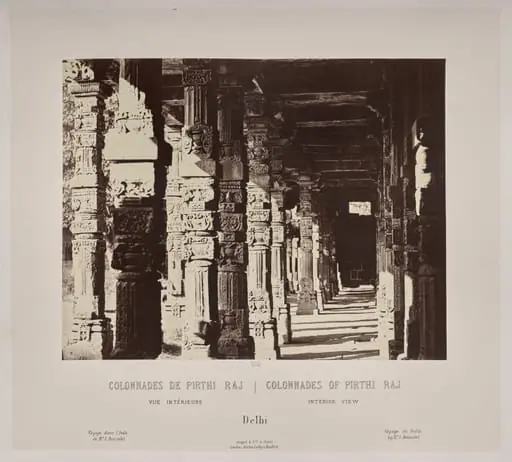
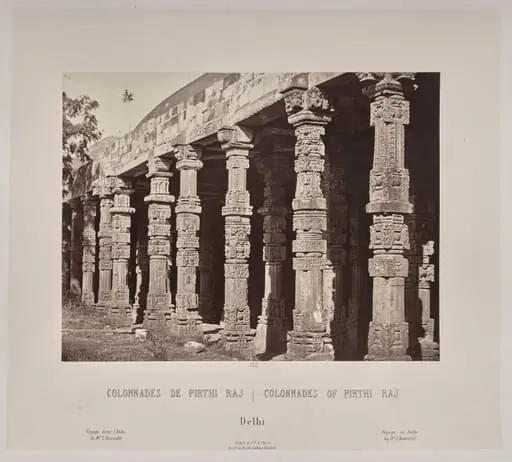 Colonnades of Pirthi Raj, Delhi
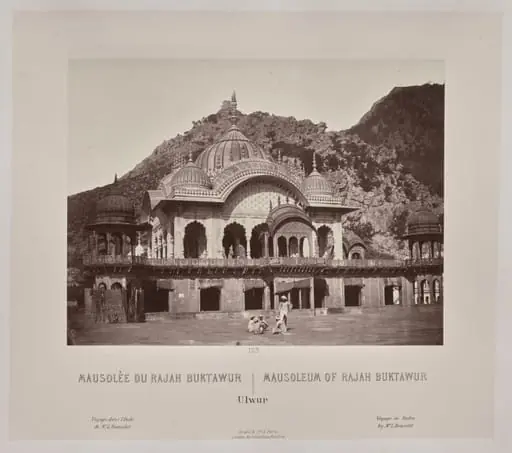 Mausoleum of Rajah Buktawur, Ulwur
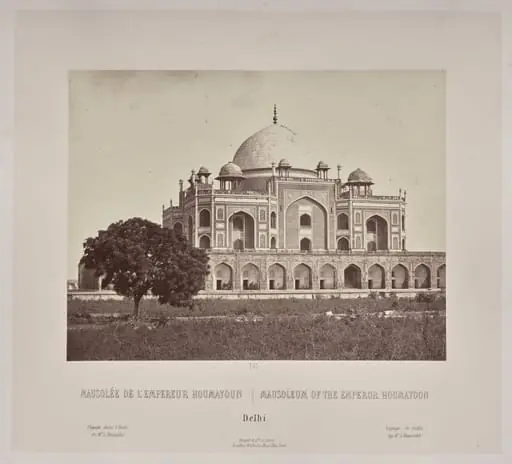
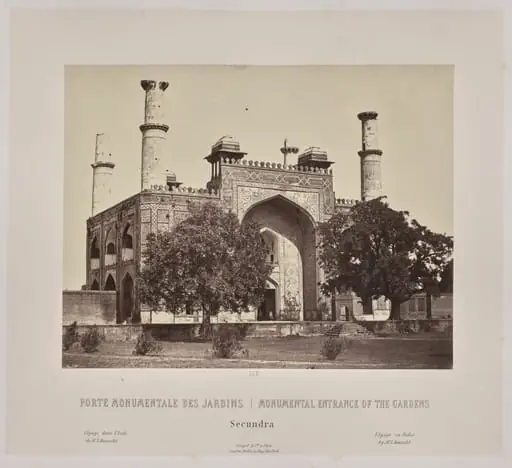
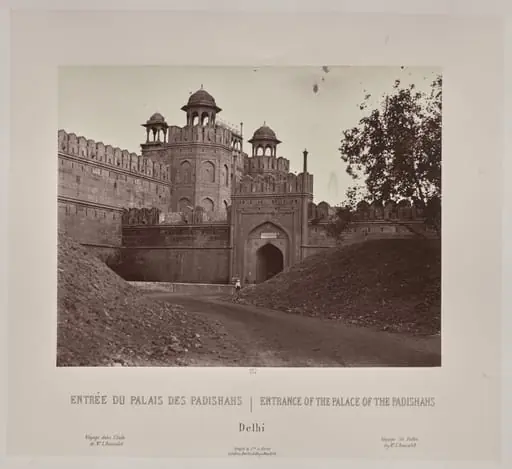 Entrance of the Palace of the Padishahs, Delhi