Artwork
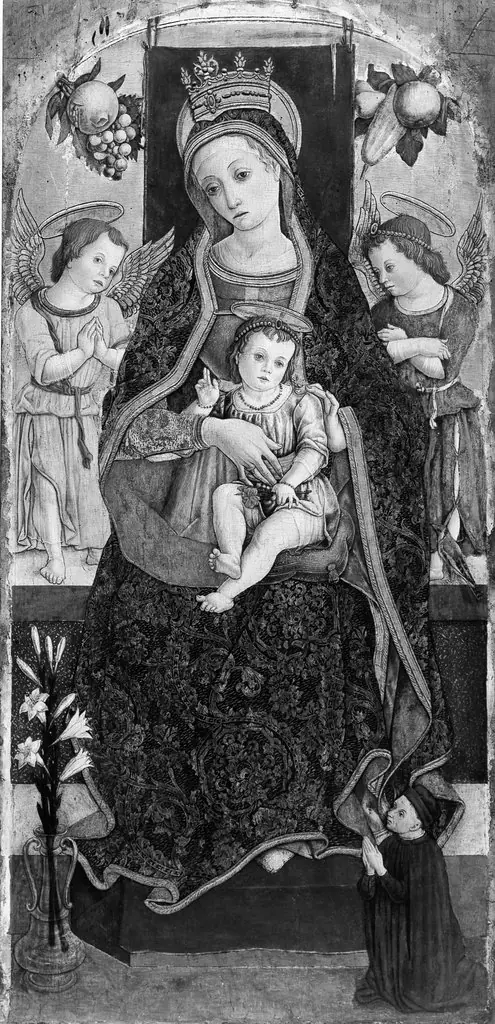
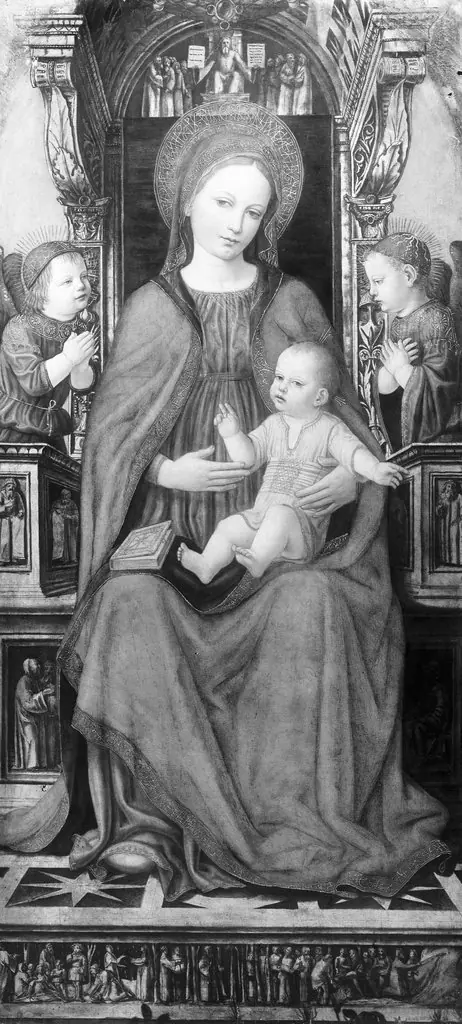
Madonna and Child Enthroned with Two Cherubim
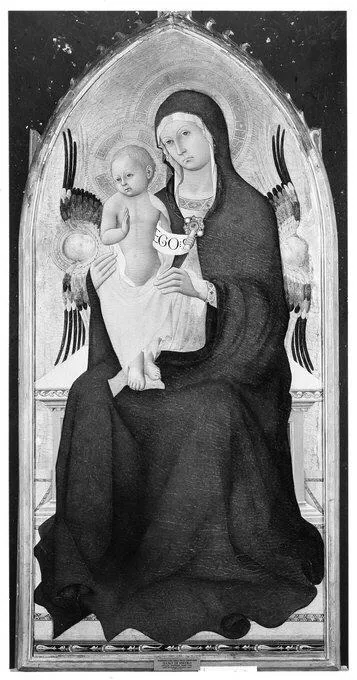
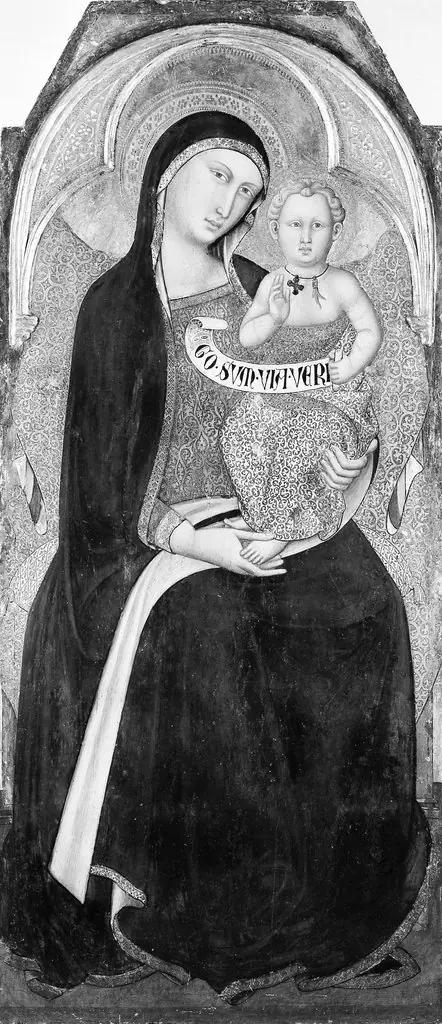
Madonna and Child Enthroned with Two Cherubim is a tempera painting by the Sienese School artist Master of the Osservanza. It is held in the collection of the Metropolitan Museum of Art.
About this work
Subject & Meaning
The work functions as a devotional image, intended to inspire reverence for the sacred figures depicted within the context of 15th-century Italian spirituality.
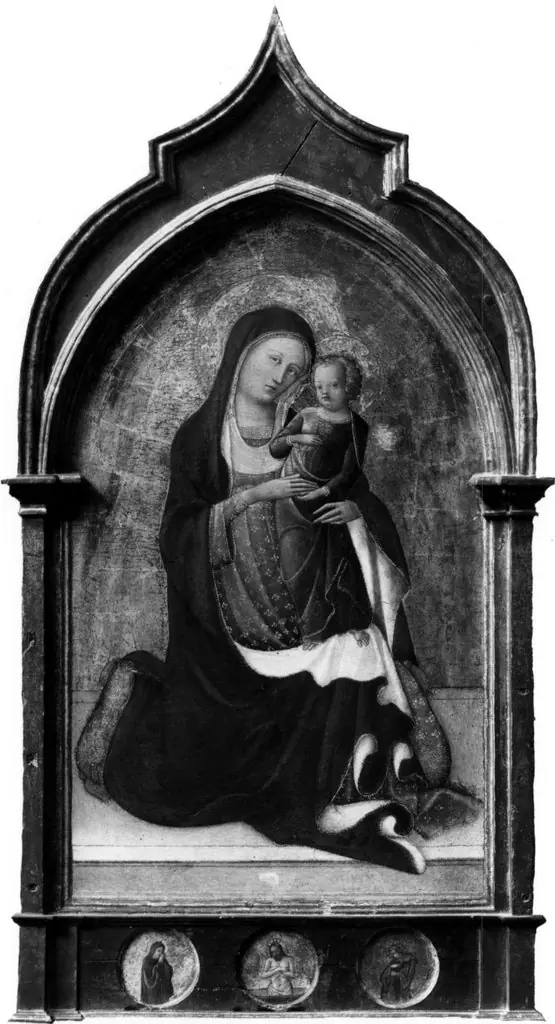
Executed in 1437 by the Master of the Osservanza, this tempera panel presents a traditional religious composition centered on the Madonna and Child enthroned. The primary subjects are the Virgin Mary and the Christ Child, who are accompanied by two cherubim, reflecting the work's alternate title. As a piece of religious art, the iconography focuses on the divine motherhood of Mary and the incarnation of Christ, a central theme in Christian theology.
The presence of the angels serves to emphasize the holy status of the figures, while the enthroned positioning signifies their spiritual authority. The work functions as a devotional image, intended to inspire reverence for the sacred figures depicted within the context of 15th-century Italian spirituality.
Technique & Style
Created in 1437 by the Master of the Osservanza, the Madonna and Child Enthroned with Two Cherubim is executed in tempera on a wooden panel support. The work measures 143.5 centimeters in height and 69.5 centimeters in width. As a religious painting, the artist employed tempera, a traditional medium for the period, to depict the Virgin Mary, the Christ Child, and two cherubim.
The piece is classified within the genre of religious art and is currently held in the collection of the Metropolitan Museum of Art, having been acquired from the Robert Lehman collection. The formal composition centers on the enthroned figures, consistent with the iconographic traditions of the mid-15th century.
History & Provenance
Created in 1437 by the Master of the Osservanza, the tempera-on-panel painting titled Madonna and Child Enthroned with Two Cherubim depicts the Virgin Mary and the Christ Child flanked by two cherubim. The work entered the collection of the Metropolitan Museum of Art, where it is currently housed. Its provenance includes ownership by Robert Lehman prior to its acquisition by the museum.
The piece measures 143.5 cm in height and 69.5 cm in width, reflecting the stylistic characteristics of mid-15th-century religious art associated with the Osservanza Master.
Madonna and Child Enthroned with Two Cherubim is housed in the Metropolitan Museum of Art in New York, where it is part of the Robert Lehman Collection. The painting, executed in tempera on panel in 1437 by the Master of the Osservanza, measures 143.5 cm × 69.5 cm and is catalogued as a religious work within the museum’s European paintings department. Its provenance traces to the Robert Lehman collection, which formed the core of the museum’s holdings of early Italian art.
No specific exhibition records are documented in the available sources; the work is listed in the museum’s permanent collection displays.
Overview
This tempera painting, titled Madonna and Child Enthroned with Two Cherubim, was created in 1437 by the artist known as the Master of the Osservanza. The work presents the Virgin Mary holding the Christ Child on her lap, flanked by two winged cherubim. This religious panel is currently part of the collection at The Metropolitan Museum of Art, offering an example of early Italian Renaissance devotional art.
Artist & collection