Artwork
Hercules with Omphale
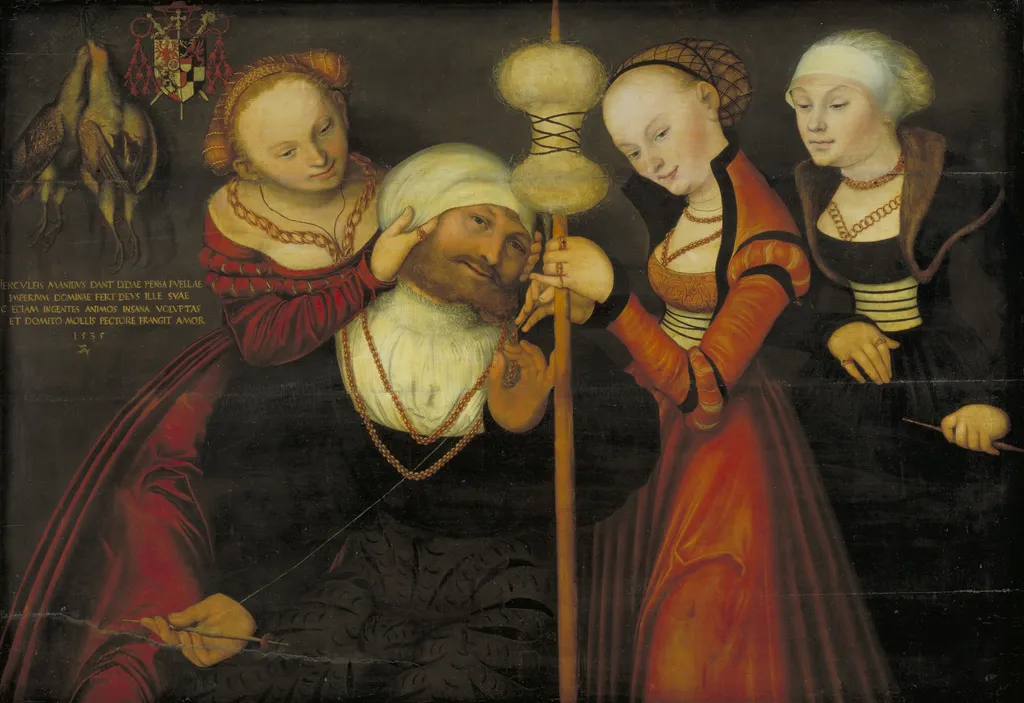
Hercules with Omphale is a paint painting by the Northern Renaissance artist Lucas Cranach the Younger. It dates from 1535 and is held in the collection of the Statens Museum for Kunst.
About this work
Subject & Meaning
The composition reflects Renaissance interest in classical myths and the moral ambiguities inherent in stories of love and control.
The painting portrays the mythological encounter between Hercules and Omphale, showing the hero in a submissive role beneath the queen of Lydia, a scene that underscores themes of power reversal and erotic domination. Hercules is identified by his characteristic lion skin and club, while Omphale holds a scepter that marks her authority over him. The composition reflects Renaissance interest in classical myths and the moral ambiguities inherent in stories of love and control.
The work is classified as a mythological painting and was created on a beech wood panel using paint in 1535.
Technique & Style
The work is a mythological painting executed in paint on a beech wood panel. Created in 1535, the piece measures 82 cm in height and 118 cm in width. The artwork depicts the subjects Hercules and Omphale within the genre of mythological painting. The medium and support reflect the panel painting traditions associated with the Cranach workshop.
History & Provenance
Hercules with Omphale is a mythological painting dated to 1535, attributed to Lucas Cranach the Younger, with Lucas Cranach the Elder also credited as a creator. The work was executed in paint on a beech wood panel measuring 82 cm in height by 118 cm in width.
The painting is held in the collection of the Statens Museum for Kunst, where it remains located. The sources do not record a commission, prior ownership, or earlier provenance history prior to its entry into this collection, nor do they document any intermediate custodians or acquisition circumstances.
Hercules with Omphale is held by the Statens Museum for Kunst in Denmark, where it belongs to the museum's collection as recorded in its institutional catalogue.
No accession number is documented in the available sources, and no exhibition history is recorded for the painting.
Context
Critical reception of Lucas Cranach the Younger's 1535 painting has been examined in relation to his father's workshop practices and the elder Cranach's mythological output, with scholars noting the collaborative attribution recorded in contemporary inventories. The work situates within broader Renaissance reinterpretations of the Hercules and Omphale narrative, reflecting humanist fascination with inverted power dynamics and domestic authority. Its placement in the Statens Museum for Kunst collection underscores early 19th-century Danish museum acquisition patterns for Northern Renaissance mythological paintings, linking it to wider historiography of German Renaissance art circulation in Scandinavia.
Overview
Created in 1535 by Lucas Cranach the Younger, this oil painting portrays the Greek hero Heracles in the company of the Lydian queen Omphale. Executed in the Northern Renaissance idiom, the work combines meticulous figuration with a vivid palette, set against a dark backdrop that accentuates the bright costumes of the figures. The composition is part of the collection of Denmark’s Statens Museum for Kunst.
Own this work as a print
Artist & collection
Artist
Lucas Cranach the Younger (German: Lucas Cranach der Jüngere, IPA:; 4 October 1515 – 25 January 1586) was a German Renaissance painter and portraitist, the son of Lucas Cranach the Elder and brother of Hans Cranach.

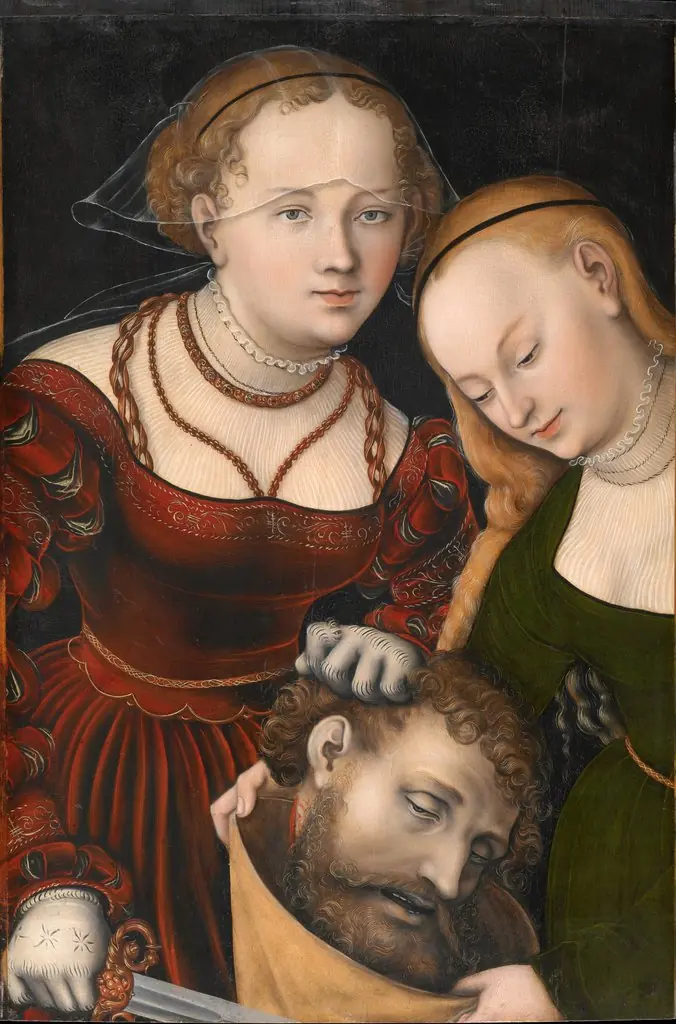 Judith with the head of Holofernes and a servant
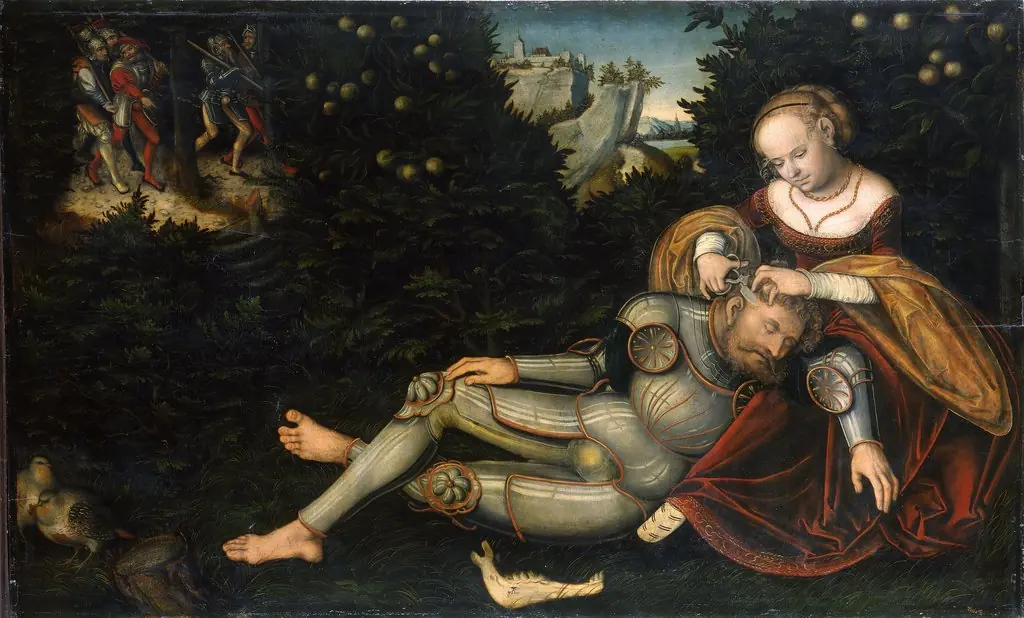 Samson and Delilah
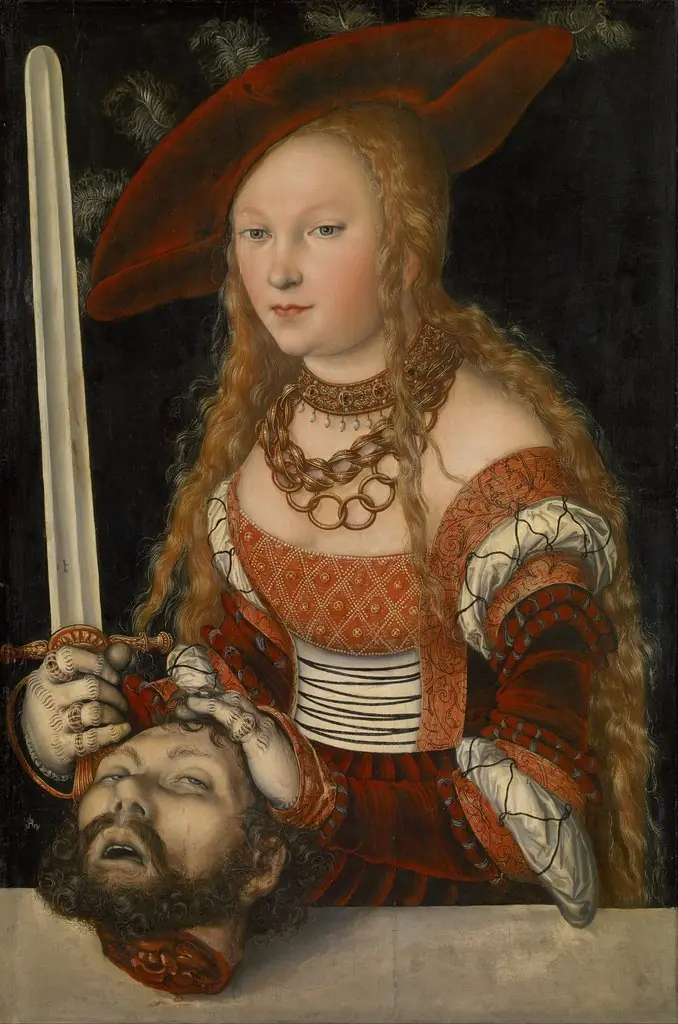 Judith with the head of Holofernes
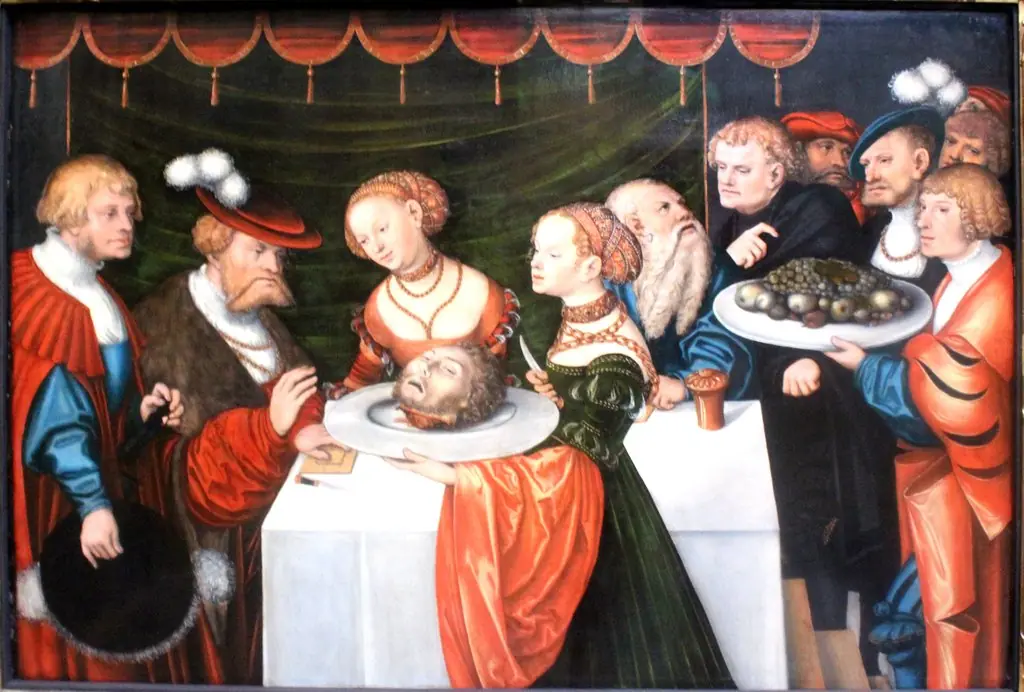 Salome with the head of St John the Baptist at Herodes table
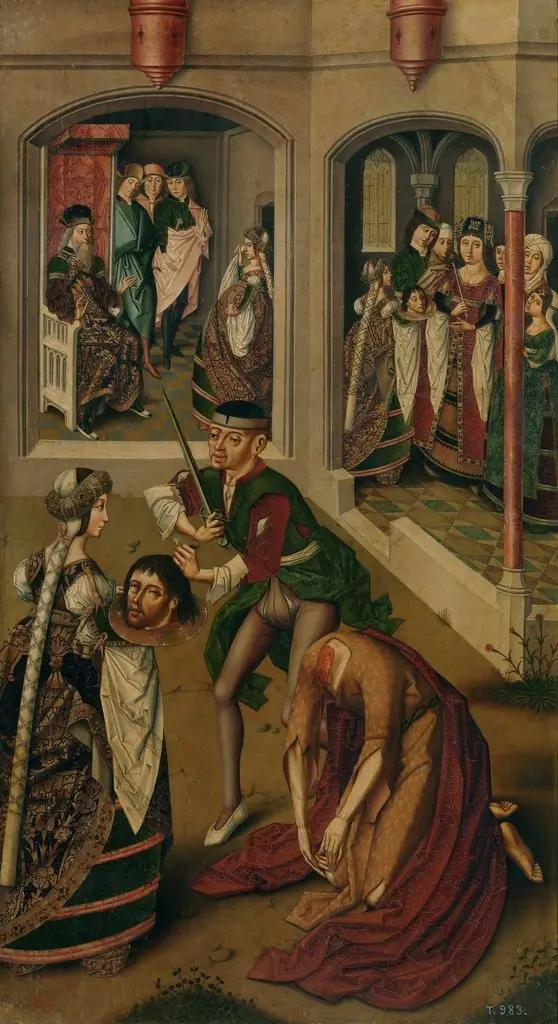 The Beheading of Saint John the Baptist
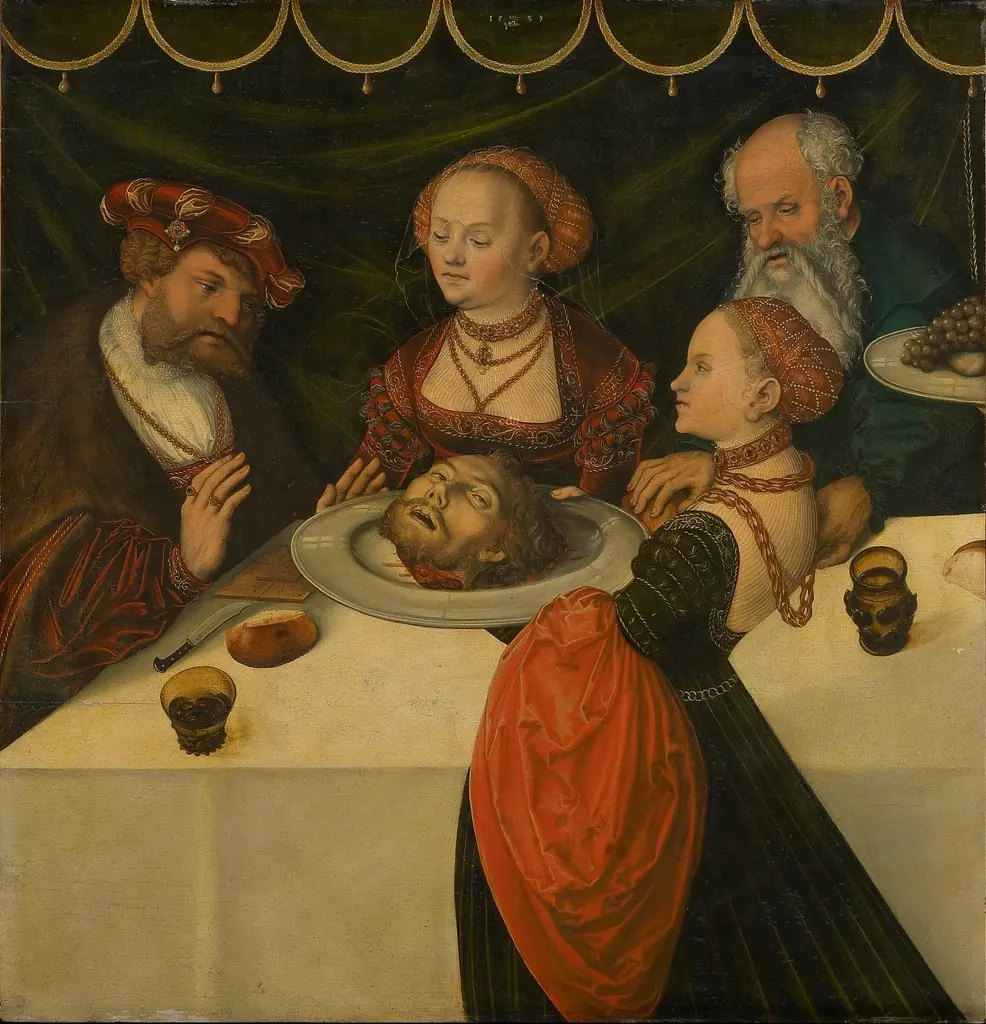 Feast of Herod
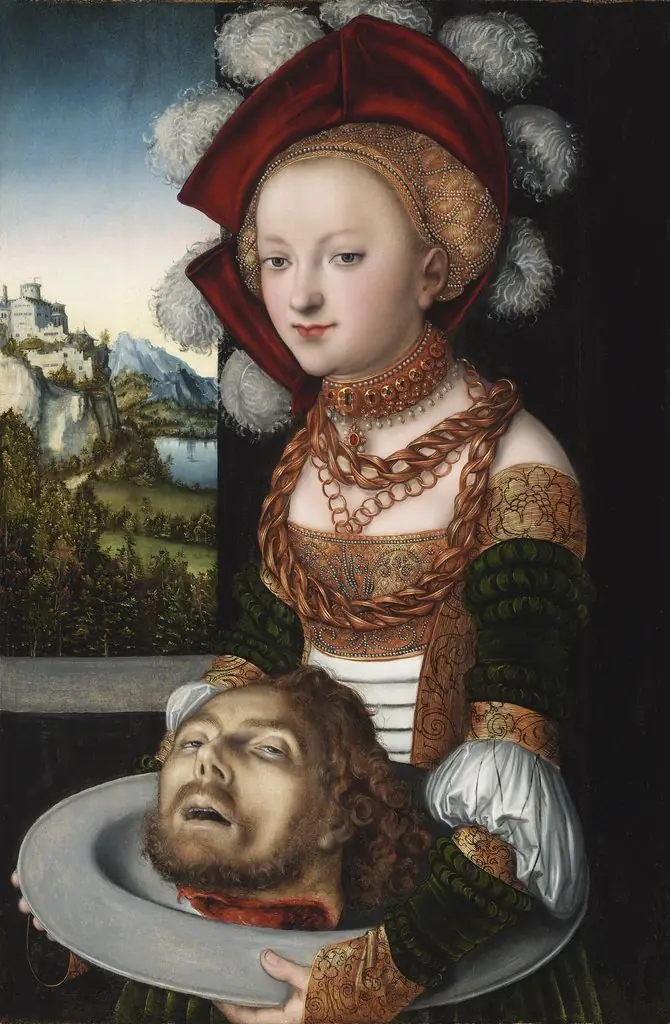 Salome with the head of Saint John the Baptist
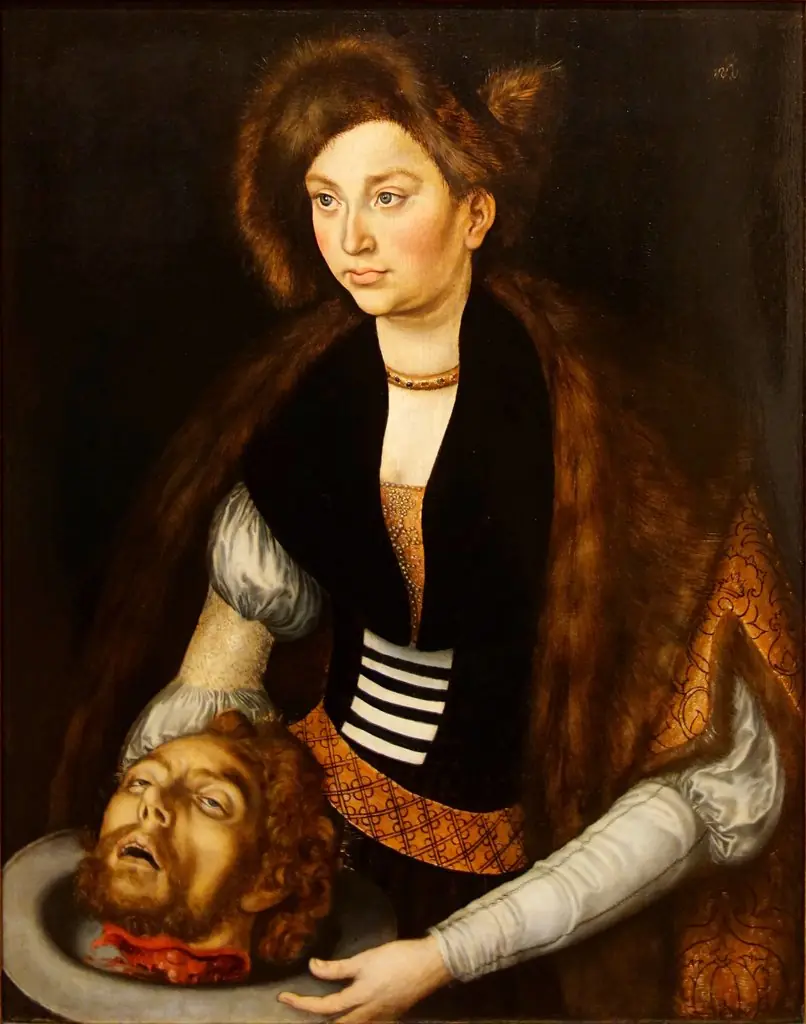 Salome with the head of Saint John the Baptist
 Altarflügel Marientod
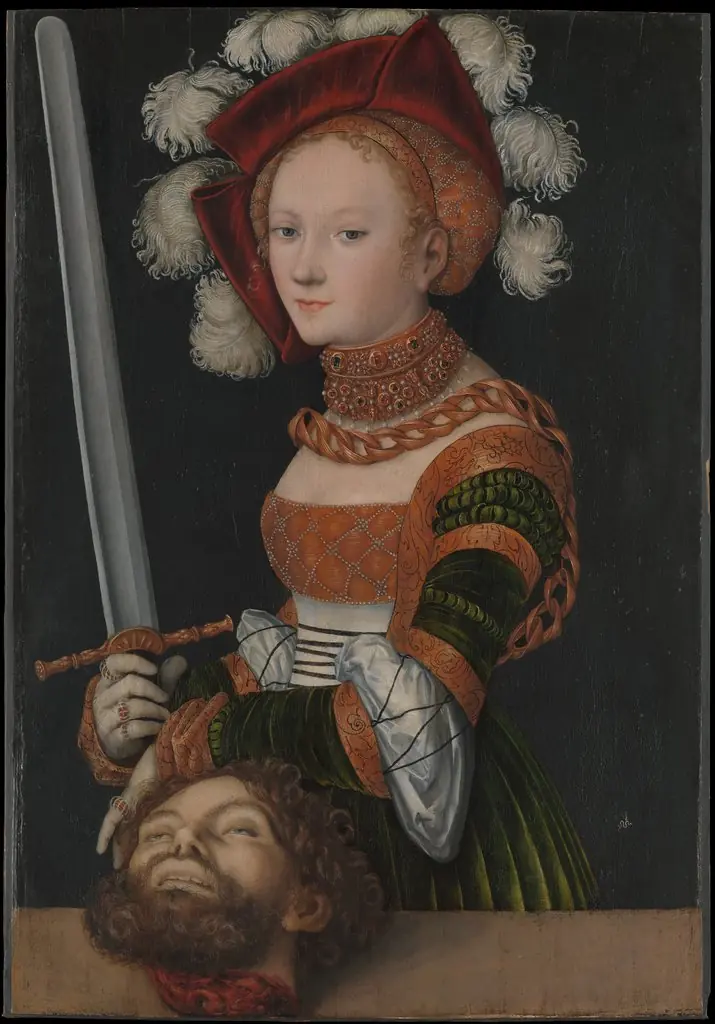 Judith with the Head of Holofernes