Artwork
Water Mill
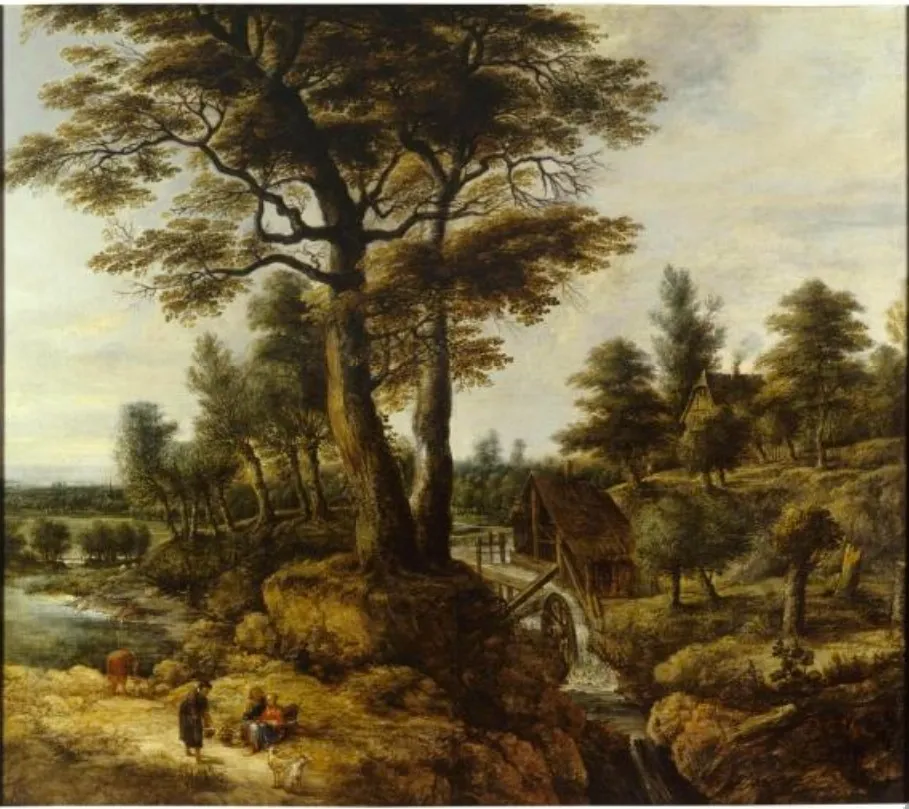
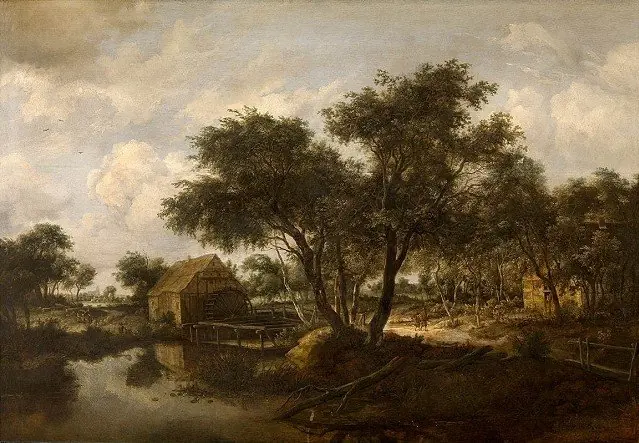
Water Mill is an oil painting by the Dutch Golden Age artist Lucas van Uden. It dates from 1650 and is held in the collection of the Royal Museum of Fine Arts Antwerp.
About this work
Subject & Meaning
The inclusion of people and domestic architecture locates the mill within a lived environment, underscoring its role in the local economy and community life.
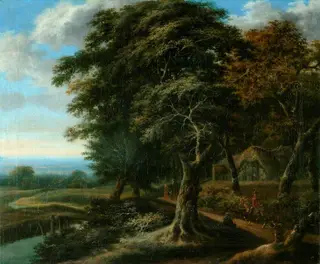
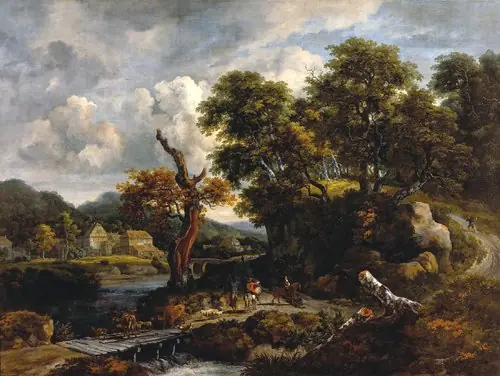
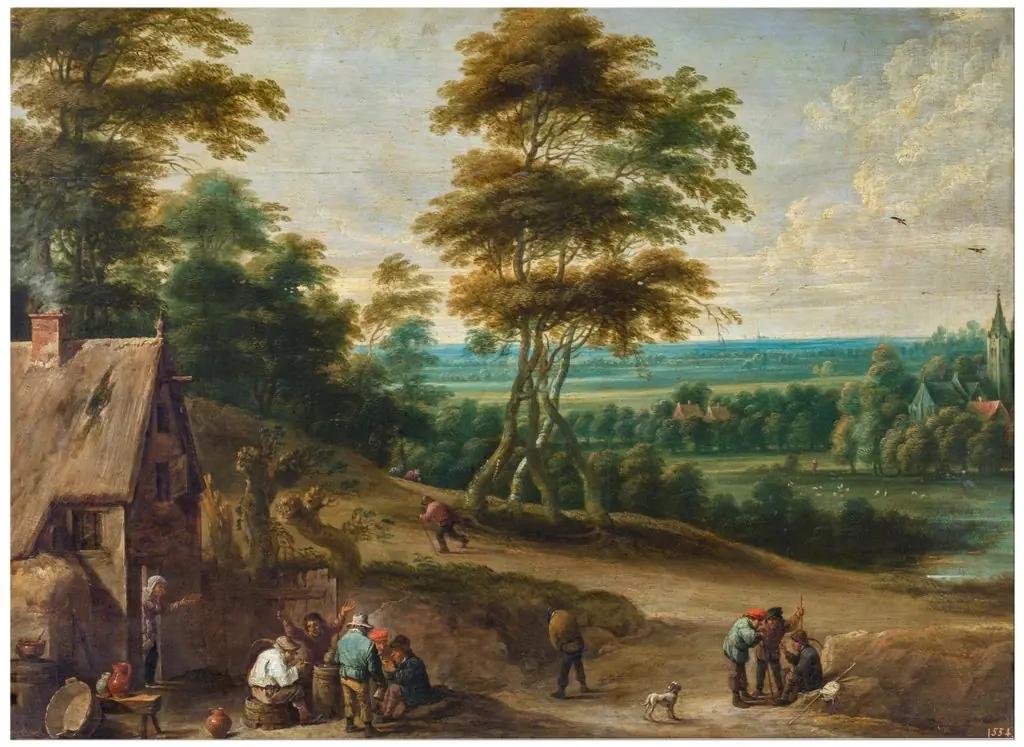
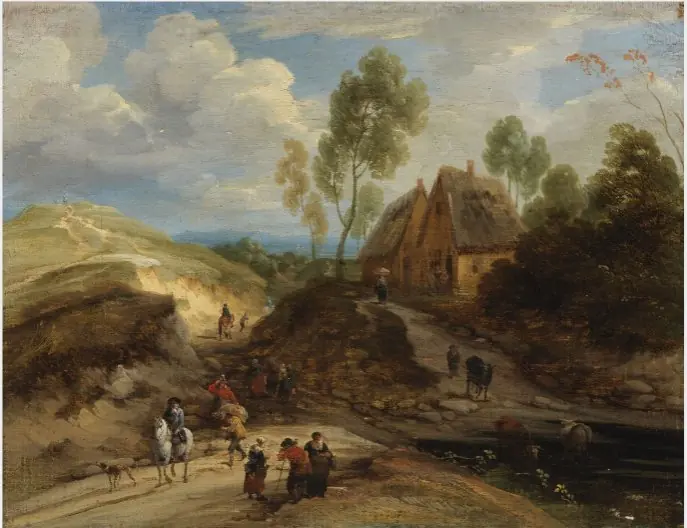
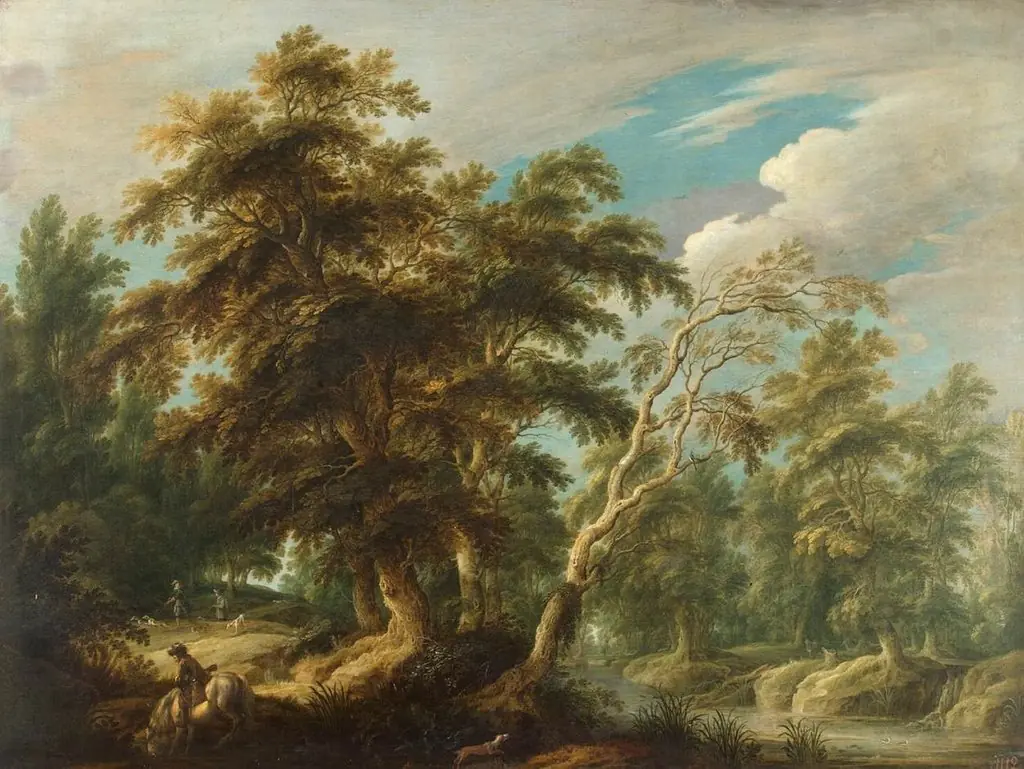
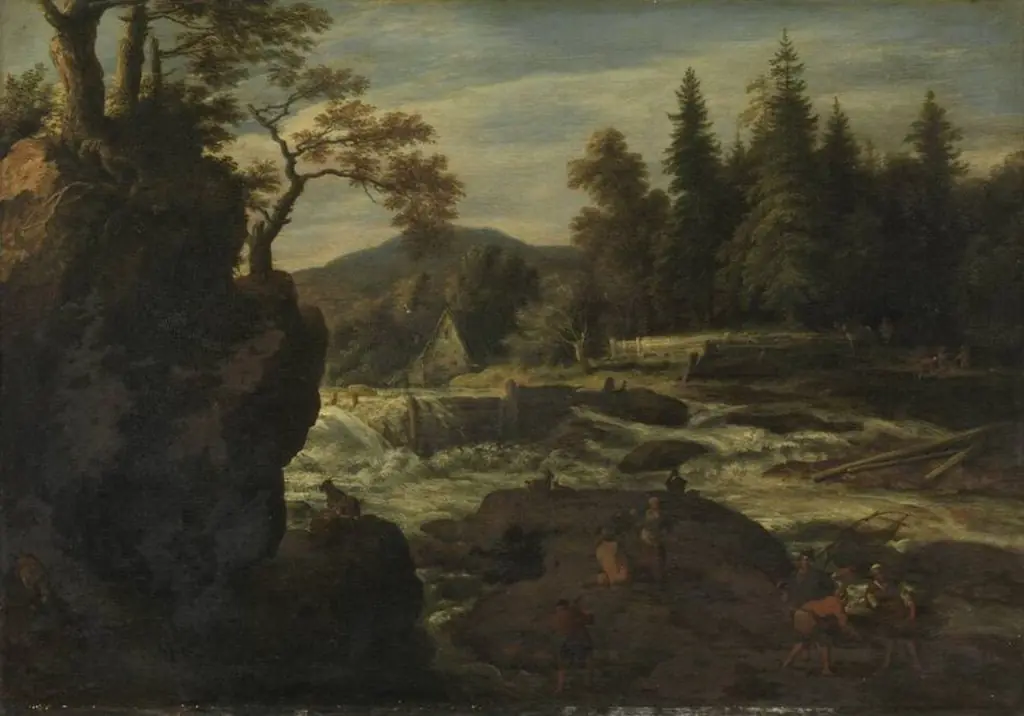
The painting depicts a water mill set within a broad, low-lying landscape. A large tree frames the left side, while a house and figures appear near the mill building. The watermill itself occupies the center, its wheel partially submerged in a still river that mirrors the sky and surrounding greenery. The scene is bathed in even, diffused light, suggesting a calm, everyday moment rather than dramatic incident.
The composition emphasizes the mill as both functional structure and emblem of rural industry, while the surrounding foliage and distant horizon evoke a sense of place and continuity. The inclusion of people and domestic architecture locates the mill within a lived environment, underscoring its role in the local economy and community life.
Technique & Style
Lucas van Uden painted Water Mill in 1650 using oil paint applied to a wooden panel, as documented in the work's technical specifications. The painting measures 159.1 centimeters in height and 181.8 centimeters in width, reflecting its substantial scale within the landscape genre. Its composition features a watermill, surrounding trees, a domestic structure, and figures, rendered with characteristic Rococo-era handling of light and atmospheric perspective.
The artwork remains part of the Royal Museum of Fine Arts Antwerp's collection, preserving its formal qualities through careful conservation.
History & Provenance
Lucas van Uden painted Water Mill in 1650 as an oil on panel work depicting a tree, house, watermill and figures. The painting entered the collection of the Royal Museum of Fine Arts Antwerp, where it remains on display in the Flemish art gallery.
The work was created in Antwerp during van Uden’s mature period, reflecting his specialization in Dutch-influenced river and mill scenes. It was later acquired by the museum’s Flemish Kunstcollectie and catalogued under its original title.
Dating to 1650, the piece measures 159.1 cm by 181.8 cm and is classified as a landscape painting in oil paint on panel.
Water Mill by Lucas van Uden is held by the Royal Museum of Fine Arts Antwerp in Belgium, where it forms part of the institution's collection and the broader Vlaamse Kunstcollectie. Painted in oil on panel in 1650, the work measures 159.1 cm in height by 181.8 cm in width.
No exhibition history is documented in the available sources.
Overview
Lucas van Uden’s Water Mill, executed in oil around 1650, presents a tranquil rural tableau. A solitary oak dominates the composition, its canopy spreading over a modest stream that powers a thatched wooden mill. Figures and livestock are interspersed along the banks, while a modest dwelling lies nearby, all rendered in muted greens and earth tones that suggest early morning mist.
Context
Watermills were a recurrent motif in 17th‑century Northern European art, symbolising both technological progress and pastoral stability. Van Uden’s depiction aligns with contemporary trends that favored bucolic scenes populated by modest architectural elements, offering a visual record of the region’s economic and environmental landscape.
Artist & collection
Artist
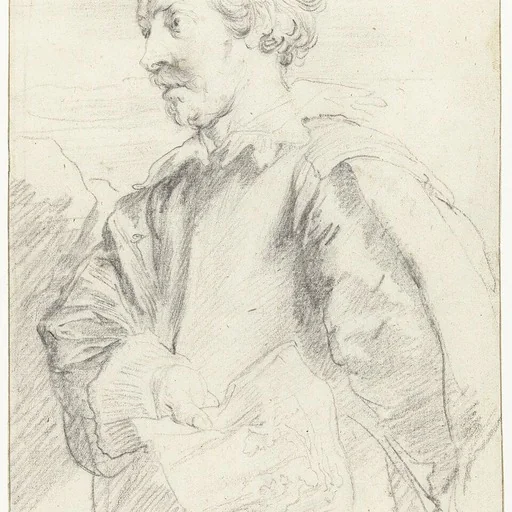
Lucas van Uden (18 October 1595 – 4 November 1672) was a leading Flemish landscape painter, draughtsman and engraver, who lived and worked in Antwerp.