Artwork
A City on a Rock
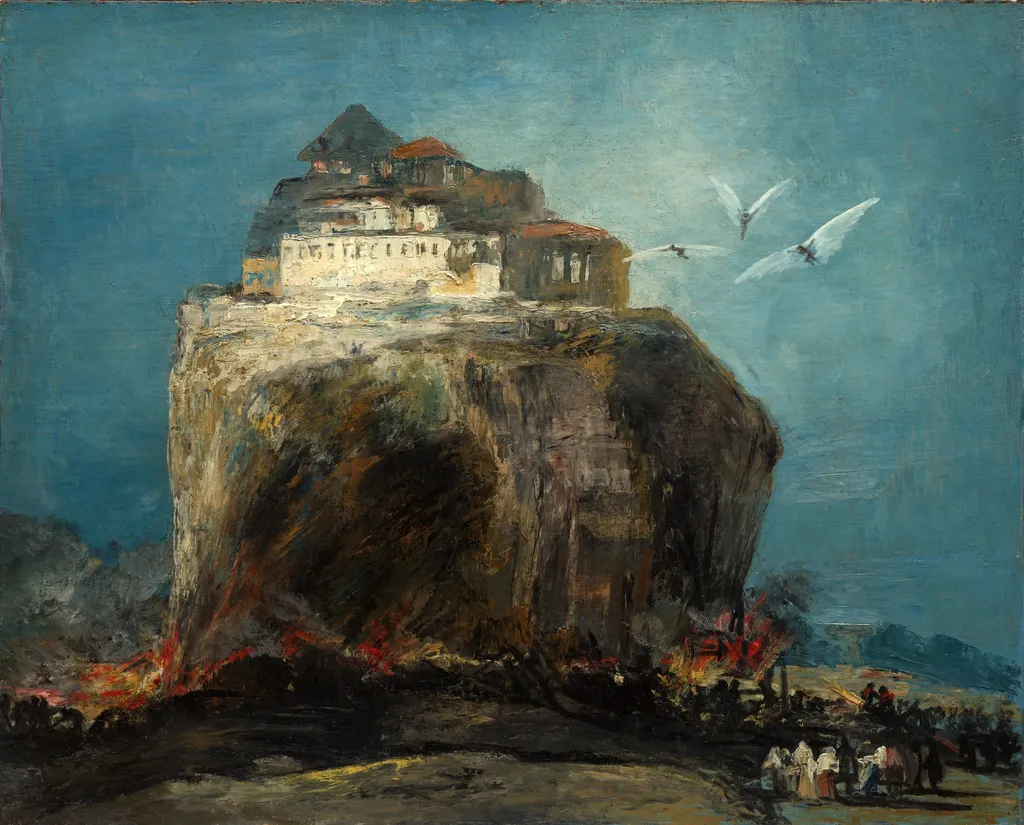
A City on a Rock is an oil painting by the Post-Impressionist artist Lucas Velázquez. It is held in the collection of the Metropolitan Museum of Art.
About this work
Technique & Style
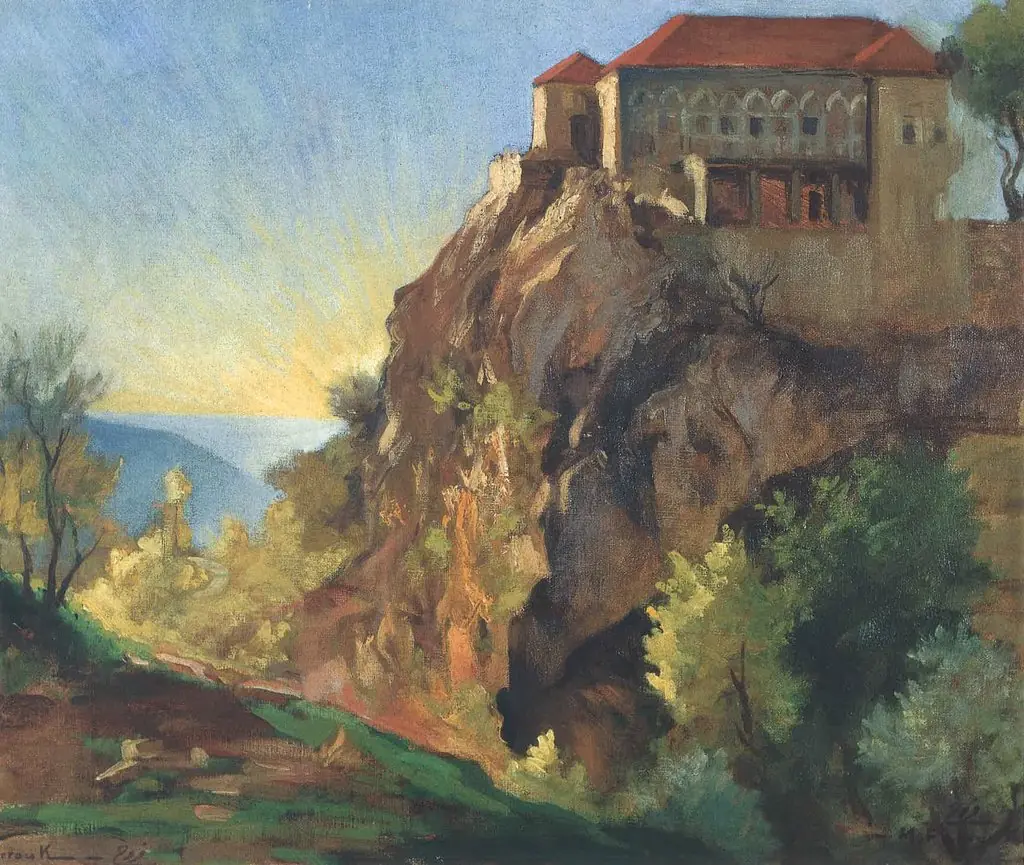
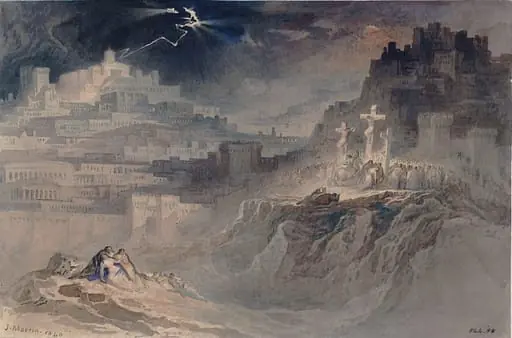
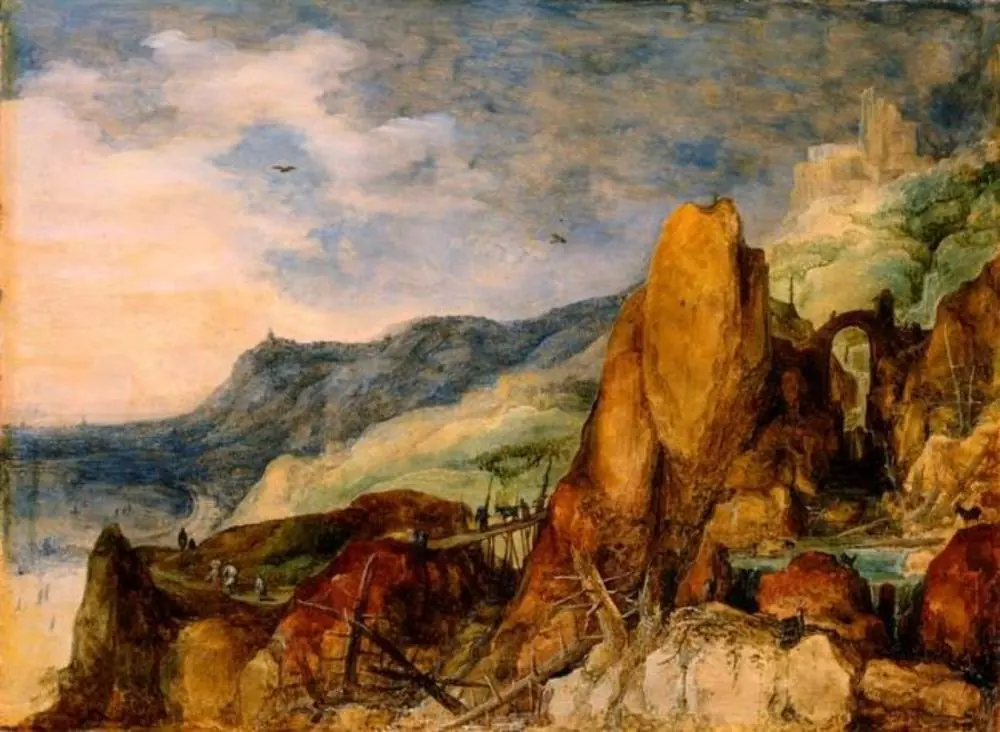
The composition emphasizes verticality, with the jagged rock rising centrally and the cityscape arranged in ascending tiers that guide the viewer’s eye upward.
The painting is executed in oil on canvas, measuring 83.8 cm in height and 104.1 cm in width. Its handling reflects a late-19th-century academic approach, with smooth, blended brushwork and careful modeling of forms to achieve a naturalistic depiction of the rocky outcrop and clustered buildings. The composition emphasizes verticality, with the jagged rock rising centrally and the cityscape arranged in ascending tiers that guide the viewer’s eye upward.
Stylistic qualities align with European historicist traditions, particularly in the precise architectural detailing and atmospheric recession, though the work is attributed to the circle of Goya rather than the artist himself.
History & Provenance
The painting A City on a Rock was created by Lucas Velázquez in 1900, as indicated by both the artist’s record and the Metropolitan Museum of Art’s holdings.
The work entered the collection of the Metropolitan Museum of Art through Louisine Havemeyer, whose ownership is documented in the museum’s records. The painting has been held by the Metropolitan Museum of Art since its acquisition, where it remains part of the permanent collection.
Context
Lucas Velázquez painted A City on a Rock in 1900, an oil on canvas measuring 83.8 cm by 104.1 cm that portrays a building within a cityscape. The work is classified as a painting in the style of Goya and entered the collection of the Metropolitan Museum of Art, where it remains on view. It was originally owned by collector Louisine Havemeyer before its acquisition by the museum.
Scholarship places the piece within Velázquez’s broader exploration of urban subjects and connects it to early twentieth‑century Spanish artistic influences, highlighting its significance within the artist’s oeuvre.
Overview
A City on a Rock, painted by Eugenio Lucas Velázquez in 1900, is an oil painting depicting a dramatic landscape. It features a solitary building perched precariously on a tall, rocky cliff, with a crowd of onlookers gathered at the water's edge below. This work is part of the collection at The Metropolitan Museum of Art. Velázquez, a Spanish artist, was recognized for his genre and costumbrista scenes, often infused with fantastical details.
Subject & Meaning
The painting presents a striking composition centered on a towering rock formation, crowned by a small, seemingly unstable building. Below, a group of figures gazes upward from the water's edge, their attention drawn to the improbable structure. A bright blue sky and three birds in flight complete the scene. This imaginative depiction aligns with Velázquez's characteristic inclusion of fantastical elements within his broader body of work.
Own this work as a print
Artist & collection
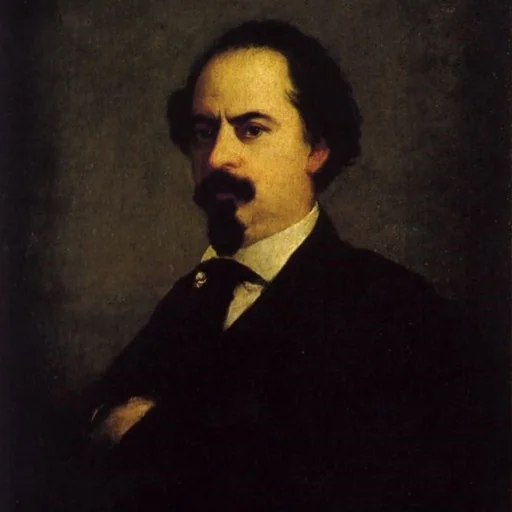
Artist
Eugenio Lucas Velázquez (9 February 1817 – 11 September 1870) was a Spanish painter in the Romantic style, known for genre and costumbrista scenes which often featured fantastic elements.