Artwork
Study for "The Destruction of Sodom"
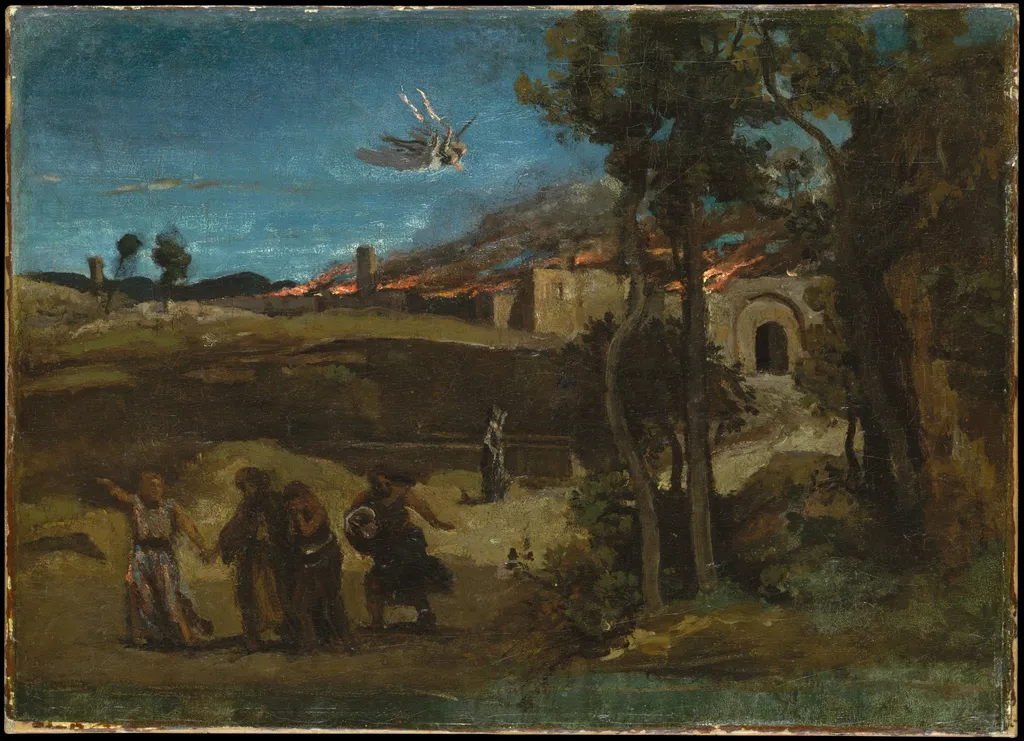
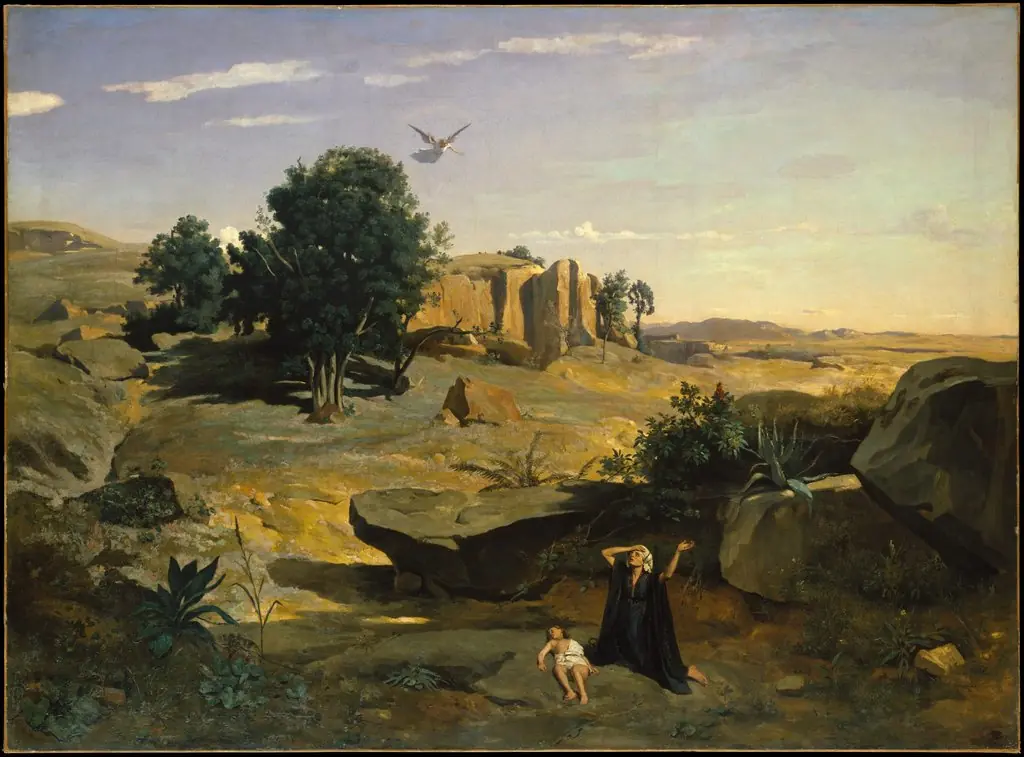
Study for "The Destruction of Sodom" is an oil painting by the French Romanticist artist Jean Baptiste Camille Corot. It dates from 1843 and is held in the collection of the Metropolitan Museum of Art.
About this work
Subject & Meaning
The drawing Study for "The Destruction of Sodom" (1843) presents a biblical scene of divine judgment, rendered as a figure set within a landscape alluding to the burning of Sodom and Gomorrah. Corot's preparatory oil study, housed in the Metropolitan Museum of Art, emphasizes human presence amid a turbulent terrain, suggesting the moment of imminent catastrophe. As a religious artwork, it functions both as an exploration of composition and as a visual meditation on the theological theme of punishment and mercy, using the landscape to frame the narrative of destruction.
Technique & Style
The relatively modest dimensions and oil-on-canvas support are typical of Corot's oil sketches, which served as studies for larger compositions.
Executed in oil paint on canvas, this 1843 study measures 35.9 by 49.8 centimeters in a horizontal landscape format. The work combines religious and landscape genres, depicting human figures within a landscape setting consistent with Corot's preparatory approach to narrative subjects. The relatively modest dimensions and oil-on-canvas support are typical of Corot's oil sketches, which served as studies for larger compositions. The painting is held in the collection of the Metropolitan Museum of Art.
History & Provenance
Created by Jean-Baptiste Camille Corot in 1843, Study for "The Destruction of Sodom" is an oil painting on canvas measuring 35.9 cm in height and 49.8 cm in width. It depicts a religious landscape featuring human figures, consistent with Corot's exploration of biblical themes during this period. The artwork is currently held within the collection of the Metropolitan Museum of Art.
Specific commission details and the chain of ownership prior to museum acquisition are not documented in the available records.
Legacy
The Study for 'The Destruction of Sodom' has come to represent Corot's engagement with biblical themes within his broader landscape oeuvre. Its inclusion in the Metropolitan Museum of Art's permanent collection has reinforced scholarly attention to Corot's religious subjects, positioning the work as a reference point for examinations of his transitional style between academic classicism and plein-air naturalism.
Overview
Jean-Baptiste-Camille Corot's Study for "The Destruction of Sodom," painted in 1843, is an oil on canvas work that explores a dramatic religious narrative within a landscape. This piece exemplifies French Romanticism through its emotional intensity and portrayal of a cataclysmic event. It serves as a preparatory work, offering insight into the artist's process for a larger composition. The painting is currently housed in the collection of The Metropolitan Museum of Art.
Context
Created during a period when Corot was developing his distinctive approach, this study reflects his engagement with both traditional historical subjects and emerging landscape practices. While rooted in the emotionalism of French Romanticism, the work also foreshadows his later integration of direct observation, or plein-air techniques, with classical compositional structures. Corot's ability to bridge these artistic currents positioned him as a pivotal figure in 19th-century French painting.
Own this work as a print
Artist & collection
Artist
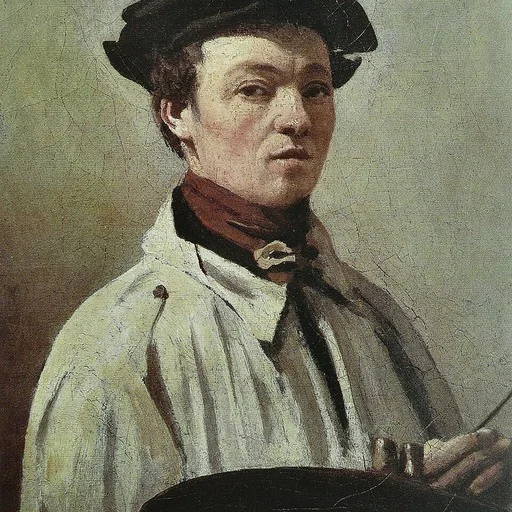
Jean-Baptiste-Camille Corot (UK: KORR-oh, US: kə-ROH, kor-OH; French:; 16 July 1796 – 22 February 1875), or simply Camille Corot, was a French landscape and portrait painter as well as a printmaker in etching.




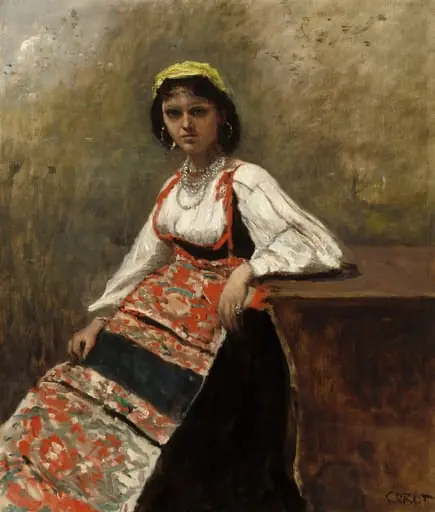


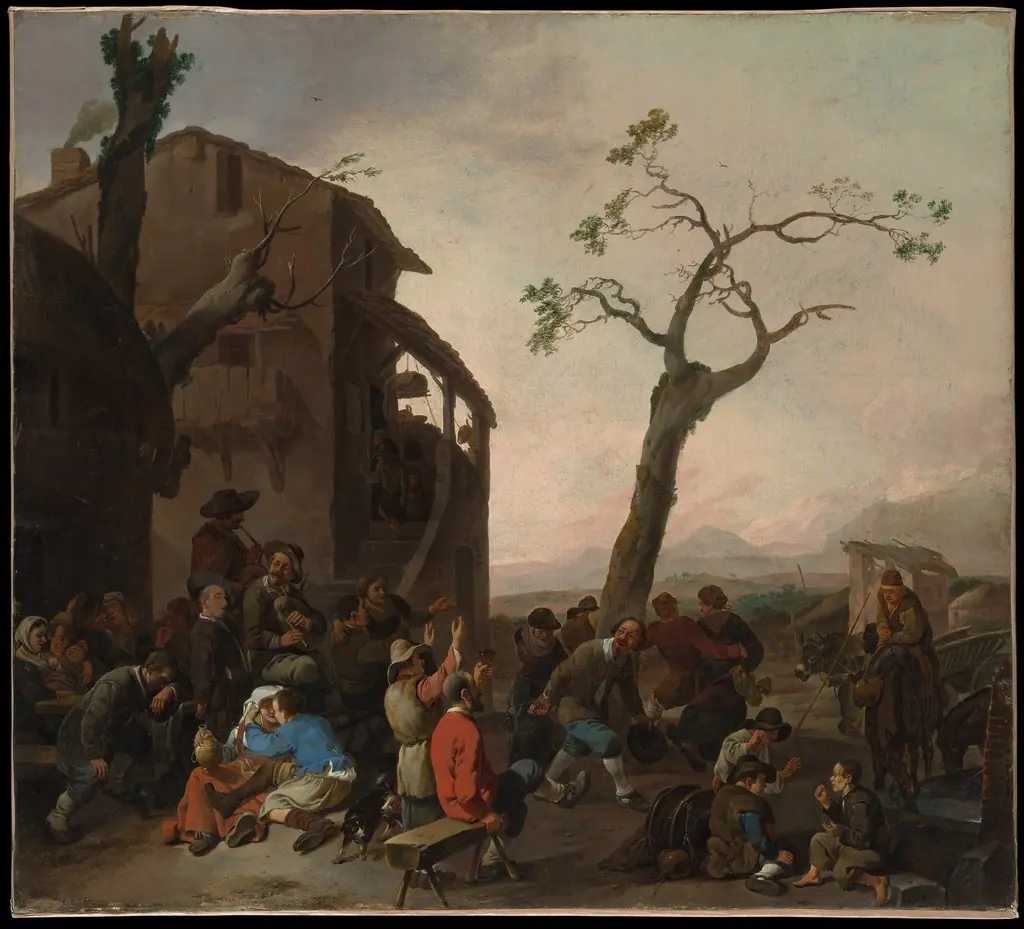 Peasants Dancing
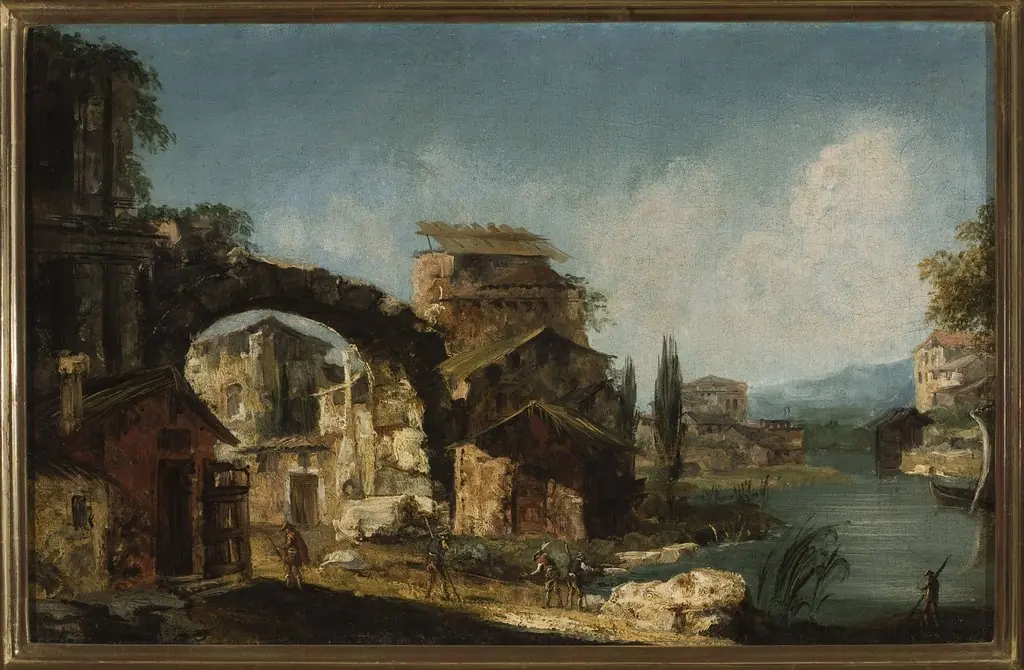 Landscape with ruins
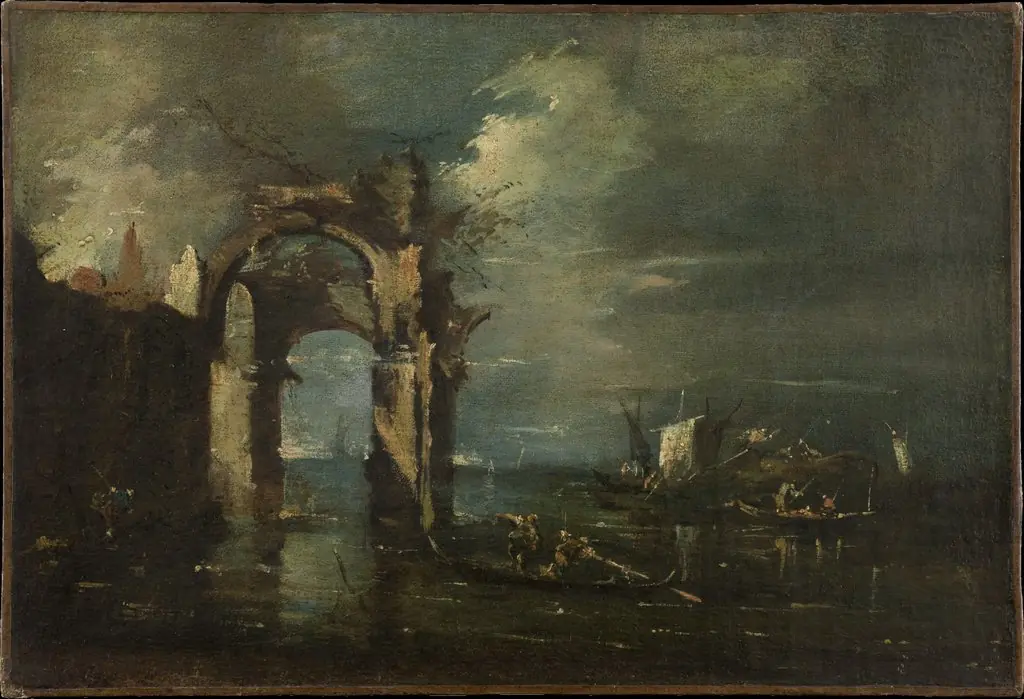 Lagoon Landscape
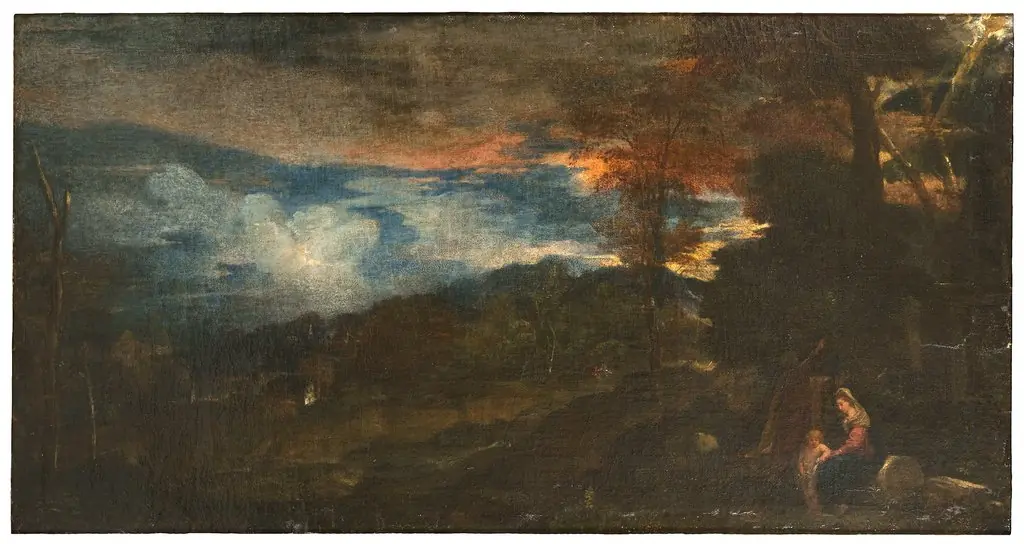 Landscape with the Holy Family
 Don Quixote and the Dead Mule
 St. Sebastian Succoured by Holy Women
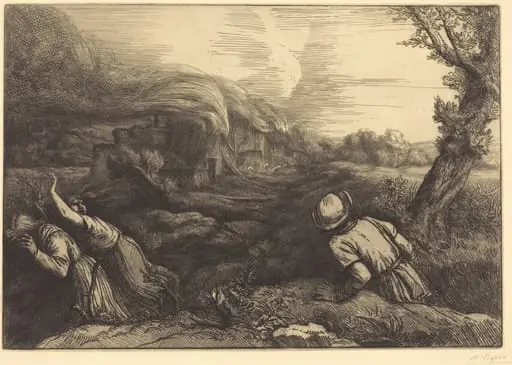 Fire in the Hamlet (L'incendie du hameau)
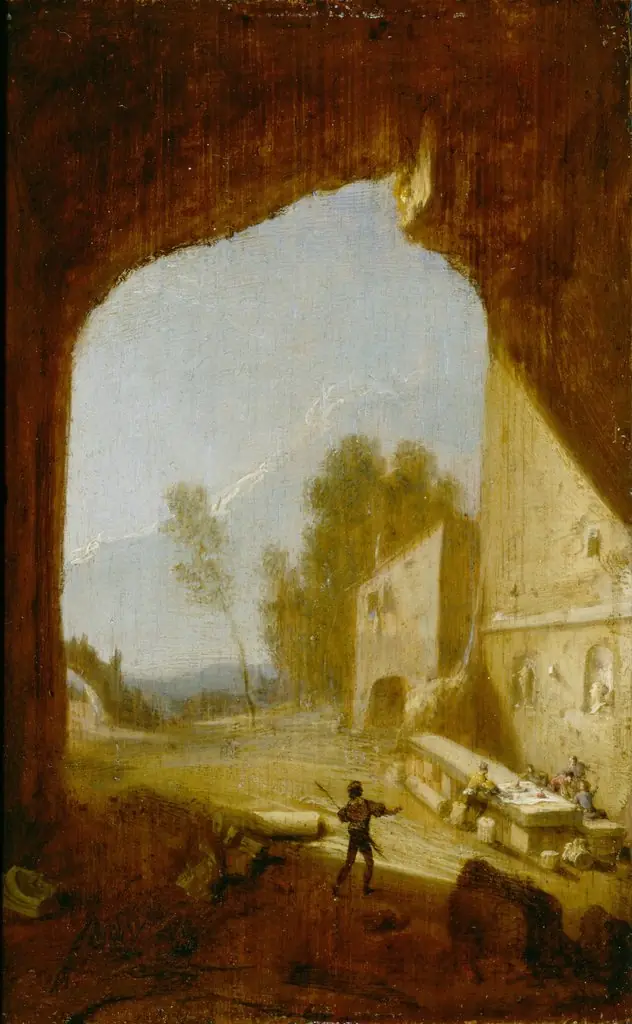 The Inn at the Grotto of Egeria
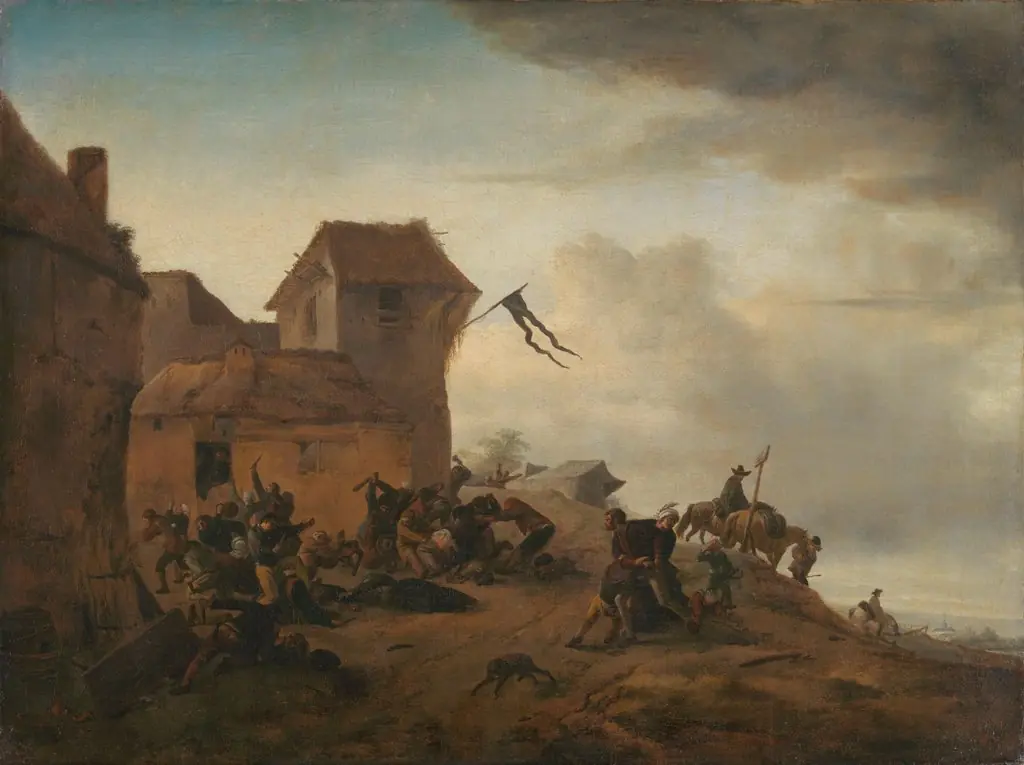 A peasant free-for-all near a village
 Peasants fighting near a Village
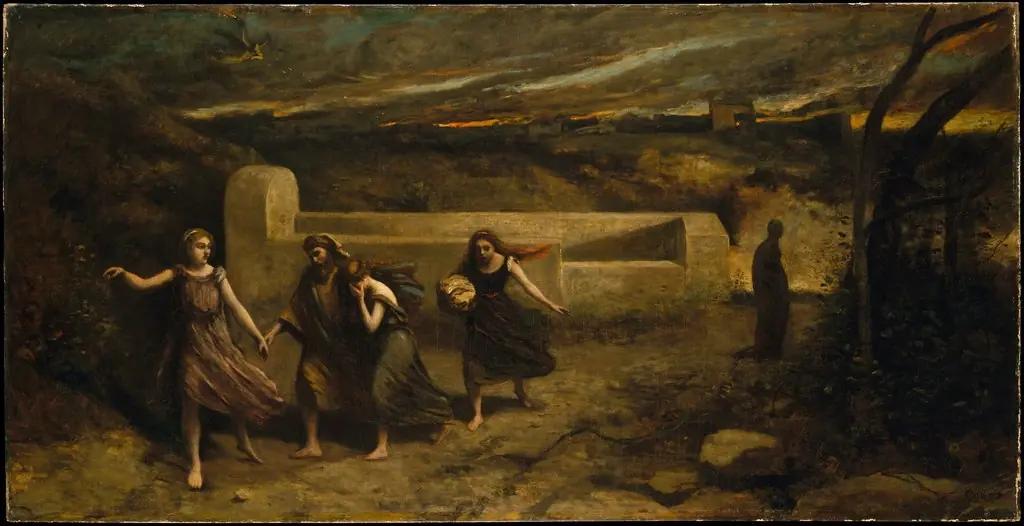
- The Burning of Sodom