Artwork
The Arrival of the Kattendijk at Texel, 22 July 1702
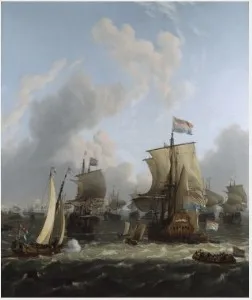
The Arrival of the Kattendijk at Texel, 22 July 1702 is an oil painting by the Dutch Golden Age artist Ludolf Bakhuizen. It dates from 1702 and is held in the collection of the National Gallery of Ireland.
About this work
Overview
The Arrival of the Kattendijk at Texel, 22 July 1702 is an oil on canvas marine painting by the German-born Dutch artist Ludolf Bakhuizen, dated 1702.
The Arrival of the Kattendijk at Texel, 22 July 1702 is an oil on canvas marine painting by the German-born Dutch artist Ludolf Bakhuizen, dated 1702. Measuring 133 by 111 cm, the work depicts the return of a Dutch East India Company vessel to the island of Texel. It is held in the collection of the National Gallery of Ireland in Dublin, having been acquired through purchase at Christie's in 1883. The painting represents a significant example of Bakhuizen's late career, when he stood as the preeminent marine painter in the Netherlands following the departure of the Van de Velde family to England in 1672.
Subject & Meaning
The painting records the arrival of the Kattendijk, a 759-tonne ship of the Dutch East India fleet built at Zeeland in 1694, at the island of Texel on 22 July 1702. The vessel is identified by the name on her stern. The ship had departed Batavia in November 1701 with 90 sailors and 25 soldiers aboard, rounded the Cape of Good Hope in February 1702, and returned as part of a fleet of 19 ships. The Sion, another vessel in this fleet, appears to the left. The composition centers on the large three-masted ship with billowing sails, flying a flag from its mainmast, surrounded by smaller craft including a single-masted boat with a tan sail and a rowboat with figures in the foreground. The scene glorifies Dutch maritime commerce and the global reach of the VOC, themes central to Bakhuizen's oeuvre.
Technique & Style
Bakhuizen executed the work in oil on canvas. The palette employs blues, grays, and whites for sky and water, with warm browns and ochres for hulls and sails. Light breaks through cloud cover, illuminating sails and creating patches of shadow on the water. The brushwork renders rigging, flags, and wave crests with precise detail while allowing atmospheric softness in the distant sky. Whitecaps and dark troughs suggest wind and movement throughout the composition. By this late stage in his career, Bakhuizen had moved away from the silvery-gray tonality and monochromatic works of his earlier period toward a lighter palette with brighter colors. His approach distinguished him from the Van de Veldes, who concentrated more on technical aspects of vessels and naval battles, whereas Bakhuizen emphasized the perpetually changing climate and magnificent skies of the Netherlands.
History & Provenance
The painting bears an inscription in the lower right: "A° Katten Dyck 1702." Its provenance traces to the F.W. Reynolds sale at Christie's on 10 April 1883, lot 78, from which it was purchased for the National Gallery of Ireland. The work has been exhibited on several notable occasions: Dutch Paintings of Golden Age from the Collection of the National Gallery of Ireland, which toured the Charles W. Bowers Memorial Museum in Santa Ana, California; the Midland Arts Council in Midland, Michigan; the Mint Museum in Charlotte, North Carolina; the Center for the Fine Arts in Miami, Florida; and the IBM Gallery of Science and Art in New York in 1987; Die Handelswelt Der Niederlande in Asien 1600-1800 at the Stadtgalerie in Bamberg from 9 October to 30 November 1988; and Masterpieces of the Dutch Golden Age at the Ulster Museum in Belfast from 12 September 2019 to 26 January 2020.
Context
Ludolf Bakhuizen was born in Emden, East Frisia, on 28 December 1630, and came to Amsterdam around 1650, where he worked as a merchant's clerk before devoting himself to art from the late 1650s. He studied under Allart van Everdingen and Hendrik Dubbels, and became a member of the Amsterdam painters guild in 1663. When Willem van de Velde the Elder and Younger left for England in 1672 with the resumption of hostilities between the Netherlands and England, Bakhuizen succeeded them as the leading Dutch marine painter. His fame attracted leading European patrons including Grand Duke Cosimo III de' Medici, King Frederick I of Prussia, the Elector of Saxony, and Tsar Peter the Great, the last of whom was reputed to have taken drawing lessons from him. Bakhuizen's work frequently glorified Amsterdam and the mercantile trade that had made the city great, and he made his first etchings in 1701 at age 71 as part of this continuing project.
Legacy
The Arrival of the Kattendijk at Texel, 22 July 1702 stands as a key document of Bakhuizen's late style and of Dutch maritime painting at the turn of the eighteenth century. The work demonstrates that Bakhuizen, at approximately 72 years of age, had not diminished in technical brilliance. The painting's specific historical subject, recording an actual voyage of the Dutch East India Company, combines with his characteristic attention to atmospheric effects to produce a work that serves both as commercial propaganda and as artistic achievement. The painting's place in the National Gallery of Ireland collection ensures its continued visibility in scholarship on Dutch Golden Age marine painting and on the global reach of Dutch trade in the early modern period. Its exhibition history, including recent display at the Ulster Museum in 2019-2020, attests to its enduring interest for public audiences.
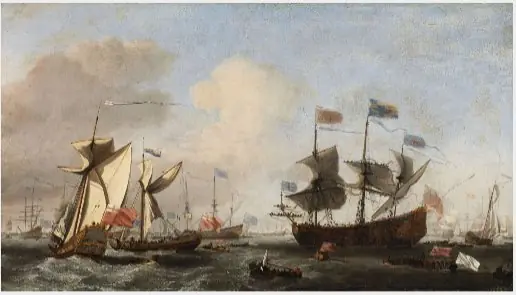
Artist & collection
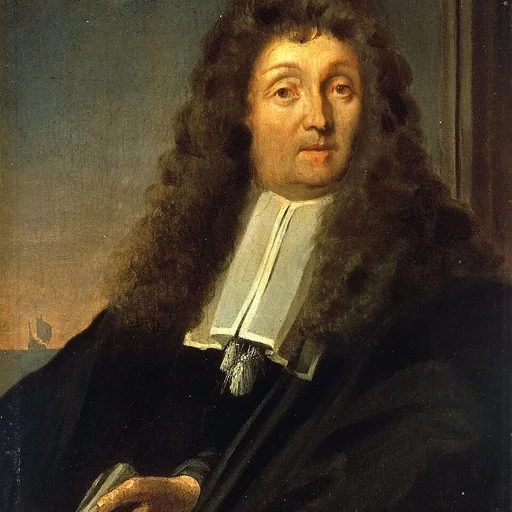
Artist
Ludolf Bakhuizen (28 December 1630 or 1632 – 7 November 1708) was a German-born Dutch painter, draughtsman, calligrapher and printmaker.

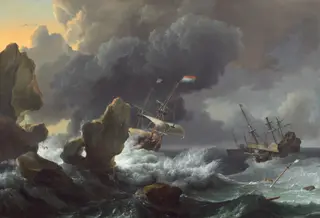 Ships in Distress off a Rocky Coast
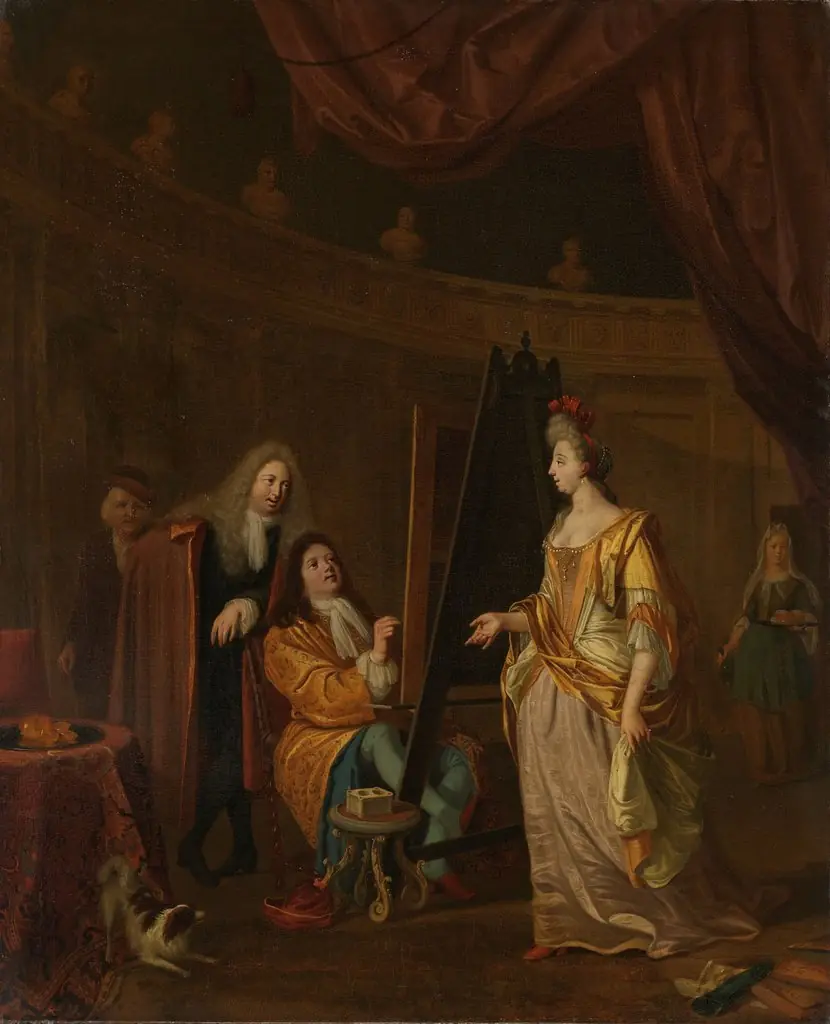 An artist in his studio, painting the portrait of a lady
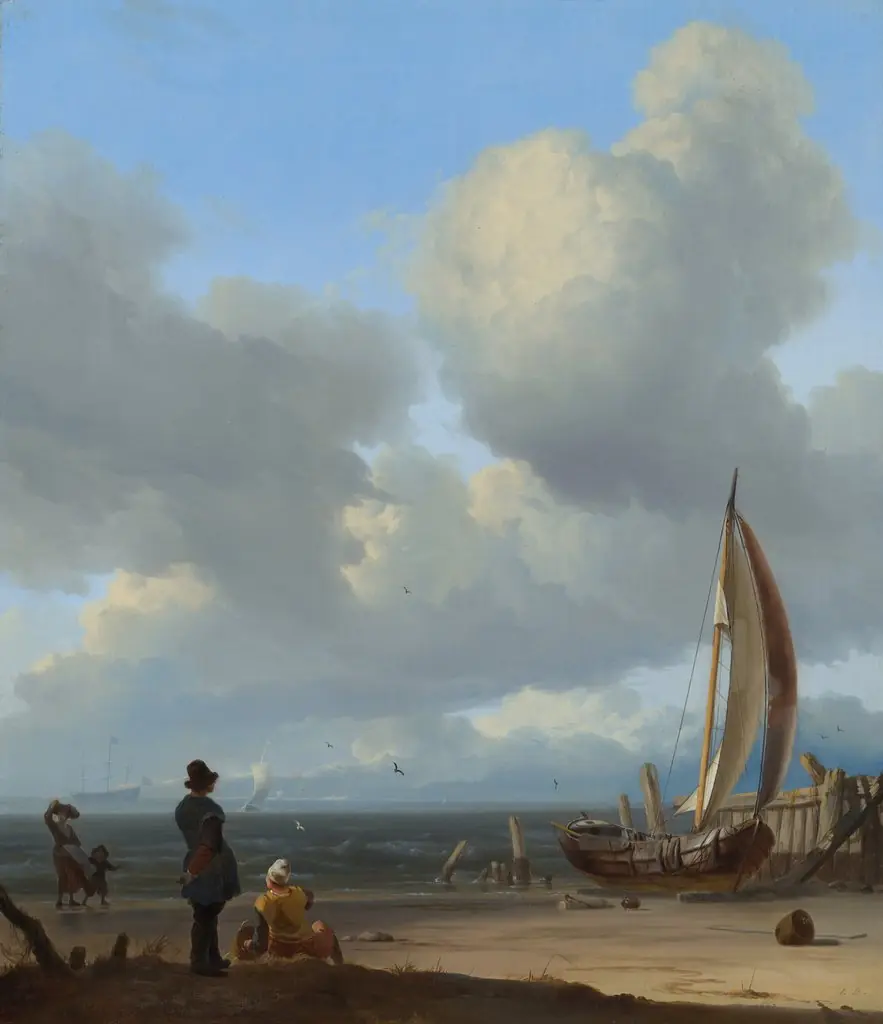 An extensive seascape with figures by a boat on a shore near Huisduinen
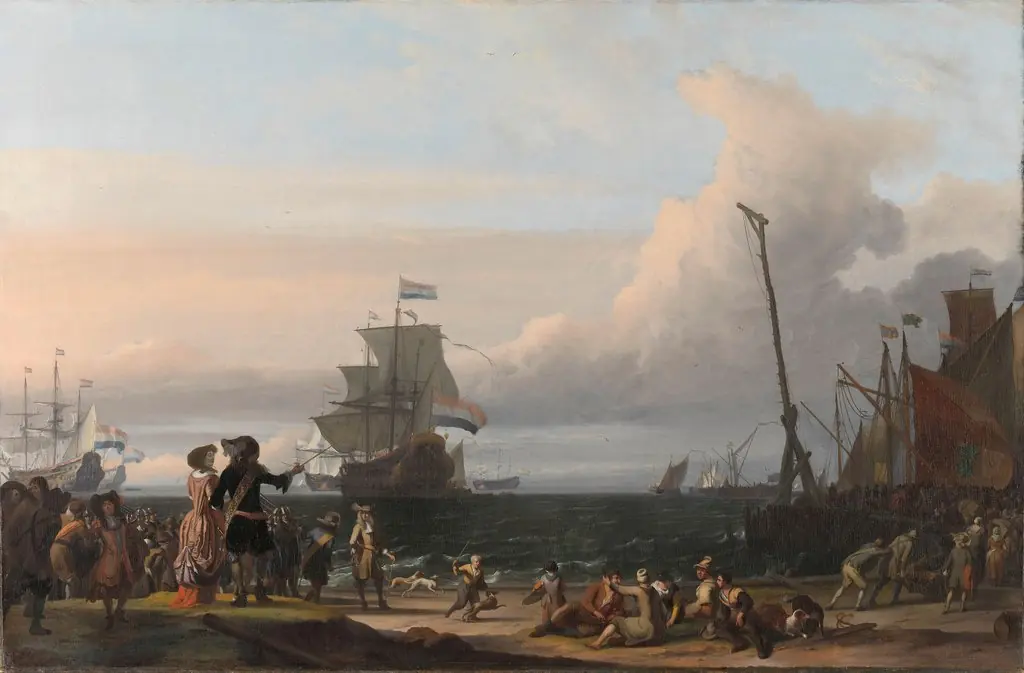 Dutch ships in the roads of Texel; in the middle the 'Gouden Leeuw,' the flagship of Cornelis Tromp
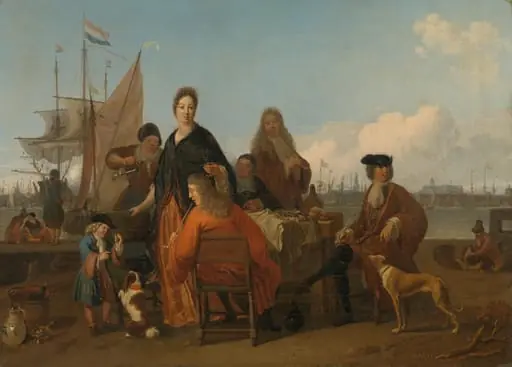 The Bakhuysen and de Hooghe Families dining at the Mosselsteiger (Mussel Pier) on the Y, Amsterdam
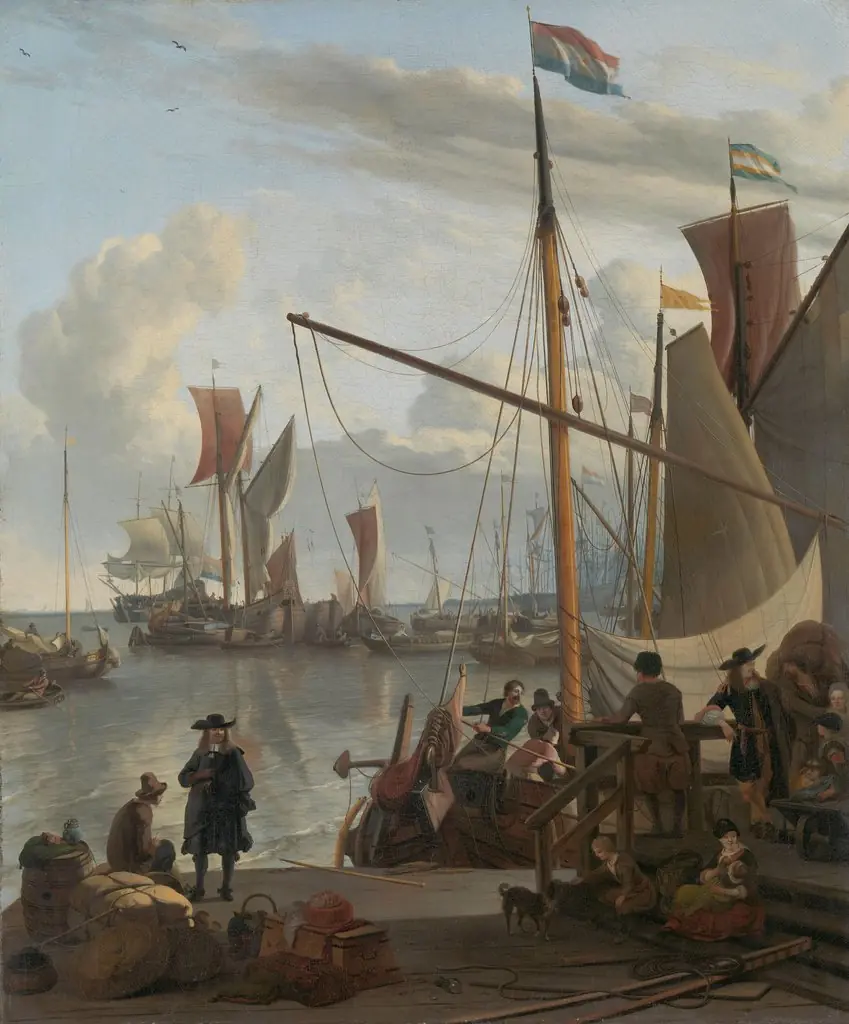 The Y at Amsterdam, seen from the Mosselsteiger (mussel pier)
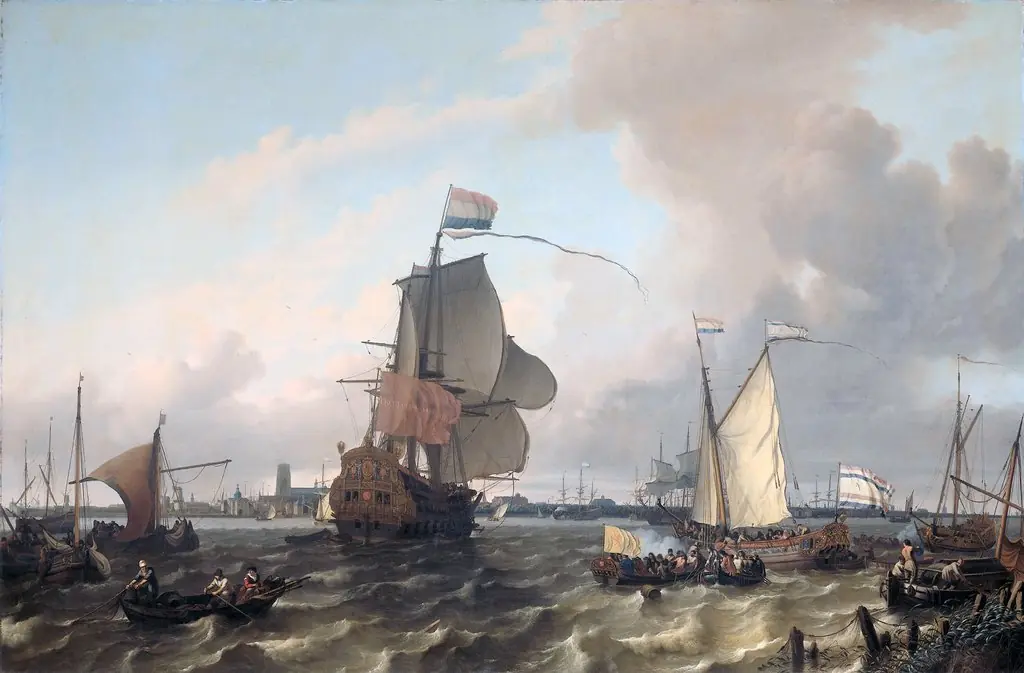 The Man-of-War Brielle on the River Maas off Rotterdam
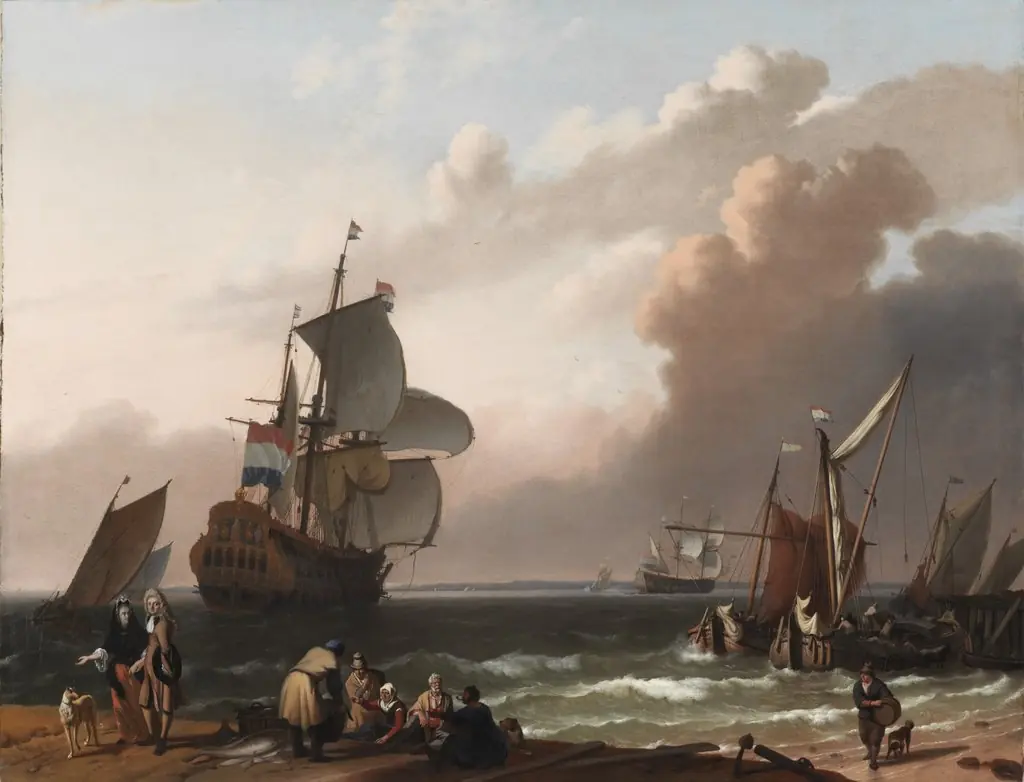 Warship and Dutch Sailboats near the Shore
- The Royal Visit to the Fleet in the Thames Estuary, 6 June 1672
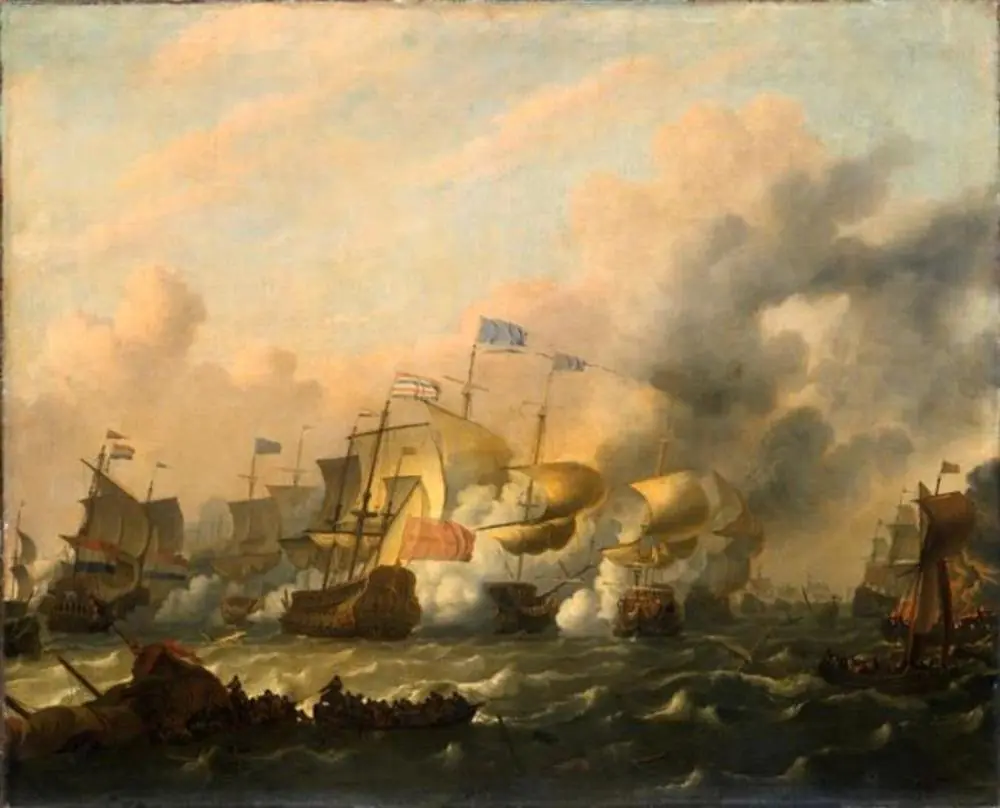 Engagement between British and Dutch Ships, after 1673
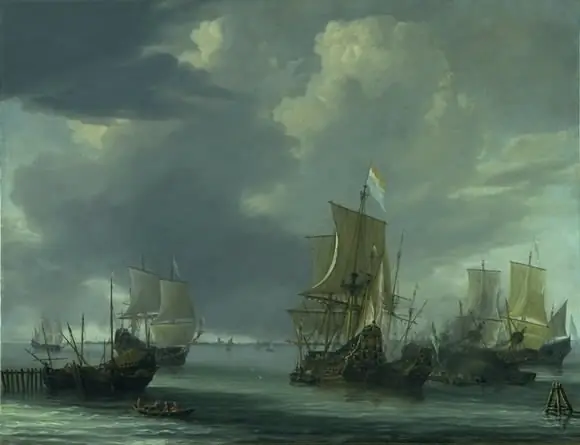 Dutch Roadstead
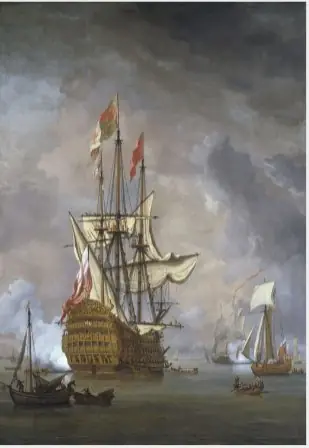 Calm: the English Ship 'Britannia' at Anchor
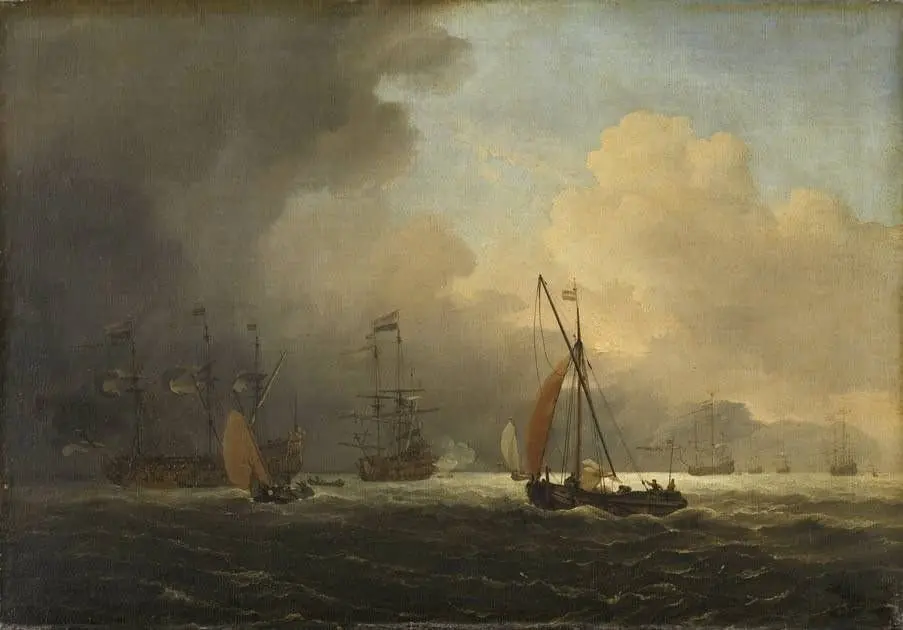 Sea storm with a rising thunderstorm
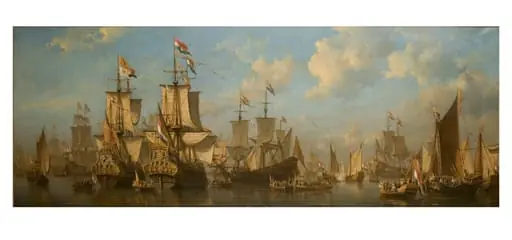 The Prince of Orange, afterwards King William III, Embarking at Hellevoetsluis for England in 1688
 The Dutch Man-of-War 'Star' at Anchor
 A Dutch Yacht with Fishing Boats off a Jetty
 The Four Days' Battle, 1-4 June 1666
 Sea-piece with a Dutch man-of-war