Artwork
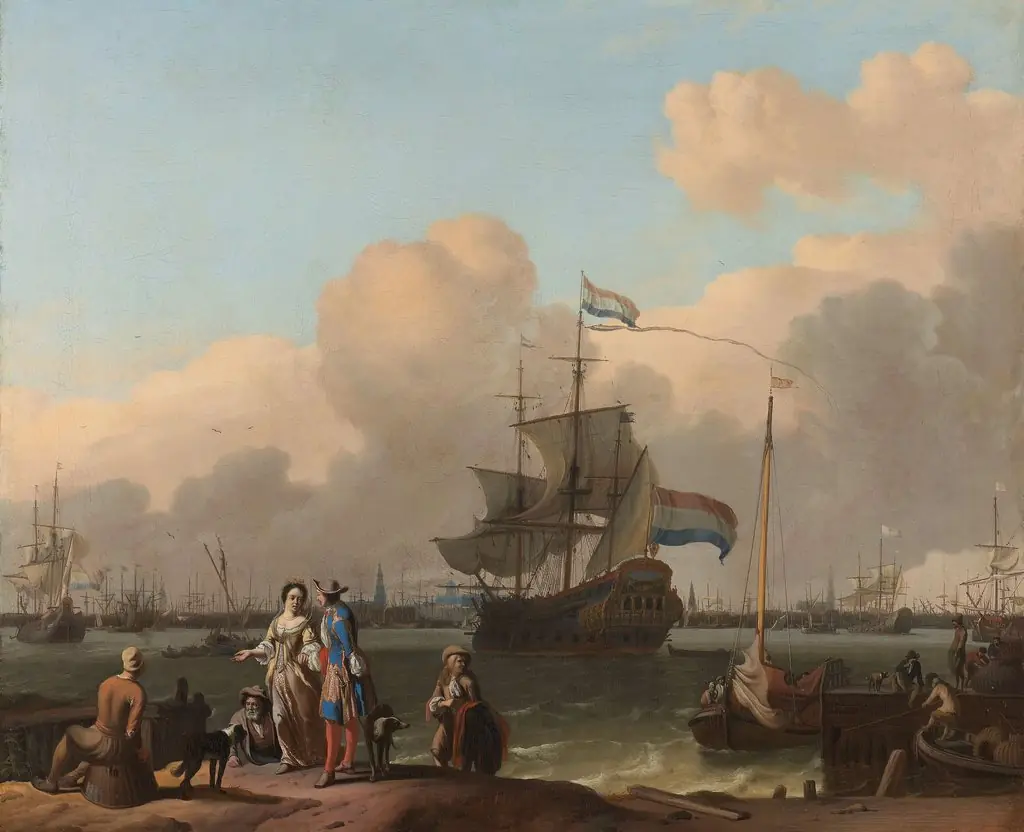
Dutch ships in the roads of Texel; in the middle the 'Gouden Leeuw,' the flagship of Cornelis Tromp
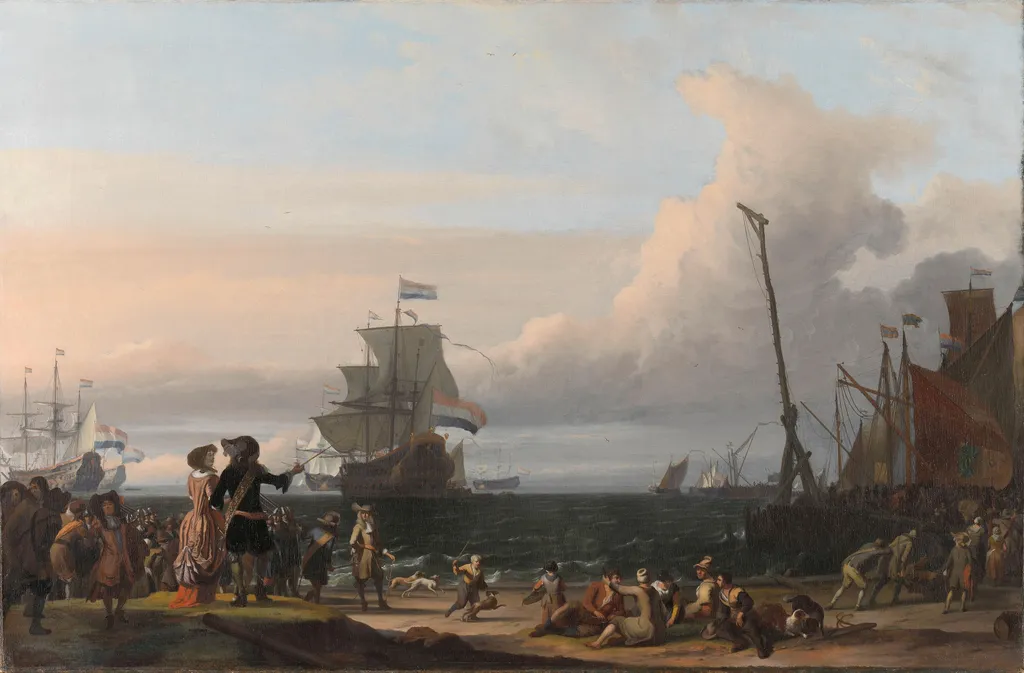
Dutch ships in the roads of Texel; in the middle the 'Gouden Leeuw,' the flagship of Cornelis Tromp is an oil painting by the Dutch Golden Age artist Ludolf Bakhuizen. It dates from 1671 and is held in the collection of the Rijksmuseum.
About this work
Subject & Meaning
Including figures such as Johan de Witt and Willem Joseph van Ghent, the work functions as a projection of Dutch maritime power.
The painting depicts a fleet of Dutch line-of-battle ships anchored in the roads of Texel, a strategic departure point for vessels heading to the Orient and a base for the Amsterdam Admiralty during the 17th and 18th centuries. Central to the composition is the Gouden Leeuw, identified as the flagship of Admiral Cornelis Tromp. The scene is populated by numerous marines embarking in the foreground, while high-ranking officials observe the proceedings from an elevated position on the left.
Including figures such as Johan de Witt and Willem Joseph van Ghent, the work functions as a projection of Dutch maritime power. Created in 1671, on the eve of the Third Anglo-Dutch War, the imagery emphasizes naval readiness and national strength.
Technique & Style
The work is an oil painting executed on canvas, reflecting Bakhuizen's characteristic marine technique of precise brushwork and dramatic lighting to convey nautical atmosphere. The composition centers on the Dutch flagship Gouden Leeuw, rendered with meticulous detail that emphasizes its role as a symbol of naval power, while surrounding vessels and figures are arranged to suggest motion and hierarchy. The handling of oil on canvas allows for rich texture and depth, contributing to the formal realism typical of 17th‑century marine art.
History & Provenance
The work was commissioned under unknown patronage and first entered the collection of Christian Josi in 1805, who sold it to the Nationale Konst-Galerij in The Hague; the museum later transferred it to the Rijksmuseum and it was placed on long-term loan to the Amsterdam Museum in November 2014.
The painting was created in 1671 by Ludolf Bakhuizen, as indicated by his signature and date in the lower right corner, placing its execution one year before the 1672 Rampjaar and during the Third Anglo-Dutch War in which Cornelis Tromp served as flag officer.
The painting is held by the Amsterdam Museum in Amsterdam, having been placed on long-term loan there in November 2014. It was previously part of the collection of the Rijksmuseum, to which it was sold in 1805 by C. Josi (likely the art dealer Christiaan Josi) in Amsterdam. The sale was made to the Nationale Konst-Galerij in The Hague, a precursor of the current Rijksmuseum, and was one of the first acquisitions by that institution.
Overview
Ludolf Bakhuizen’s 1671 oil canvas records a bustling maritime scene in the Texel roadstead, centering on the warship Gouden Leeuw, the flagship of Admiral Cornelis Tromp. A multitude of Dutch vessels crowd the water under a cloudy sky, while figures on the shore and in the shallows observe the traffic. The composition balances the drama of sea and the everyday presence of onlookers.
Context
The canvas reflects the Dutch Golden Age’s fascination with seafaring, a period when the United Provinces dominated global trade and naval warfare. Bakhuizen’s focus on Texel, a key anchorage for ships entering the Zuiderzee, mirrors contemporary concerns about fleet readiness and the economic importance of the North Sea routes.
Own this work as a print
Artist & collection
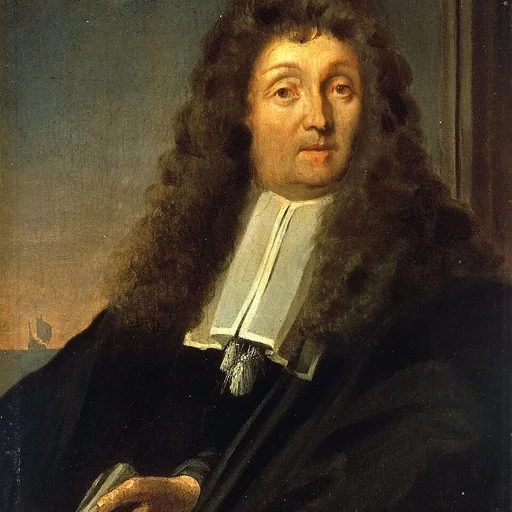
Artist
Ludolf Bakhuizen (28 December 1630 or 1632 – 7 November 1708) was a German-born Dutch painter, draughtsman, calligrapher and printmaker.

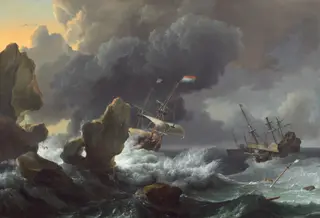 Ships in Distress off a Rocky Coast
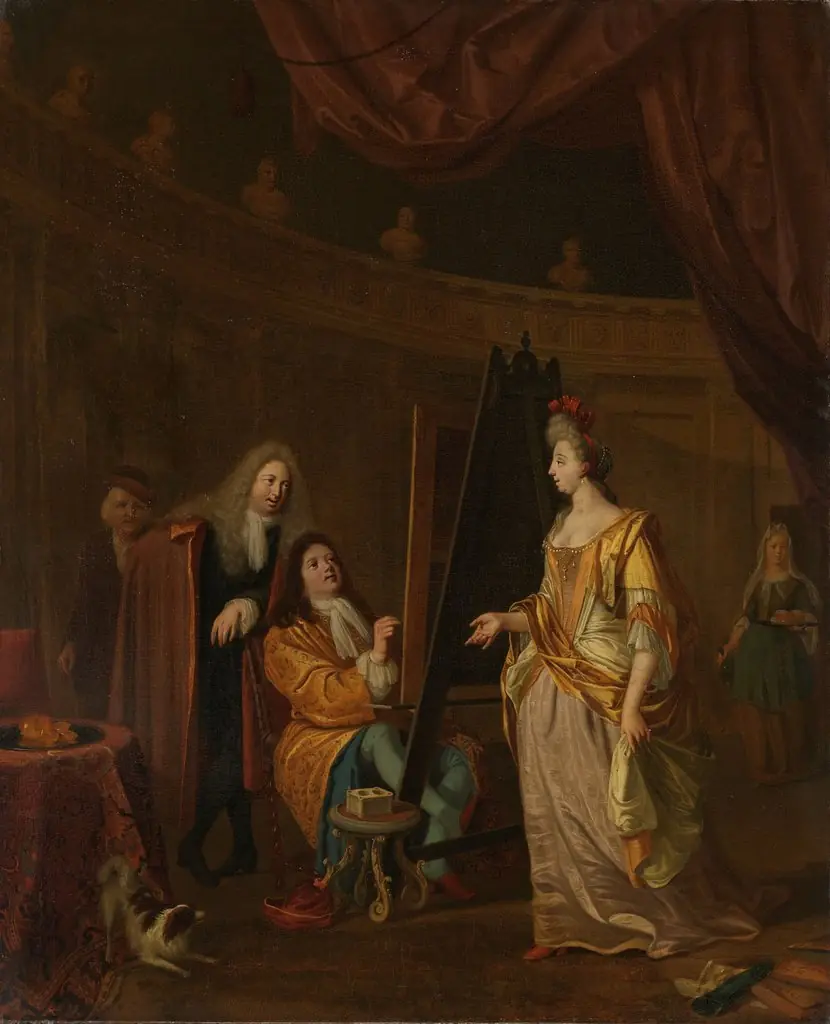 An artist in his studio, painting the portrait of a lady
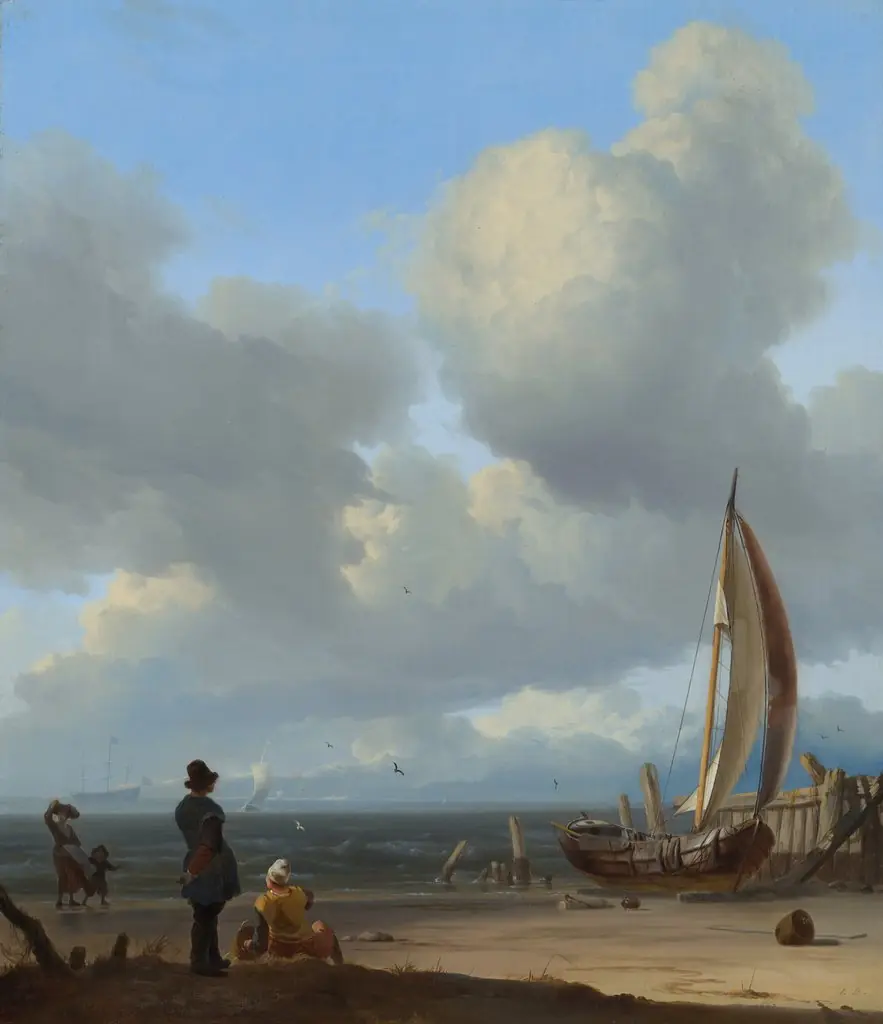 An extensive seascape with figures by a boat on a shore near Huisduinen
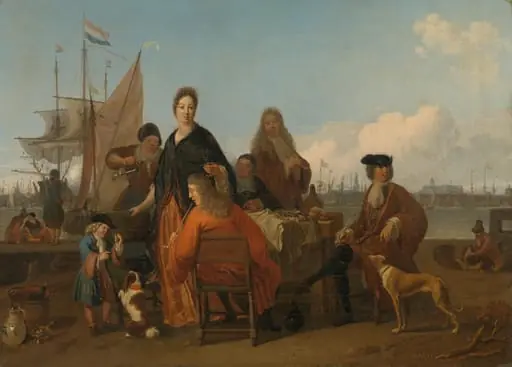 The Bakhuysen and de Hooghe Families dining at the Mosselsteiger (Mussel Pier) on the Y, Amsterdam
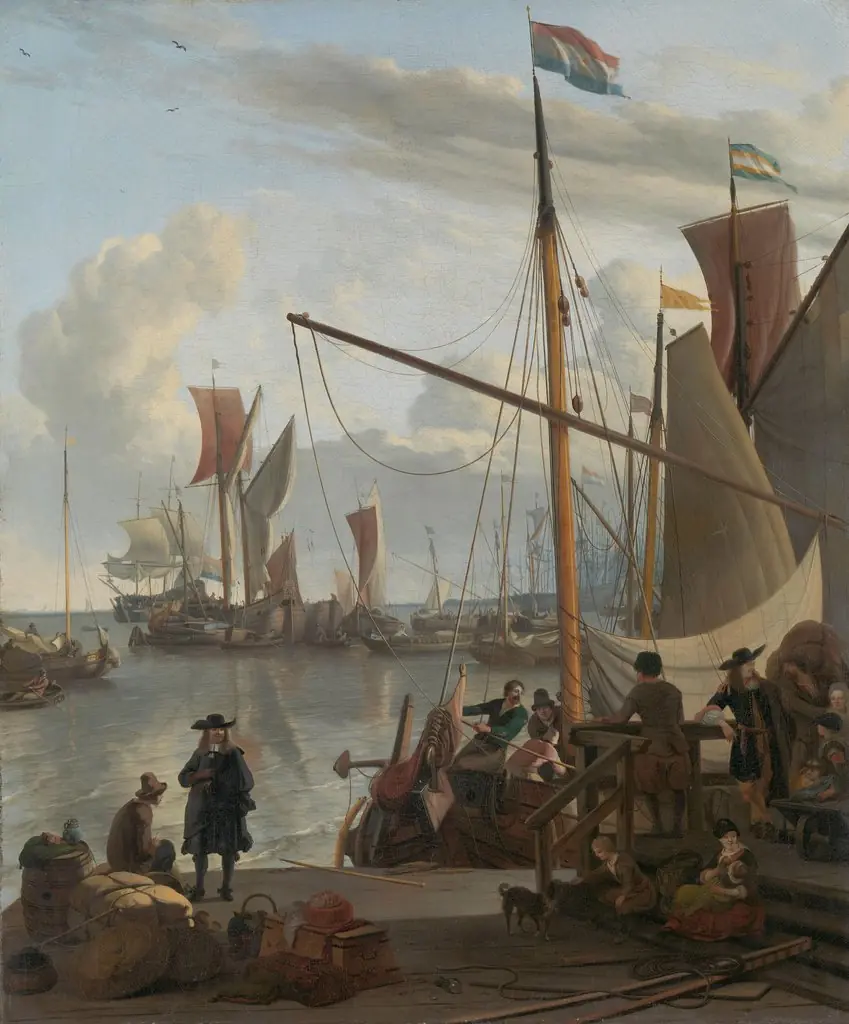 The Y at Amsterdam, seen from the Mosselsteiger (mussel pier)
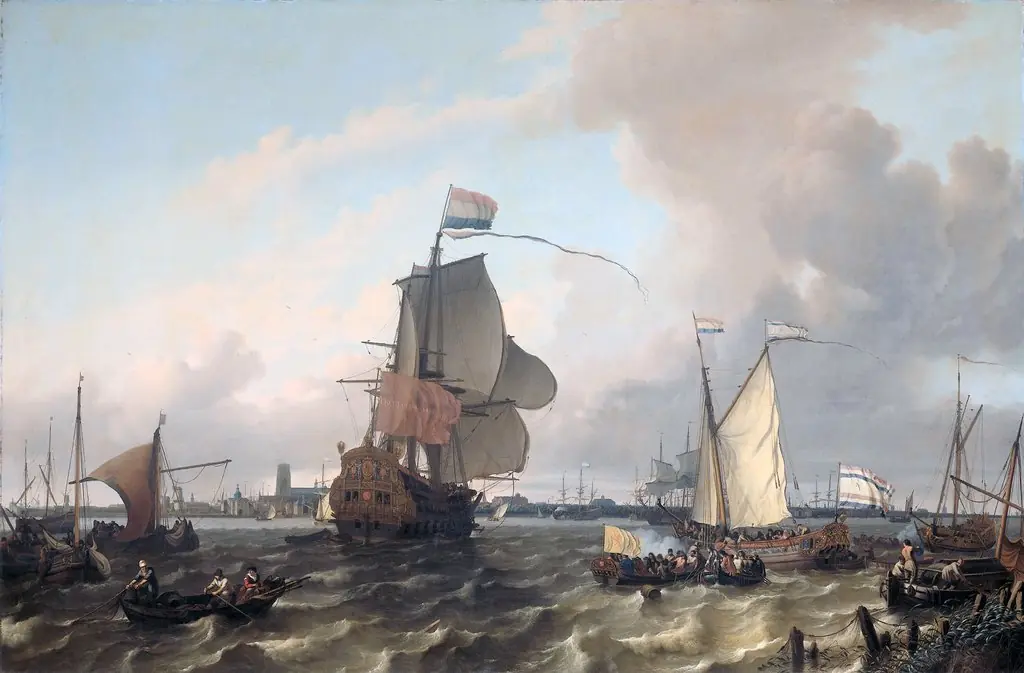 The Man-of-War Brielle on the River Maas off Rotterdam
- Warship and Dutch Sailboats near the Shore
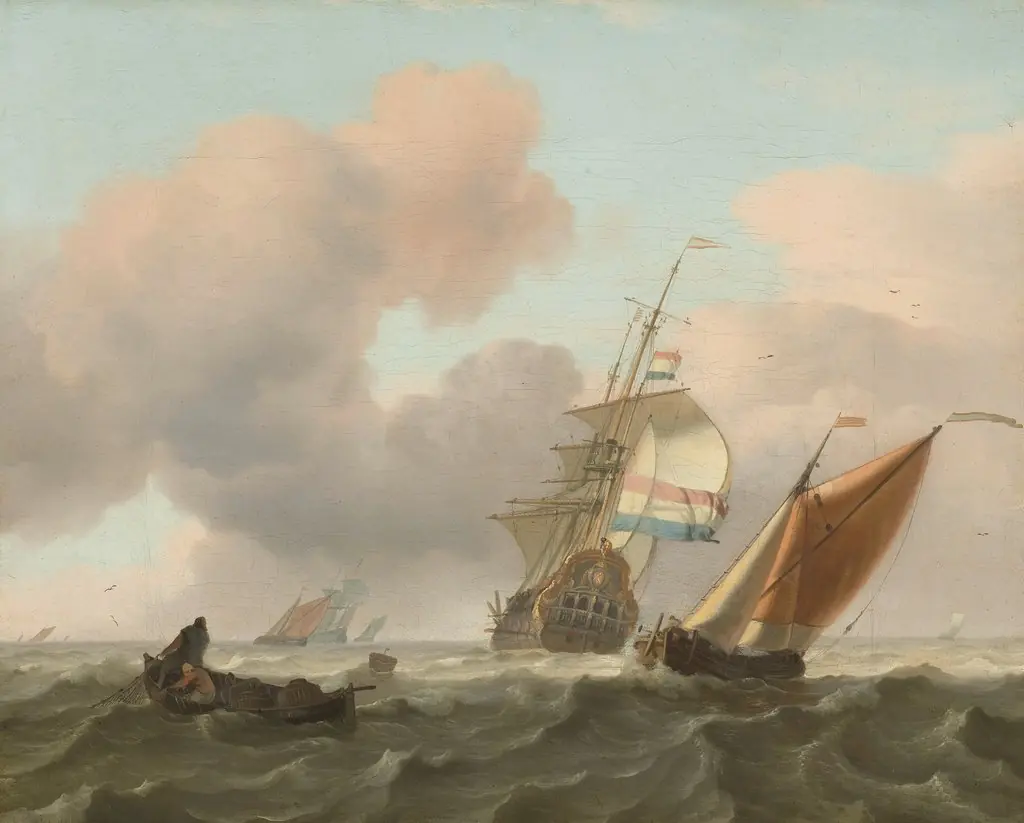 Rough sea with Ships