Artwork
The Y at Amsterdam, seen from the Mosselsteiger (mussel pier)
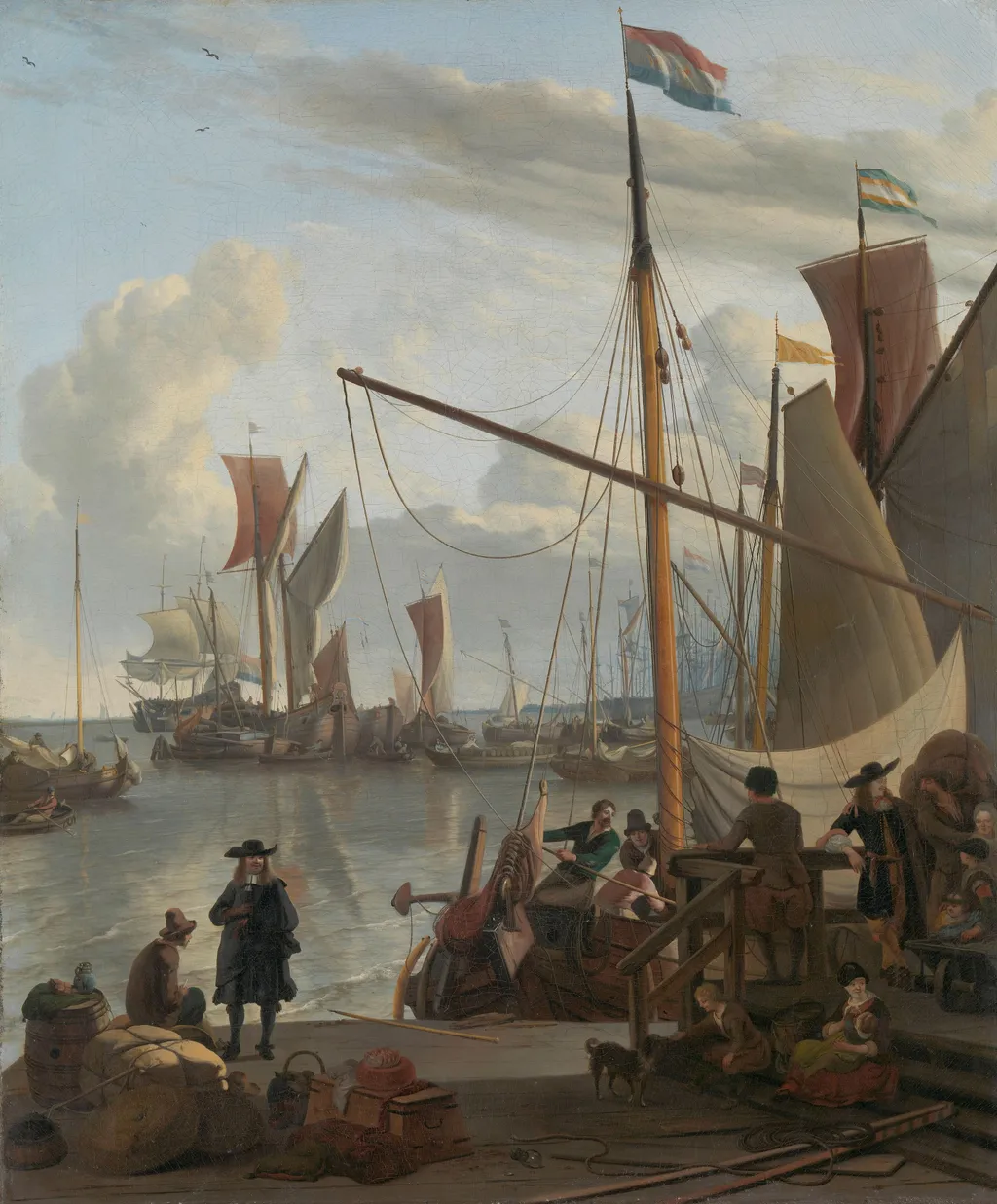
The Y at Amsterdam, seen from the Mosselsteiger (mussel pier) is an oil painting by the Dutch Golden Age artist Ludolf Bakhuizen. It dates from 1673 and is held in the collection of the Rijksmuseum.
About this work
Subject & Meaning
The painting depicts a bustling wooden quay at the Mosselsteiger pier in Amsterdam, situated near the Haringpakkerstoren and the Oude Stadsherberg.
The painting depicts a bustling wooden quay at the Mosselsteiger pier in Amsterdam, situated near the Haringpakkerstoren and the Oude Stadsherberg. The scene captures the daily activity of the IJ waterway, featuring a ship being unloaded and travelers, including women with children, waiting for the next vessel. The foreground is cluttered with trade goods such as bales and barrels, alongside passenger luggage like a suitcase and a basket.
Iconographically, the work serves as a specific topographical record of this pier, which functioned as a bridge between the city and the inn. An 1808 auction catalog identifies the figure dressed entirely in black on the left side as the artist, Ludolf Bakhuizen, inserting himself into the composition as an observer of the maritime commerce.
Technique & Style
Ludolf Bakhuizen executed this 1673 landscape using oil paint on a canvas support measuring 81 by 67 centimeters. The artist signed and dated the work '1673 / L. Backhuy' on a traveler's trunk positioned in the lower left foreground. Stylistically, the composition depicts a bustling wooden quay where a ship is being unloaded, with figures including women and children awaiting transport.
The foreground is densely populated with commercial goods such as bales and barrels alongside personal luggage like baskets and trunks. A figure dressed entirely in black on the left side of the scene is identified as a self-portrait of the painter.
History & Provenance
The painting is signed and dated 1673 by Ludolf Bakhuizen on the trunk in the lower left.
It entered the collection via the Rotterdam collector Gerrit van der Pot, lord of Groeneveld. On 6 June 1808 the work was purchased by the Rijksmuseum at Van der Pot’s estate sale in Rotterdam.
The painting is held by the Rijksmuseum, Amsterdam, accessioned under inventory no. SK-C-1157. It entered the museum’s collection on 6 June 1808, purchased at the posthumous sale of Rotterdam collector Gerrit van der Pot, heer van Groeneveld. The work has remained in the Rijksmuseum’s holdings since acquisition and is currently displayed in Gallery 2.15.
Context
The painting shows a bustling wooden quay on the IJ river, with a ship being unloaded and travelers, including women with children, awaiting the next boat. In the foreground barrels and crates of trade goods and luggage, such as a trunk and basket, are visible. An 1808 auction catalogue describes the scene as “a part of the IJ, at the Mosselsteiger in Amsterdam,” identifying the long pier on the Houttuinen near the Haringpakkerstoren as the Mosselsteiger, which also served as a bridge to the Oude Stadsherberg.
The figure in black on the left is recorded as the painter himself. The work is signed and dated “1673 / L. Backhuy” on the barrel in the centre-left. It entered the Rijksmuseum collection from the Rotterdam collector Gerrit van der Pot, who had inherited it from his estate sale on 6 June 1808.
Overview
Ludolf Bakhuizen’s 1673 oil painting, The Y at Amsterdam, seen from the Mosselsteiger, presents a bustling scene on the IJ waterway. The canvas captures a crowded harbor where vessels of varying sizes line the quay, while figures in dark attire linger near barrels and crates, observing the activity. The work is part of the Rijksmuseum’s collection.
Own this work as a print
Artist & collection
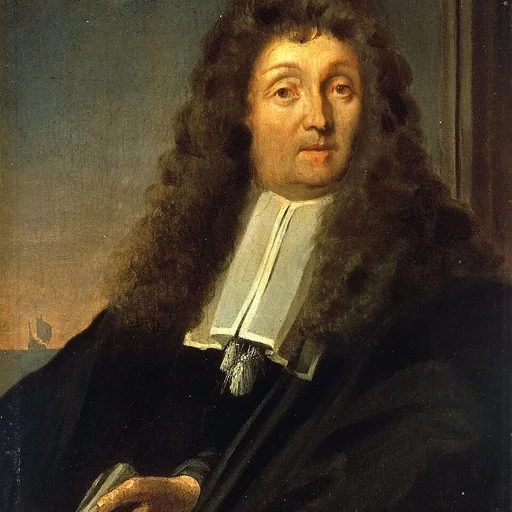
Artist
Ludolf Bakhuizen (28 December 1630 or 1632 – 7 November 1708) was a German-born Dutch painter, draughtsman, calligrapher and printmaker.

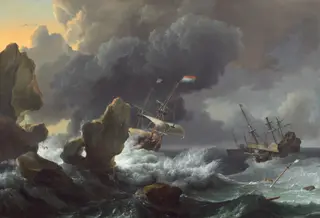 Ships in Distress off a Rocky Coast
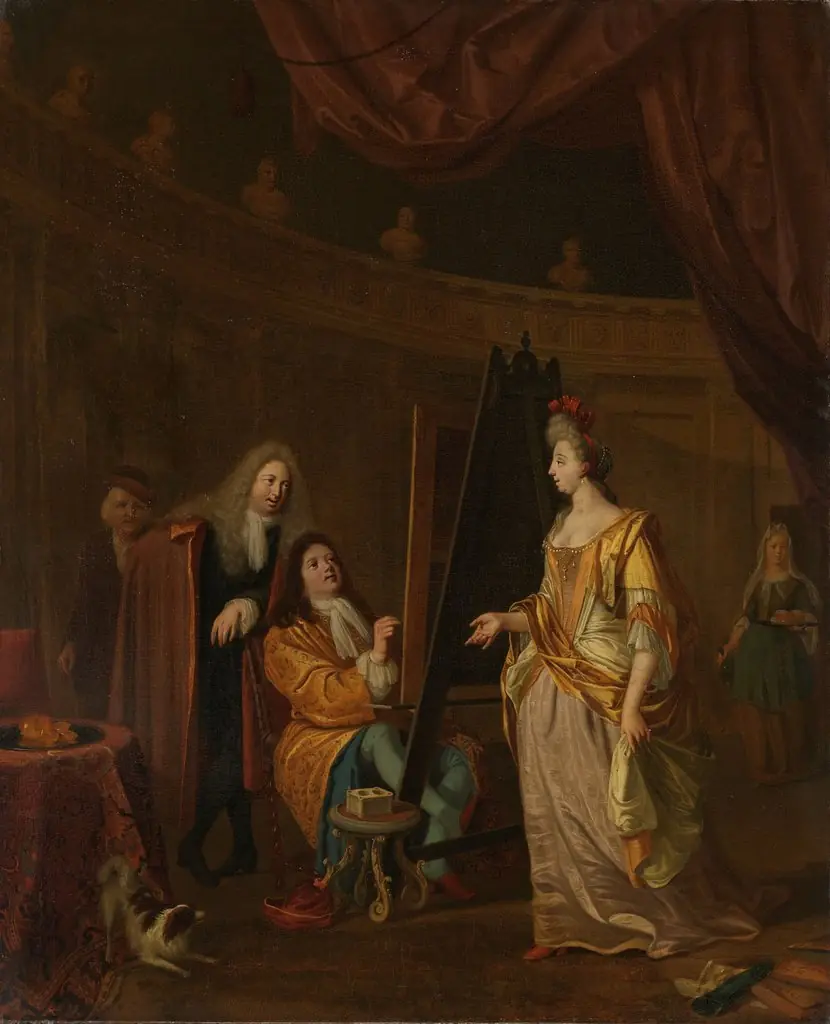 An artist in his studio, painting the portrait of a lady
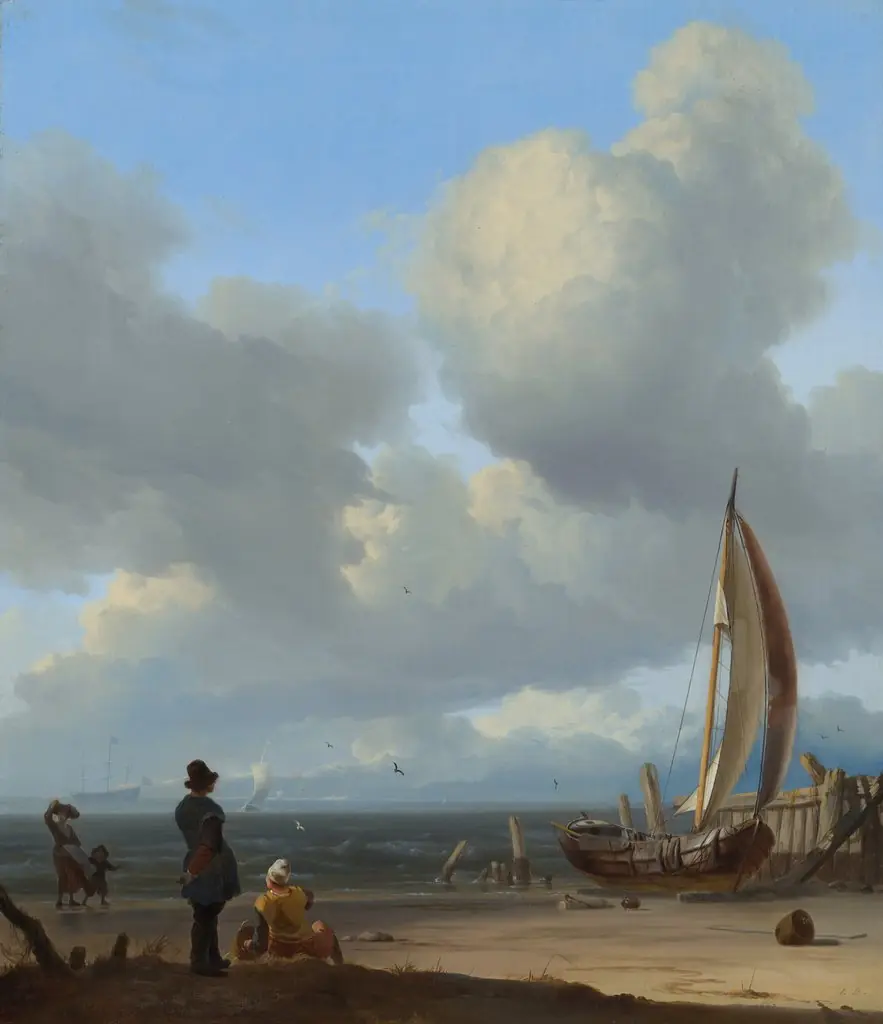 An extensive seascape with figures by a boat on a shore near Huisduinen
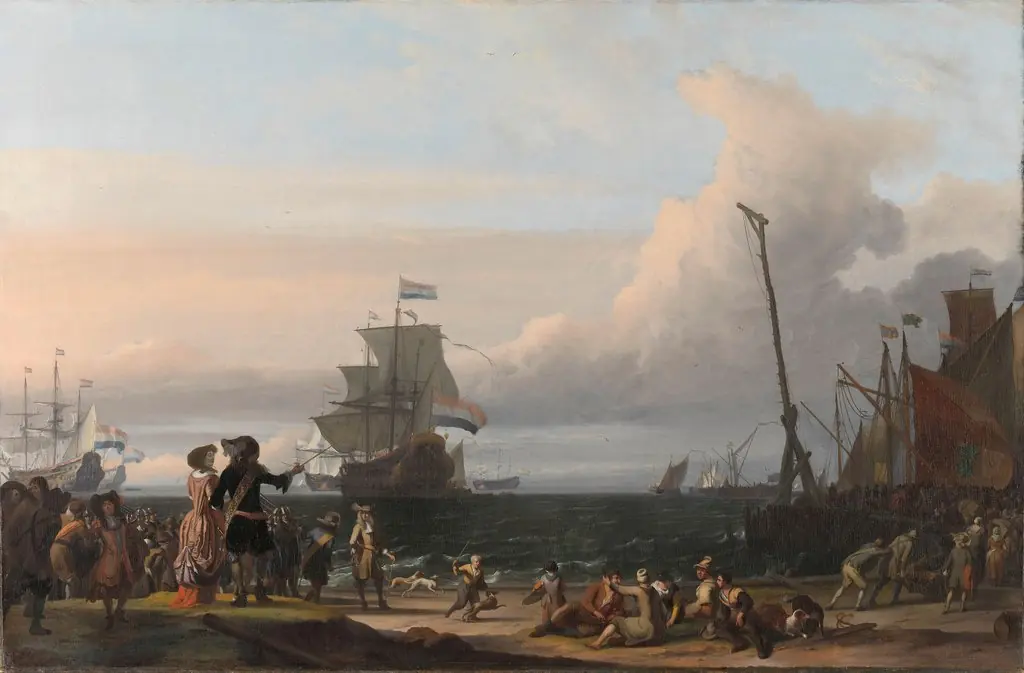 Dutch ships in the roads of Texel; in the middle the 'Gouden Leeuw,' the flagship of Cornelis Tromp
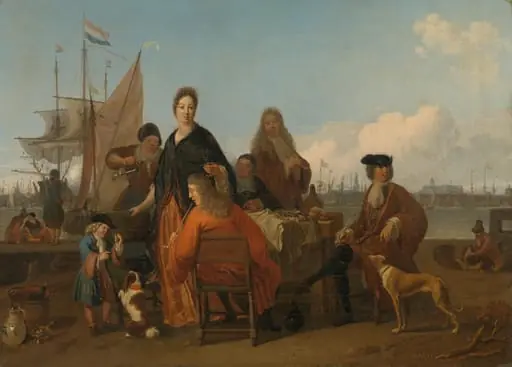 The Bakhuysen and de Hooghe Families dining at the Mosselsteiger (Mussel Pier) on the Y, Amsterdam
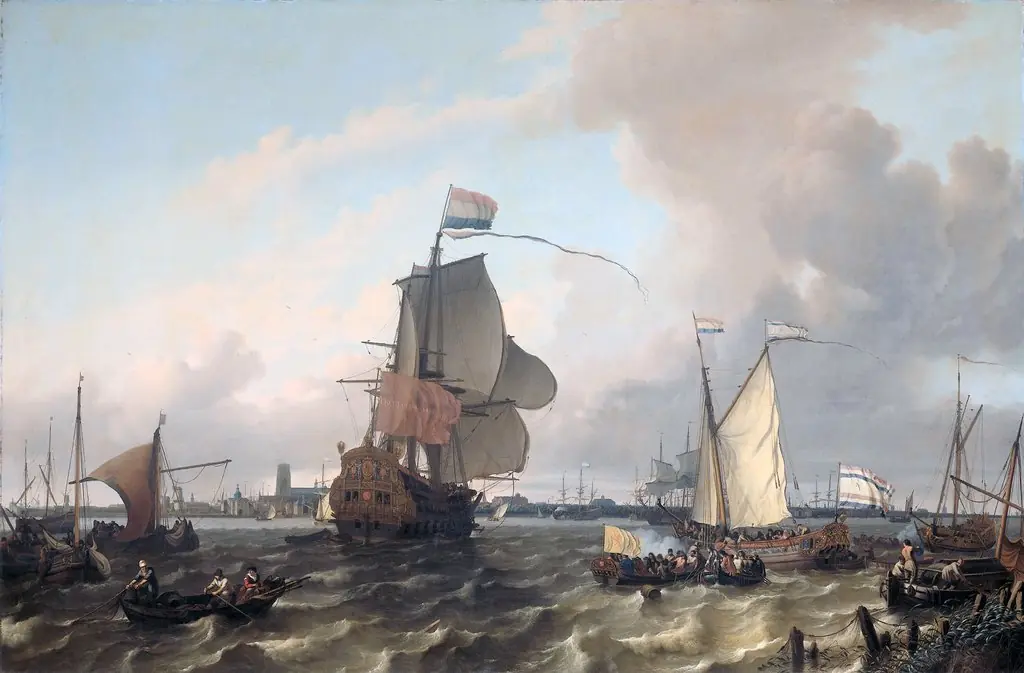 The Man-of-War Brielle on the River Maas off Rotterdam
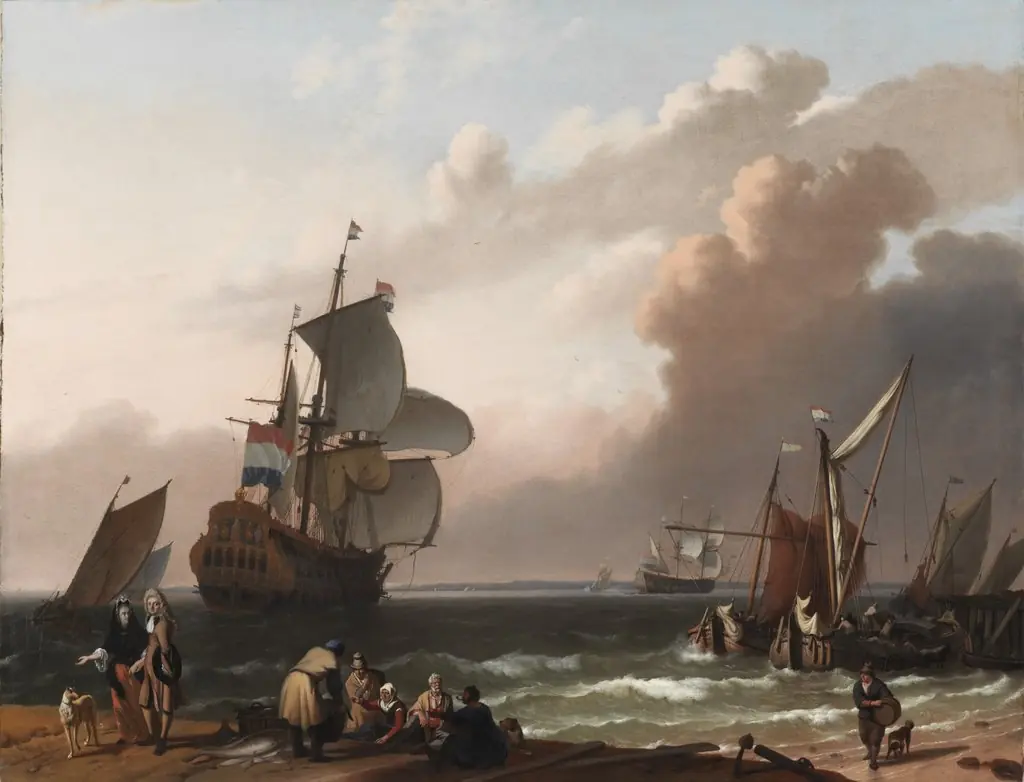 Warship and Dutch Sailboats near the Shore
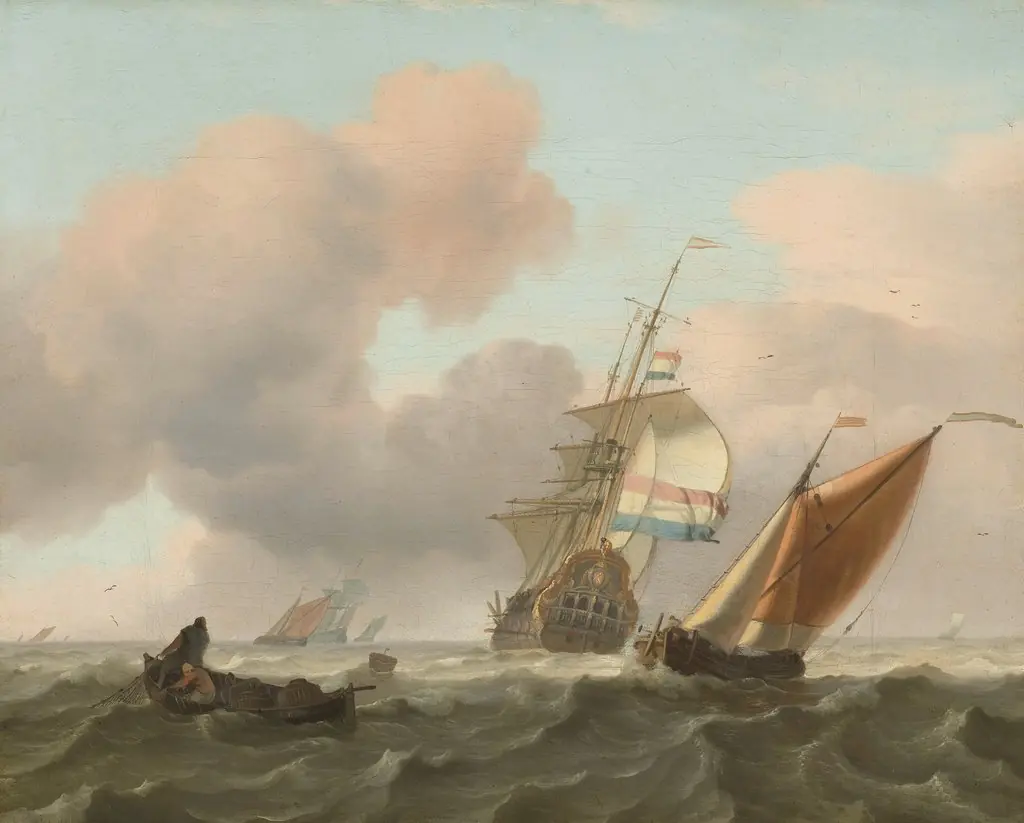 Rough sea with Ships