Artwork
The Bakhuysen and de Hooghe Families dining at the Mosselsteiger (Mussel Pier) on the Y, Amsterdam
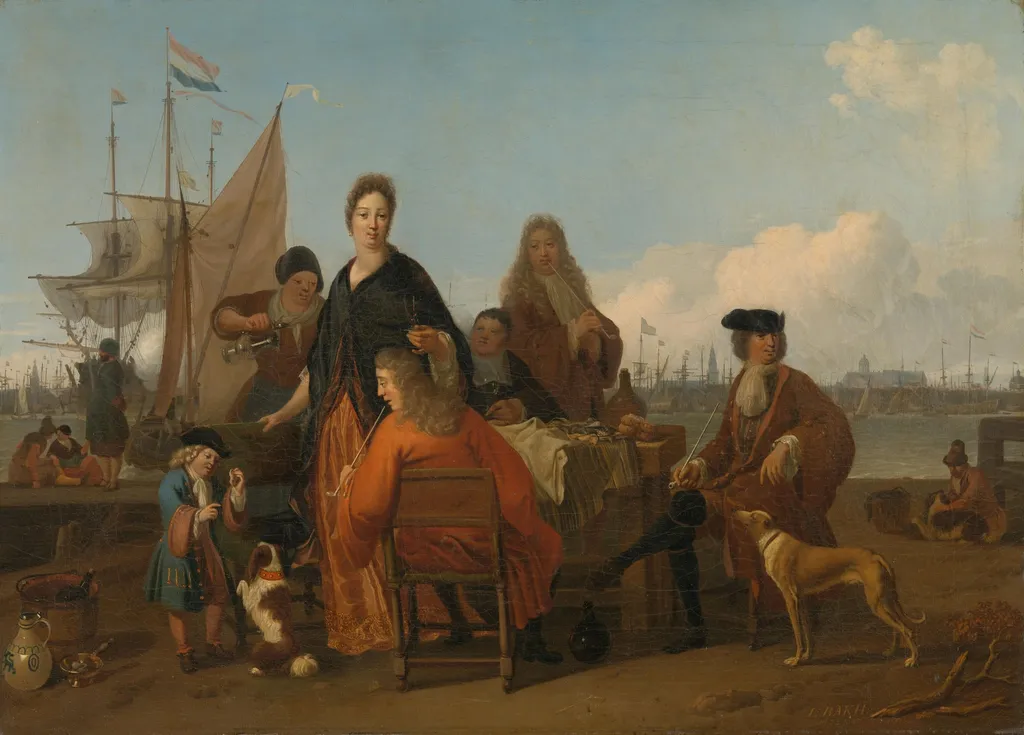
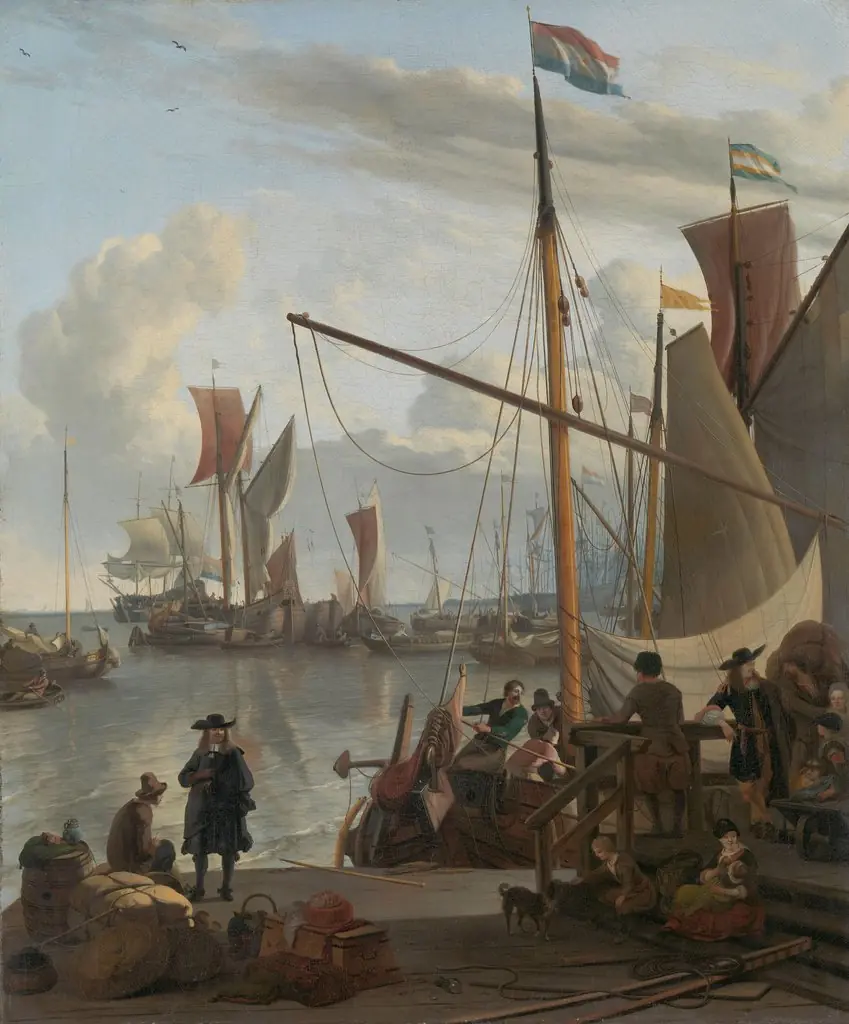
The Bakhuysen and de Hooghe Families dining at the Mosselsteiger (Mussel Pier) on the Y, Amsterdam is an unspecified painting by the Rococo painting artist Ludolf Bakhuizen. It dates from 1702 and is held in the collection of the Rijksmuseum.
About this work
It’s a rare snapshot of two real families, Bakhuysen and de Hooghe, enjoying a summer day by the water.
You see a big outdoor feast on a wooden pier in Amsterdam. A long table is packed with people eating mussels, drinking, and smoking long clay pipes. A boy plays with a dog at the left edge.
The painting is signed and dated 1702, but no one knows who painted it. It’s a rare snapshot of two real families, Bakhuysen and de Hooghe, enjoying a summer day by the water. The artist even labeled some of the faces so we know who’s who.
If you like scenes of everyday life, visit the Rijksmuseum.
History & Provenance
The painting The Bakhuysen and de Hooghe Families dining at the Mosselsteiger (Mussel Pier) on the Y, Amsterdam is dated 1702, placing its creation in the final years of Ludolf Bakhuysen's life. The work depicts the artist's own family circle, specifically referencing his third wife, Anna de Hooghe, whom he married in 1680. By 1705, their son Joannes was living with the artist in his home on the Herengracht, suggesting the family unit portrayed had been established for some time.
While Bakhuysen is primarily known for marine subjects, this piece exemplifies his later production of portraits featuring his friends and family. The work was created shortly before the artist's death in November 1708, representing a personal commission or domestic record rather than a public diplomatic gift like his earlier 1666 view of Amsterdam.
Context
Ludolf Bakhuizen is recognized as the preeminent Dutch maritime painter who succeeded Willem van de Velde the Elder and Younger after their departure for England in 1672. While celebrated for his intense realism and dramatic depictions of storms, his artistic output also included portraits of his family and circle of friends, a genre in which works like The Bakhuysen and de Hooghe Families dining at the Mosselsteiger (1702) are situated. These later portraits are generally considered of lesser artistic value than his seascapes but offer valuable insight into his social connections with contemporary scholars and literary figures.
Bakhuizen's career was marked by international acclaim, with visits from figures such as Cosimo III de' Medici and Peter the Great, and his works remained highly sought after into the nineteenth century. His reputation as a leading artist of the Dutch Golden Age was further solidified by his establishment of a gallery in 1699 and his influence on the next generation of marine artists.
Legacy
After the departure of the van de Velde brothers for England in 1672, Bakhuysen assumed the position of the foremost Dutch marine painter, a status that cemented his reputation throughout the late 17th century. His seascapes, celebrated for their realistic depiction of storms and light, remained in high demand and were acquired by major institutions including the Rijksmuseum, the Louvre, and the Musée du Havre, a demand that persisted into the 19th century. In 1699 he opened a gallery in the Amsterdam town hall, one of the earliest public exhibition spaces dedicated to contemporary marine art, underscoring his institutional legacy.
Contemporary accounts describe him as a forerunner of Romanticism, and his works continued to influence later marine painters; his legacy is also noted in 19th‑century literature, such as Jules Verne’s reference to his seascapes.
Overview
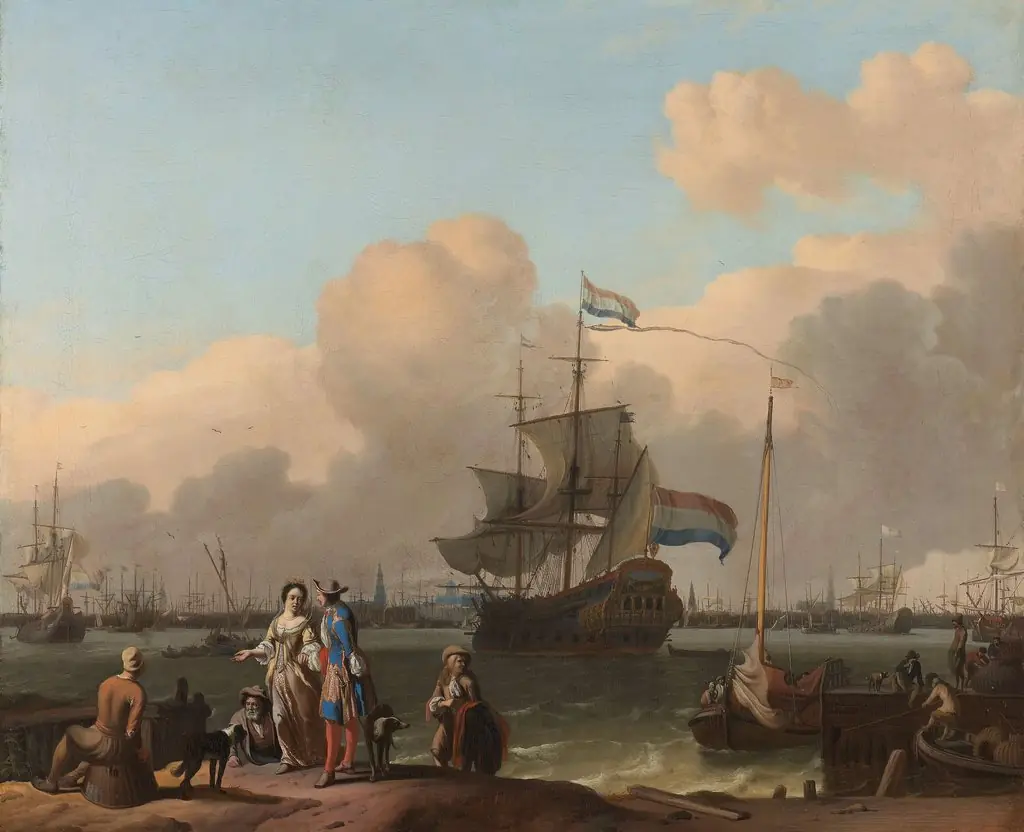
The canvas captures a summer gathering on Amsterdam’s Mussel Pier along the IJ, where members of the Bakhuysen and de Hooghe families share a communal meal. A long wooden table is laden with mussels and drink, while several men puff long clay pipes. A boy at the left edge entertains a dog, adding a lively touch to the scene.
Subject & Meaning
The work records a specific social occasion, depicting real individuals, Ludolf and Johannes Bakhuysen, Anna and Jan de Hooghe, engaged in leisure and consumption. By naming the sitters, the artist emphasizes familial ties and the pleasure of communal dining, offering insight into the customs of Dutch merchant families in the early eighteenth century.
Technique & Style
Signed and dated 1702, the painting employs a detailed, naturalistic approach typical of Dutch genre scenes. The artist renders textures, clay pipes, wooden planks, and the sheen of mussels, with precise brushwork, while the composition balances a crowded foreground with a modest background, suggesting depth without distracting from the figures.
Own this work as a print
Artist & collection
Artist
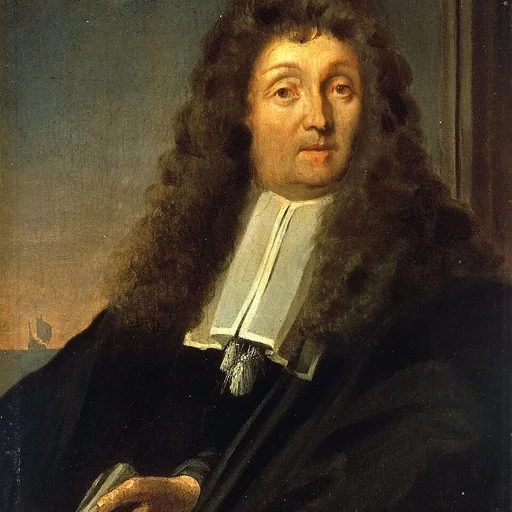
Ludolf Bakhuizen (28 December 1630 or 1632 – 7 November 1708) was a German-born Dutch painter, draughtsman, calligrapher and printmaker.

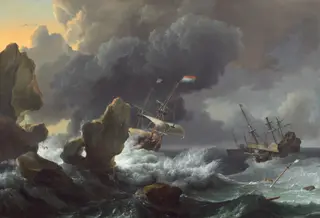 Ships in Distress off a Rocky Coast
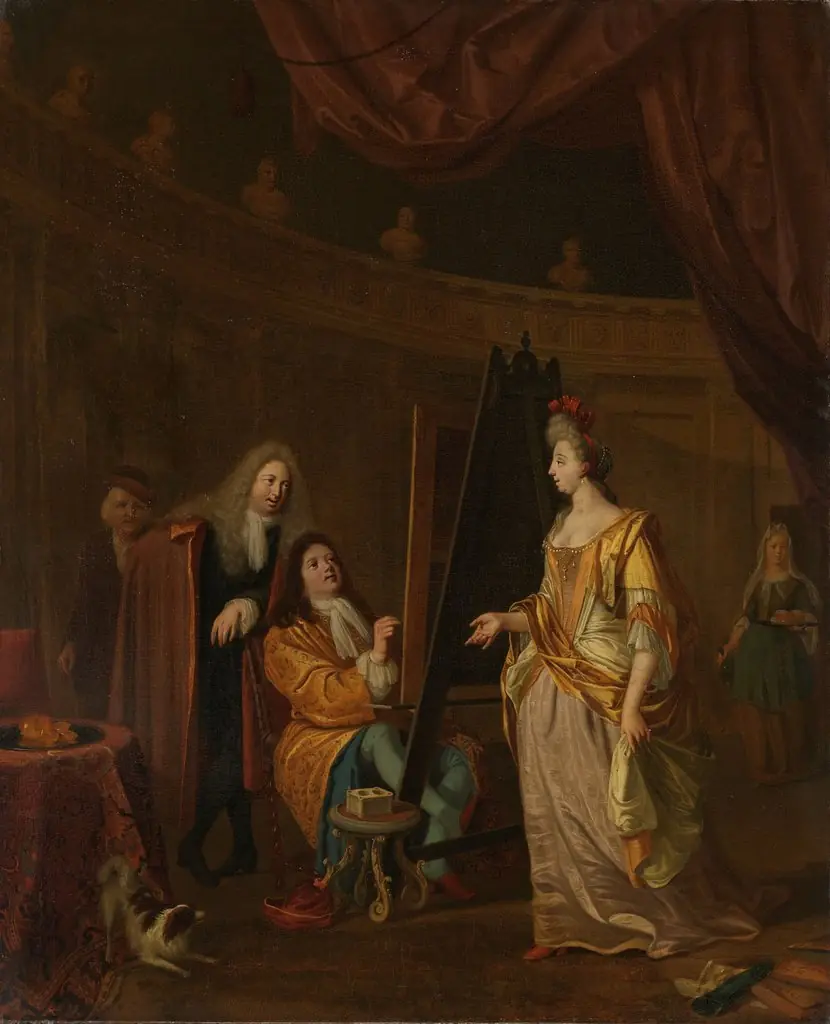 An artist in his studio, painting the portrait of a lady
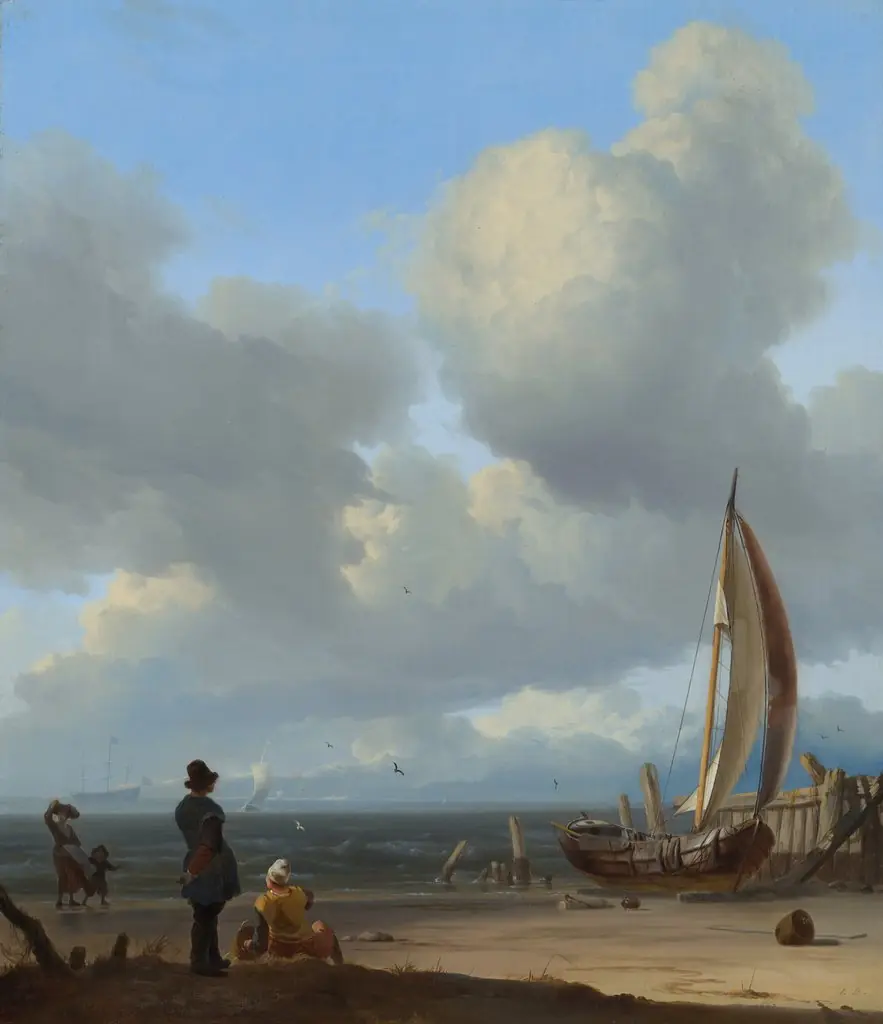 An extensive seascape with figures by a boat on a shore near Huisduinen
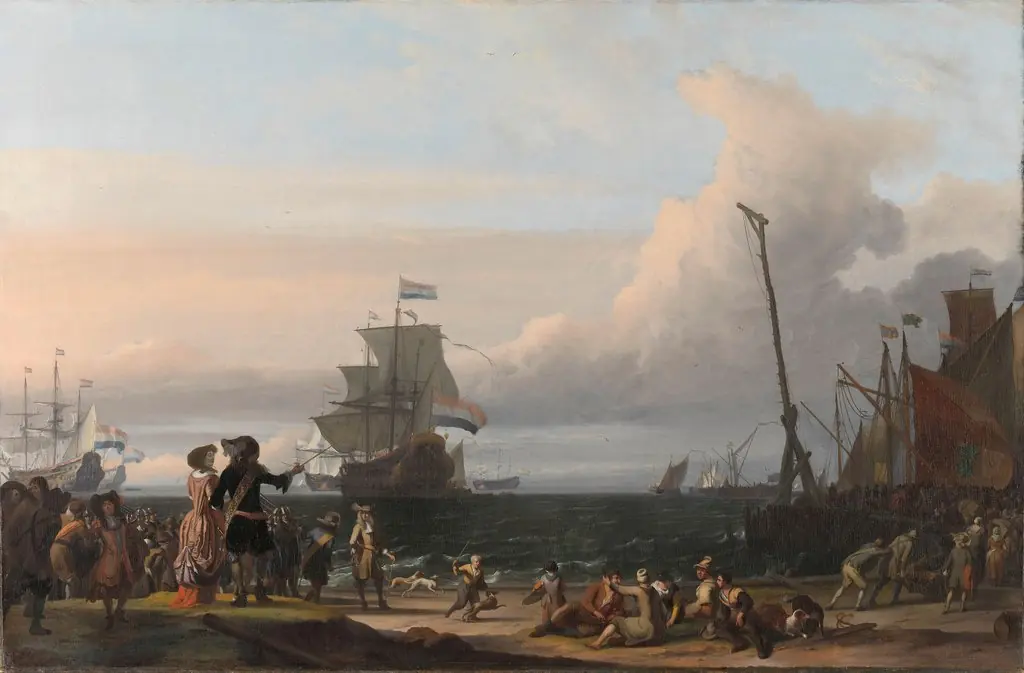 Dutch ships in the roads of Texel; in the middle the 'Gouden Leeuw,' the flagship of Cornelis Tromp
- The Y at Amsterdam, seen from the Mosselsteiger (mussel pier)
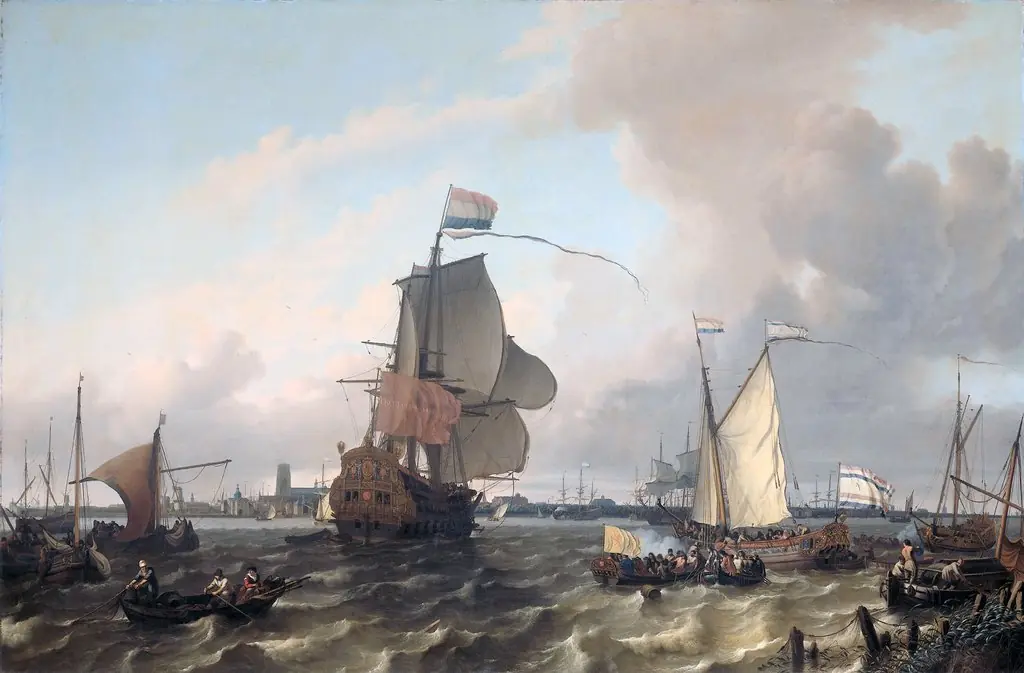 The Man-of-War Brielle on the River Maas off Rotterdam
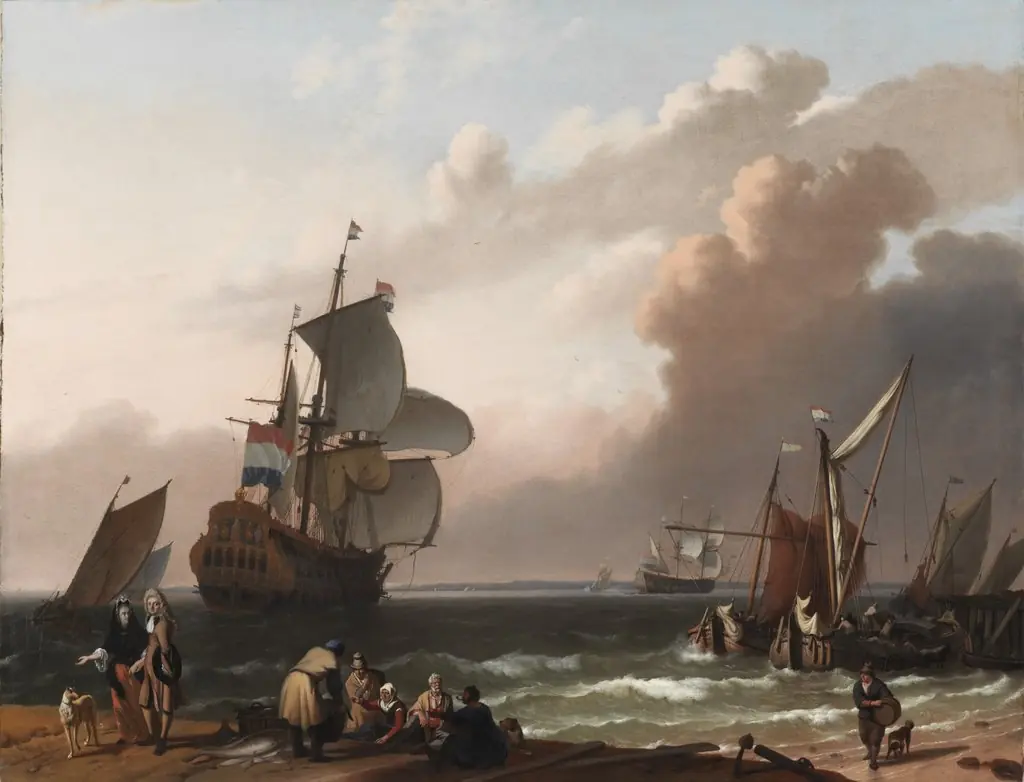 Warship and Dutch Sailboats near the Shore
 Rough sea with Ships