Artwork
Napoléon I (1769–1821) on Horseback
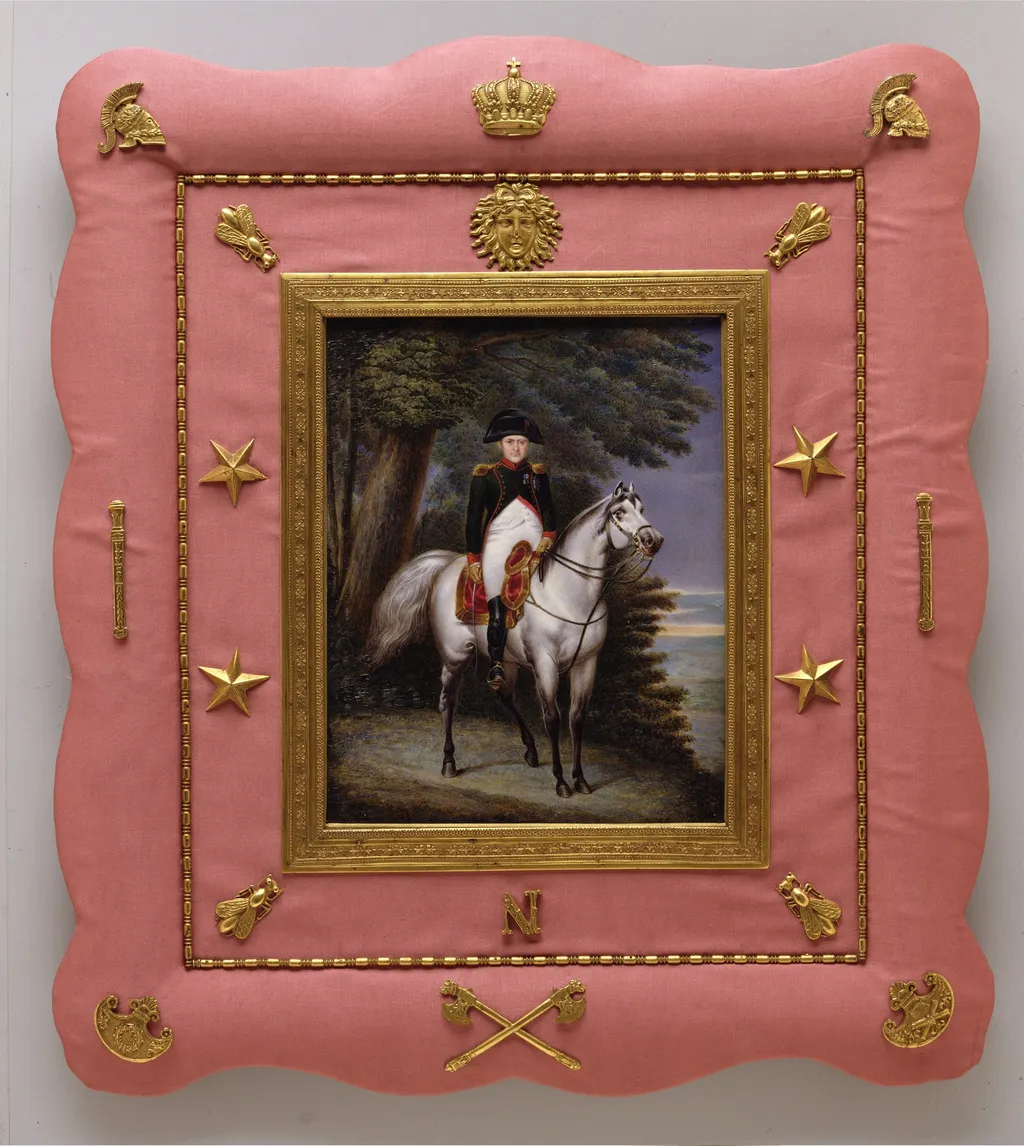
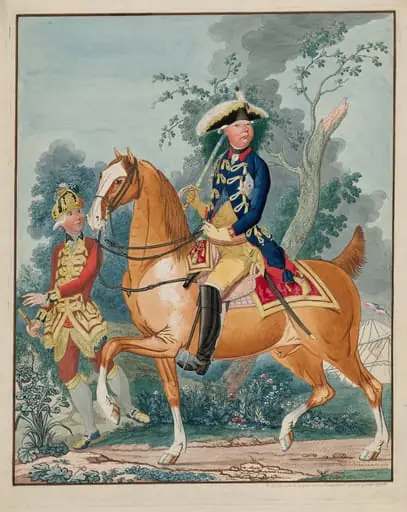
Napoléon I (1769–1821) on Horseback is an unspecified painting by the Neoclassicist artist Luigi Marta. It dates from 1830 and is held in the collection of the Metropolitan Museum of Art.
About this work
Subject & Meaning
Created by Luigi Marta in 1830, the painting functions as a miniature portrait that captures the former emperor in a mounted stance.
The work depicts Napoleon Bonaparte as the central subject, presented as a portrait that integrates the themes of equestrianism. Created by Luigi Marta in 1830, the painting functions as a miniature portrait that captures the former emperor in a mounted stance. While the specific symbolic gestures or regalia are not detailed in the available records, the composition classifies the piece within the genre of equestrian portraiture, historically used to convey authority and martial leadership.
The depiction focuses entirely on Napoleon, reinforcing his status as the primary figure of the artwork. This representation aligns with the tradition of portraying leaders on horseback to signify command and power, though the specific iconographic details beyond the general theme of equestrianism are not explicitly elaborated in the provided sources.
History & Provenance
The painting Napoléon I (1769–1821) on Horseback (1830) by Luigi Marta is held in the collection of the Metropolitan Museum of Art. Its accession number is 1975.1.198. The work was first recorded in the museum’s holdings in 1975. It has not been included in major public exhibitions since its acquisition, according to available records.
Overview
Napoléon I (1769–1821) on Horseback is a painted portrait by Luigi Marta, completed in 1830. This work captures the French emperor, Napoléon Bonaparte, in an equestrian pose, a common motif for depicting powerful leaders. The artwork is presently held within the collection of The Metropolitan Museum of Art, offering a view into early 19th-century portraiture and imperial representation.
Technique & Style
Marta's approach to the portrait combines a formal depiction of the subject with a more atmospheric background. The figure of Napoléon and his horse are rendered with clarity, highlighting details of his attire and the animal's form. In contrast, the surrounding woodland, with its soft blue and green tones, suggests depth and a natural environment without distracting from the central figures.
Context
The painting is presented within an elaborate gilded frame, adorned with imperial symbols such as stars, crowns, and crossed swords. This ornate framing is integral to the artwork's presentation, underscoring the subject's elevated status and the power he represented. Such decorative elements were commonly used to enhance the perceived importance of portraits depicting monarchs and military leaders during this period.
Own this work as a print
Artist & collection

- Frederik V on Horseback
 Portrait of general Wincenty Krasiński (1782–1858)
 Emperor Jahangir
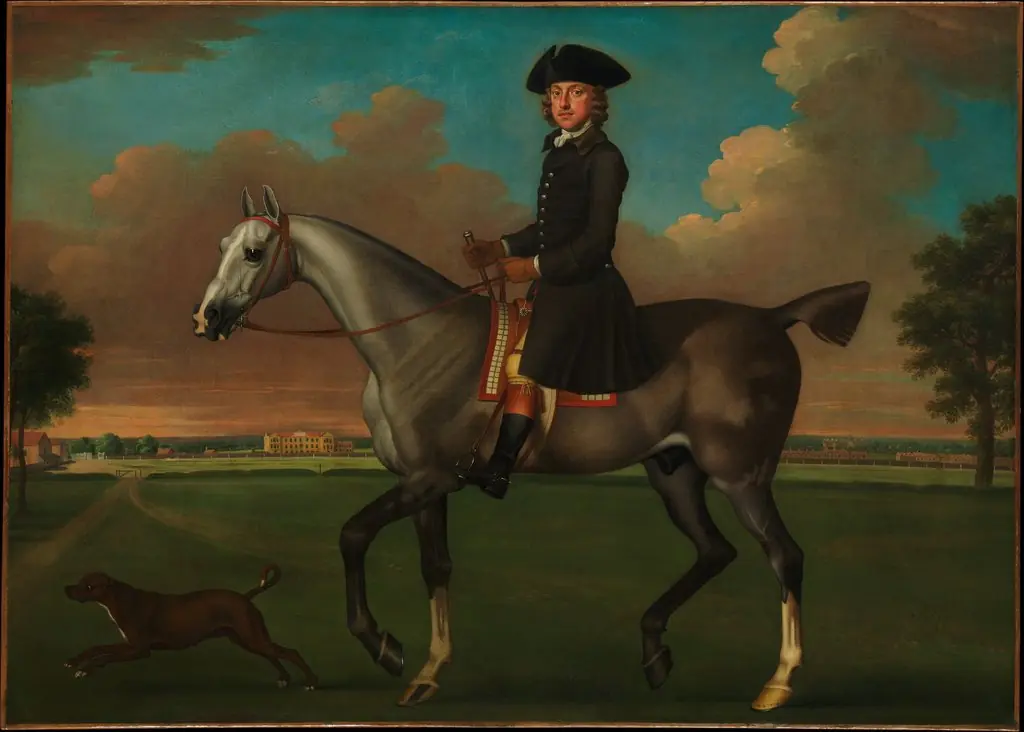 Portrait of a Horseman
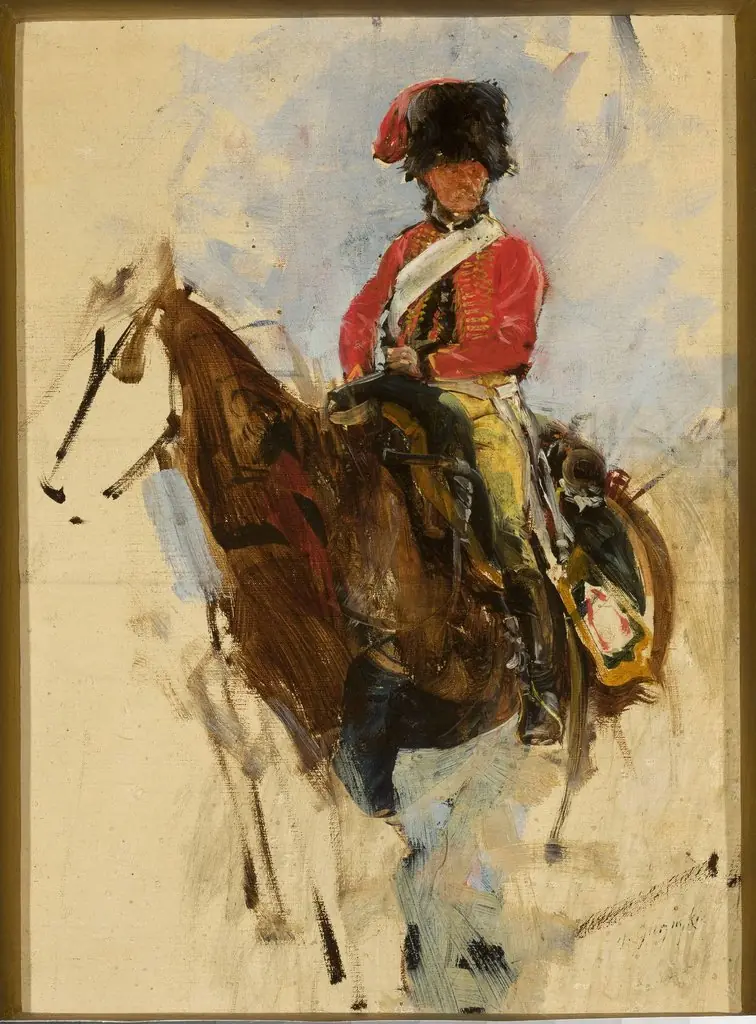 Sketch of a horseman, hussar
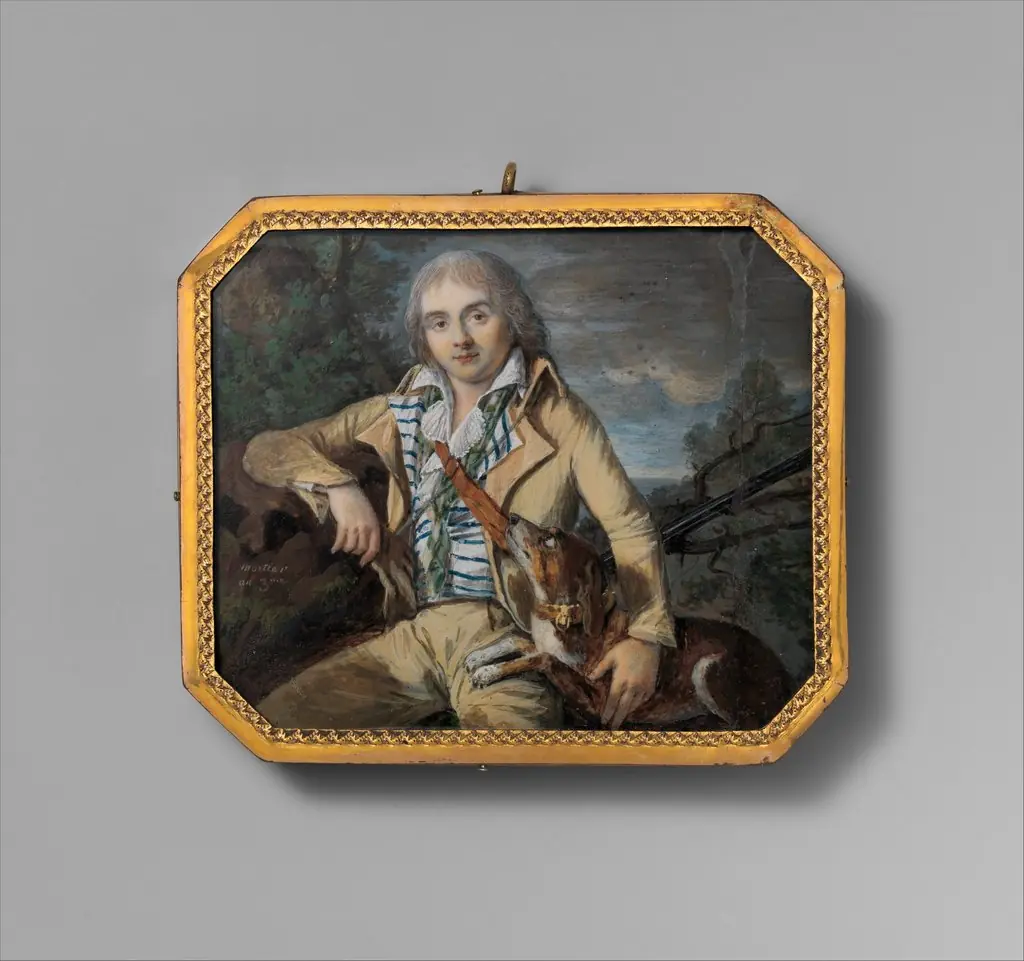 A Hunter with a Dog
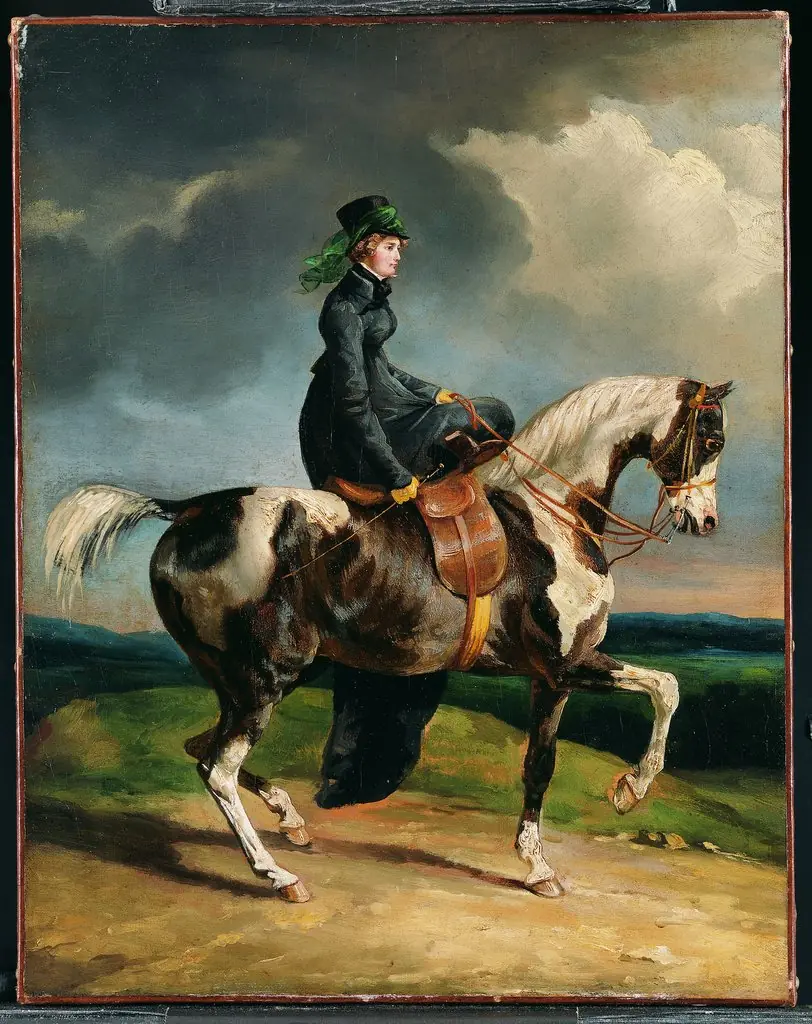 Horsewoman
 Rappe in der Levade
 Seated Woman Sketching a Design for Embroidery and Children Winding Yarn
 Civil War Regalia of Major Levi Gheen McCauley
 Equestrian Portrait of Grand Prince Alexander Nikolayevich
 William V of Orange