Artwork
Still Life with Apricots Buns and Vessels
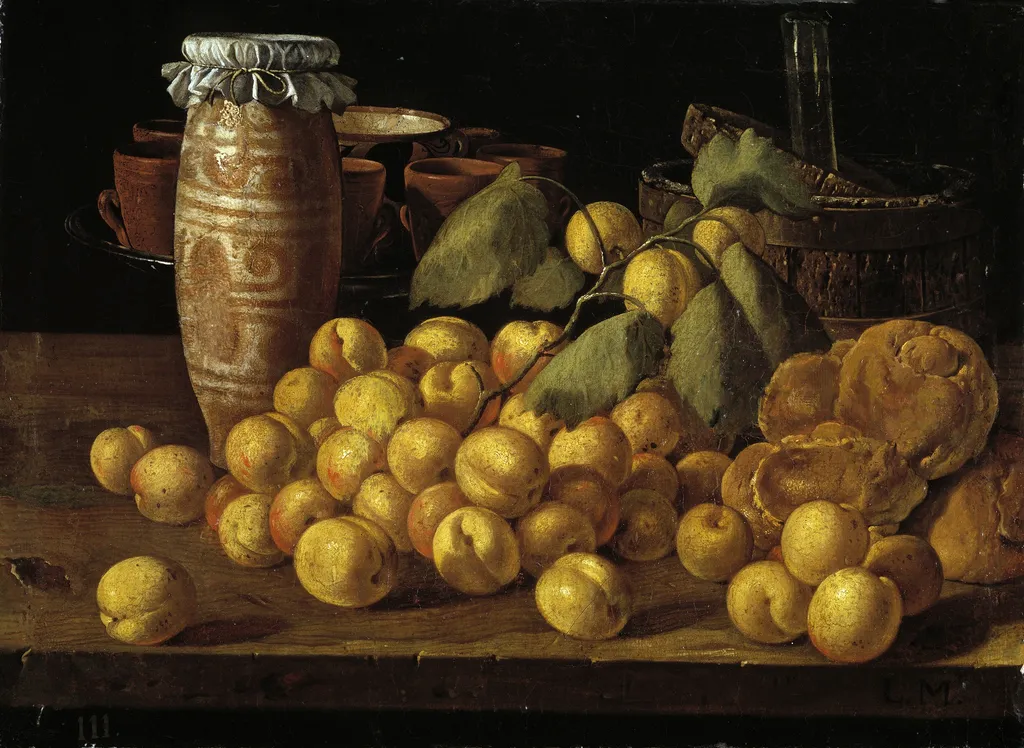
Still Life with Apricots Buns and Vessels is an oil painting by the Rococo painting artist Luis Egidio Meléndez. It dates from 1751 and is held in the collection of the Museo del Prado.
About this work
Technique & Style
It depicts a still life arrangement of apricots, buns, and assorted vessels rendered with the meticulous brushwork characteristic of Meléndez's mature period.
The work is an oil on canvas painting executed in 1751, measuring 34 cm in height by 47 cm in width. It depicts a still life arrangement of apricots, buns, and assorted vessels rendered with the meticulous brushwork characteristic of Meléndez's mature period. The composition reflects the Spanish still-life tradition of the mid‑18th century, emphasizing textural contrast and careful handling of light on fruit and porcelain.
The painting's surface shows fine craquelure consistent with age, though no major condition issues are documented. Its formal qualities include a balanced pyramidal arrangement, subdued palette, and precise rendering of objects that convey both material richness and a sense of quiet domestic abundance.
History & Provenance
Still Life with Apricots Buns and Vessels was created by Luis Egidio Meléndez in 1751, executed in oil paint on canvas. The painting entered the Spanish royal collections and was owned by Ferdinand VII of Spain. It is now held by the Museo del Prado, where it is associated with the Royal Palace of Aranjuez.
Still Life with Apricots Buns and Vessels is held in the collection of the Museo del Prado. The work was historically owned by Ferdinand VII of Spain and has been located at the Royal Palace of Aranjuez. Created in 1751, this oil painting on canvas depicts salvillas alongside other still-life elements.
The provided sources do not list a specific inventory number or detail any public exhibition history for the piece.
Overview
Luis Egidio Meléndez’s oil painting Still Life with Apricots, Buns and Vessels (1751) presents a modest arrangement of fruit, baked goods and ceramic containers on a wooden tabletop. The composition is rendered with meticulous realism, emphasizing the subtle variations of colour, light and surface that characterize each object.
Subject & Meaning
The work gathers ordinary kitchen items, a cluster of yellow‑orange apricots, golden‑brown buns, and a selection of vessels, including a large jar capped with a white cloth and several smaller cups. By focusing on everyday nourishment, Meléndez invites contemplation of the material culture of 18th‑century Spain and the quiet dignity of domestic still life.
Own this work as a print
Artist & collection
Artist
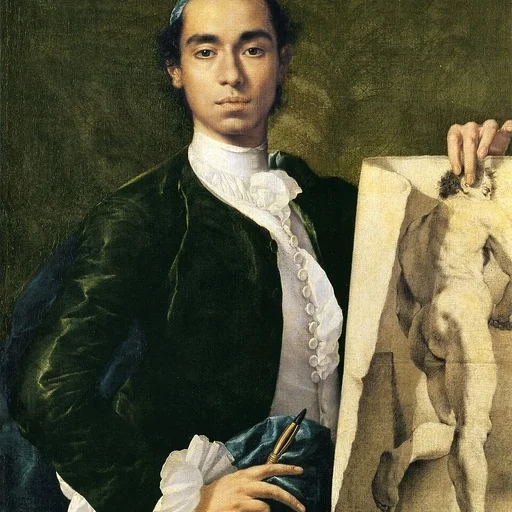
Luis Egidio Meléndez (1716–1780) was a Spanish painter. Though he received little acclaim during his lifetime and died in poverty, Meléndez is recognized as one of the greatest Spanish still-life painters of the 18th…

 The Afternoon Meal (La Merienda)
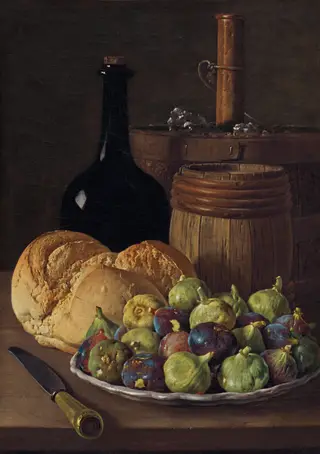 Still Life with Figs and Bread
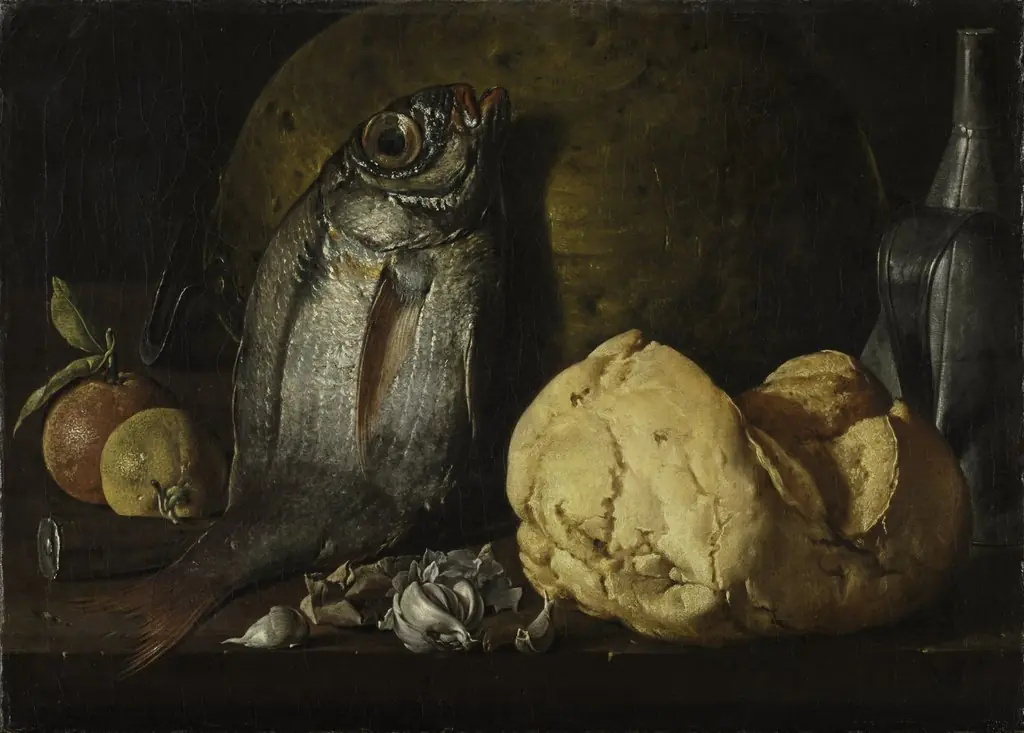 Still Life with Fish, Bread, and Kettle
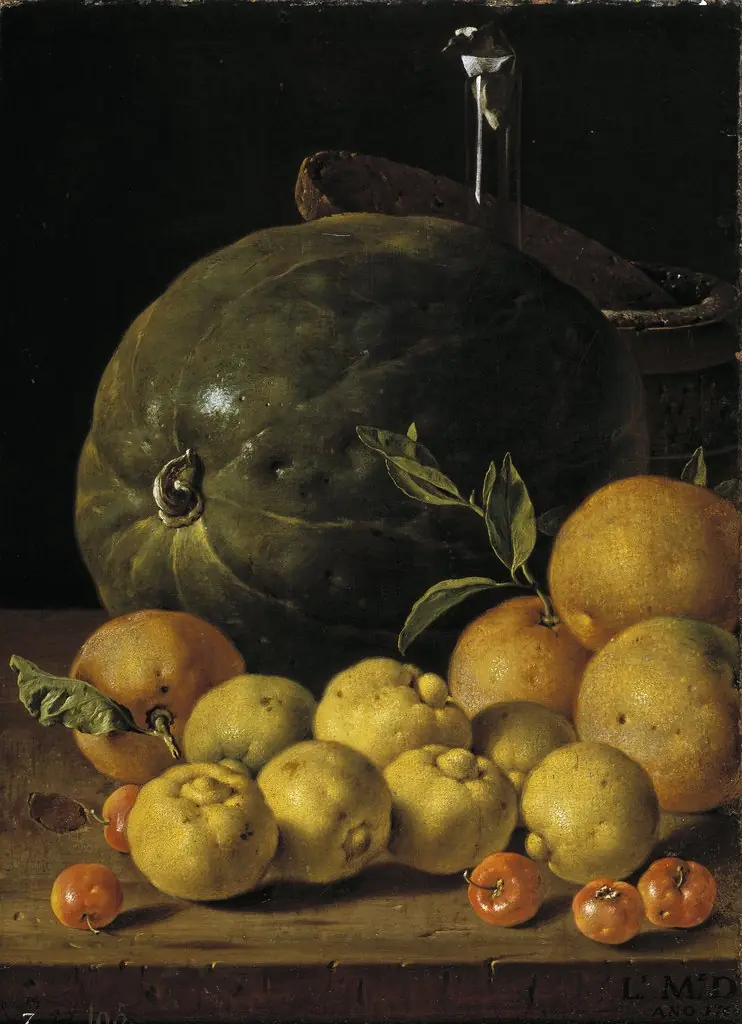 Still Life with Limes Oranges Haw Berries and Watermelon
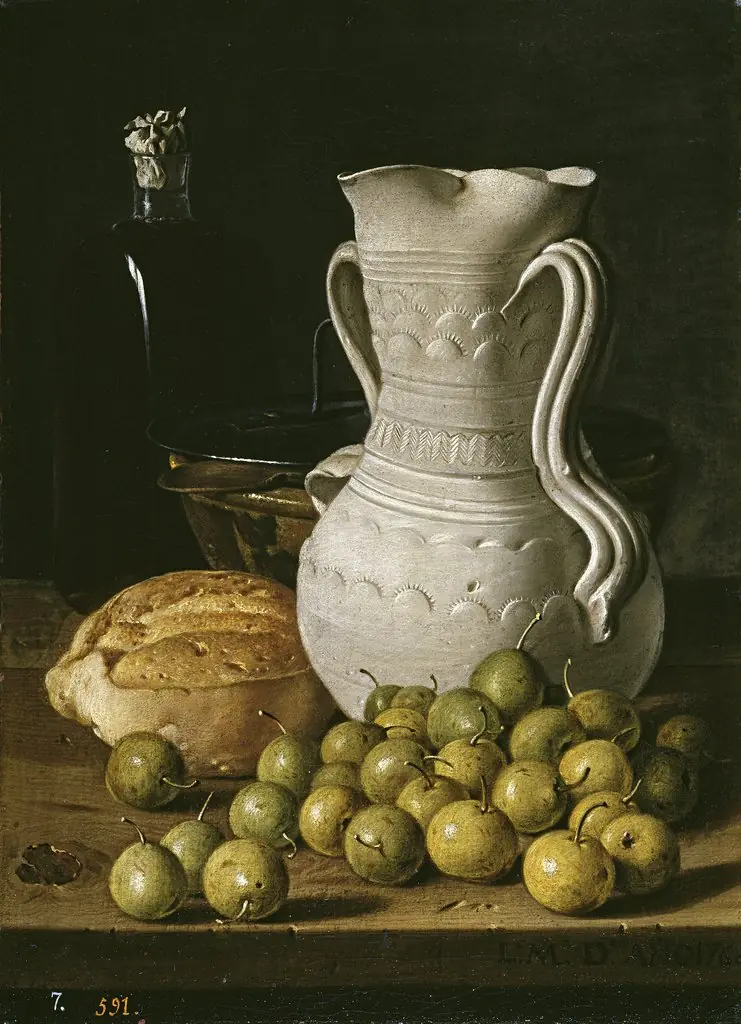 Still Life with Small Pears Bread Flask Bowl and Dry Leaves
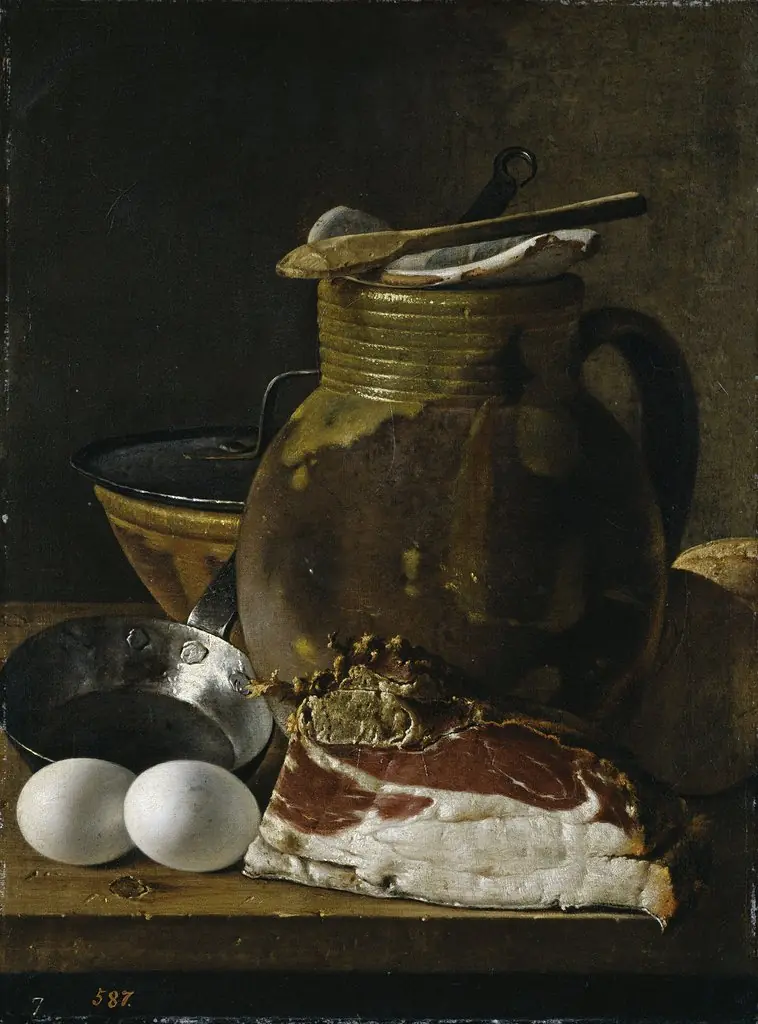 Still Life with Ham Eggs and Vessels
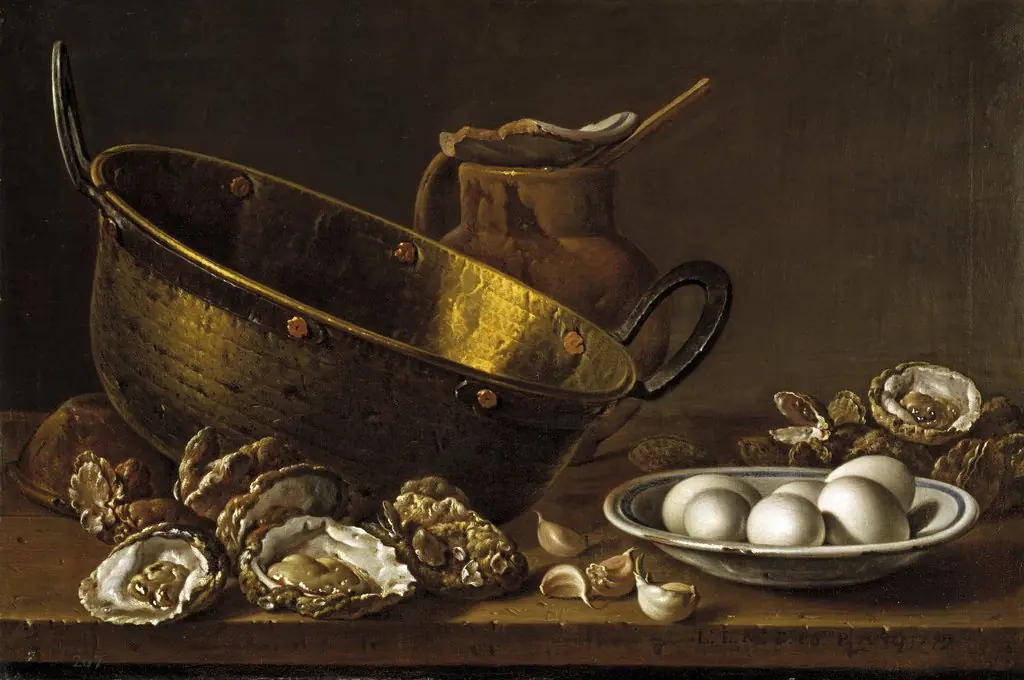 Still Life with Oysters Garlic Eggs Pot and Pan
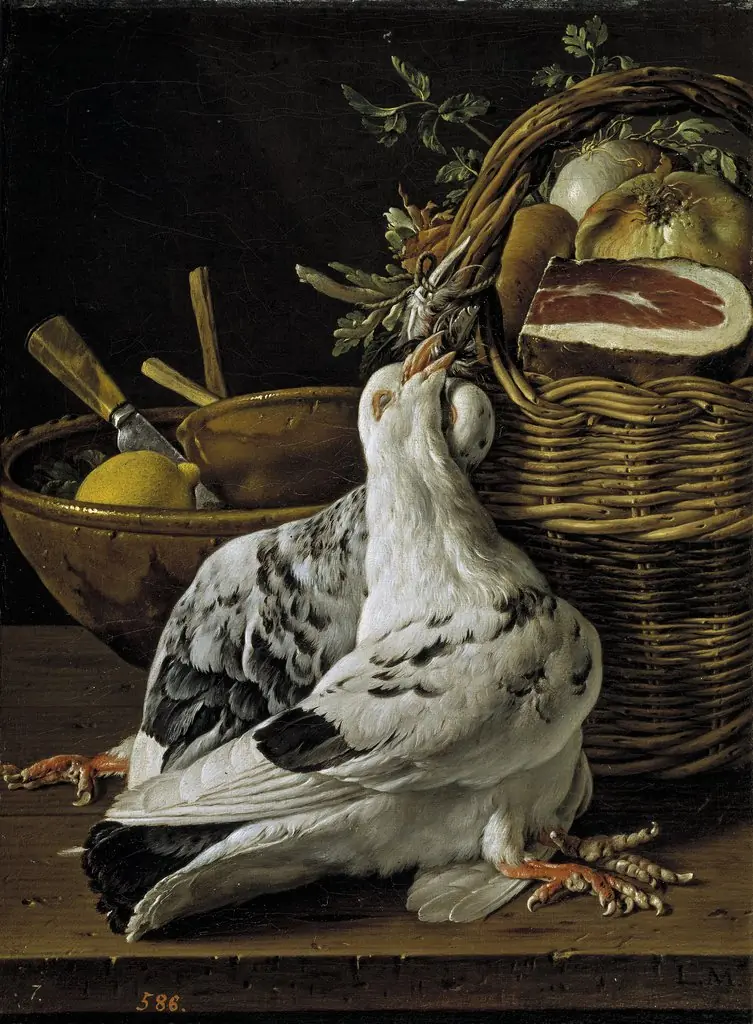 Bodegón con pichones cesta de comida y cuencos
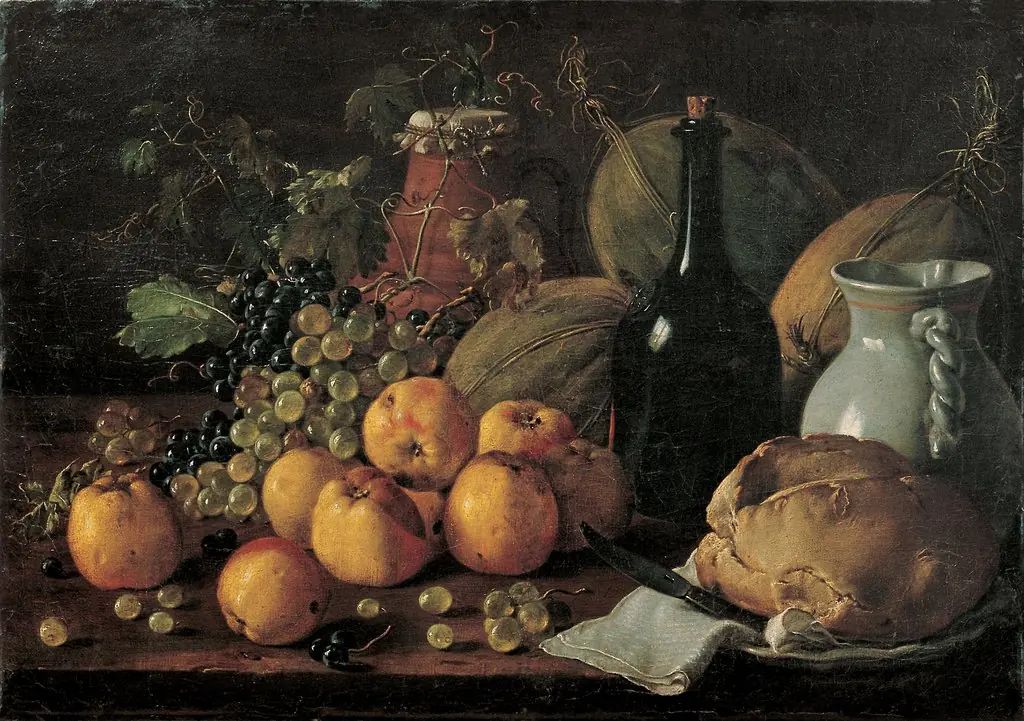 Still Life with Apples, Grapes, Melons, Bread, Jug and Bottle
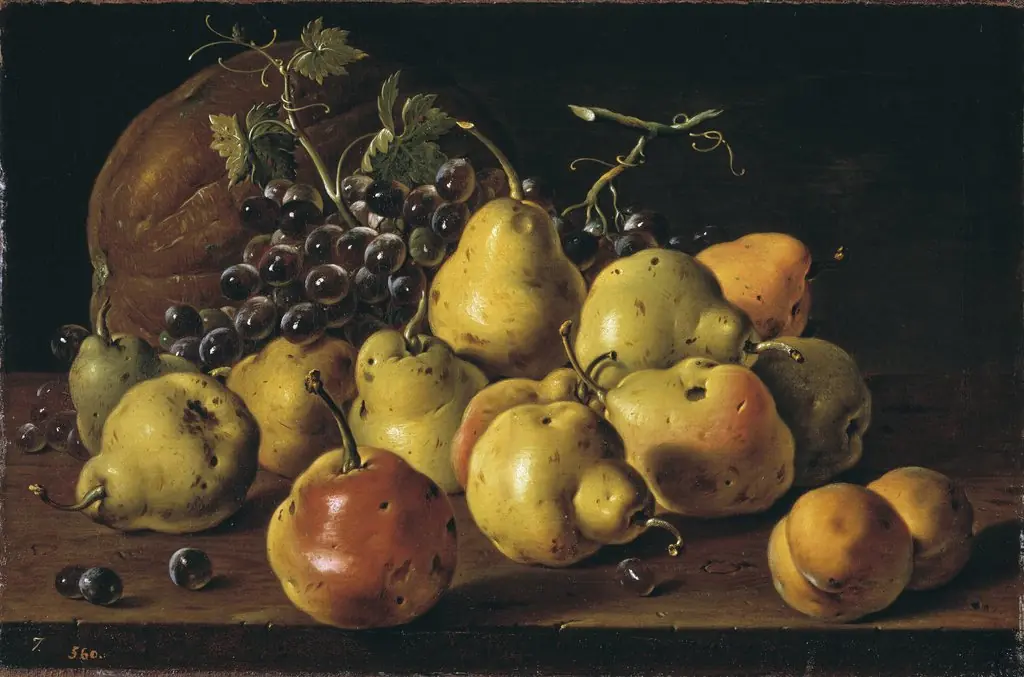 Bodegón con peros y melocotones uvas y melón
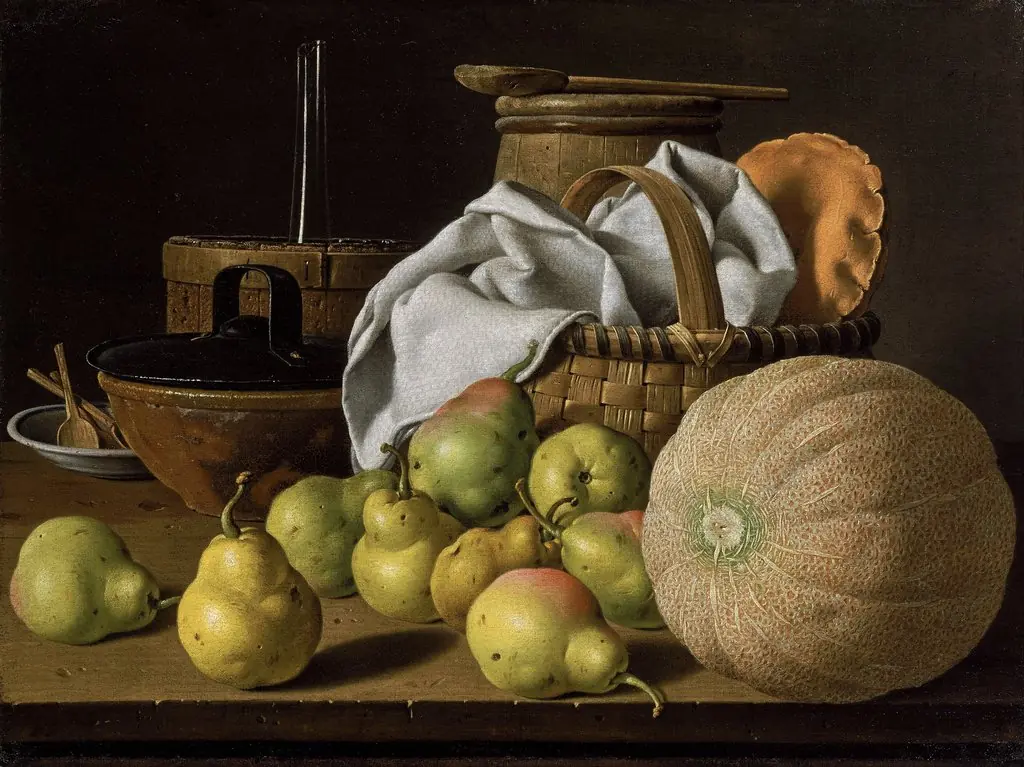 Still Life with Melon and Pears
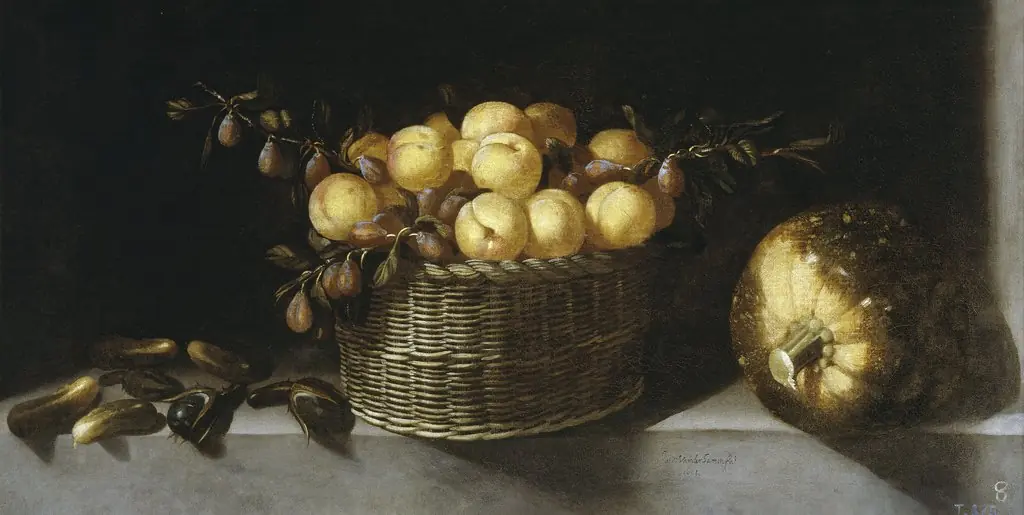 Still Life with Fruit and Vegetables
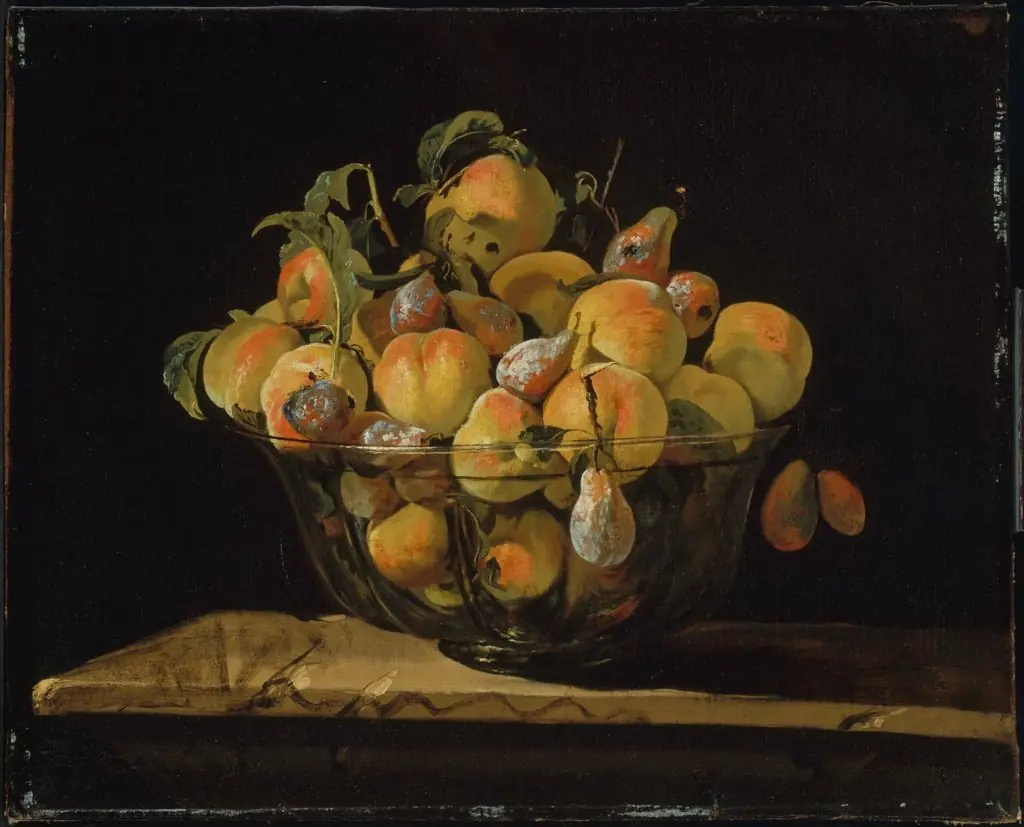 Peaches and Pears in a Glass Bowl
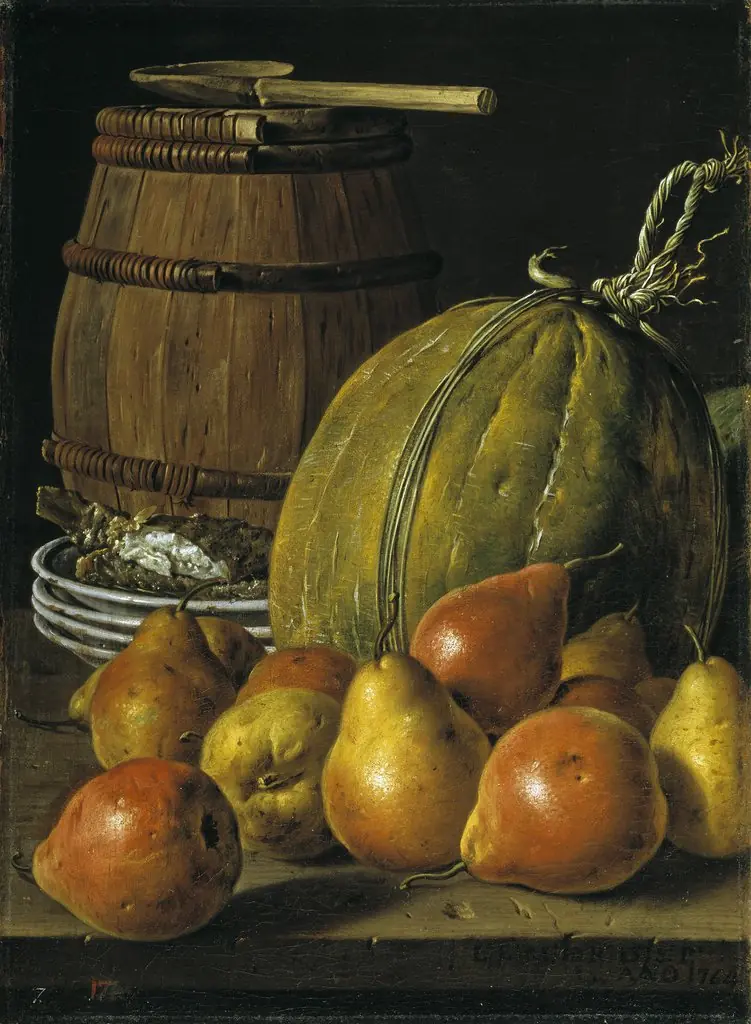 Bodegón con peras melones platos y barril
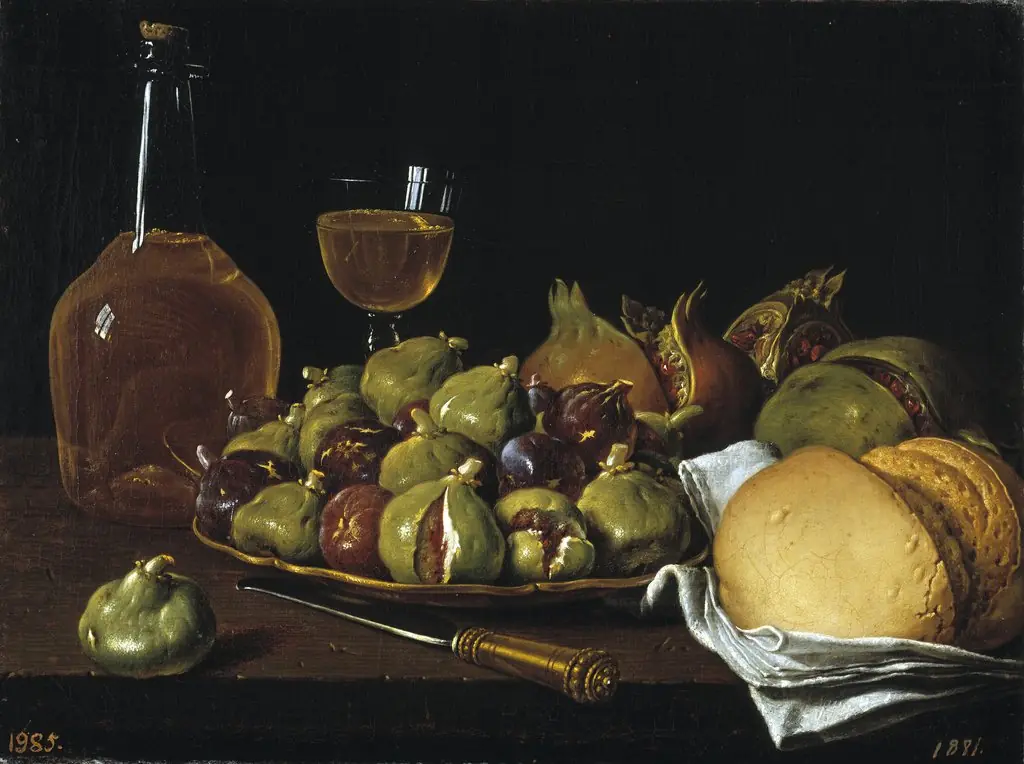 Still Life with Bread Pomegranates Figs and Tableware
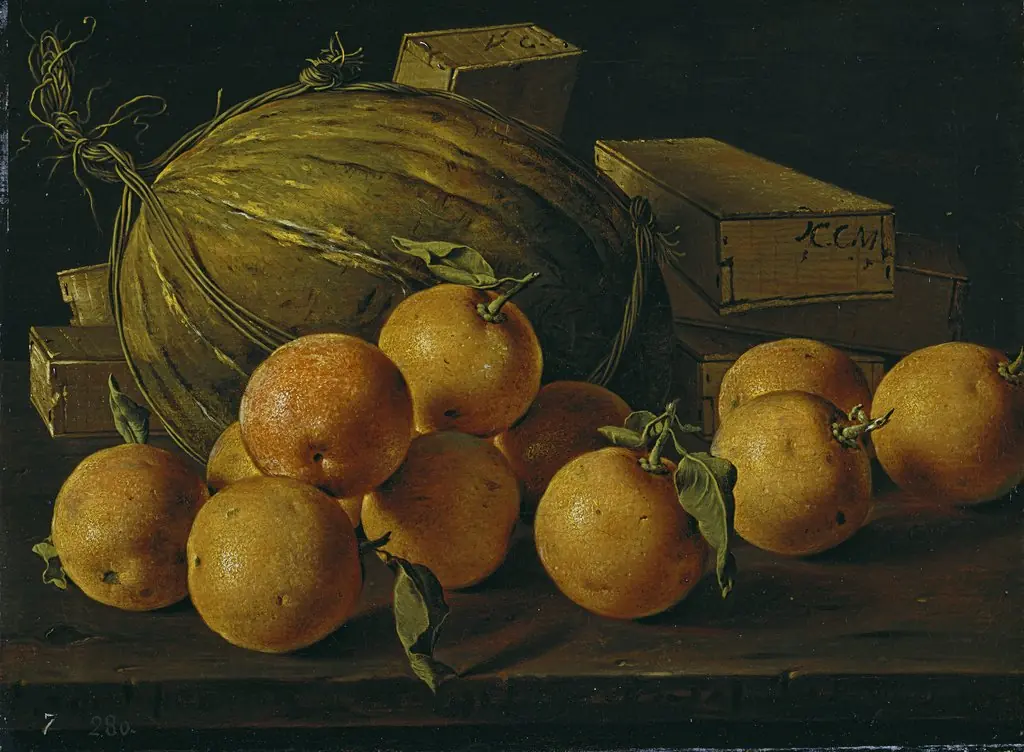 Still Life with Oranges Melon and Boxes of Sweets
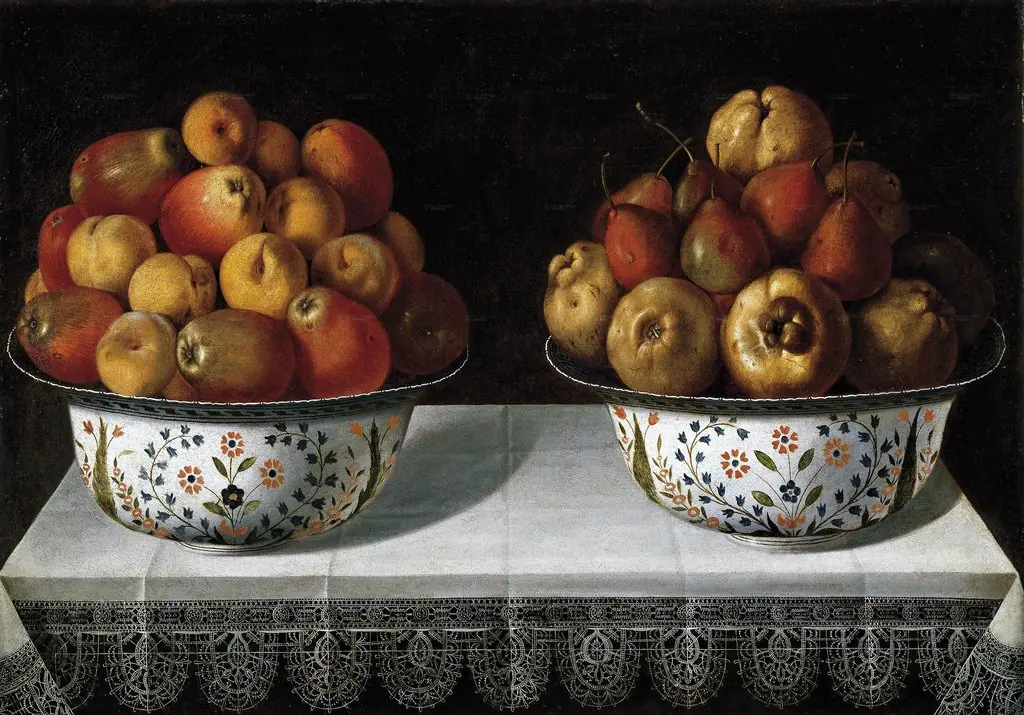 Two Fruit Bowls on a table