Artwork
The Death of the Virgin
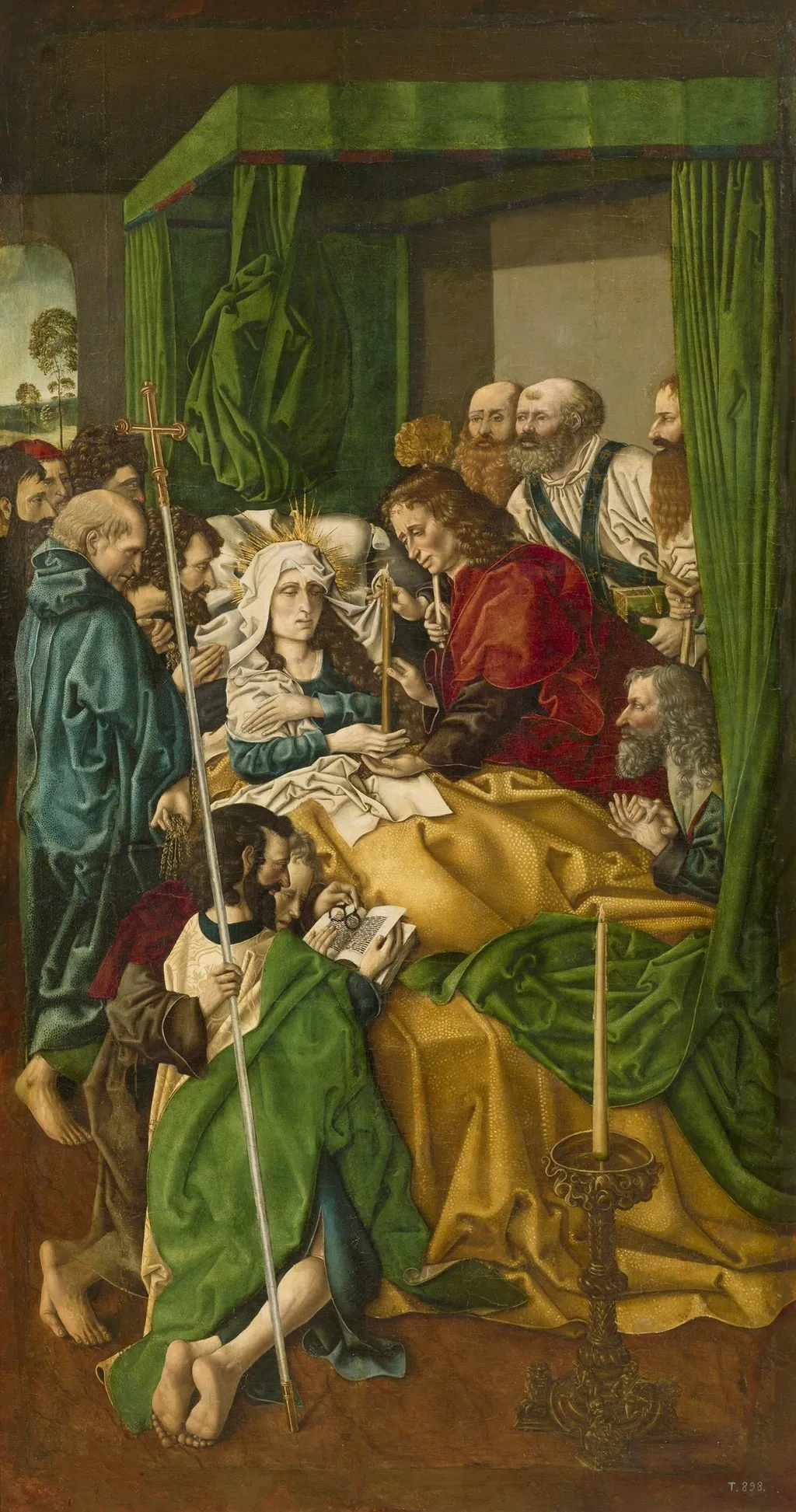
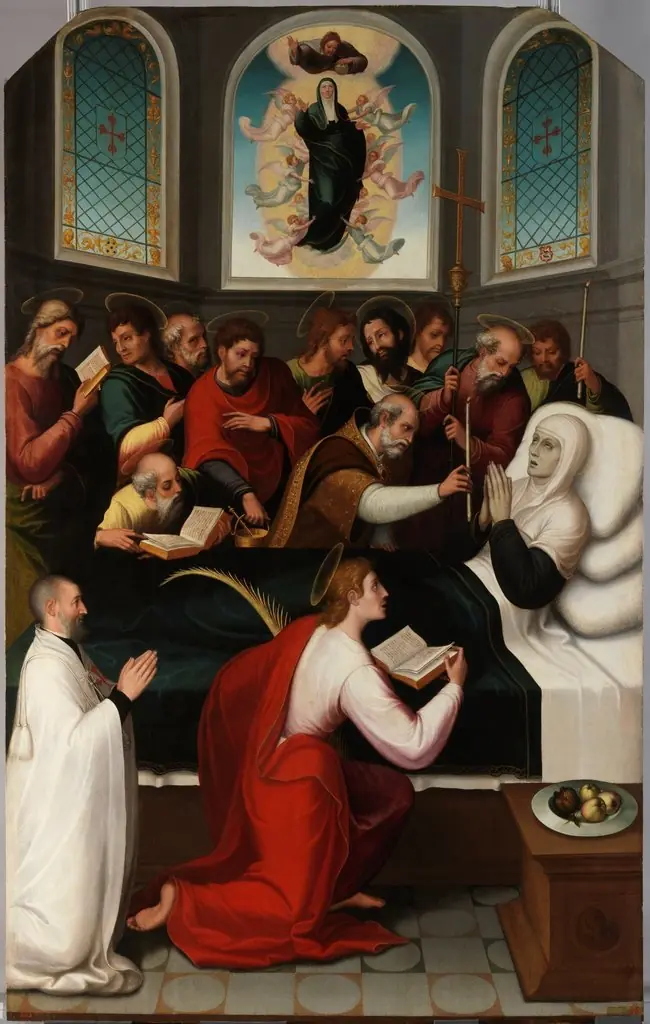
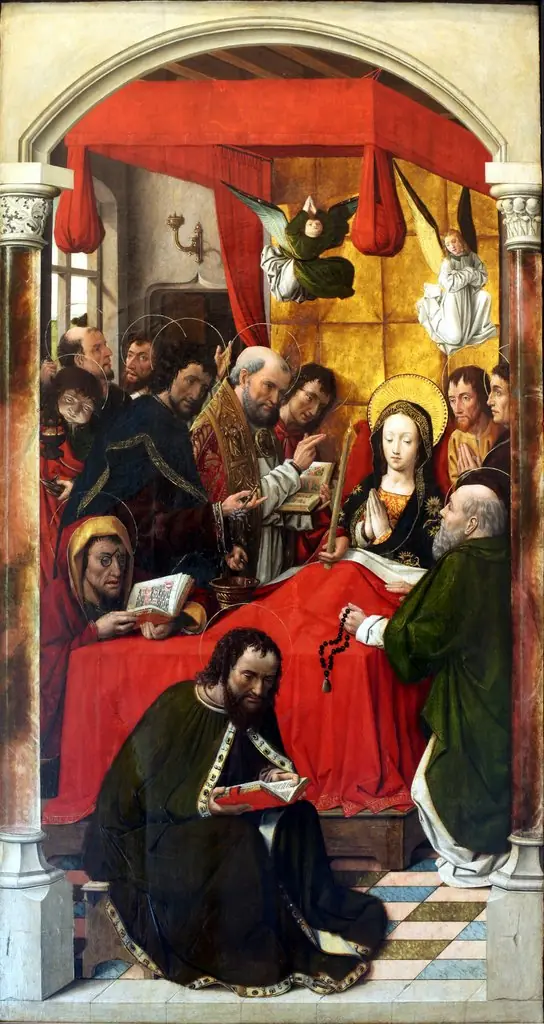
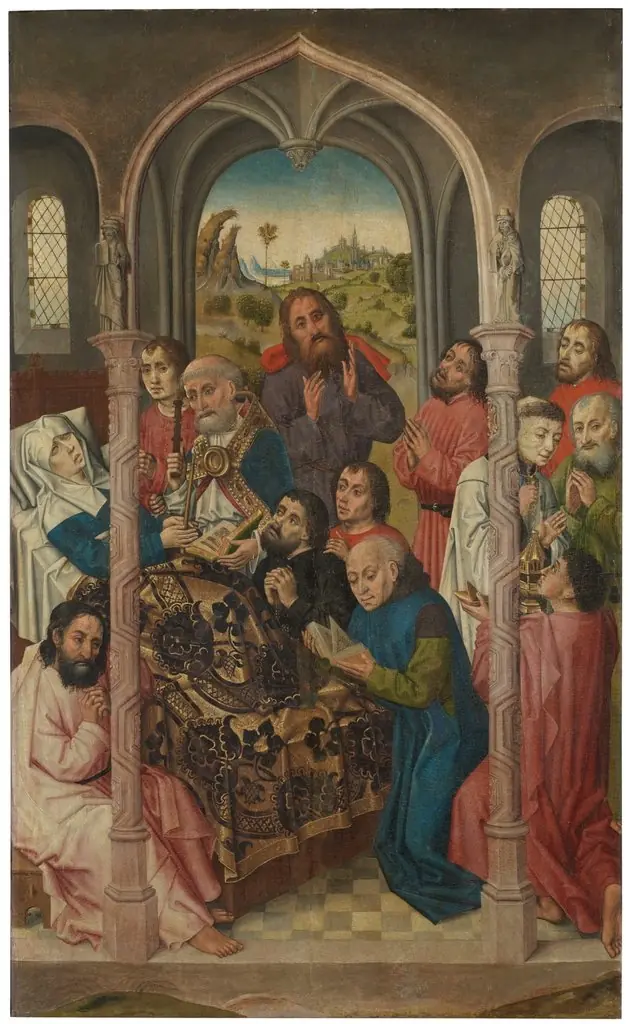
The Death of the Virgin is an unspecified painting by the Italo Byzantine artist Maestro de la Sisla. It dates from 1500 and is held in the collection of the Museo del Prado.
About this work
Subject & Meaning
It also reflects late‑medieval devotional practices that focused on the suffering and sanctity of the Virgin, inviting contemplation of her intercessory role.
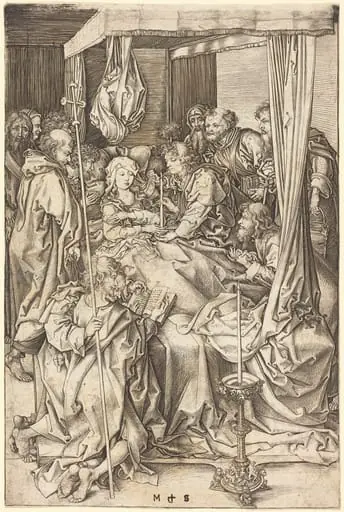
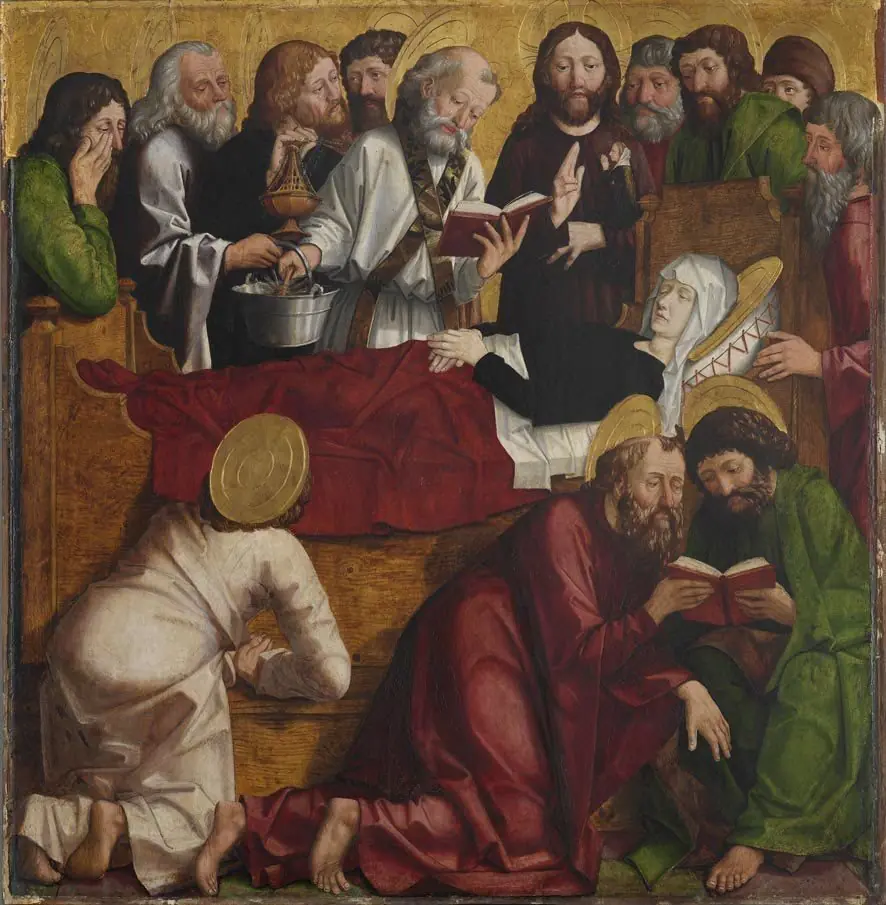
The painting shows the Virgin Mary lying on a bed surrounded by mourners, a composition that emphasizes her humanity and the moment of divine transition. Iconographic elements include a book, a crosier and a white shroud, symbols that reference her role as teacher, queen of heaven and the promise of salvation. The work therefore conveys theological ideas about the Assumption and the continuity between earthly life and heavenly glory.
It also reflects late‑medieval devotional practices that focused on the suffering and sanctity of the Virgin, inviting contemplation of her intercessory role. The depiction is anchored in a specific narrative of the Virgin’s death as recorded in apocryphal tradition, making the scene both a devotional image and a visual sermon on faith.
Technique & Style
The painting is executed in tempera on a wooden panel, measuring 212 cm by 113 cm. It portrays the Death of the Virgin surrounded by symbolic objects including a book, a bed, and a crosier. The work belongs to the religious art genre and was created circa 1500 by the Maestro de la Sisla. It is part of the collections at the Museo del Prado and the Museo de la Trinidad, currently housed in the Museo del Prado in Madrid.
History & Provenance
The work was created circa 1500 by the anonymous painter known as the Master of the Sisla, as indicated by the shared date and authorship across sources.
It entered the collection of the Museo de la Trinidad after its foundation in 1837, following the nationalization and redistribution of ecclesiastical holdings during the disentailment of church property in Spain. By 1872, the painting had been transferred to the Museo del Prado, where it remains in the permanent collection.
The work is held by the Museo del Prado, Madrid, where it entered via the Museo de la Trinidad before the latter’s holdings were absorbed by the Prado.
Its inventory number at the Museo del Prado is P002614.
It has been exhibited at the Museo del Prado in the exhibition “El Prado en las calles. Maestros Antiguos” (Madrid, 2010).
Legacy
The Death of the Virgin, painted by the Maestro de la Sisla around 1500, was housed in the Museo del Prado and later influenced religious art through its distinctive iconography of a book, bed, and crosier. Its inclusion in the Museo de la Trinidad further cemented its reputation within Spanish devotional circles. The work's legacy is anchored in its preservation and scholarly attention, reflecting its enduring significance in the study of late medieval Spanish painting.
Overview
The painting known as The Death of the Virgin is attributed to the anonymous Master of La Sisla, an artist active around the turn of the 16th century. Executed in the Italo‑Byzantine style, the work originally formed part of a larger altarpiece for the Monastery of Santa María de Sisla near Toledo and now belongs to the Museo del Prado’s collection.
Context
The work reflects the devotional practices of late medieval Spain, where the death of Mary, often called the Dormition, was a popular subject for altarpieces. Its Italo‑Byzantine characteristics illustrate the cross‑cultural influences between Italian artistic currents and Iberian religious iconography during the period.
Artist & collection
Artist
The Master of La Sisla (active c.1500) is the name given to an anonymous artist who painted the panels for the altarpiece at the Monastery of Santa María de Sisla, near Toledo; now preserved at the Museo del Prado.