Artwork
The Death of the Virgin
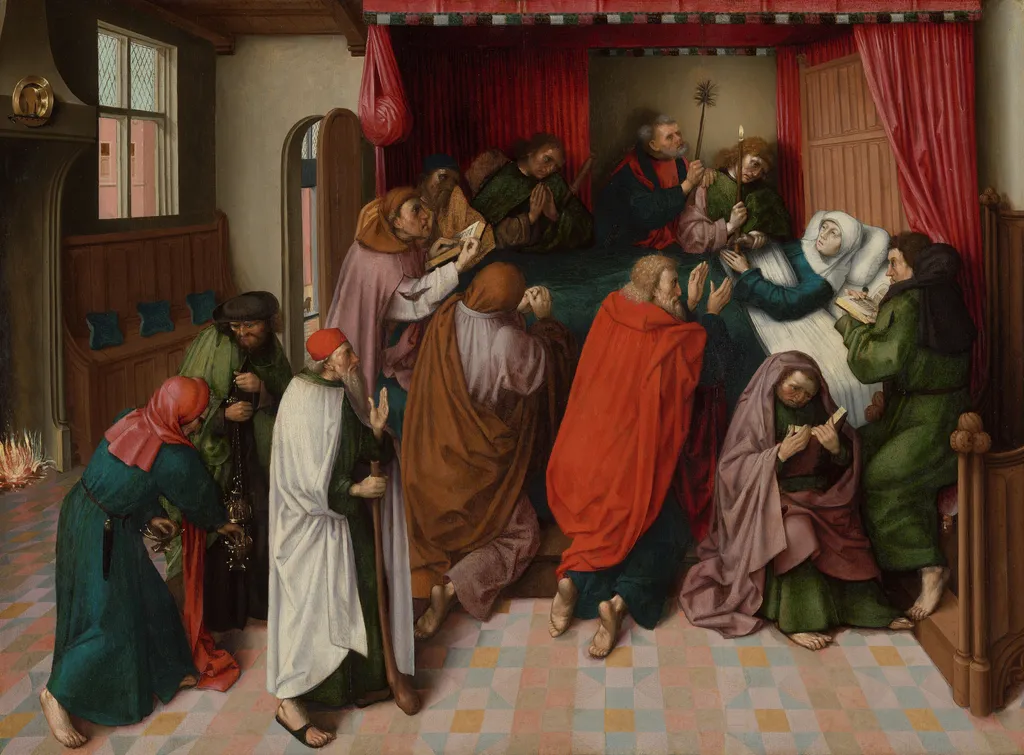
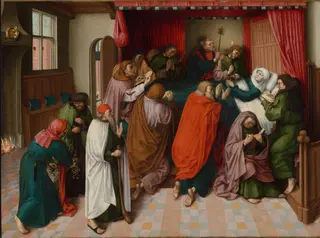
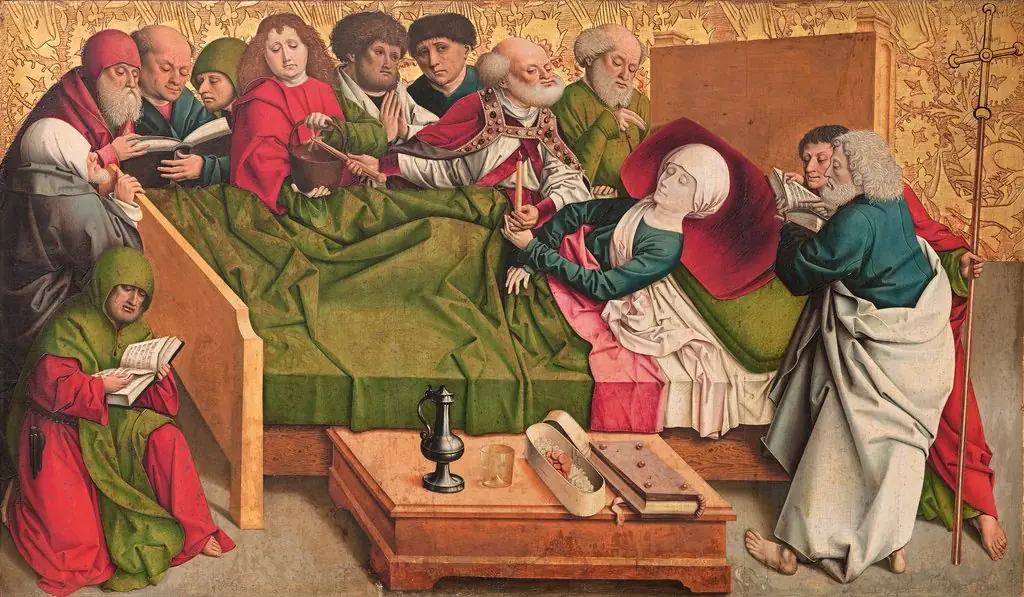
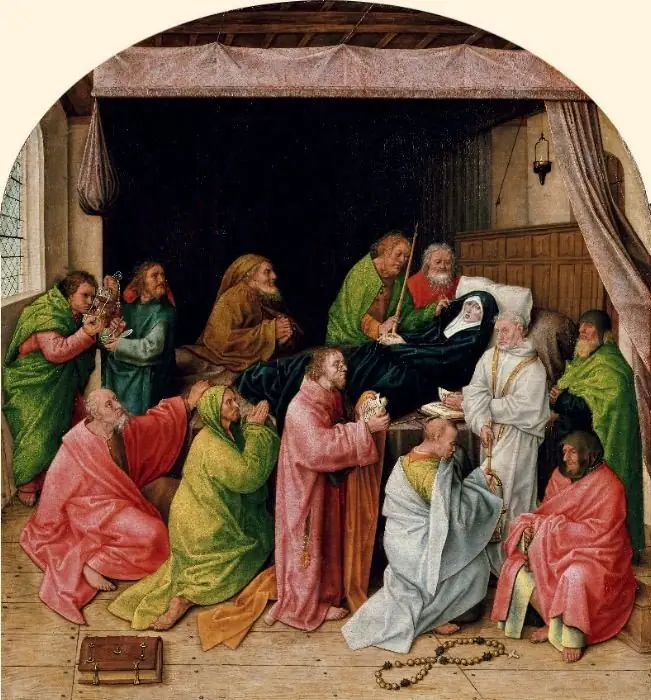
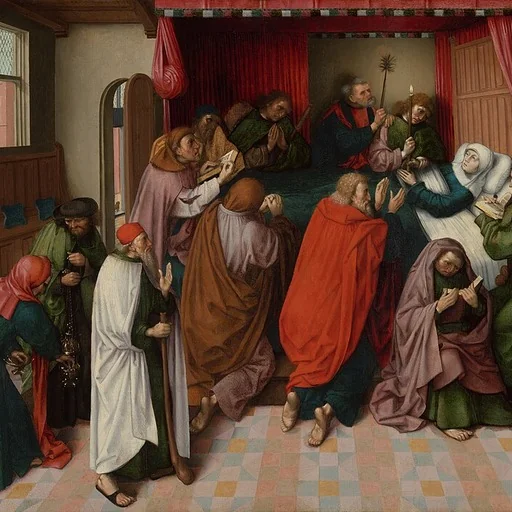
The Death of the Virgin is an oil painting by the Northern Renaissance artist Master of the Amsterdam Death of the Virgin. It dates from 1500 and is held in the collection of the Rijksmuseum. Created circa 1500, this oil painting portrays the Virgin Mary at the moment of her death, surrounded by the twelve apostles.
About this work
Subject & Meaning
Iconographically, the composition emphasizes her lifeless body surrounded by mournful figures, highlighting themes of mortality and divine compassion.
The subject depicted is the death of the Virgin Mary, rendered as a religious scene of her final moments. Iconographically, the composition emphasizes her lifeless body surrounded by mournful figures, highlighting themes of mortality and divine compassion. Symbolically, the work conveys the theological significance of the Virgin's transition to heaven, reflecting medieval beliefs about intercession and the promise of salvation.
This meaning is rooted in its classification as religious art within the Northern Low Countries tradition, where depictions of the Death of the Virgin served both devotional and didactic purposes, inviting contemplation of the sacred narrative surrounding Mary's passing.
Technique & Style
The work is executed in oil paint on a wooden panel, creating a richly textured surface that emphasizes the solemn gravity of the central figure. The composition is arranged hierarchically, with the Virgin’s body positioned diagonally across the picture plane, surrounded by mourners whose gestures and drapery convey both grief and reverence. Light falls softly from the left, illuminating the pallid flesh and highlighting the delicate rendering of facial expressions, while the muted palette of earth tones reinforces the contemplative mood.
Subtle underdrawing and glazing techniques contribute to the depth of color and the three‑dimensional modeling of forms, characteristic of early Netherlandish practice.
History & Provenance
The Death of the Virgin, an oil painting on panel created around 1500 in the Northern Low Countries, was commissioned as a religious work and executed by the Master of the Amsterdam Death of the Virgin. It entered the collection of the Rijksmuseum Amsterdam, where it remains on display in hall 0.1, Hofje De Zeven Keurvorsten. The work measures 56.6 cm in height and 76.8 cm in width and is classified as a religious painting within the broader genre of death imagery.
The Death of the Virgin is held by the Rijksmuseum in Amsterdam. According to the museum's catalogue, the painting is installed in hall 0.1 of the Hofje De Zeven Keurvorsten section of the institution.
No exhibition history beyond the painting's current installation at the Rijksmuseum is documented in the available sources, and no inventory or accession number is provided.
Overview
Created circa 1500, this oil painting portrays the Virgin Mary at the moment of her death, surrounded by the twelve apostles. The scene unfolds within a modest interior, illuminated by subdued daylight that filters through a window. The composition gathers a multitude of figures around the bedridden saint, emphasizing the communal aspect of the final vigil.
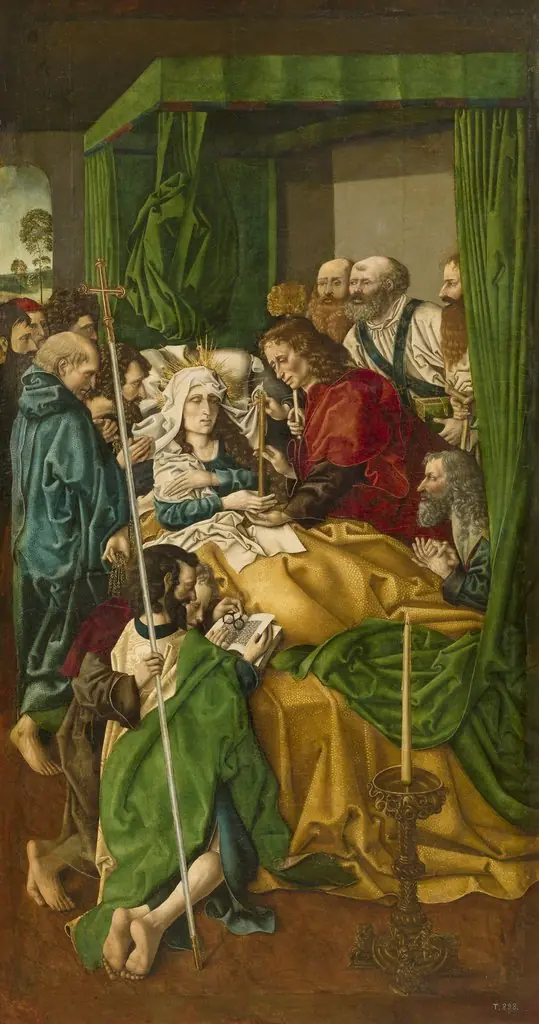
Own this work as a print
Artist & collection
Artist
Master of the Amsterdam Death of the Virgin
The Master of the Amsterdam Death of the Virgin (sometimes called the Master of the Almshouse of the Seven Electors) (fl.